Places
Santarém, Capital of Portuguese Gothic
Santarém, capital of Portuguese Gothic in Ribatejo: medieval churches, the Portas do Sol overlooking the Tagus, and the tomb of Pedro Álvares Cabral.
- Location
- Santarém, Santarém
- Built
- Idade Média
- Style
- Gótico
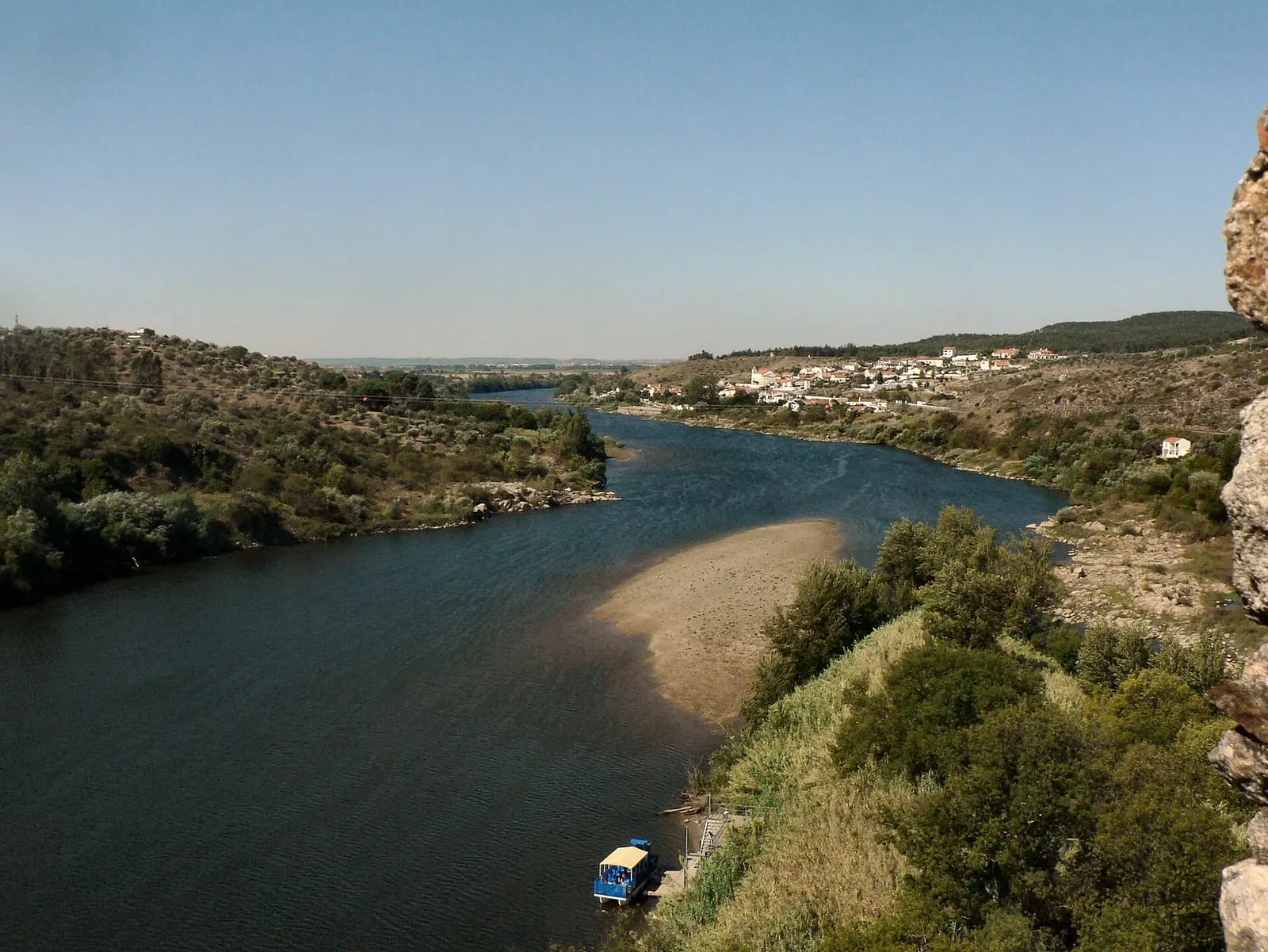
Perched on a hill overlooking the Lezíria plains and the Tagus River, Santarém is the district capital of Ribatejo and one of Portugal’s most densely historic medieval cities. Its reputation as the capital of Gothic is no recent tourist label: it reflects the extraordinary concentration of churches, tombs, and portals built between the 13th and 15th centuries, when the town frequently hosted royal courts and was a favored residence of several monarchs.
From Roman Scalabis to the Reconquista
Before becoming Santarém, the city was known as Scalabis, one of the main centers of Roman Lusitania, a crossroads of routes and a judicial capital. Its current name derives, according to tradition, from the martyr Santa Iria, whose cult became established in the region. Its strategic position along the Tagus made it a highly contested stronghold: the Muslim castle was seized by Dom Afonso Henriques in a famous night-time assault on March 15, 1147—an episode the first king himself recounted in the charter donating it to the Order of Saint Bernard.
This dominance over the river explains the layout of the upper town, organized around the former alcáçova. Today transformed into the Jardim das Portas do Sol, the walled enclosure preserves sections of ramparts and towers and offers the finest viewpoint over the Lezíria—the natural starting point for any visit.
A Museum of Gothic Stone
Santarém’s monumental ensemble stands out for its coherence and quality. The Igreja da Graça, begun around 1380 and completed in the second quarter of the 15th century, is the finest example of Flamboyant Gothic in Portugal: its rose window, carved from a single block of stone, and its intricately lace-like portal rank among the most delicate works of the style. Inside lie the mausoleums of the Meneses family, founders of the church, and the tombstone of Pedro Álvares Cabral, the navigator associated with the arrival in Brazil.
A few steps away, the Igreja de São João de Alporão—now part of the archaeological museum—blends Romanesque origins with a Gothic apse, one of the earliest applications of the style in the country. Opposite it stands the Torre das Cabaças, the town’s former clocktower. Completing the itinerary are the Igreja de Santa Maria de Marvila, famed for its 17th-century tilework, and the seminary Cathedral, already Baroque, a reminder of the city’s ecclesiastical importance.
Nowhere else in Portugal is Gothic so didactically concentrated: exploring Santarém is like leafing through, street by street, three centuries of an artistic language’s evolution.
Heart of Ribatejo
Santarém is also the gateway to Ribatejo culture, land of campinos (cattle herders), bulls, and the agricultural fair that annually gathers Portugal’s rural world. This riverine and agricultural vocation connects it to other landmarks in the region, which you can explore in the pages dedicated to Gothic architecture in Portugal and the Lisbon and Tagus Valley region.
Following the Tagus upstream, visitors will find, by the riverside, the picturesque Castelo de Almourol, built on an island by the Order of the Temple, and further on, the Convento de Cristo in Tomar, headquarters of the Templars and the Knights of Christ. Together, these sites trace an itinerary that extends Santarém’s medieval heritage throughout the river valley that gave it life.
Frequently asked questions
- Why is Santarém called the capital of Gothic?
- Santarém boasts the largest concentration of Gothic architecture in Portugal, with medieval churches and tombs built primarily between the 13th and 15th centuries, when the city was a key court and administrative center.
- Who is buried in the Church of Graça in Santarém?
- The Church of Graça houses the tomb of Pedro Álvares Cabral, the navigator credited with the Portuguese arrival in Brazil in 1500, as well as the mausoleums of the Meneses family, founders of the church.
- What are the Portas do Sol?
- They are the former enclosure of Santarém's alcáçova, now a garden-viewpoint surrounded by walls and towers, offering panoramic views over the Tagus River and the Lezíria floodplain.
Sources
Keep exploring
Heritage nearby
More places to discover from here. Approximate straight-line distances, within 50 km.