Monuments
Idanha-a-Velha Cathedral (Sé)
The ancient cathedral of Idanha-a-Velha, a Paleochristian and Visigothic basilica of Egitania in Castelo Branco district: history, architecture and visiting…
- Location
- Idanha-a-Velha, Castelo Branco
- Built
- séc. VI (sobre estruturas paleocristãs anteriores)
- Style
- Paleocristão e visigótico
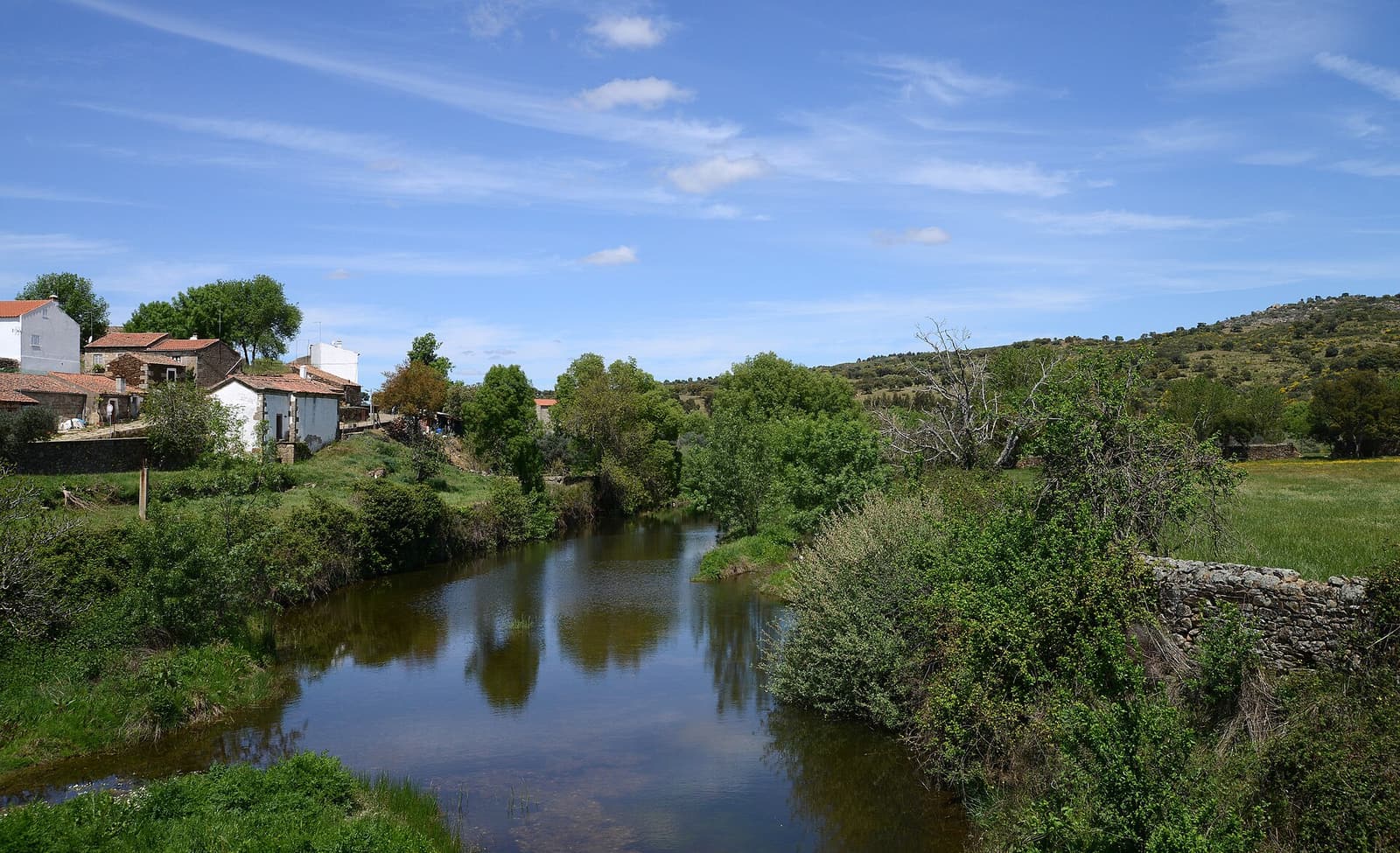
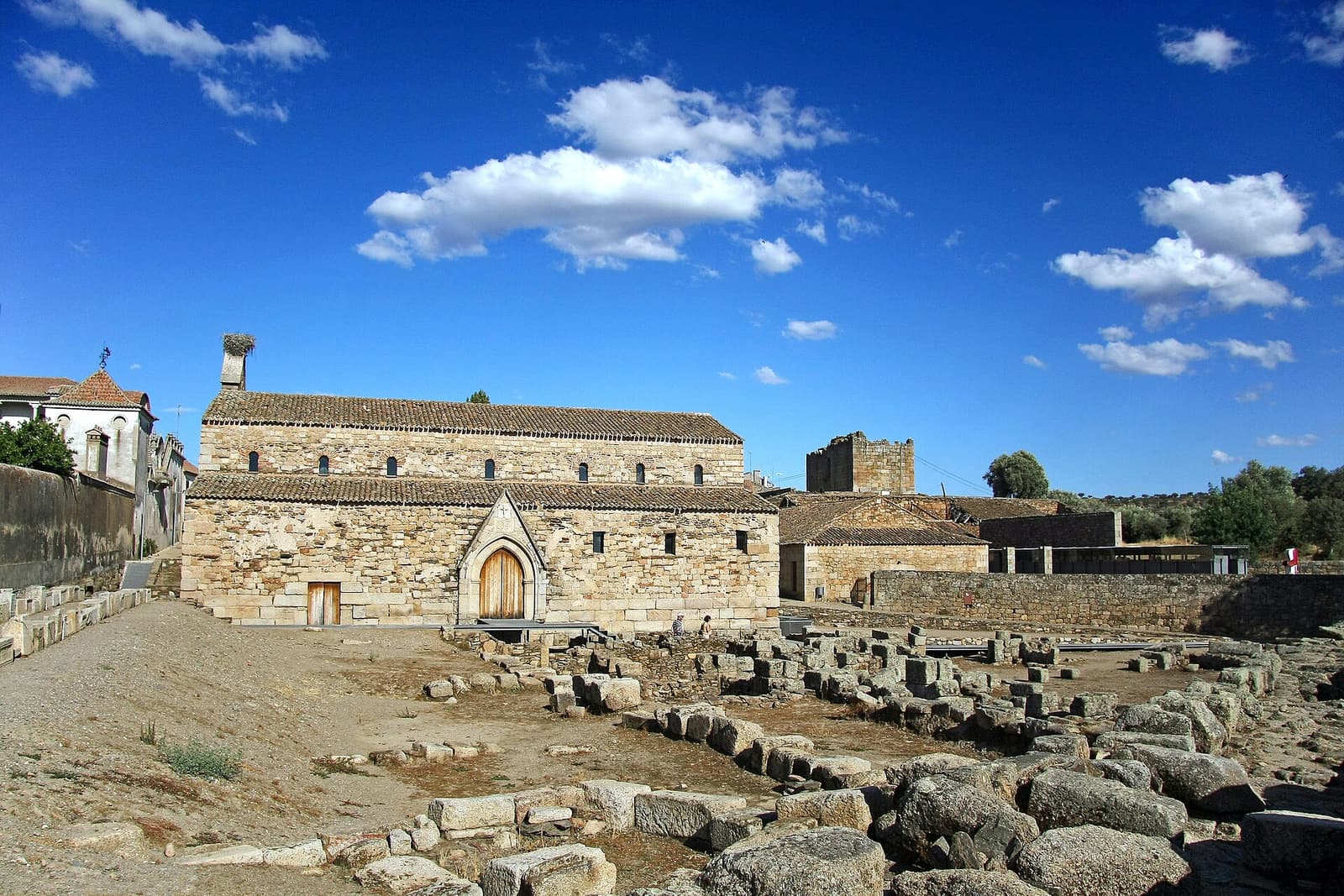
On the banks of the Ponsul stream, amidst scattered houses within Roman walls and olive groves, stands one of Portugal’s oldest Christian buildings: the ancient cathedral of Idanha-a-Velha, commonly known as Sé. Its sober, almost severe volume conceals a rare stratigraphy where Roman, Paleochristian, Visigothic, Islamic and Late Medieval layers overlap. Few monuments encapsulate so much history within such modest proportions.
From Roman Egitania to Episcopal See
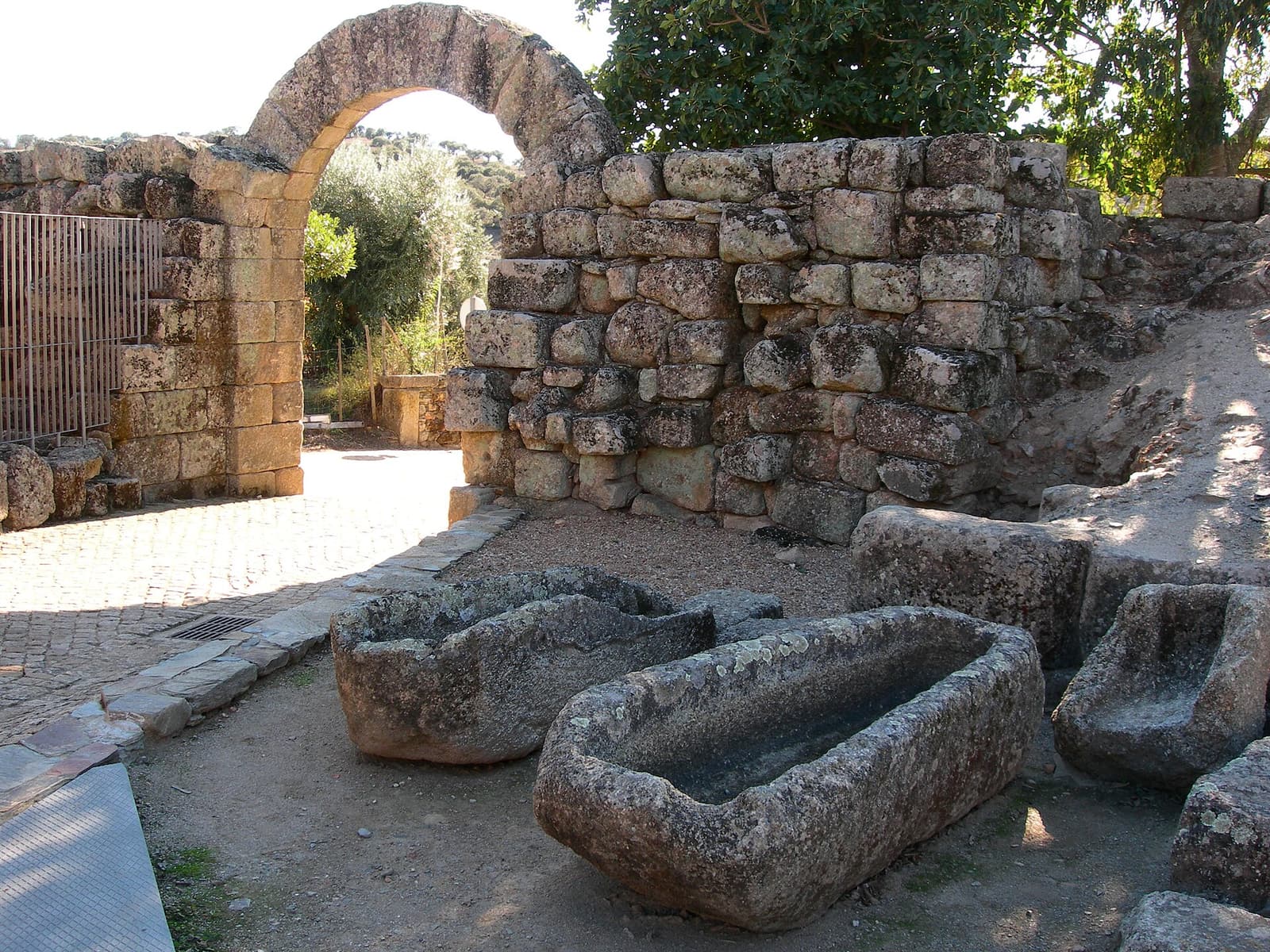
The village occupies the site of civitas Igaeditanorum, founded during Augustus’ reign and elevated to an important urban center of Lusitania. Surviving elements include Roman walls, stelae, altars and granite masonry reused in nearly all subsequent constructions. Under Visigothic rule, ancient Egitania became a prosperous bishopric seat, attested in Hispanic councils and its own coinage series — evidence of its political and religious significance. This context explains why such a small modern settlement contains a true cathedral.
The current building was erected atop a rectangular Paleochristian church with three naves. The 6th-century Visigothic basilica maintained this tripartite division, articulated by arches resting on columns whose capitals frequently repurpose Roman elements. It stands as one of the most eloquent testimonies of Visigothic art in Portugal, of which few complete examples remain in the country.
In a village of few dozen inhabitants survives, intact in its plan, the memory of a diocese that rivaled Lusitania’s greatest.
Mosque, church and museum
Following the Islamic conquest of Iberia, the temple was likely adapted into a mosque — reinforcing the building’s narrative as a continuously repurposed rather than rebuilt space. After the Reconquista, King Afonso Henriques donated the settlement to the Knights Templar in 1165 to repopulate and defend this still-unstable frontier territory. The present configuration owes much to a 16th-century remodeling under King Manuel I that regularized volumes and openings.
The interior preserves a remarkable collection of Roman and Late Antique epigraphy gathered through study and restoration campaigns, making the building both monument and small lapidary museum. The 1960s restoration largely established its current appearance while restoring legibility to its various construction phases.
Visiting the Cathedral in the historic village
The ancient cathedral is the highlight of visiting Idanha-a-Velha, one of Portugal’s oldest historic villages, where urban fabric blends with archaeological site. Visitors encounter Roman walls, Templar towers, olive presses and continuous evidence of Roman archaeology underpinning the site’s interpretation.
Compared to grand medieval cathedrals featured in Portugal’s cathedrals itinerary, Idanha-a-Velha’s distinction lies precisely in its absence of Gothic monumentality: its value resides in antiquity, functional continuity and archaeological density. Classified as a Property of Public Interest since 1956, it remains essential for understanding Late Antiquity’s transition into Portuguese territorial formation.
Frequently asked questions
- Why does Idanha-a-Velha Cathedral have such an ancient floor plan?
- Because it originates from a three-nave Paleochristian church, remodeled as a Visigothic basilica in the 6th century atop the ancient Roman civitas of Egitania. It's not a medieval cathedral in the usual sense, but one of the rarest surviving examples of Christian architecture predating the Islamic conquest in Portugal.
- Was Idanha-a-Velha Cathedral ever used as a mosque?
- Yes. After the Islamic conquest of the Iberian Peninsula, the building was adapted into a mosque, returning to Christian worship following the Reconquista when King Afonso Henriques donated the settlement to the Knights Templar in 1165.
- Does it still function as a church?
- No. It ceased religious functions in the 19th century. Today it operates as a museum space within the historical village circuit of Idanha-a-Velha, and has been classified as a Property of Public Interest since 1956.
Sources
Keep exploring
Heritage nearby
More places to discover from here. Approximate straight-line distances, within 50 km.