Typologies
Seminaries and Episcopal Palaces of Portugal
Seminaries and episcopal palaces of Portugal: the architecture of diocesan administration, from bishops' residences to Tridentine clergy training.
- Style
- Arquitetura religiosa residencial (do maneirismo ao barroco e rococó)
Where there was a see, there was a bishop; and where there was a bishop, there was a palace. In the shadow of the cathedral sees, a second family of buildings grew to serve the Church’s governance: the prelate’s residence and, later, the house where his clergy were trained. This typology encompasses episcopal palaces and seminaries — the architecture of diocesan administration, less celebrated than that of temples but essential to understanding how the Church organized Portuguese territory.
The palace: the bishop’s house and diocesan governance
The episcopal palace is the bishop’s official residence and the center of diocesan administration. Under one roof, it combined diverse functions: the prelate’s dwelling, audience halls, curia and ecclesiastical court, prison, archive, and notary office. In archdioceses, it was called archiepiscopal palace, reflecting the higher dignity of the archbishop. In scale and ostentation, these buildings stand midway between religious architecture and grand manor houses and noble residences: they were, after all, the house of a lord who was simultaneously a shepherd of souls and a temporal power.
The greatest example is the Archiepiscopal Palace of Braga, seat of Portugal’s oldest archdiocese. With an irregular floor plan, it grew through successive campaigns spanning from Gothic to revivalism, passing through Mannerism, Baroque, and Rococo — a palimpsest of centuries of ecclesiastical power. Today it houses the University of Minho’s Rectorate and the Braga Public Library, heir to the libraries of Minho’s extinct monasteries in 1834. Inside, the Episcopal Palace of Castelo Branco, built in the late 16th century, became famous less for the house than for its Baroque garden, filled with staircases, ponds, and allegorical statuary.
An episcopal palace reads like a genealogy in stone: each bishop added a wing, a chapel, a facade. Few civil buildings encapsulate so many generations of a single power institution.
The seminary: a Trent invention
Unlike the palace, which is as old as the episcopate, the seminary has a precise birth date. It was the Council of Trent that, through the decree Cum Adolescentium Aetas of 1563, required each diocese to establish its own college to train clergy — something that until then did not exist in a structured form. Portugal played an active role in this reform, through figures like D. Frei Bartolomeu dos Mártires, Archbishop of Braga, and other bishops present in the council’s final phase.
Implementation was, however, slow. Several seminaries only emerged a century after the decree, and many were housed in preexisting buildings — former colleges, extinct monasteries, or wings of the palaces themselves. The Angra Seminary, in the Azores, occupied the Convent of São Francisco; the Algarve’s was founded by D. Francisco Gomes de Avelar only in the late 18th century. This reliance on prior structures explains why the typology rarely has a unique architectural form: the seminary is, above all, a function.
A sober architecture serving reform
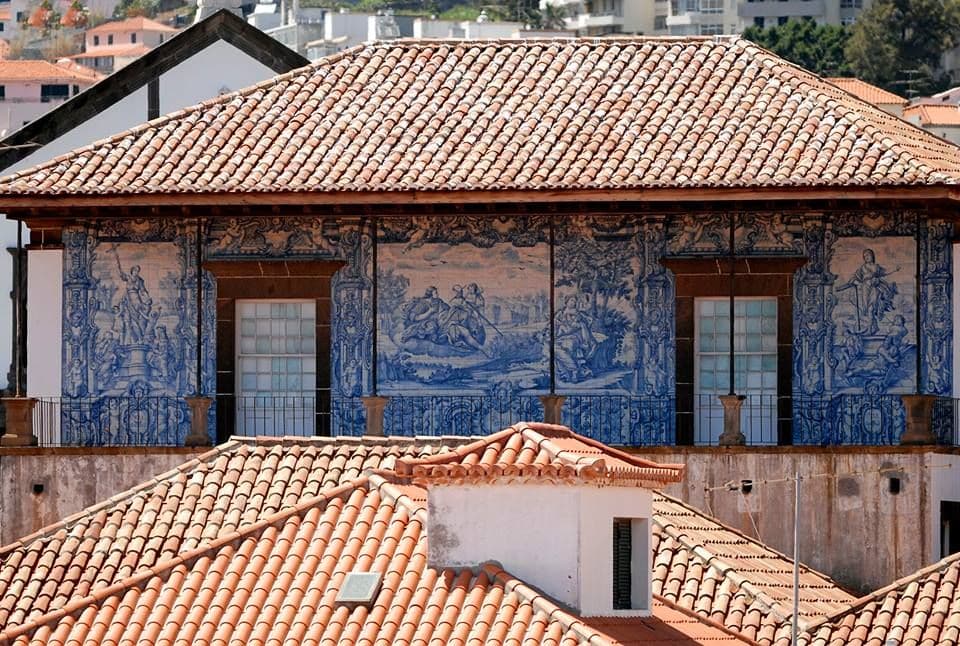
When built from scratch, palaces and seminaries adopted the language of their time: the restraint of Mannerism and plain architecture in the 16th and 17th centuries, and the greater exuberance of Baroque and Rococo in the 18th century. Regular floor plans organized around cloisters or courtyards dominate, along with long ashlar facades punctuated by windows, internal chapels, and often a grand staircase — solutions inherited from conventual architecture, of which this typology is a close relative of monasteries.
With the extinction of religious orders (1834) and, later, the separation of Church and State, many of these buildings changed用途. They became museums, libraries, archives, town halls, and universities, preserving their monumentality for new public functions. Visiting them is to explore the administrative side of religious heritage — the discreet machinery that, for centuries, kept the Church running beyond the altar.
Cathedral Sees
The head churches of dioceses, beside which the palaces rose.
TYPOLOGYMonasteries
The houses of religious orders, architectural relatives of seminaries.
TYPOLOGYManor Houses and Noble Residences
The noble residential architecture with which palaces dialogue.
THEMEReligious Heritage
The entirety of Portuguese sacred architecture and art.
Frequently asked questions
- What is an episcopal palace?
- The episcopal palace — or archiepiscopal palace in the case of an archdiocese — is the bishop's official residence and the administrative center of the diocese. It combined functions of housing, curia, audience chambers, and archives, often being the largest civil building in a cathedral city.
- Why did seminaries only emerge from the 16th century onwards?
- Because they were a creation of the Council of Trent. The decree Cum Adolescentium Aetas, approved in 1563, required each diocese to establish a seminary for clergy training. Until then, there was no dedicated and structured institution for priestly education.
- Where can one see good examples in Portugal?
- Among the most notable are the Archiepiscopal Palace of Braga, the Episcopal Palace of Castelo Branco — famous for its Baroque garden — and the former palaces and seminaries of Guarda and Porto. Many have been repurposed as museums, libraries, archives, or public services.