Places
Abrantes
Abrantes, a town of the Médio Tejo in the district of Santarém: a medieval castle above the river, the Church of Santa Maria do Castelo and a frontier historic…
- Location
- Abrantes, Santarém
- Built
- séc. XII (castelo)
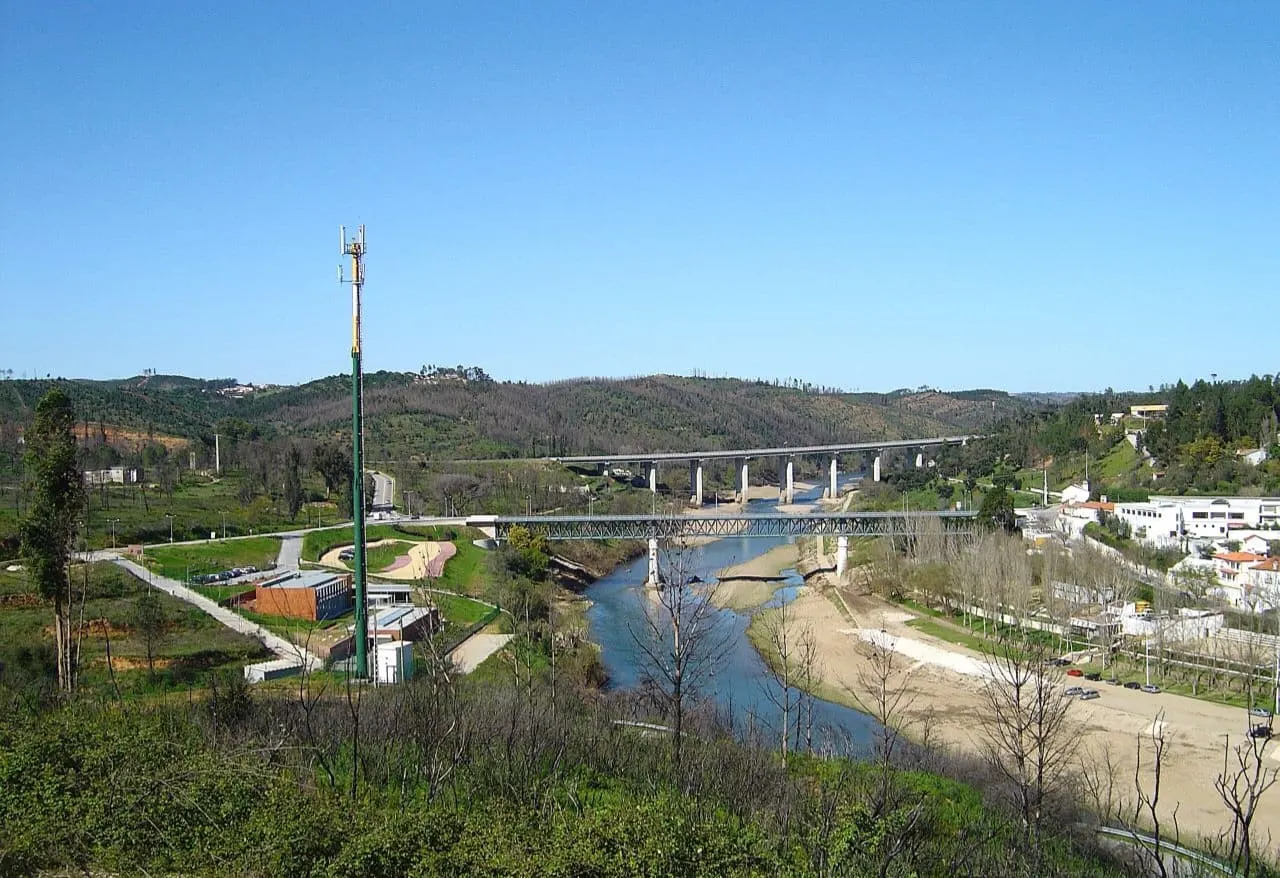
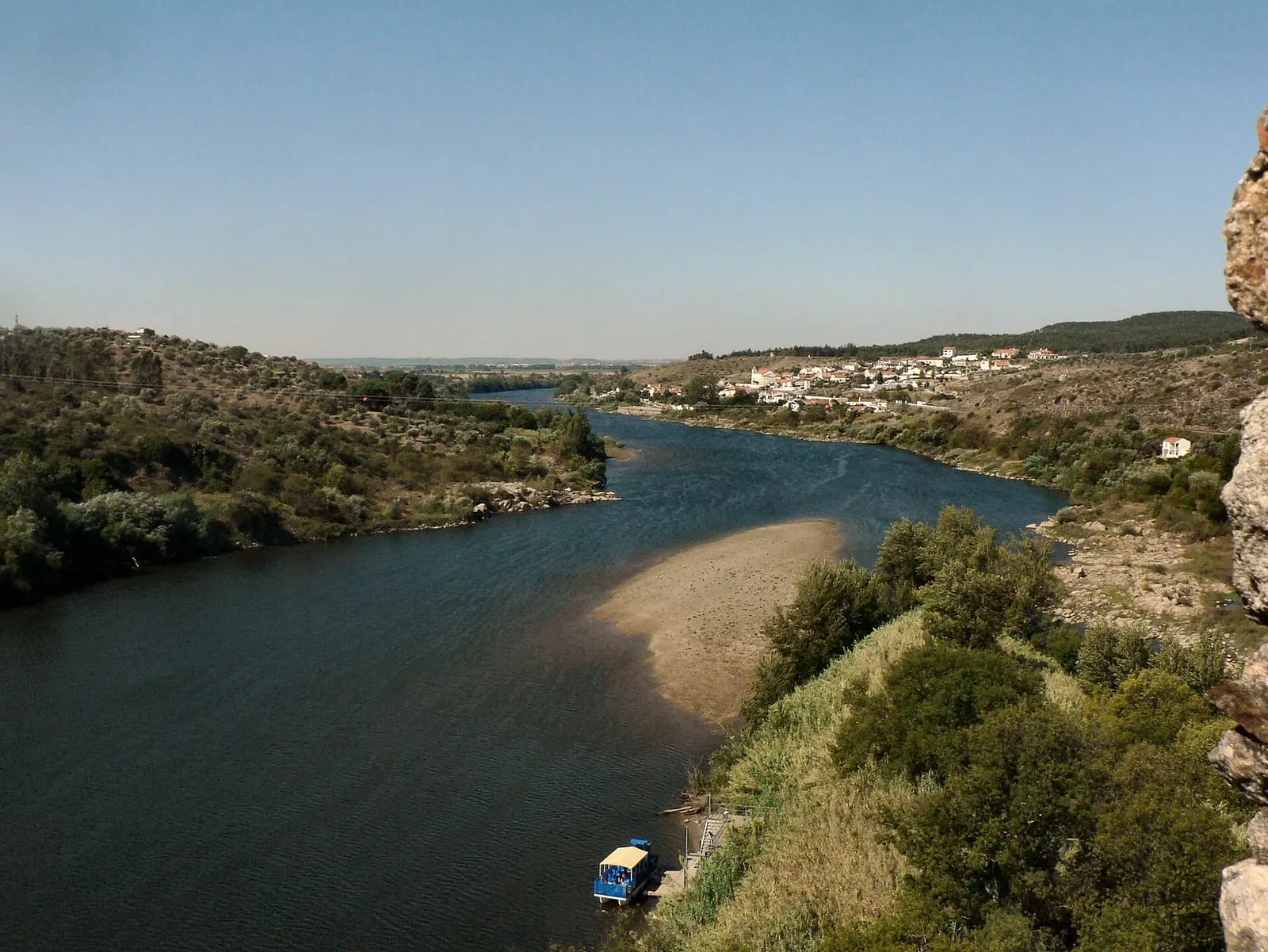
Rising on a hill that commands the valley of the Tagus, Abrantes is one of the most strategic historic towns of the Médio Tejo. Its position — guarding one of the few safe crossings of the river between Lisbon and the frontier of the Beira — made it, over the centuries, a military key to Portuguese territory. The seat of a municipality in the district of Santarém, its white houses tiered along the slope preserve the memory of a frontier, a stronghold and a river port.
From the castle to the Tagus frontier
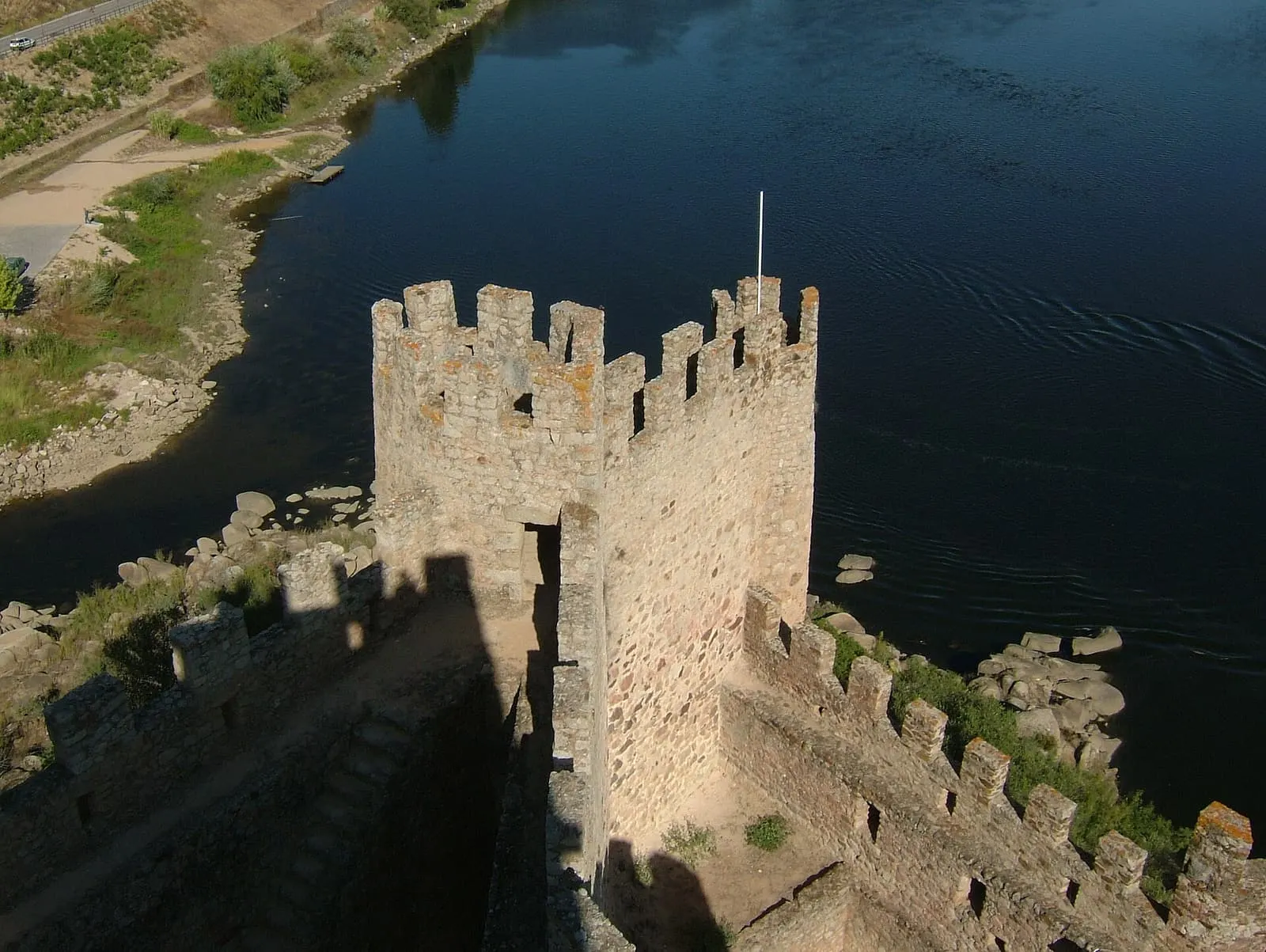
The occupation of the hill goes back to prehistory and Antiquity, but it is with the formation of the kingdom that Abrantes gained its decisive role. Tradition attributes the conquest of the settlement to Afonso Henriques in the mid-twelfth century; in 1173 the monarch granted the castle and its vast district to the Order of Santiago, and in 1179 the first charter was issued, a model for the settlement and defence of the line of the Tagus. The castle, with its enclosure, its keep and the Church of Santa Maria within, became the nerve centre of a defensive system that controlled the middle course of the river, working together with positions such as the emblematic Castelo de Almourol, raised on an islet upstream.
Whoever controlled Abrantes controlled the crossing of the Tagus: through here passed armies, goods and the very idea of a frontier between the Christian North and the South still to be reconquered.
Throughout the Middle Ages the town prospered as an entrepôt for river trade, a point of loading and unloading for the goods that travelled down the river to Lisbon. In 1471, D. Lopo de Almeida was named the first Count of Abrantes, and the Almeida family, chief alcaides of the town, would leave a deep mark on its heritage.
The Church of Santa Maria do Castelo
Within the walls stands the Church of Santa Maria do Castelo, presumably built in the early thirteenth century and rebuilt between 1433 and 1451 by order of D. Diogo Fernandes de Almeida, after an earthquake had damaged it. Classified as a National Monument in 1910, it holds a remarkable group of Gothic tombs from the fifteenth and sixteenth centuries belonging to the Almeida lineage — among them those of the counts and of the first marquis of Abrantes — as well as azulejo work and gilded carving of great quality.
From 1921 to 2021 the church housed the Museu Regional D. Lopo de Almeida, one of the oldest museums in the country. After the collection was transferred to the Iberian Museum of Archaeology and Art of Abrantes, the space was redisplayed as the Pantheon of the Almeidas, returning prominence to the funerary ensemble that distinguishes it.
A stronghold in the Peninsular War
The military vocation of Abrantes endured into the Napoleonic era. In November 1807, the French general Jean-Andoche Junot occupied the town and made it the base of his operations in the first invasion; the following year Napoleon would reward him with the title of Duke of Abrantes. With the Convention of Sintra, in 1808, the place returned to Portuguese control. The strategic importance of the position remained significant within the framework of the defensive lines of the Tagus, and the castle was later the object of works that adapted part of its structures to modern military uses.
Today, the walled crown offers one of the broadest viewpoints over the Médio Tejo. From here the visitor can extend the itinerary along the river, descending to Constância, at the confluence with the Zêzere, or climbing to the Templar lands of Tomar. As the head of the old district, Abrantes is fully part of the heritage of the region of Lisbon and the Tagus Valley, of which it forms one of the historic gateways to the interior.
Frequently asked questions
- Where is Abrantes?
- Abrantes lies in the district of Santarém, in the Médio Tejo sub-region, on the right bank of the River Tagus, on a hill that commands the valley at around 150 metres above sea level.
- Who conquered Abrantes from the Moors?
- Tradition attributes the conquest of Abrantes to Afonso Henriques, in the mid-twelfth century, in the context of the Christian expansion along the line of the Tagus. In 1173 the king granted the castle and its district to the Order of Santiago.
- Why is there a French Duke of Abrantes?
- During the Peninsular War, General Jean-Andoche Junot occupied the town in 1807. Napoleon rewarded him with the title of Duke of Abrantes in 1808, a title that passed to his descendants.
Sources
Keep exploring
Heritage nearby
More places to discover from here. Approximate straight-line distances, within 50 km.