Places
Almeida
Almeida, a fortified town in the district of Guarda, in the Beira Alta region: a twelve-pointed star-shaped bastioned fortress and one of the Historic Villages…
- Location
- Almeida, Guarda
- Built
- 1641–séc. XVIII
- Style
- Fortificação abaluartada
Perched on a plateau in the Beira Alta, some twelve kilometres from the Spanish border, Almeida is one of the most remarkable fortified towns in Europe. Its name immediately evokes the star-shaped bastioned fortress that surrounds it completely — a walled perimeter of more than two and a half kilometres that makes this locality in the district of Guarda one of the most singular places in the Portuguese interior.
From medieval frontier to fortified stronghold
The site was contested between Christians and Muslims and, later, between the kingdoms of Portugal and León. The settlement became definitively Portuguese with the Treaty of Alcañices (1297), and King Dinis granted it a charter and rebuilt the castle, the centrepiece of the frontier’s defence. For centuries, Almeida was an advanced sentinel on an ever-tense border.
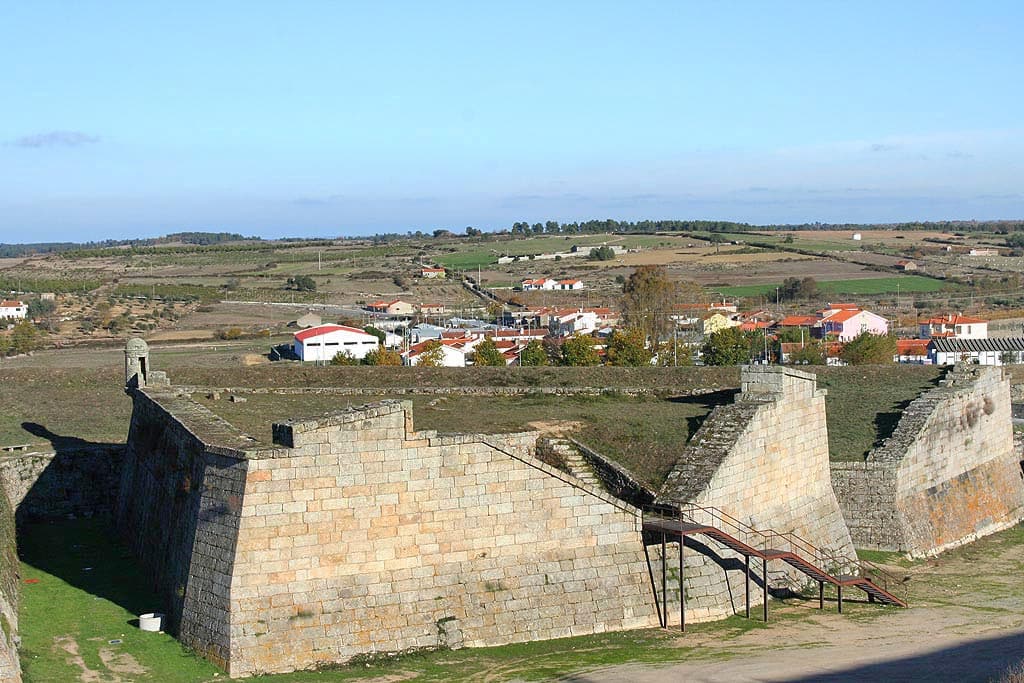
The town we know today, however, arose from a later transformation. After the Restoration of 1640, the war with Spain demanded defences capable of resisting modern artillery. From 1641 onwards, a fortified stronghold with a bastioned layout was raised around the old castle, with six bastions and six ravelins, in the manner of the French-style military engineering associated with Vauban. The result is the famous twelve-pointed star plan.
In a bastioned fortress there is no high wall to scale: there are angles. Each bastion covers the flank of the next with fire, turning the entire perimeter into a network of crossfire with no blind spots.
The catastrophe of 1810
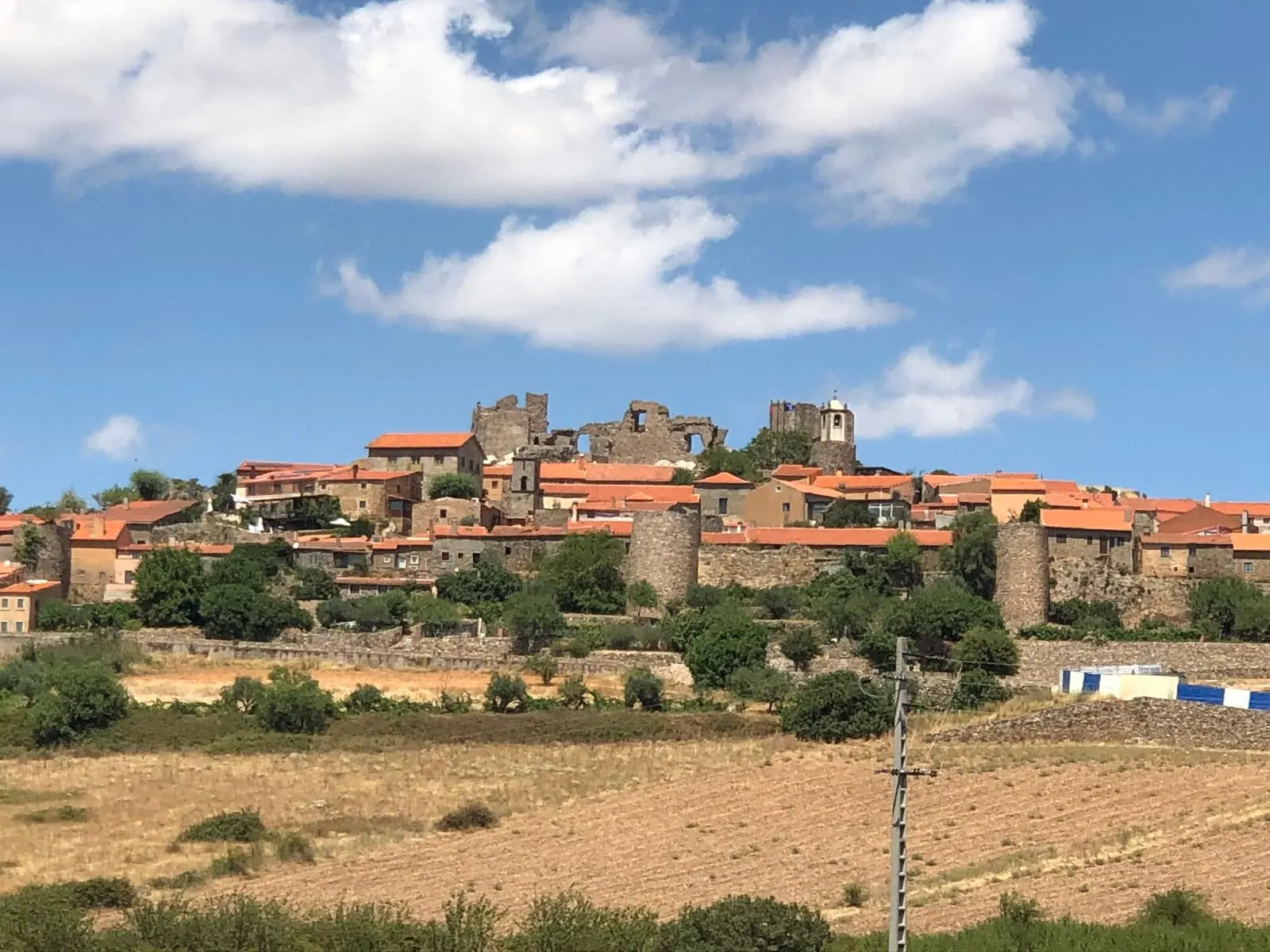
The most dramatic chapter in Almeida’s history belongs to the Peninsular War. In the summer of 1810, the Napoleonic forces laid siege to the stronghold. On 26 August, a French shell struck the main powder magazine, next to the castle: the explosion razed the medieval keep, killed hundreds of defenders and destroyed much of the housing, forcing an almost immediate surrender. The French occupied the town until 1811, the year in which they evacuated it after the Allied campaign. The ruins of the castle, gutted by the blast, remain as a silent memorial to that disaster — a testimony that can be read at the medieval castle of Almeida.
A living fortified ensemble
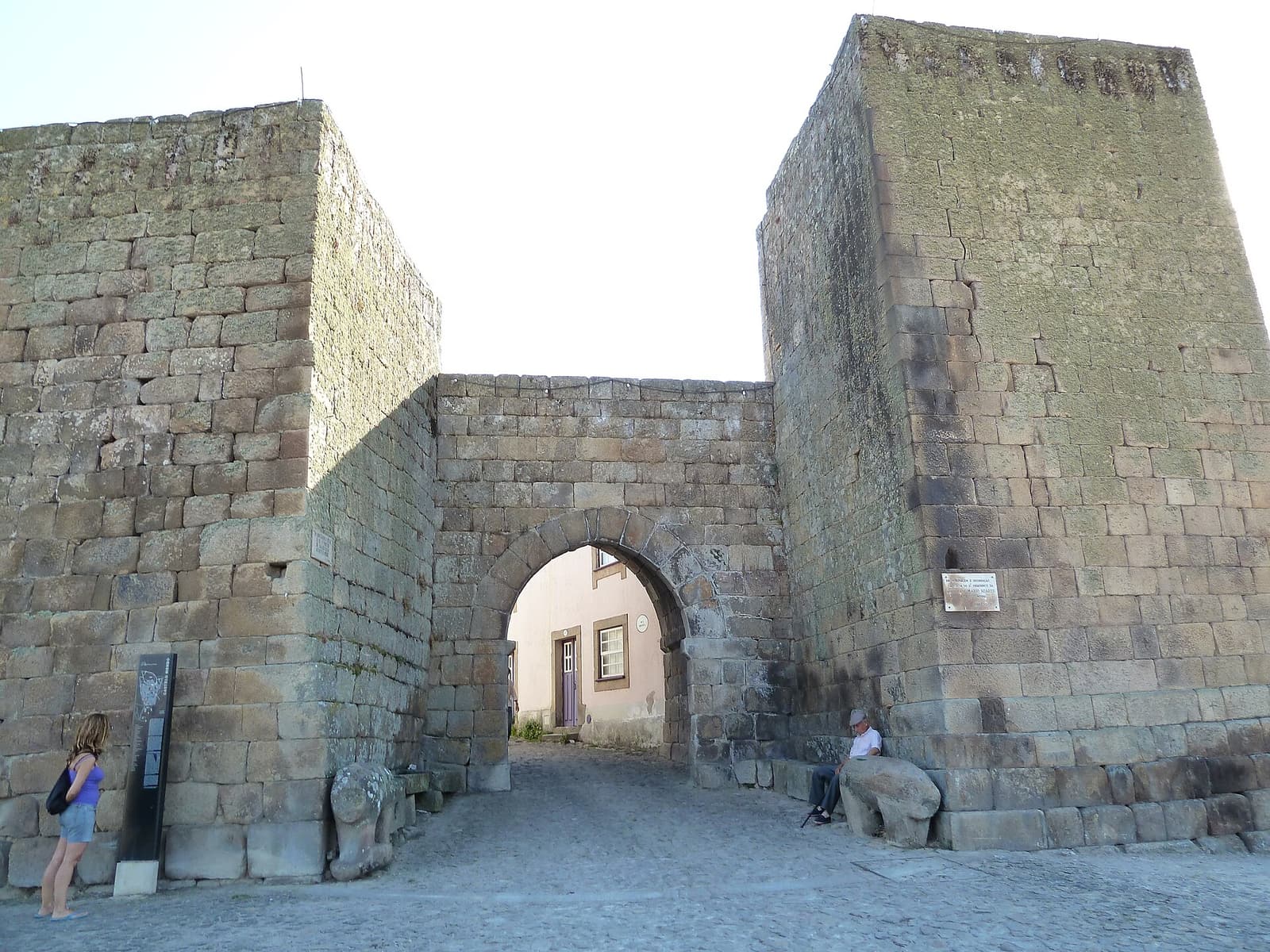
Within its walls, Almeida preserved its urban fabric of barracks, quarters and regular streets, a legacy of its military function. Monumental gates, vaulted casemates and the eighteenth-century powder magazine make up one of the most complete examples of bastioned fortification in the country, part of the Route of the Bastioned Fortresses of the Frontier.
Classified as a National Monument and part of the network of the Historic Villages of Portugal, Almeida shares with neighbours such as Castelo Rodrigo the frontier vocation that shaped this whole landscape. Its casemates — vaulted underground galleries that served as barracks, store and shelter during bombardments — are among the most extensive in the country and show the extent to which everyday life was organised around war.
Today, far from the threats that raised it, Almeida lives above all on its heritage and military memory. The double tunnel gates, the moat, the grassed ravelins and the low houses within the walls offer the visitor a rare and almost intact reading of the military urbanism of the seventeenth and eighteenth centuries. To visit it is to trace, from bastion to bastion, the history of the defence of the Portuguese frontier.
Frequently asked questions
- Why does the fortress of Almeida have the shape of a twelve-pointed star?
- The bastioned layout, with six bastions and six ravelins, multiplies the angles of crossfire, eliminating blind spots and allowing the attacker to be raked with flanking fire. Seen from the air, this polygonal perimeter traces out a twelve-pointed star.
- What happened at Almeida during the Peninsular War?
- In August 1810, during the French siege, a shell set fire to the main powder magazine, next to the medieval castle. The devastating explosion killed hundreds of defenders and forced the stronghold to surrender. The French did not abandon Almeida until 1811.
- Is Almeida one of the Historic Villages of Portugal?
- Yes. Almeida is part of the network of the Historic Villages of Portugal, distinguished for its fortified ensemble and for the historic houses preserved within its walls.
Sources
Keep exploring
Heritage nearby
More places to discover from here. Approximate straight-line distances, within 50 km.