Monuments
Água de Prata Aqueduct (Évora)
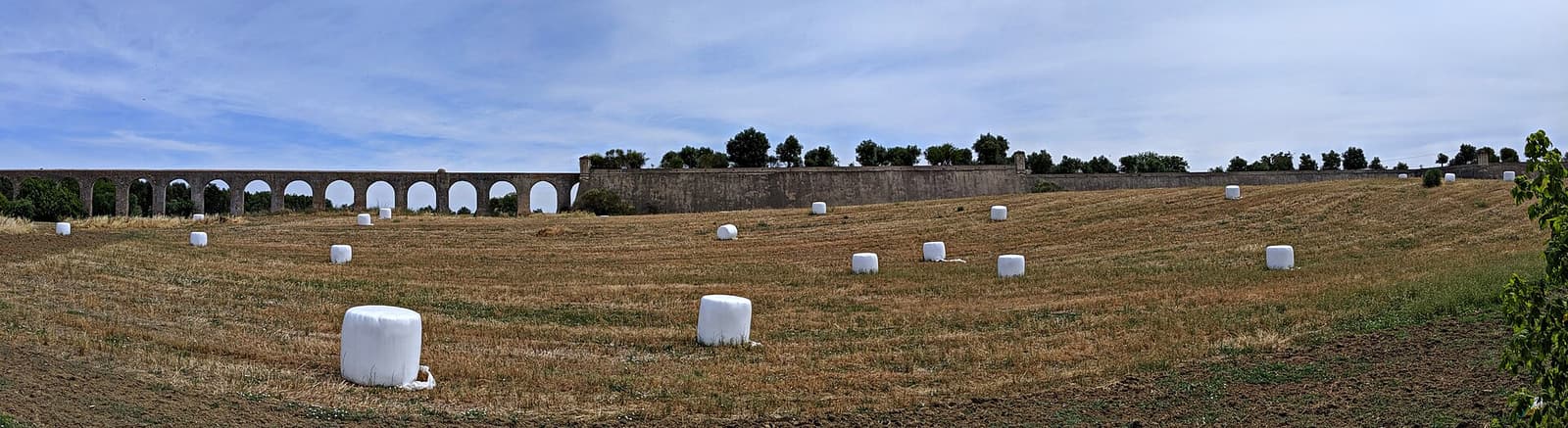
A sixteenth-century aqueduct by Francisco de Arruda that carries water to Évora over some 18 km, penetrating into the houses of the historic centre.
- Location
- Évora, Évora
- Built
- 1531–1537
- Style
- Renascença
The Água de Prata Aqueduct is one of the most remarkable works of hydraulic engineering of the Portuguese Renaissance. Built between 1531 and 1537 on the initiative of King João III, it carried drinking water from springs lying to the north-west into the centre of Évora, over a course of around 18 kilometres. It was inaugurated on 28 March 1537, completing an undertaking finished in just six years — an extraordinary pace for the scale of the work.
A remedy for the city’s thirst
In the first decades of the sixteenth century, the water supply to Évora was plainly inadequate, above all in the summer months. The city, then one of the most important in the kingdom and a frequent residence of the court, had suffered successive health crises, including outbreaks of plague in 1495, 1509 and 1523. The construction of the aqueduct answered this chronic shortfall, ensuring a steady flow that fed public fountains and conduits scattered throughout the houses.
The name “Água de Prata” (Silver Water) derives from the clarity of the springs that fed the system, and not, as is sometimes supposed, from the cost of the project. The reputation of the work was such that Luís de Camões evoked it in Os Lusíadas, a sign of the place it held in the sixteenth-century imagination.
The hand of Francisco de Arruda
The design and direction of the work fell to Francisco de Arruda, a royal architect who had worked on the fortifications of North Africa and who, together with his brother Diogo, is associated with some of the most striking achievements of the period. At Évora, Arruda devised a layout adapted to the Alentejo terrain: the aqueduct runs mostly at ground level or in underground channels, rising into arcades only where the ground demanded it.
The most celebrated stretch is precisely the one where the arcade plunges into the city, entering along the Rua do Cano: over the centuries, houses, shops and workshops settled literally beneath and between the arches, fusing the hydraulic structure with the urban fabric.
This episode — dwellings colonising the infrastructure — is rare in European heritage and gives the monument a living character, far from contemplative ruin. On reaching the city, the water was distributed from a monumental fountain, the Caixa de Água, near the square of the Porta de Avis.
Listing and relationship with the Roman heritage
The Água de Prata Aqueduct has been classified as a National Monument since 1910 and forms part of the perimeter of the Historic Centre of Évora, inscribed on the UNESCO World Heritage list in 1986. Some argue that Arruda’s work made use, in part, of the course of a Roman-era conduit, when the city was Ebora Liberalitas Iulia — a plausible hypothesis, given the Roman past evident in the Roman Temple of Évora, but one that lacks archaeological confirmation.
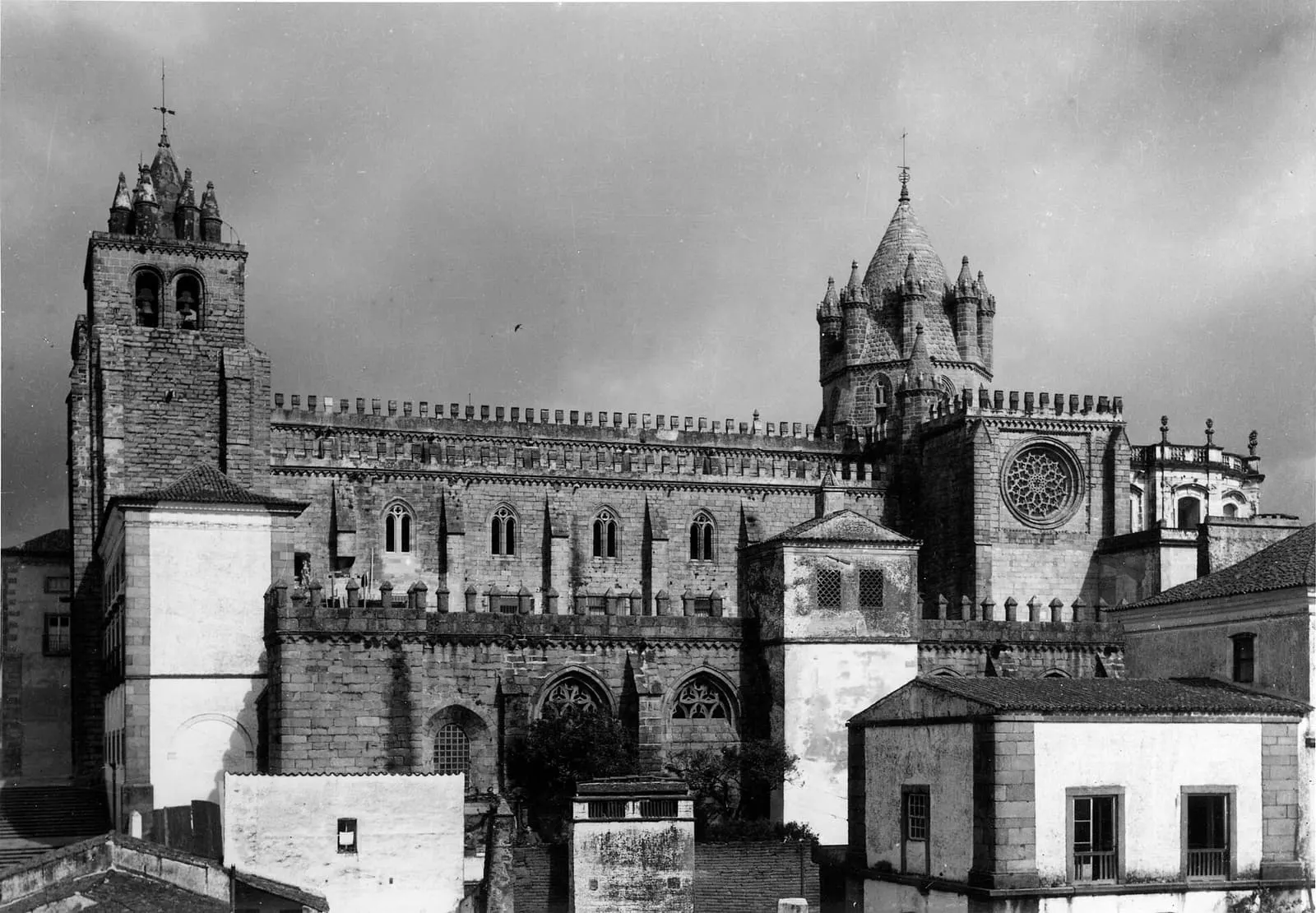
Set within an urban ensemble of exceptional coherence, it converses with other landmarks of Évora’s heritage, such as the Évora Cathedral, and belongs to the long tradition of Portuguese aqueducts that also includes the monumental Amoreira Aqueduct in Elvas. More than a picturesque curiosity, the Água de Prata remains a functional testimony to Renaissance ingenuity: part of the system continues to operate, making it one of the few sixteenth-century aqueducts still in use in Europe.
Frequently asked questions
- Who ordered the Água de Prata Aqueduct to be built?
- It was commissioned by King João III, who in 1531 charged the royal architect Francisco de Arruda with resolving the water shortage in Évora.
- How long is the aqueduct?
- It runs for about 18 km, drawing water in the area of Graça do Divor, to the north-west of Évora, and conveying it to the heart of the city.
- Is the aqueduct part of the World Heritage?
- Yes. Although classified as a National Monument since 1910, it forms part of the Historic Centre of Évora, inscribed on the UNESCO list in 1986.
Sources
Keep exploring
Heritage nearby
More places to discover from here. Approximate straight-line distances, within 50 km.