Monuments
Santa Clara Aqueduct (Vila do Conde)
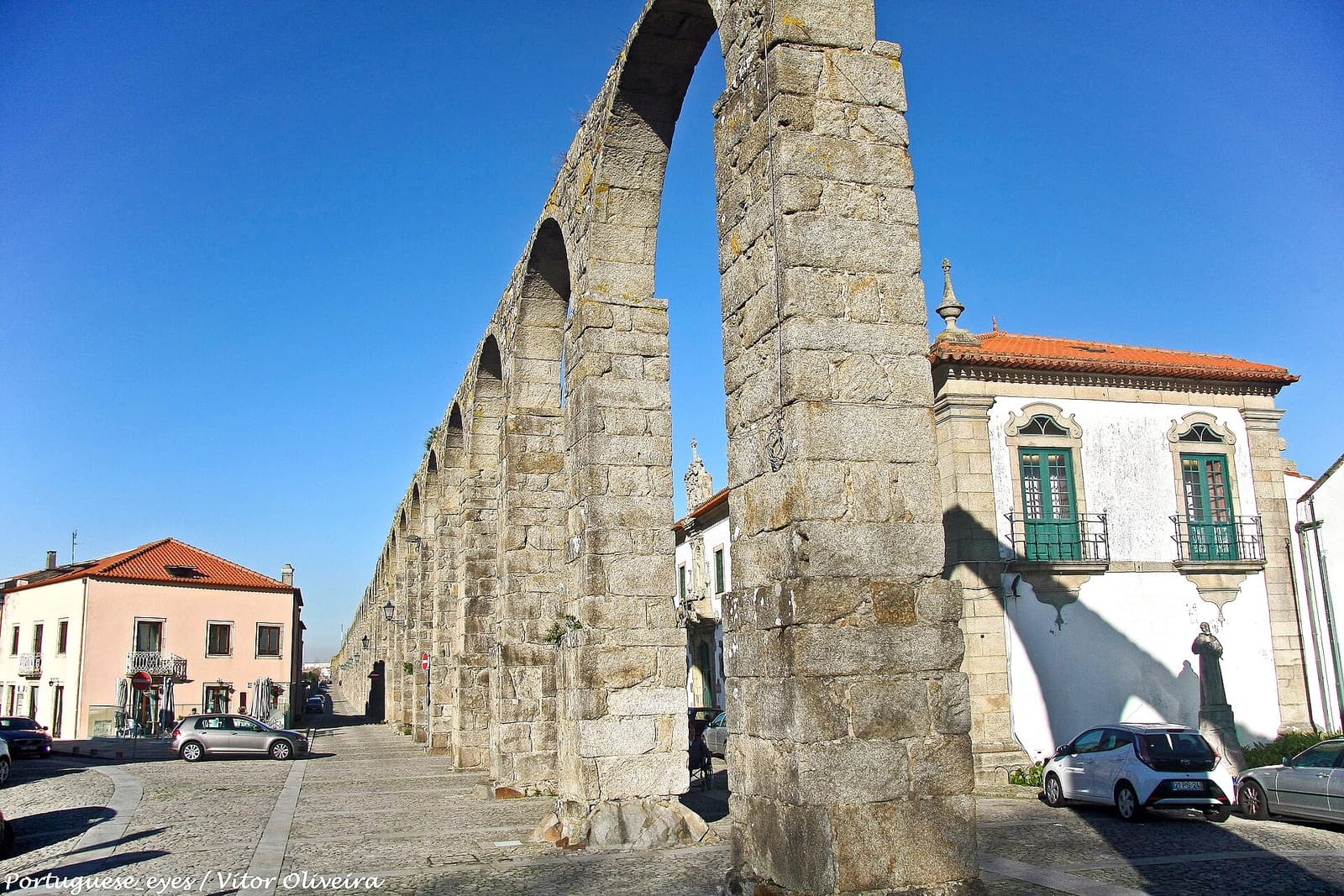
Baroque Santa Clara Aqueduct in Vila do Conde, which supplied the convent with water from Terroso, in Póvoa de Varzim. A National Monument since 1910.
- Location
- Vila do Conde, Porto
- Built
- 1705–1714
- Style
- Barroco
The Santa Clara Aqueduct, in Vila do Conde, is one of the most remarkable Baroque hydraulic works in the north of Portugal. It was raised in the early eighteenth century to carry water to the Convent of Santa Clara, drawing it from a spring at Terroso, in the neighbouring municipality of Póvoa de Varzim, several kilometres away. Its long arcade, which still crosses the fields and streets of the region today, has become the city’s emblem.
History and construction
The wish to provide the convent with its own water supply went back to the first quarter of the seventeenth century, but the earliest attempts, poorly calculated in their course and gradient, were eventually abandoned. The work we know today was resumed methodically in December 1705 and completed in 1714, driven by the Poor Clare community and its abbess.
The result was an artificial channel of great length, borne on a succession of stone arches whose height and width diminished as they approached the convent, following the slope of the terrain. Local tradition set the number of its arches at 999 — a figure of strong symbolic resonance, often repeated but hard to verify. The most careful studies point to more than nine hundred arches in the original course, of which a substantial part still survives, over a stretch of about five to six kilometres. For this length it is usually cited as one of the longest aqueducts in the country.
Features and classification
Built entirely of dressed stone, the aqueduct belongs to the world of the great hydraulic undertakings that, between the sixteenth and eighteenth centuries, brought water to Portuguese convents, monasteries and towns. Its function was at once practical and symbolic: to ensure the sustenance of a large religious community and to affirm the prestige of the convent that had ordered it built. On arrival, the water fed fountains and the cloister, becoming part of the nuns’ daily life.
The monument was classified as a National Monument by the decree of 16 June 1910, forming part of the first great wave of protection of Portuguese architectural heritage. Today, partly followed by footpaths, it forms a scenic route linking Vila do Conde to Terroso and a living testimony to Baroque engineering.
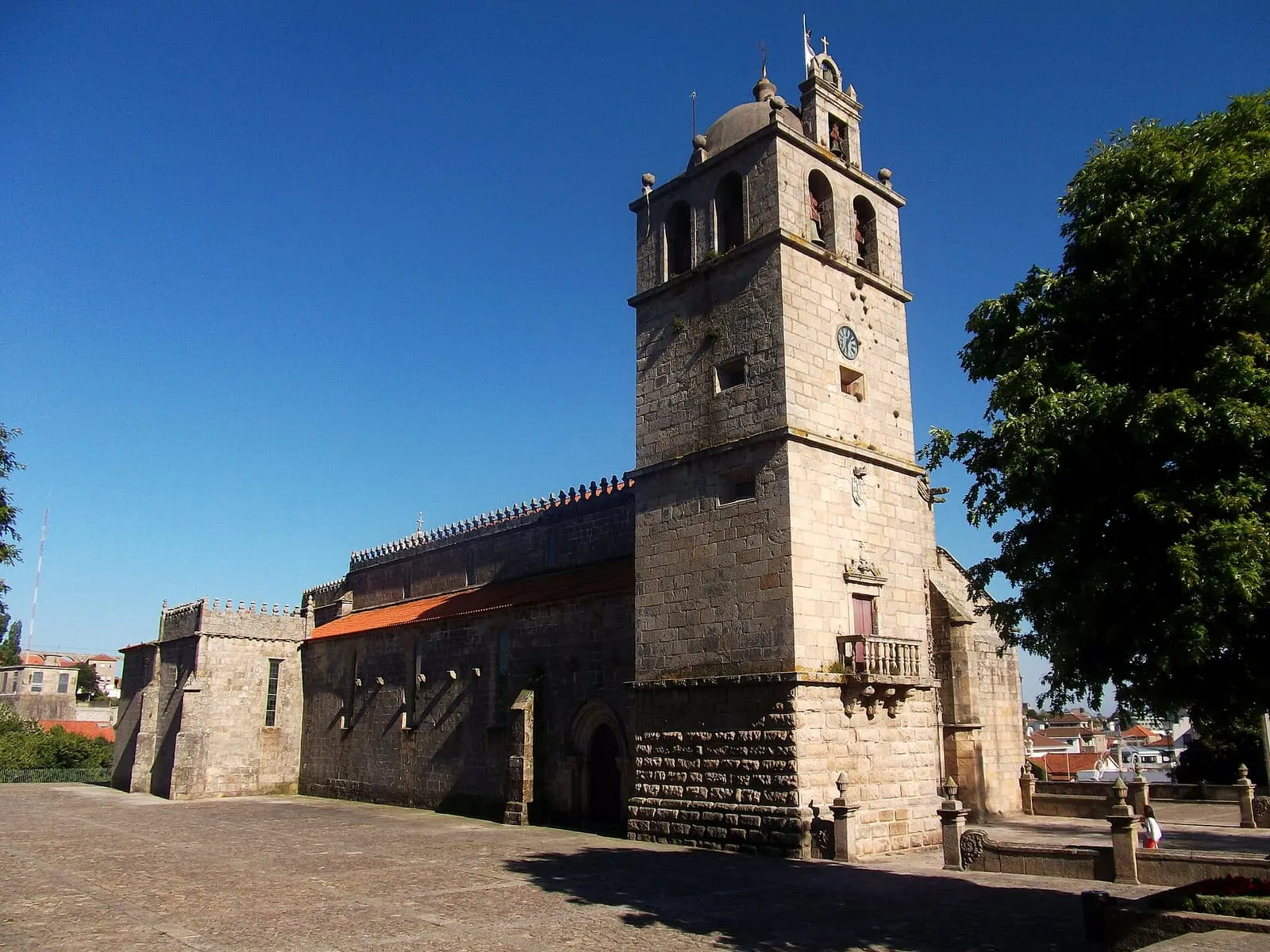
It belongs to the long history of Portuguese aqueducts, alongside more famous works such as the Águas Livres Aqueduct in Lisbon. In Vila do Conde, it converses with the rest of the city’s monumental core, of which the Mother Church of Vila do Conde forms part, and helps us understand the weight that the Convent of Santa Clara had in shaping the urban and rural landscape of the northern region.
Frequently asked questions
- What was the Santa Clara Aqueduct used for?
- It was built to supply water to the Convent of Santa Clara in Vila do Conde, carrying it from a spring at Terroso, in the municipality of Póvoa de Varzim, several kilometres away.
- How many arches does the Vila do Conde aqueduct have?
- Tradition ascribes it 999 arches, a figure that is symbolic rather than precise. Later studies point to more than nine hundred arches, a good part of which survive today, over a stretch of about five to six kilometres.
- Is the aqueduct classified as a National Monument?
- Yes. It was classified as a National Monument by the decree of 16 June 1910, forming part of the first great list of Portuguese heritage classifications.
Sources
Keep exploring
Heritage nearby
More places to discover from here. Approximate straight-line distances, within 50 km.