Monuments
Mother Church of Vila do Conde
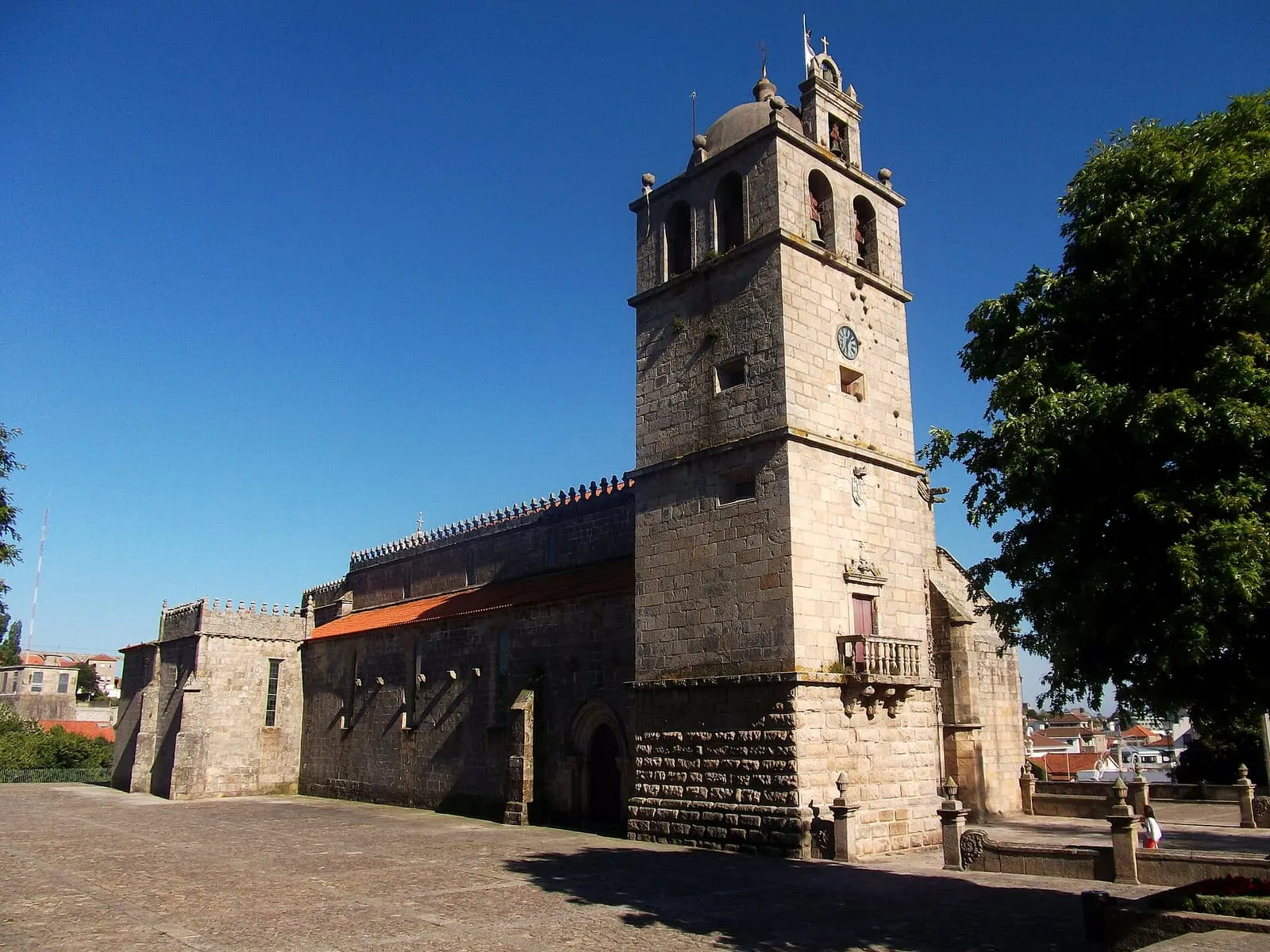
The Mother Church of Vila do Conde, a Manueline church dedicated to Saint John the Baptist, with its celebrated portal and sixteenth-century tower, in the…
- Location
- Vila do Conde, Porto
- Built
- 1496–1515
- Style
- Manuelino
The Mother Church of Vila do Conde, dedicated to Saint John the Baptist, rises at the high point of the city’s historic centre, in the district of Porto. It is one of the most representative churches of the Manueline style in northern Portugal and the most emblematic monument of this riverside town on the Ave. Classified as a National Monument since 1910, the church distils, in the stone of its portals and vaults, the exuberant taste of the reign of Manuel I and Vila do Conde’s connection to the sixteenth-century maritime epic.
History and construction
Work began in 1496, on the site where an earlier mother church consecrated to Saint John the Evangelist had stood, beside the old nucleus of the monastery of Santa Clara. The passage of Manuel I through Vila do Conde, on pilgrimage to Santiago de Compostela, awakened royal interest in the town and spurred the progress of the works at the start of the sixteenth century.
Construction continued over several decades and through successive master masons of Castilian and Biscayan origin — among them João de Rianho, Sancho Garcia and Rui Garcia de Penagós — culminating in the presence of João de Castilho, who worked in the town around 1511–1513, before earning renown at the Jerónimos Monastery and the Convent of Christ. The main body was completed around 1514–1515, but the ensemble only acquired its definitive silhouette in 1573, when the quadrangular bell tower was raised, attributed to João Lopes the Elder.
Architecture and decoration
The church’s most celebrated feature is the main portal, one of the richest pieces of Manueline sculpture in the country. The decorative profusion interweaves armillary spheres, the Cross of Christ, vegetal motifs and nautical references evoking the Age of Discovery, in a register that brings the late Gothic close to the early Renaissance. The heavily worked crowning of the porch is likewise attributed to the circle of João de Castilho.
Inside, with three naves, the Manueline vocabulary continues in the arches of the chapels — above all in the transept —, in the baptismal font and in the ribbed vaults of the chancel and the apsidal chapels. The gilded woodwork and the seventeenth- and eighteenth-century altarpieces later superimposed a Baroque layer onto this sixteenth-century core, bearing witness to the continuity of worship across the centuries.
Setting and heritage
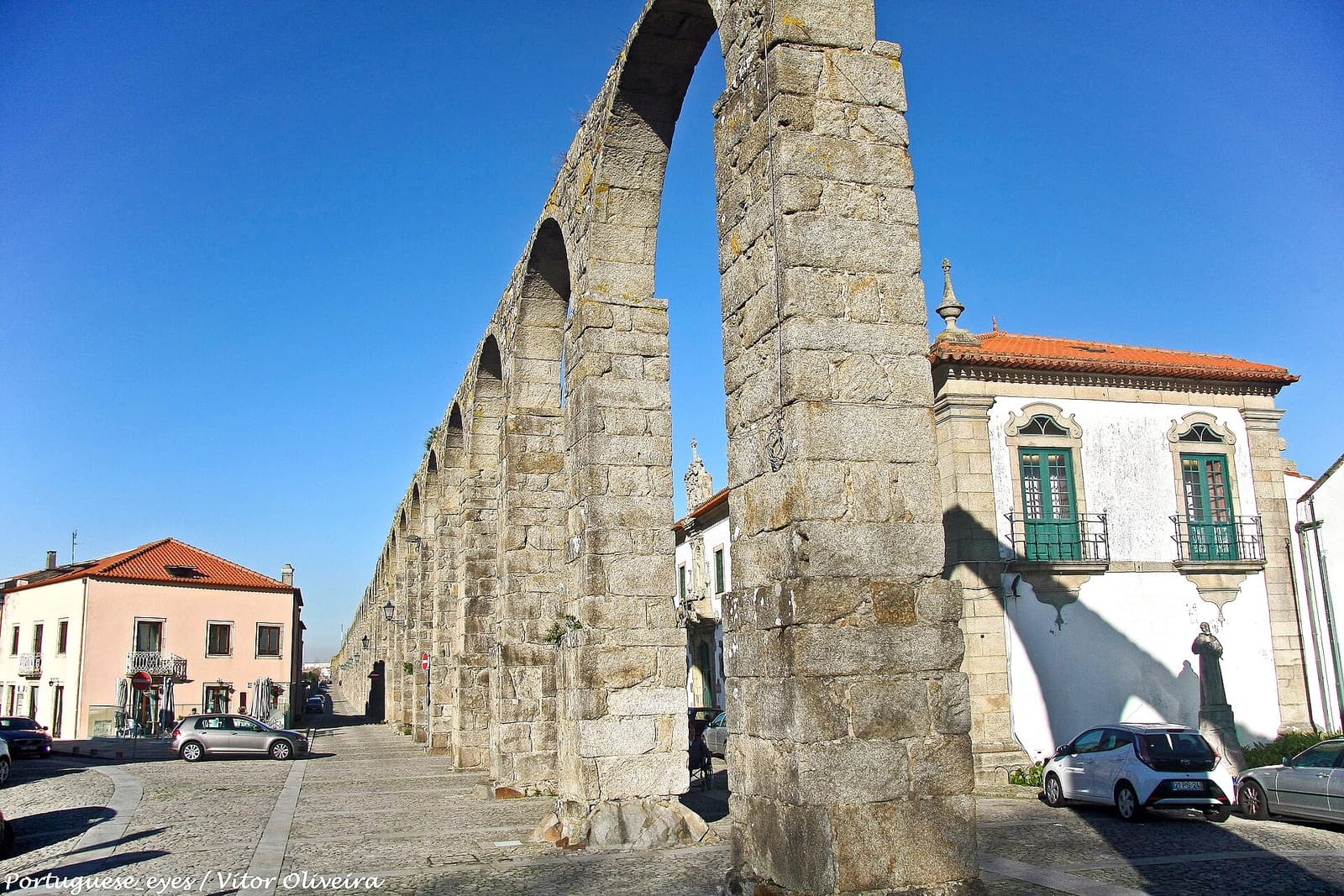
The Mother Church shares the hilltop with the Aqueduct of Vila do Conde, the long eighteenth-century structure that supplied the neighbouring Convent of Santa Clara and which today is one of the city’s calling cards. Together, church and aqueduct define the monumental front that dominates the urban landscape.
Part of the network of mother churches of the Minho coast, its language is in dialogue with other churches of the region, such as the Romanesque Church of São Pedro de Rates, highlighting the wealth of the religious heritage of the North. It remains the seat of the parish and an active place of worship, combining liturgical function with historical and artistic value.
Frequently asked questions
- To which saint is the Mother Church of Vila do Conde dedicated?
- It is dedicated to Saint John the Baptist, the parish's patron, and is therefore also known as the Church of Saint John the Baptist.
- When was the Mother Church of Vila do Conde built?
- Construction began in 1496 and the main body was completed around 1514–1515. The bell tower was added in 1573.
- Is the Mother Church of Vila do Conde a National Monument?
- Yes. It has been classified as a National Monument since 1910 and forms part of the most important heritage ensemble of the city's historic centre.
Sources
Keep exploring
Heritage nearby
More places to discover from here. Approximate straight-line distances, within 50 km.