Monuments
Alcácer do Sal Castle
Alcácer do Sal Castle, a former Muslim citadel overlooking the Sado in Setúbal: history, seat of the Order of Santiago, pousada and archaeological crypt.
- Location
- Alcácer do Sal, Setúbal
- Built
- séc. VIII–XII (alcáçova islâmica)
- Style
- Arquitetura militar islâmica
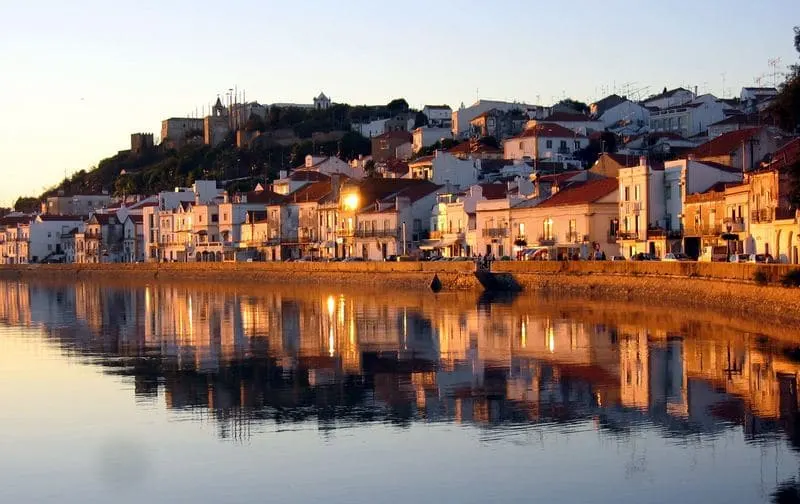
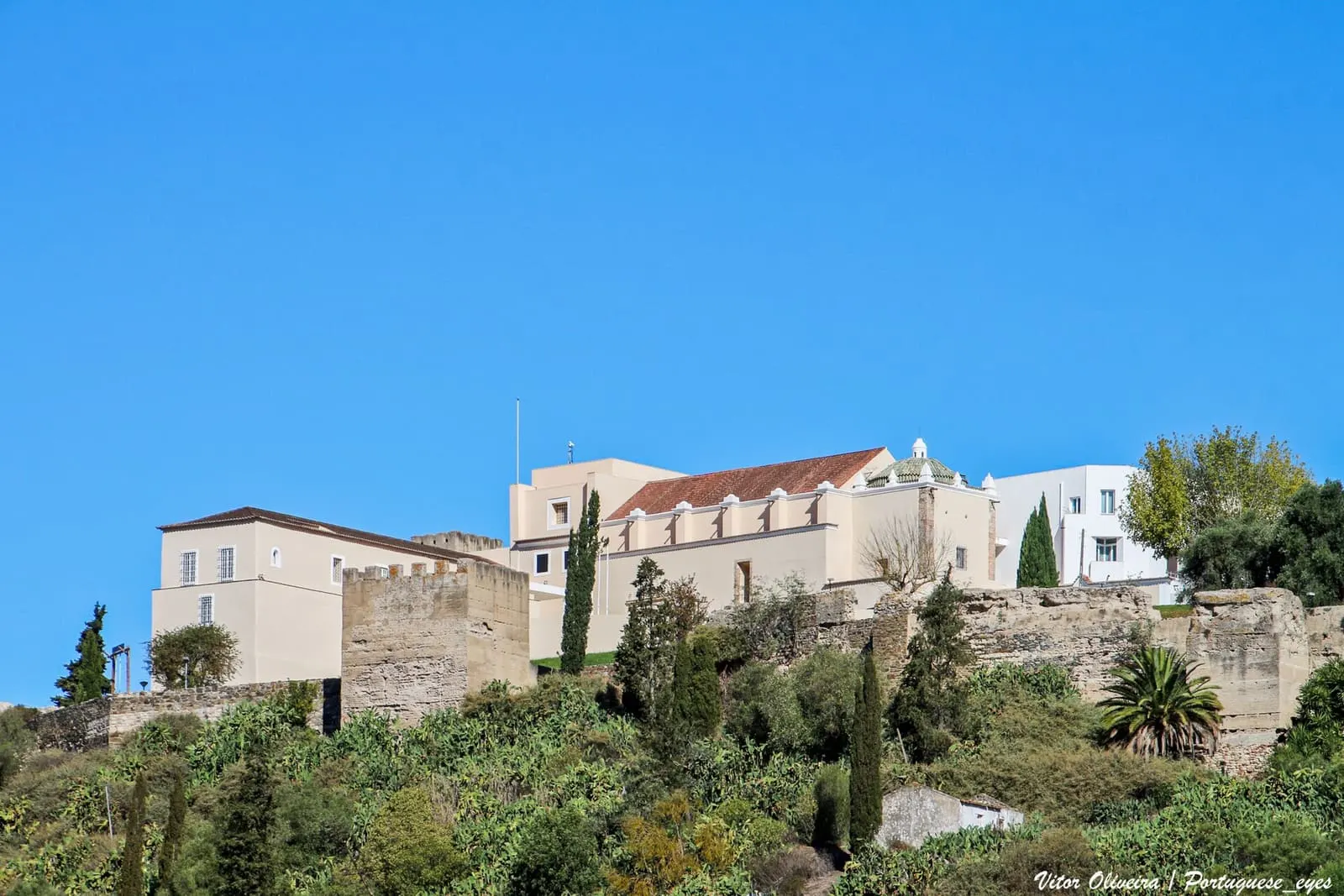
The Castle of Alcácer do Sal rises on a hill overlooking the River Sado, in the town of Alcácer do Sal, district of Setúbal, at the western edge of the Alentejo. It is one of the oldest fortified positions in Portuguese territory, with a human occupation that reaches back to prehistory and continues, almost without interruption, to the present day. The complex was classified as a National Monument by decree of 16 June 1910.
From Phoenician origins to the Islamic citadel
The site was inhabited from the Neolithic and saw a significant Phoenician presence, being identified with the ancient Bevipo and later with the Roman Salacia, an outpost of river trade and of the salt production that gives the town its name. From 715, under Muslim rule, the hill was strengthened and transformed into a powerful citadel, which became one of the chief Atlantic ports south of the Tagus. The fortress has an elliptical plan and a perimeter defended by some thirty towers; it still preserves sections built in rammed earth, a technique characteristic of Islamic military architecture and now rare among Portuguese castles. This past can be explored further on the page devoted to Islamic art in Portugal.
The Reconquest and the Order of Santiago
Contested throughout the twelfth century, Alcácer was taken and lost again several times. In 1186 Sancho I granted the town and castle to the Order of Santiago, which established one of its headquarters here, making the place a strategic node in the Christian advance. The definitive conquest came only in 1217, under Afonso II, with the help of a crusader fleet. Its ties to the military Order link Alcácer to other Santiago strongholds, such as Palmela Castle, with which it shared the defence of the Sado estuary and of the kingdom’s southern frontier.
Convent, pousada and archaeological crypt
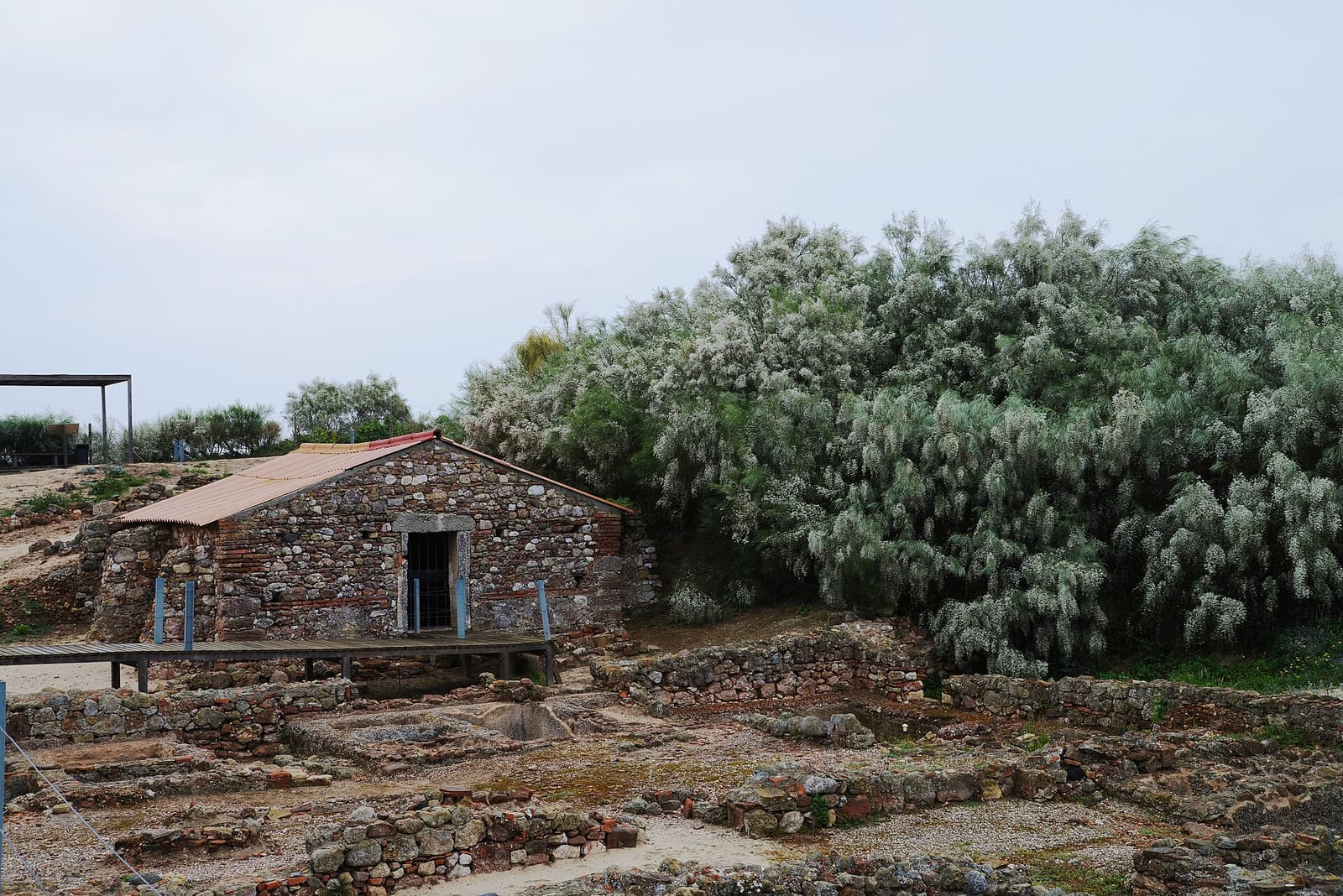
Within the enclosure, churches and conventual structures survived over the centuries, among them the Convent of Aracoeli, occupied by nuns until the dissolution of the religious orders in 1834. In 1998 part of the precinct was adapted to house the Pousada D. Afonso II. The works to install the hotel revealed archaeological levels of remarkable richness, from the Iron Age, Roman and Islamic periods, preserved and showcased in the Archaeological Crypt, opened to the public in 2008, which forms part of the municipal museum. The complex is one of the most expressive examples of the long historical palimpsest that defines the system of Portuguese castles, and is the principal landmark of the built heritage of the town of Alcácer do Sal.
Frequently asked questions
- Who definitively conquered Alcácer do Sal Castle from the Muslims?
- The definitive conquest took place in 1217, during the reign of Afonso II, with the support of a crusader fleet bound for the Holy Land. The town had already been taken and lost several times over the course of the twelfth century.
- Is it possible to visit the castle and stay overnight there?
- Yes. Part of the enclosure has housed the Pousada D. Afonso II since 1998, as part of the Pousadas de Portugal network. The Archaeological Crypt, inaugurated in 2008, can also be visited inside.
- Why was the Order of Santiago important in Alcácer do Sal?
- In 1186 Sancho I granted the town and castle to the Order of Santiago, which established one of its headquarters here, making Alcácer a strategic centre of the Christian military effort south of the Tagus.
Sources
Keep exploring
Heritage nearby
More places to discover from here. Approximate straight-line distances, within 50 km.