Monuments
Castle of Monsaraz
Castle of Monsaraz, a medieval fortified town in the Alentejo overlooking the Guadiana and the Alqueva, on the borderland with Castile, in the municipality of…
- Location
- Monsaraz, Évora
- Built
- séc. XIII–XIV (torre de menagem, 1310)
- Style
- Gótico militar; reforço abaluartado seiscentista
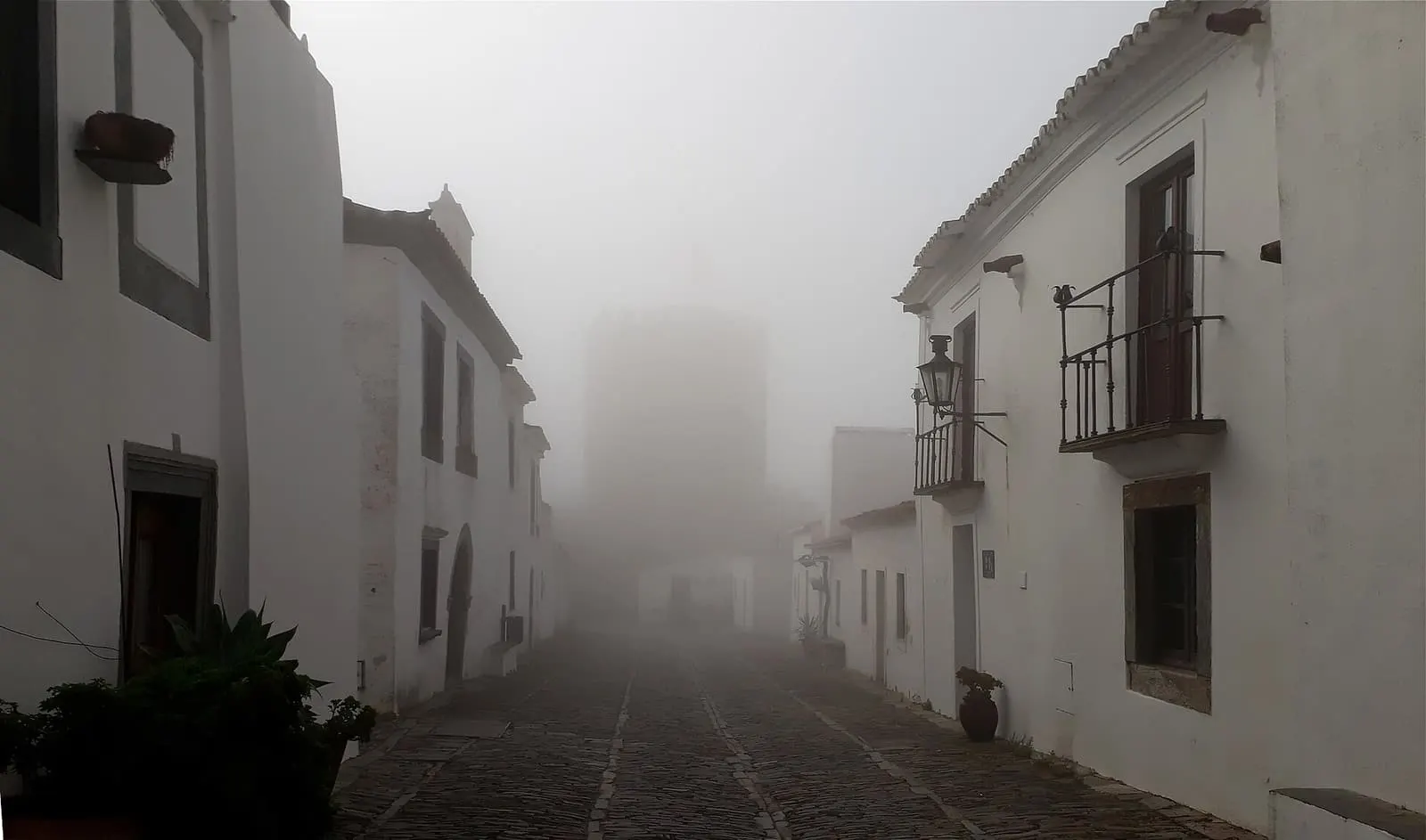
High on a schist ridge dominating the right bank of the Guadiana, the Castle of Monsaraz crowns one of the best-preserved fortified towns of the Alentejo. Its silhouette of walls and keep rises over a horizon now marked by the waters of the Alqueva reservoir, in a place that has watched over the frontier with Castile for centuries. More than an isolated monument, Monsaraz is a fortified ensemble in which the castle, the town walls and the whitewashed houses form a single defensive organism.
From the Muslim frontier to the Order of the Temple
The spur above the Guadiana was settled from remote times: a proto-historic occupation is presumed, successively reused by Romans, Visigoths and Muslims. Its elevated and inaccessible position made it a natural watchtower over the river.
The Christian conquest was contested. Geraldo Sem Pavor took Monsaraz in 1167, but the stronghold returned to Almohad control a few years later. Only in 1232 did King Sancho II, with the support of the Order of the Temple, definitively bring it into the kingdom, granting the territory to the friars so that they would secure its defence and settlement. This military dependence shaped the town, which would become the seat of a commandery, later transferred to the Order of Christ.
The Gothic castle of King Dinis
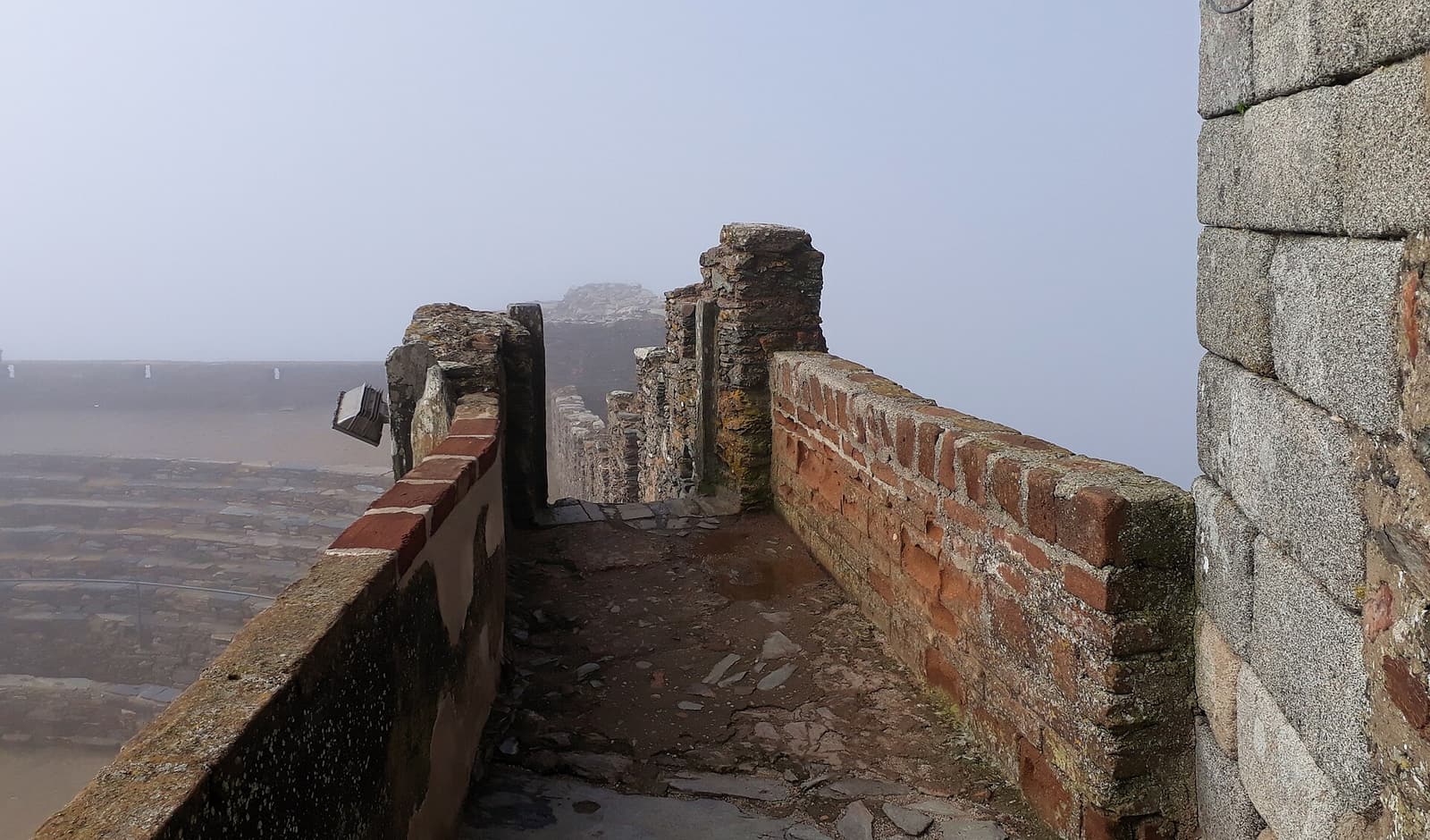
The layout we recognise today is owed above all to the reign of King Dinis, who had the keep rebuilt in 1310 and the walled circuit enlarged. The castle, of roughly quadrangular plan, combines stretches of schist wall reinforced with lime and flanking towers, according to the grammar of military Gothic that was then redrawing the Alentejo borderland.
Monsaraz is not to be understood as a castle, but as an entire town turned into a fortress — the houses lean against the wall and defence merges with the daily life of its inhabitants.
This logic of an entirely fortified town brings Monsaraz close to other frontier settlements, where the wall encloses not merely a military redoubt, but the urban cluster itself and its population.
The bastioned modernisation and the Alqueva
With the Restoration War (1640–1668), the old medieval fortress proved insufficient against modern artillery. The War Council of King João IV ordered the modernisation of the defences, and military engineers in the service of the Crown — among them Nicolau de Langres and Jean Gillot — devised bastioned walls inspired by the school of Vauban, adapted to the contours of the terrain. Thus arose an ensemble that superimposes two eras of the art of fortification: the Gothic castle and the star-shaped fort, on a single spur.
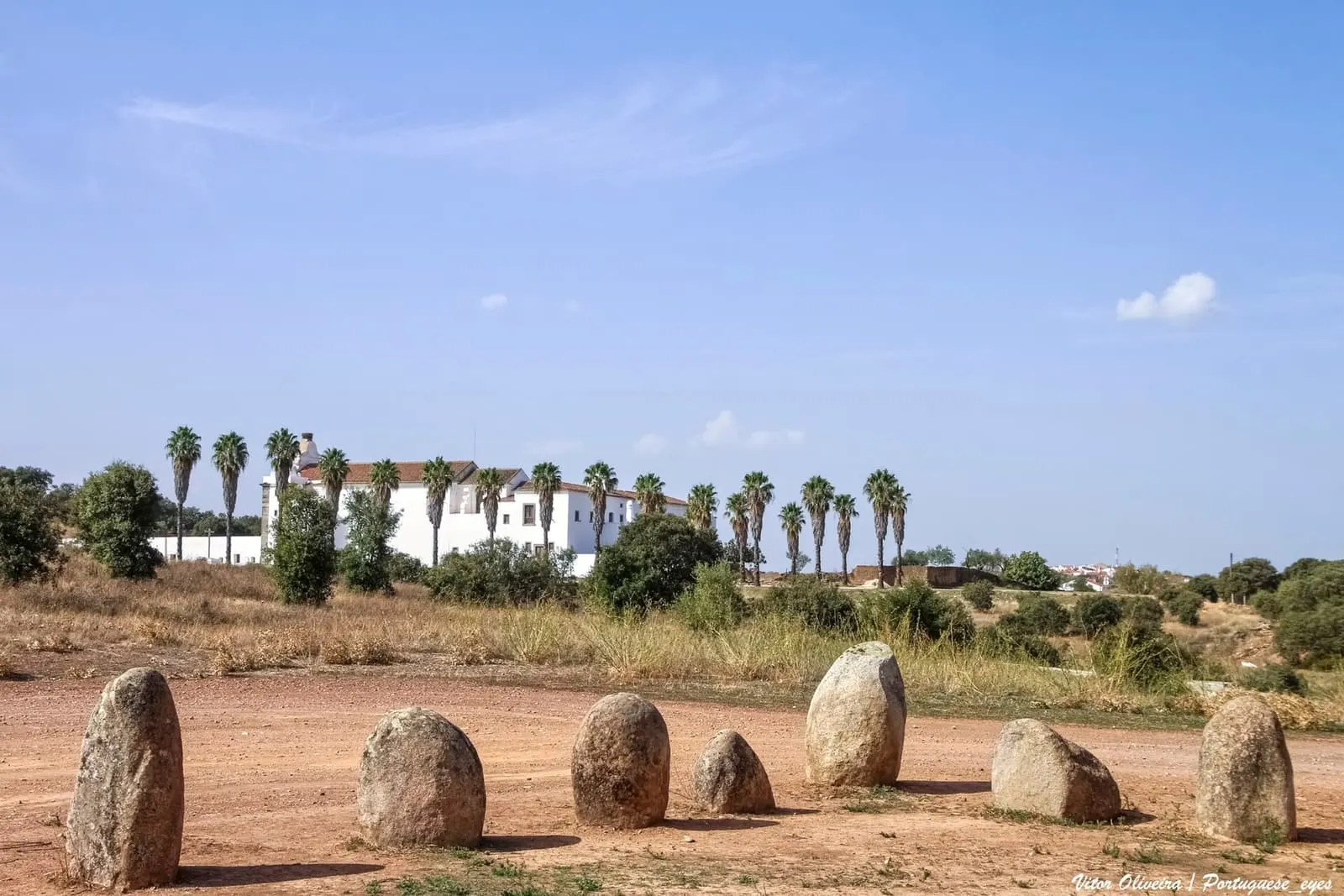
The fortified ensemble and the town were classified as a National Monument by a decree of 1946. Today, from the wall-walk, the eye sweeps across the Alentejo plain and, in the foreground, the great mirror of water of the Alqueva — a landscape that dialogues with the region’s deep past, also legible in the remarkable megalithic complex of Monsaraz, with its menhirs and dolmens scattered across the surrounding fields.
Those who visit the castle do well to extend their route through the streets of the historic town of Monsaraz itself, and to compare its defensive system with that of other inland strongholds, such as the castle of Évoramonte. Together, these monuments of the Alentejo trace the memory of a frontier that, for centuries, defined the eastern limit of Portugal.
Frequently asked questions
- Who reconquered Monsaraz from the Muslims?
- The town was definitively conquered in 1232 by King Sancho II, with the help of the Order of the Temple, to whom the territory was granted for the defence and settlement of the frontier.
- When was the castle's keep built?
- The keep was rebuilt in 1310, during the reign of King Dinis, as part of the reinforcement of the town's walls and the consolidation of the defensive line of the borderland.
- Why does the Castle of Monsaraz have bastioned fortifications?
- During the Restoration War (1640–1668), Monsaraz's strategic position next to Castile led to the modernisation of its defences with bastioned walls in the manner of Vauban.
Sources
Keep exploring
Heritage nearby
More places to discover from here. Approximate straight-line distances, within 50 km.