Monuments
Serpa Castle
The castle and walls of Serpa, in the Baixo Alentejo: a medieval circuit with a seventeenth-century aqueduct and waterwheel, a National Monument on the border…
- Location
- Serpa, Beja
- Built
- Séculos XIII–XIV (reconstrução); aqueduto e nora séc. XVII
- Style
- Gótico (arquitetura militar medieval)
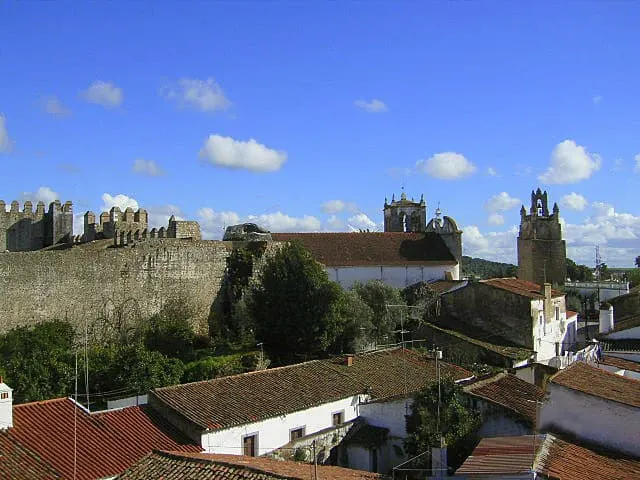
Serpa Castle is the fortified ensemble that encloses the historic centre of the town of Serpa, in the district of Beja, deep in the Baixo Alentejo and a short distance from the border with Spain. The urban wall circuit, with its characteristic aqueduct and monumental waterwheel, is one of the most recognisable features of the Serpa landscape and is classified as a National Monument.
Origin and history
The settlement of Serpa has a very ancient occupation, with traces of prehistoric and Roman presence, lying beside the road that linked Beja to the south of Hispania. After the fall of Roman rule, the site saw the passage of Germanic peoples and, from the eighth century onwards, a Muslim presence, which fortified the place by reusing rammed-earth structures.
Its definitive integration into the kingdom of Portugal came in the context of the rectification of the southern frontier. In 1295, during the reign of King Dinis, Serpa received a charter (foral) with privileges similar to those of the inhabitants of Évora, a moment associated with the rebuilding of the old Muslim fortification and the consolidation of the medieval wall circuit. Because of its position on the border, Serpa was from an early date part of the line of strongholds that defended the Alentejo, in a system shared with neighbours such as Moura.
Architecture and notable features
The circuit has a roughly oval plan, reinforced by towers and bastions of square and semicircular profile, topped with prismatic merlons. Monumental gates opened in it — among them the Porta de Moura, to the north-east, and the Porta de Beja, to the north-west — flanked by cylindrical towers.
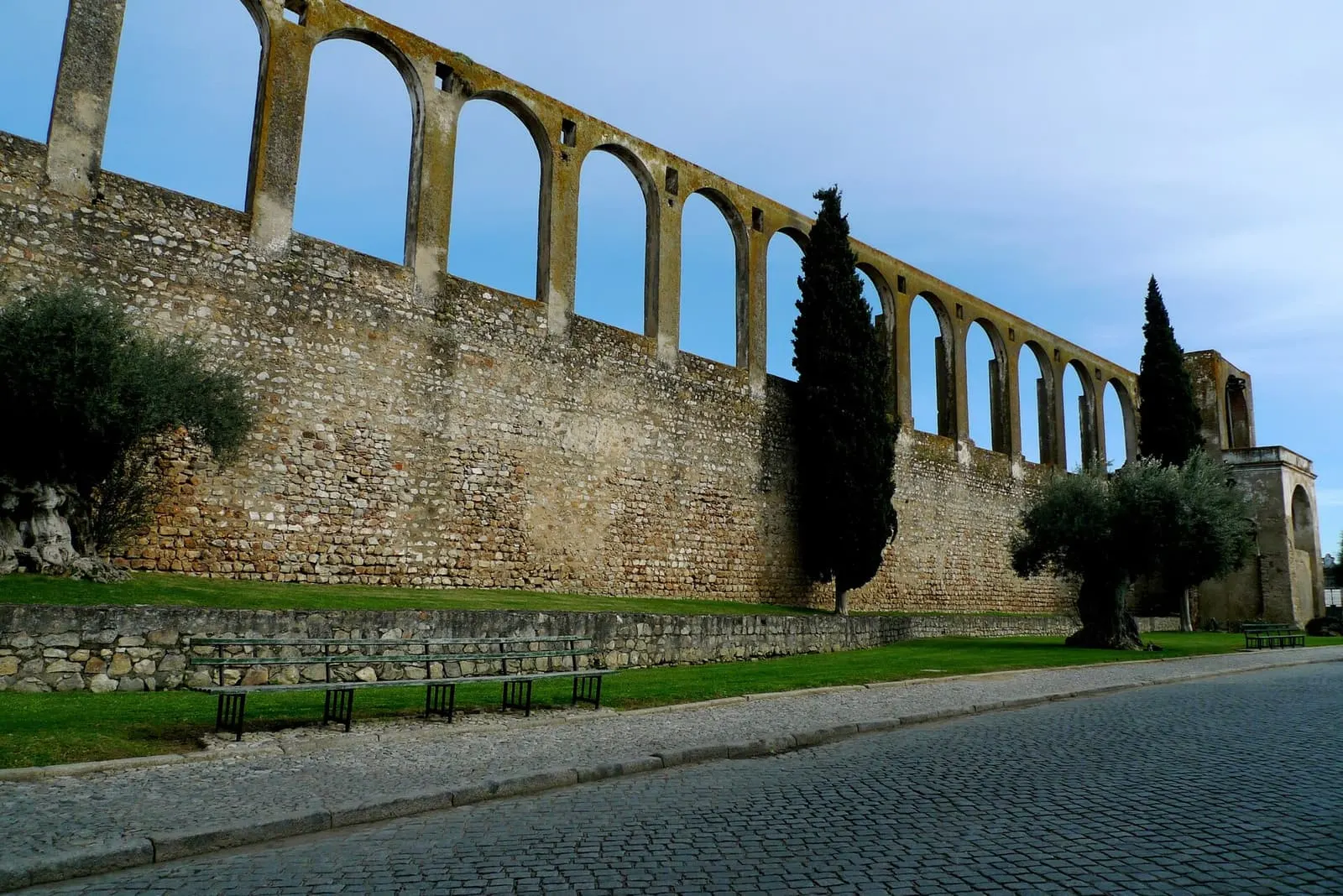
The western stretch of the walls is crowned by an aqueduct resting on a round-arched arcade, which linked the former palace of the Counts of Ficalho to a large waterwheel mounted over a well, beside the south-eastern corner. This waterwheel, from the seventeenth century, was intended to raise water to supply the palace and became one of the town’s emblems. The ensemble of the castle and walls was classified as a National Monument by a decree of 1954.
Visiting and setting
Today the walls and wall-walk allow visitors to walk part of the defensive perimeter and survey the surrounding plain, forming part of the itinerary of the Alentejo’s military heritage. A visit to the castle naturally combines with discovering the town of Serpa and is set within the broader ensemble of Portuguese castles, testimonies to the history of borders and to the organisation of the territory throughout the Middle Ages.
Frequently asked questions
- Where is Serpa Castle?
- It stands in the town of Serpa, in the district of Beja, in the Baixo Alentejo, close to the border with Spain. The wall circuit encloses the historic centre, overlooking the plain.
- Is Serpa Castle a National Monument?
- Yes. The ensemble of the castle and walls of Serpa was classified as a National Monument by a decree of 1954.
- What is the waterwheel of Serpa Castle?
- It is a large seventeenth-century waterwheel set over a well, beside the wall, linked by an aqueduct to the former palace of the Counts of Ficalho that crowned part of the circuit.
Sources
Keep exploring
Heritage nearby
More places to discover from here. Approximate straight-line distances, within 50 km.