Places
Serpa
Serpa, a walled town in Baixo Alentejo, Beja district: medieval castle, 17th-century aqueduct, monumental noria and whitewashed historic center.
- Location
- Serpa, Beja
- Built
- séc. XII–XIII (reconquista e amuralhamento)
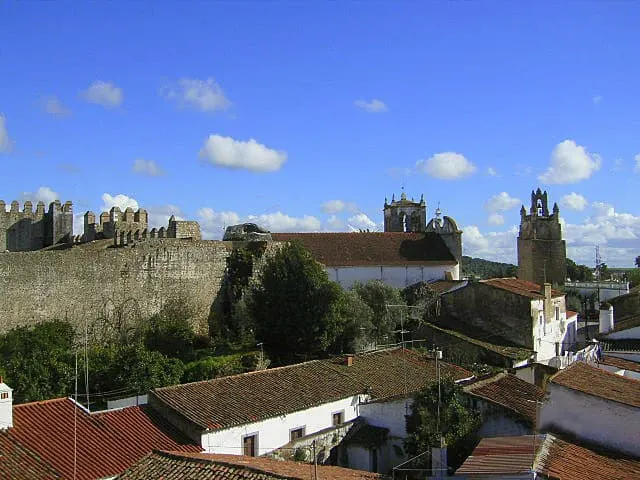
Serpa rises on a hill in the plains of Baixo Alentejo, on the left bank of the Guadiana River, crowning the whitewashed houses with the profile of its walls. A municipal seat in Beja district, it is one of the best-preserved border towns in southern Portugal, where the medieval walls, 17th-century aqueduct, and labyrinth of whitewashed streets form an urban ensemble of remarkable coherence. Its history intertwines with that of the border territory that for centuries separated and connected the peninsular kingdoms.
From origins to the border
The site has been occupied since prehistoric times and was Romanized during the imperial era, retaining the toponym Serpa since antiquity. Under Islamic rule, it became a fortified settlement in the territory of Garb al-Andalus, linked with neighboring strongholds of Moura and Mértola, along the Guadiana line. D. Afonso Henriques captured Serpa in 1166, but the unstable position of the border caused the town to change hands repeatedly in the following decades.
It was D. Dinis who definitively fixed the border and reestablished the Christian settlement: he granted it a charter in 1295, with privileges identical to those of the inhabitants of Évora, and ordered the reconstruction of the old Muslim fortification. This effort resulted in the oval-shaped wall, reinforced by quadrangular and semicircular towers, and the Castle of Serpa, whose keep still dominates the historic center today.
Serpa’s most famous feature is a wound: the castle’s wall section, partially destroyed by the troops of Philip V during the War of the Spanish Succession in 1707-1708, remains suspended in the air like a precarious arch, transforming defeat into one of the town’s most recognizable images.
The walled ensemble
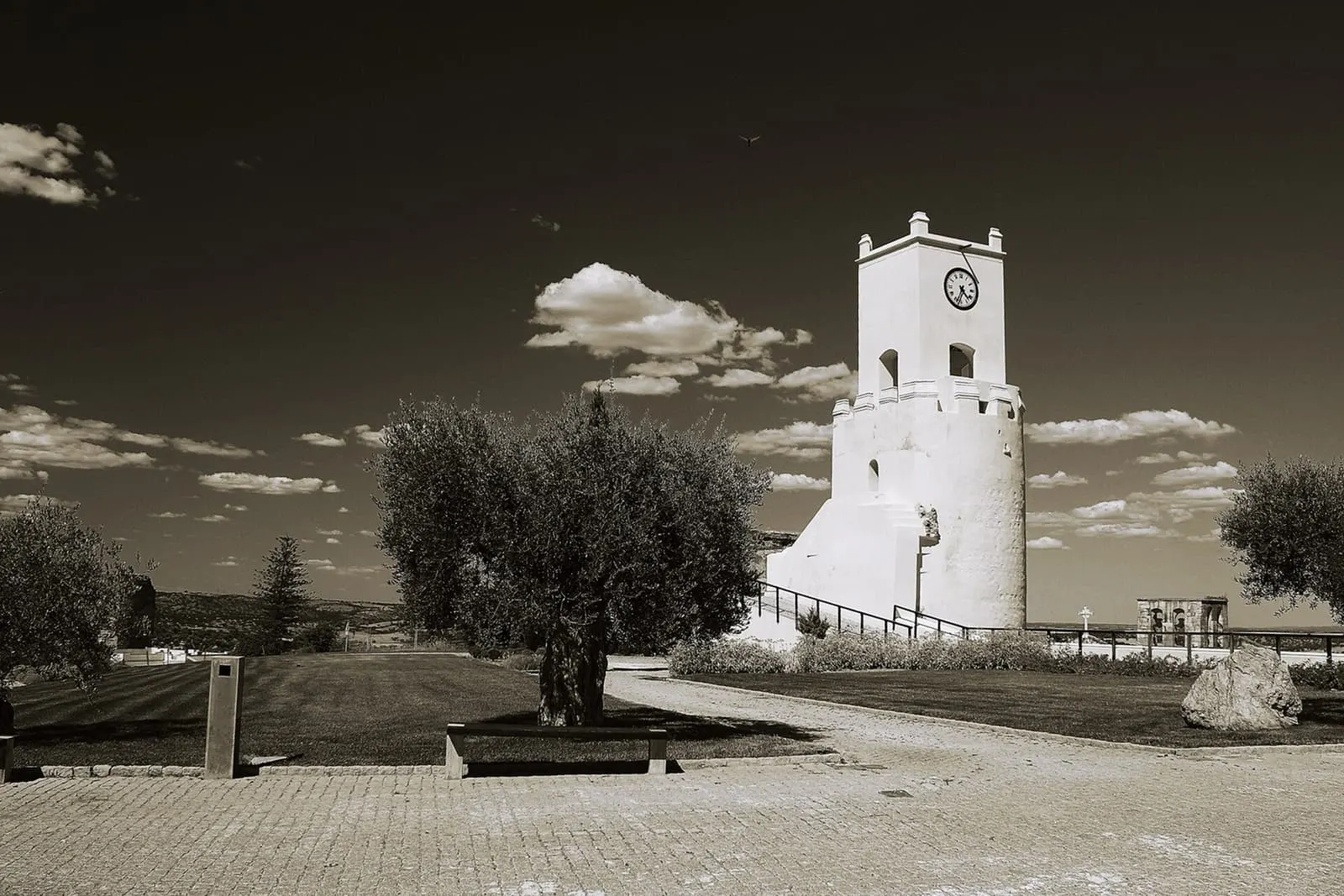
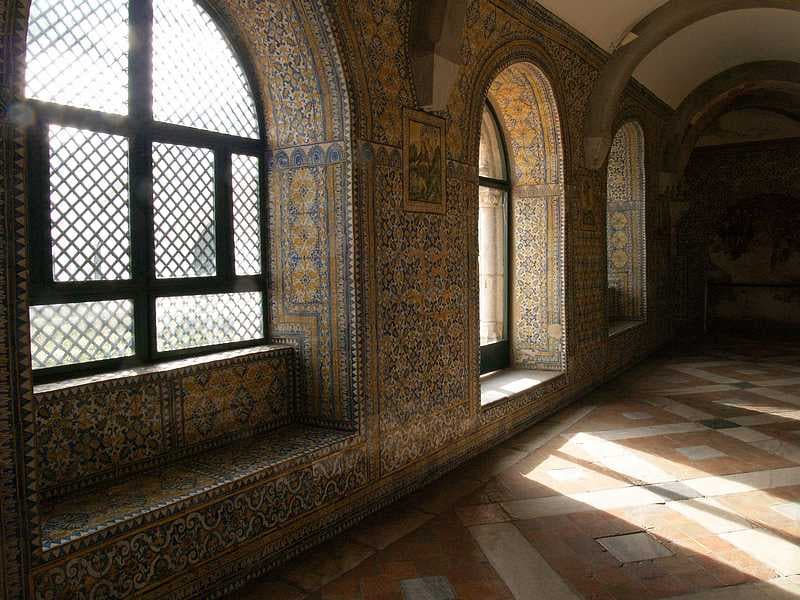
Within the walls, the houses are arranged along narrow streets and whitewashed alleys, punctuated by churches and manor houses. The Church of Santa Maria, the town’s main church, and the former Church of Misericórdia share the urban space with the Palace of the Counts of Ficalho, the Clock Tower, and several hermitages. The castle and walls ensemble was classified as a National Monument by decree in 1954, a recognition that established Serpa among the border fortifications of Alentejo.
The defensive structure is part of a network of military strongholds that guarded the Guadiana River, sharing functions and chronology with the Castle of Beja, capital of Baixo Alentejo, and the fortresses of the eastern border. This system, more than a sum of isolated monuments, expresses the territorial logic of a living border throughout the Middle Ages and the modern period.
The aqueduct and the noria
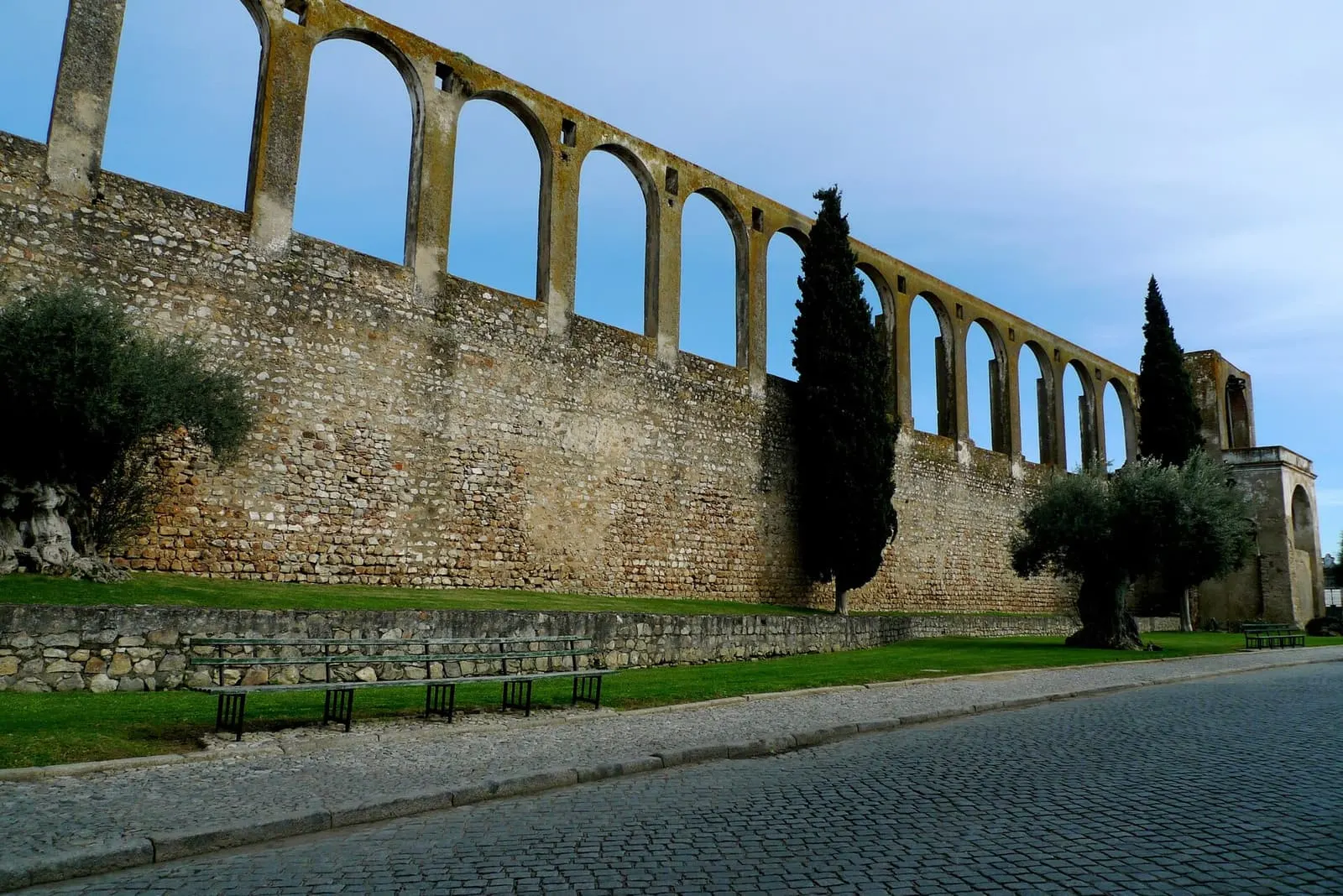
Among Serpa’s most unique features is its aqueduct, erected in the late 17th century at the initiative of D. Francisco de Melo, lord of Ficalho and the town’s alcaide-mor. Designed to supply water to the Palace of the Counts of Ficalho, the canal runs over a row of arches leaning against the wall, ending in a monumental noria that itself serves as a buttress to the structure. Standing about twenty meters tall, this noria is noted as the largest water supply noria in the Iberian Peninsula and has become, alongside the broken wall, one of the town’s symbols.
Serpa is also a land of cheese — the renowned Serpa cheese DOP — and of cante alentejano, the polyphonic singing inscribed by UNESCO as Intangible Cultural Heritage of Humanity. This intangible dimension completes the portrait of a place where built heritage and living traditions sustain each other and helps explain why Serpa remains one of the essential stops for those exploring the historic Alentejo.
Frequently asked questions
- Where is Serpa located?
- Serpa is situated in Baixo Alentejo, Beja district, on the left bank of the Guadiana River, approximately thirty kilometers southeast of the city of Beja.
- When was Serpa reconquered from the Moors?
- The town was taken by D. Afonso Henriques in 1166, though the border was only stabilized during the reign of D. Dinis, who granted it a charter in 1295 and ordered the reconstruction of its walls.
- What distinguishes Serpa's aqueduct?
- Built in the late 17th century to supply water to the Palace of the Counts of Ficalho, it rests on arches along the wall and terminates in a monumental noria, considered the largest supply noria in the Iberian Peninsula.
Sources
Keep exploring
Heritage nearby
More places to discover from here. Approximate straight-line distances, within 50 km.