Monuments
Soure Castle
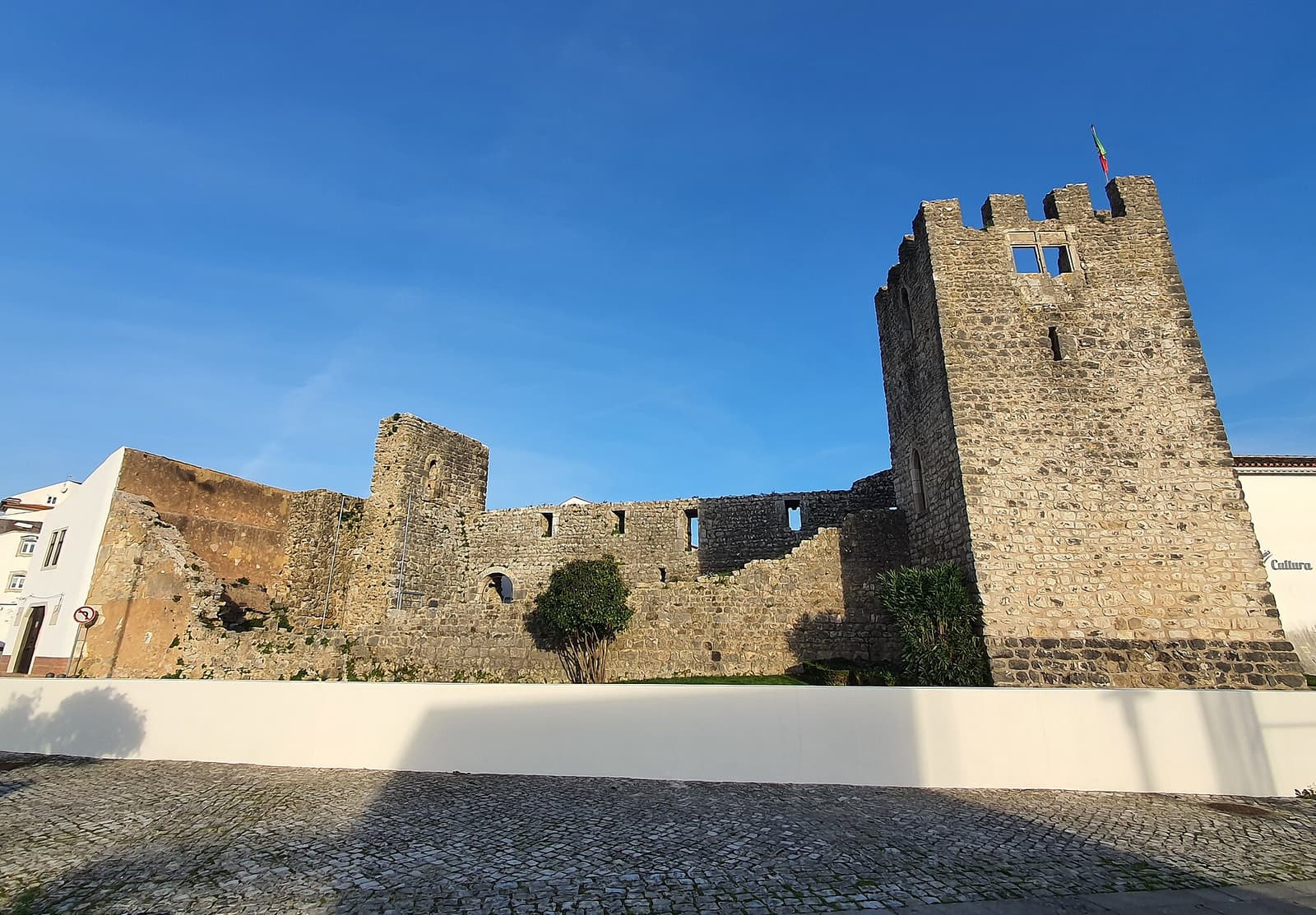
Soure Castle, in the district of Coimbra: a former fortress on the Mondego line and the setting for the first great donation to the Templars in Portugal, in 1128.
- Location
- Soure, Coimbra
- Built
- séc. XI–XII
- Style
- Românico, com vestígios góticos e manuelinos
Soure Castle is a ruined medieval fortification set above the town of Soure, in the district of Coimbra, beside the river Anços, in the Mondego basin. Despite its fragmentary state, it holds a singular place in Portuguese military and religious history: it was here, in the early twelfth century, that the presence of the Order of the Temple was consolidated in the young kingdom, in the wake of the first great donation made to the Templars on Portuguese soil.
Origins on the Mondego line
The original fortification of Soure dates from the period between 1064 and 1111, at a time when the Christian frontier was settling along the banks of the Mondego. Some attribute its foundation to the Mozarabic count Sesnando Davides, governor of Coimbra after the city’s conquest in 1064; others associate it with the charter of settlement granted by Count Henry in 1111, intended to attract settlers to a zone still exposed to Muslim raids. In either case, Soure emerged as an advanced piece of a defensive network linking positions such as the castle of Montemor-o-Velho and the urban heart of Coimbra itself.
The donation to the Templars
The event that forever marks the castle’s memory took place on 19 March 1128, when Countess Teresa donated to the Order of the Temple “the castle of Soure and all the lands between Coimbra and Leiria”. The donation was confirmed the following year by the infante Afonso Henriques, who declared himself a “brother” of the Order. It was an act of unusual significance, for it came only a few months after the promulgation of the Rule of the Temple, and made Soure one of the first Templar seats in Portugal.
Soure was the gateway of the Order of the Temple into Portuguese territory, preceding its definitive settlement at Tomar and the construction of the Convent of Christ.
The Templars undertook the rebuilding of the fortress, endowing it with new towers of square plan. Their expansionist drive was, however, interrupted in 1144 by a Muslim counter-offensive that took Soure, killing many of its inhabitants or carrying them off as captives to Santarém. Once the stronghold was recovered, the castle retained its role as a frontier bulwark until the frontier shifted definitively southward.
From the Order of Christ to ruins
After the suppression of the Order of the Temple, the domains of Soure passed to the Order of Christ by papal bull of 14 March 1319, immediately constituted as the head of a commandery. With the advance of the Reconquista and the resulting military relief of the region, the fortress lost its strategic importance and gradually fell into decay over the following centuries.
Today, what remains belongs to the wider body of Portuguese medieval fortifications: sections of curtain wall survive, along with two of the four original towers, in masonry of Romanesque character with traces of Gothic and Manueline interventions. Soure Castle has been classified as a National Monument since the decree of 5 April 1949, standing as a material testimony to the beginnings of the Templar presence in Portugal and to the shaping of the Mondego frontier.
Frequently asked questions
- Where is Soure Castle?
- It stands above the town of Soure, in the district of Coimbra, on the bank of the river Anços, a tributary of the Mondego, some 25 km south of the city of Coimbra.
- What is the castle's connection to the Templars?
- On 19 March 1128, Countess Teresa donated the castle of Soure and all the lands between Coimbra and Leiria to the Order of the Temple. It was the first great donation to the Templars in Portugal, and the castle became one of their earliest seats in the kingdom.
- What remains of the castle today?
- The complex lies in ruins. Stretches of curtain wall survive, along with two of the four original towers, of square plan, which bear witness to the Templar rebuilding campaigns.
Sources
Keep exploring
Heritage nearby
More places to discover from here. Approximate straight-line distances, within 50 km.