Monuments
Castle of the Templars (Tomar)
The Castle of the Templars in Tomar, a fortress founded by Gualdim Pais in 1160 that embraces the Convent of Christ, a World Heritage Site in the district of…
- Location
- Tomar, Santarém
- Built
- 1160
- Style
- Românico militar
High atop a hill that dominates the town and the river Nabão stands the Castle of the Templars in Tomar, one of the most significant fortresses of the Portuguese Reconquest. Its construction began on 1 March 1160, on the initiative of Dom Gualdim Pais, master of the Order of the Temple in Portugal, who established here the seat of the militia and, at the same time, founded the settlement of Tomar. The date is recorded in an epigraphic inscription on the very walls, a rare testimony to the precision with which the knights preserved the memory of the enterprise.
A fortress on the Tagus frontier
The castle was born as a key element in the defence of Christian territory and as support for the advance southwards, beyond the line of the Tagus, then an unstable frontier facing Almohad power. Gualdim Pais, who had returned from the East after taking part in the Crusades, introduced into Portuguese military architecture solutions that were innovative for the time: the square-plan keep, set apart within the precinct, and the alambor — the sloping talus at the base of the walls, intended to strengthen the structure and hinder the approach of siege engines. The complex unfolded in successive enclosures, separated by curtain walls, articulating the citadel, the knights’ palace and the oratory.
The stronghold’s resilience was revealed in 1190, when the castle withstood the siege of the Almohad caliph Yaqub al-Mansur without falling, an episode that consolidated the fame of the Templar fortress.
The rotunda and the birth of the Convent of Christ
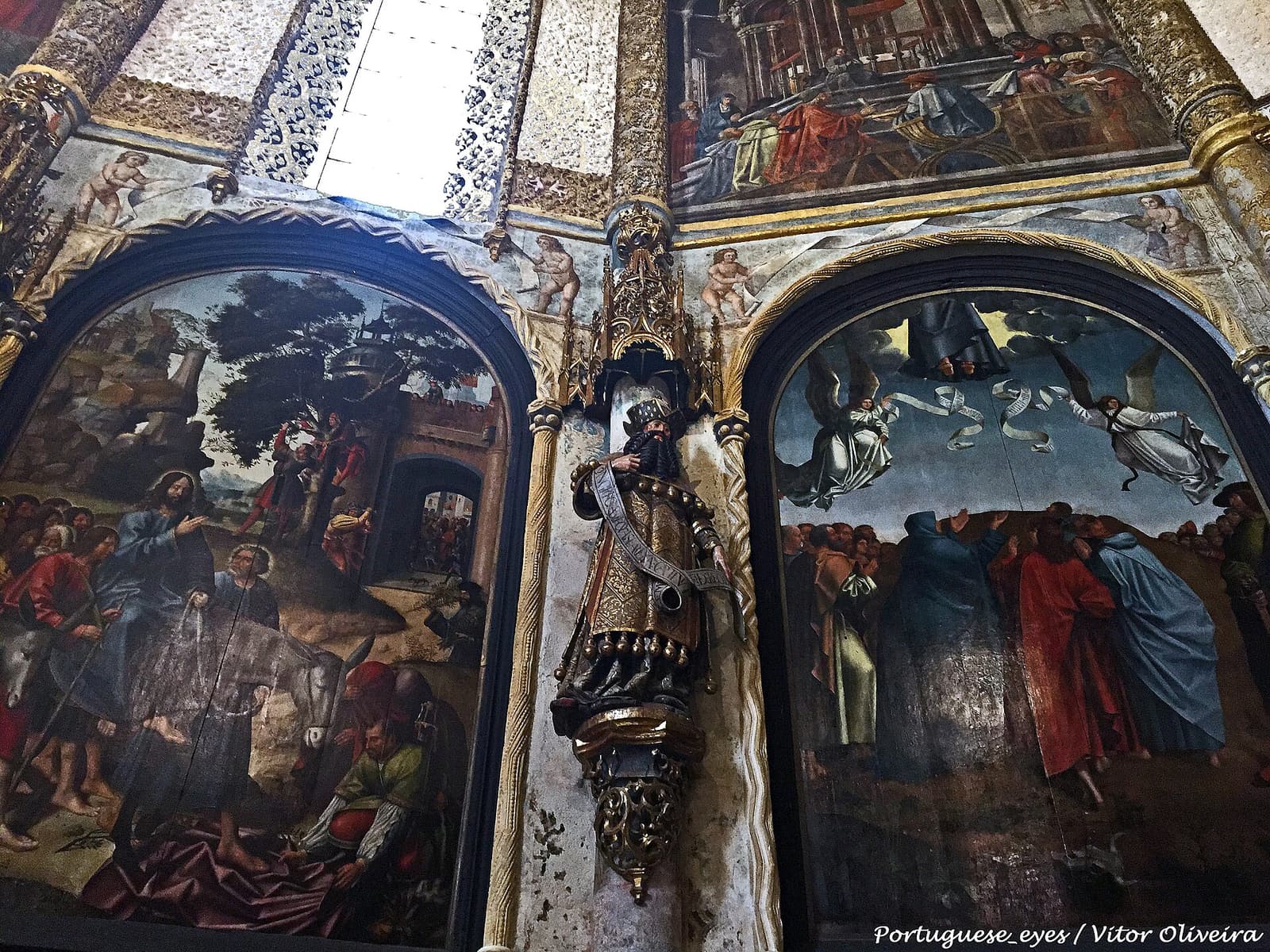
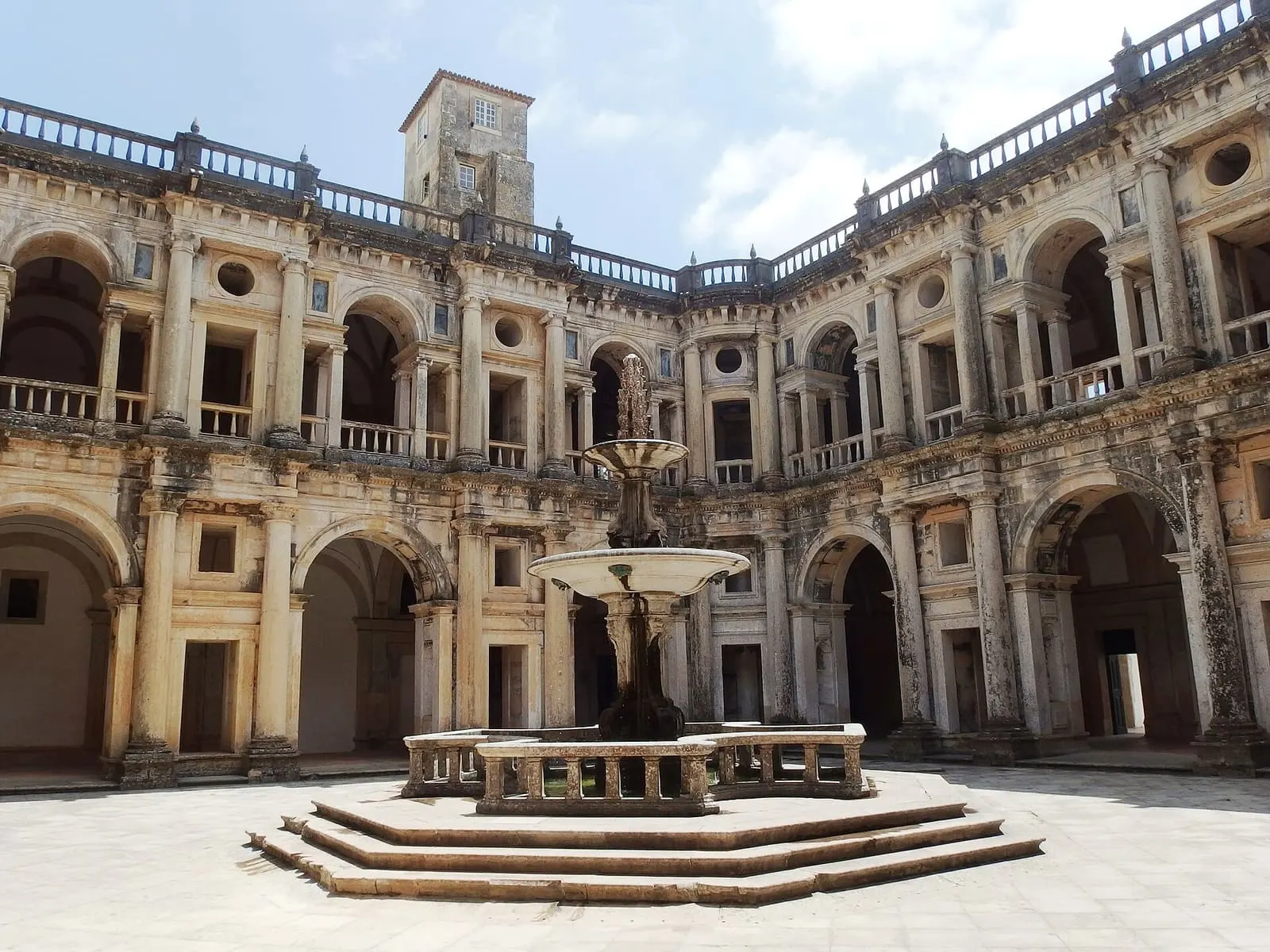
Within the walls, the Templars raised their conventual church, the celebrated rotunda with a centralised plan, completed around 1190. Of robust cylindrical structure, it evokes the circular-plan sanctuaries of the Near East, in particular the Holy Sepulchre in Jerusalem, uniting liturgical function with defensive capacity. When the Order of the Temple was suppressed in 1312, its property and privileges in Portugal passed, by the will of Dom Dinis, to the newly created Order of Christ, which established its seat here. From that medieval nucleus grew the Convent of Christ, with its succession of cloisters and the famous Manueline window that celebrate, in stone, the age of the Discoveries.
Classification and visit
The castle and the convent today form an inseparable monumental ensemble, classified as a National Monument since 1910 and inscribed on the UNESCO World Heritage List in 1983, under reference number 265. The walls, the keep and the defensive curtains can be walked before entering the conventual space, offering a clear reading of the fortress’s evolution over seven centuries. Tomar continues to celebrate this heritage in its traditions, and visitors to the castle can extend the Templar itinerary through the Tagus valley, where the scenic Castelo de Almourol, also associated with the Order, stands out. The monument is also part of the network of Portuguese medieval castles that structured the settlement of the kingdom.
Frequently asked questions
- Who founded the Castle of Tomar?
- Construction began on 1 March 1160 under Dom Gualdim Pais, master of the Order of the Temple in Portugal, who also founded the town of Tomar.
- What is the relationship between the castle and the Convent of Christ?
- The castle is the original nucleus of the complex: its Templar rotunda became the church of the Convent of Christ, classified as a UNESCO World Heritage Site in 1983.
- What is the Templars' rotunda?
- It is the circular oratory of the knights, completed around 1190, with a centralised plan inspired by the sanctuaries of the Holy Sepulchre in Jerusalem.
Sources
Keep exploring
Heritage nearby
More places to discover from here. Approximate straight-line distances, within 50 km.