Places
Chaves
Chaves, the Roman Aquae Flaviae in the district of Vila Real: Trajan's bridge, thousand-year-old thermal baths and bastioned fortifications in Trás-os-Montes.
- Location
- Chaves, Vila Real
- Built
- séc. I d.C. (fundação romana)
Nestled in a fertile valley watered by the river Tâmega, beside the Trás-os-Montes border with Galicia, Chaves is one of the oldest cities in northern Portugal. Its urban history begins in the heart of the Roman era, when Aquae Flaviae flourished here, a centre privileged by the confluence of roads and by the abundance of hot waters that still rise from the subsoil at temperatures close to 73 °C. The capital of Alto Tâmega and the second city of the district of Vila Real, it preserves a remarkable palimpsest of layers — Roman, medieval and modern — legible in its stones.
From Aquae Flaviae to a frontier city
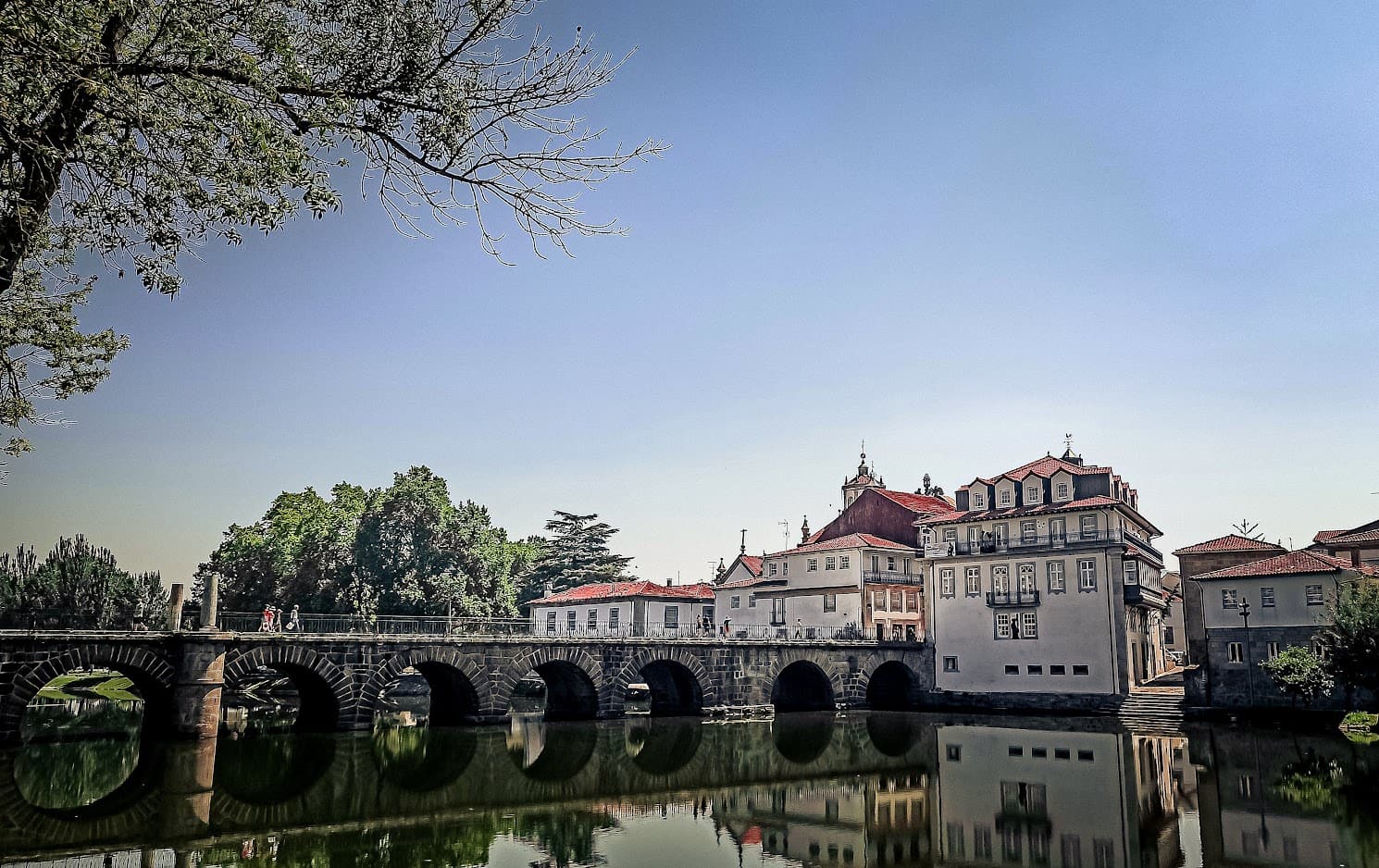
The Roman foundation belongs to the policy of territorial organisation carried out by the Flavian dynasty: the settlement was raised to a municipium in AD 79, during the principate of Vespasian, receiving the name Aquae Flaviae in allusion to its thermal springs. The location was strategic, for the city marked a stage on the great road linking Bracara Augusta (Braga) to Asturica Augusta (Astorga), a vital axis of the road network of the Hispanic north-west. From that importance there survives one of the most celebrated testimonies of Portuguese Roman archaeology: the Trajan’s bridge over the Tâmega, raised in the late first or early second century and still crossable on foot, with its milestone markers and the inscription dedicated to the communities that contributed to the work.
The very name Aquae Flaviae seals the city’s destiny: water and imperial power, thermal baths and frontier, fused in a single place name that would endure for centuries.
The fortress of Trás-os-Montes
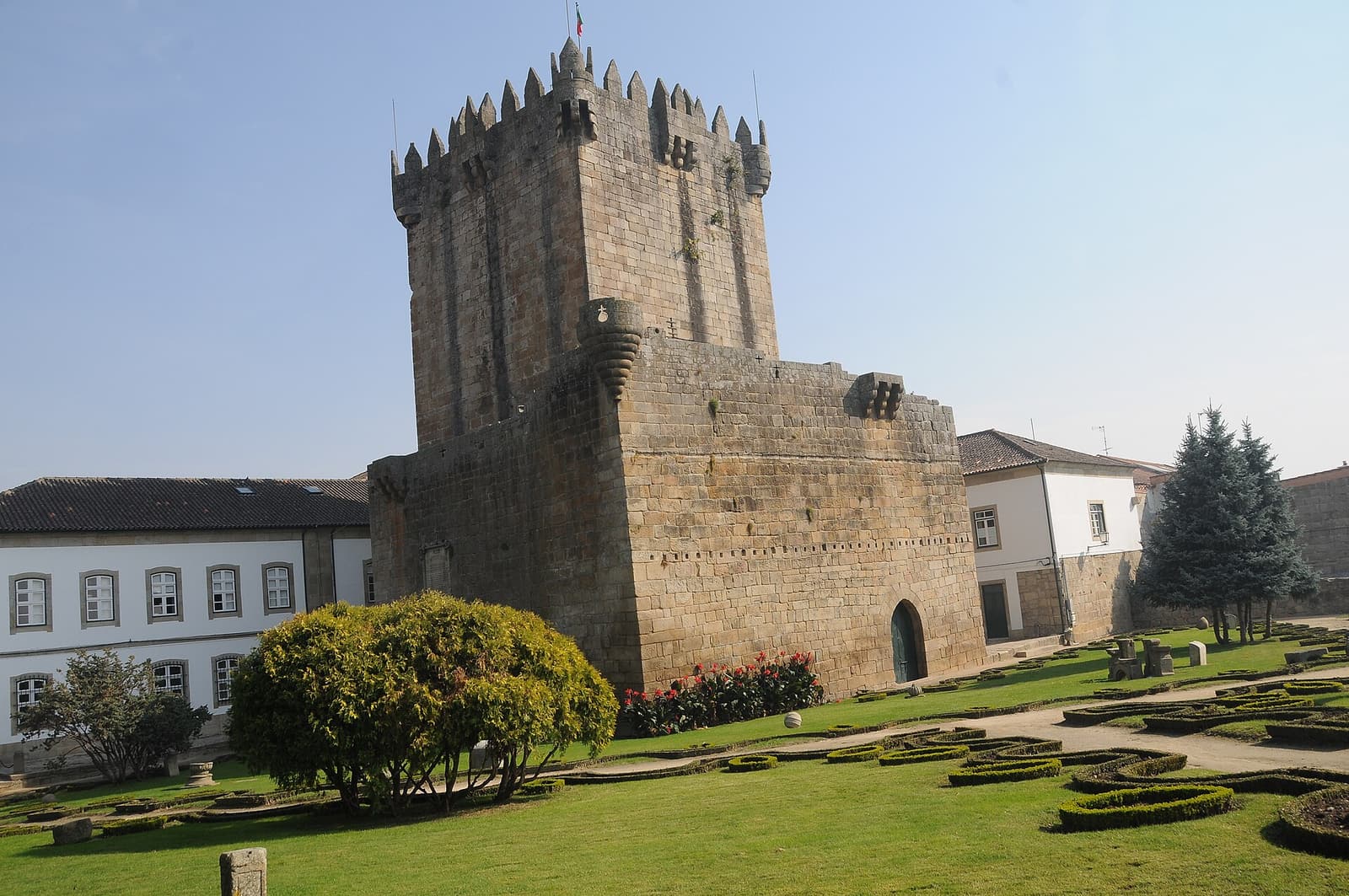
Reconquered and integrated into Portuguese territory in the twelfth century, Chaves became a front-line stronghold in the defence of the north-eastern frontier. King Dinis ordered the castle and the medieval wall to be built at the turn of the thirteenth into the fourteenth century, and its keep — today the seat of a military museum collection — still dominates the urban fabric. This military vocation continued into the early modern period with the construction of the bastioned forts of São Francisco and São Neutel, conceived according to the principles of modern fortification to withstand artillery. Those who walk the walls can follow the thread linking the medieval fortification of Chaves to the defensive logics that marked the whole Trás-os-Montes border.
Thermal baths, urban fabric and identity
Chaves’s relationship with its waters has never been broken. The thermal baths, exploited since Antiquity, made the city a destination for healing and leisure, and the discovery of a monumental Roman bathhouse near the historic centre confirmed the thousand-year continuity of that tradition. The noble houses of the seventeenth and eighteenth centuries, the wooden balconies and the Baroque churches lend the old quarter a character of its own, at once of Trás-os-Montes and imperial — the city indeed bears the historic title of “most noble and ever loyal”.
Part of the North region, Chaves dialogues with other centres of the inland Trás-os-Montes and Douro, such as neighbouring Vila Real, and forms part of a territory where the legacy of Roman archaeology is particularly dense. To visit Chaves is thus to traverse two thousand years of continuous occupation: from the waters that gave it its name to the walls that guarded it, from Trajan’s causeway to the streets where the pulse of a frontier city can still be felt.
Frequently asked questions
- What was the Roman name of Chaves?
- Chaves corresponded to the Roman town of Aquae Flaviae, founded in the first century AD and raised to the status of municipium in AD 79, under the Flavian dynasty. The place name alluded to the region's abundant thermal waters.
- Is Trajan's bridge in Chaves really Roman?
- Yes. The bridge over the river Tâmega is a feat of Roman engineering raised in the late first or early second century AD, associated with the reign of Trajan, and it still preserves much of its arches and two epigraphic markers.
- In which district and region is Chaves located?
- Chaves lies in the district of Vila Real, in the sub-region of Alto Tâmega, in the heart of Trás-os-Montes, near the border with Galicia, in northern Portugal.
Sources
Keep exploring
Heritage nearby
More places to discover from here. Approximate straight-line distances, within 50 km.