Monuments
Chaves Castle
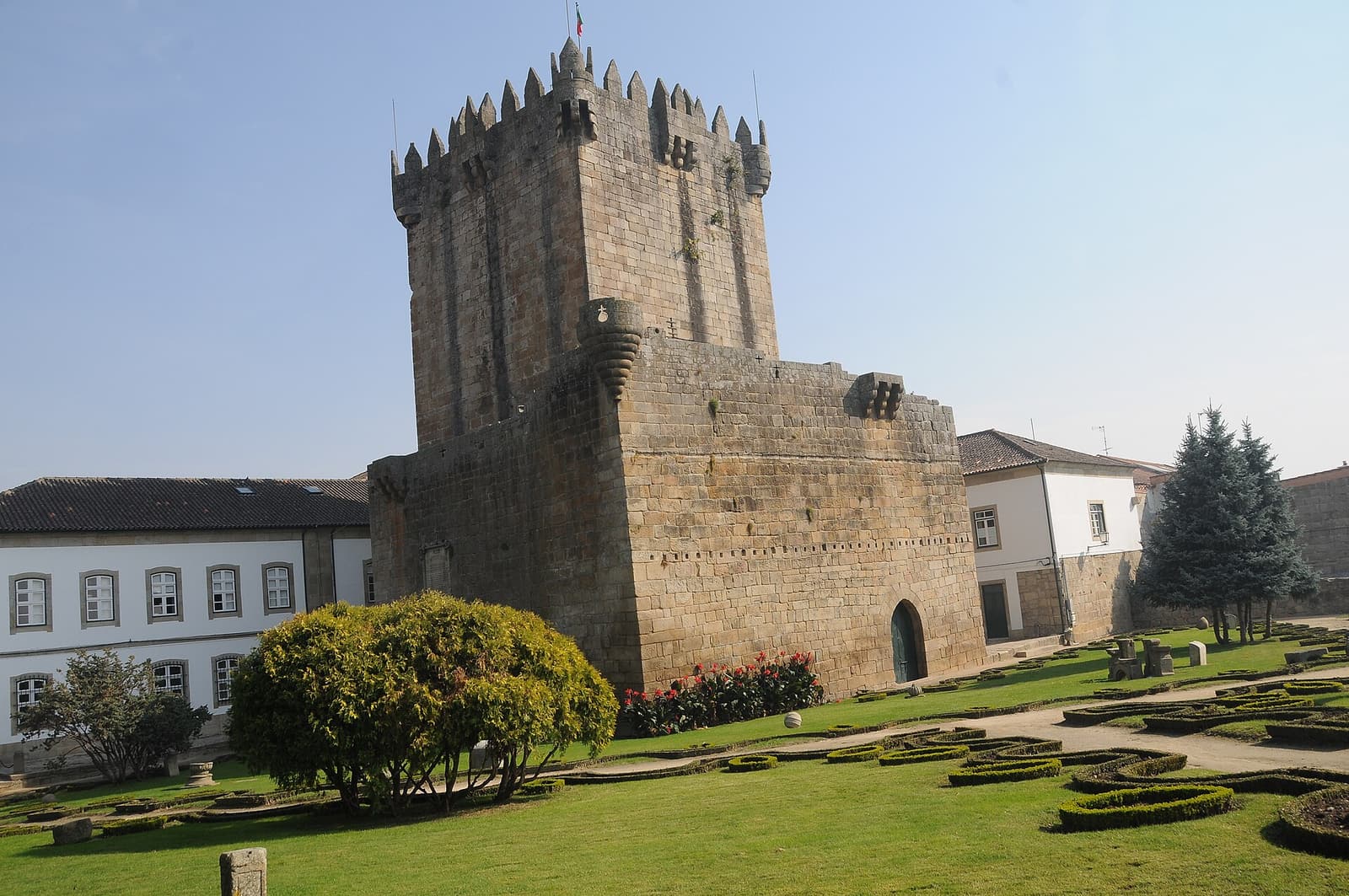
Chaves Castle, in Vila Real: a Gothic keep and bastioned fortifications that guarded the ancient Aquae Flaviae on the Trás-os-Montes border.
- Location
- Chaves, Vila Real
- Built
- séc. XIII–XIV (torre de menagem)
- Style
- Gótico militar; fortificação abaluartada (séc. XVII)
High above the town of Chaves, overlooking the River Tâmega and the line of the old Roman road, stands one of the most striking fortifications on the Trás-os-Montes border. Chaves Castle gathers in a single place two millennia of military history: the site that was a Roman settlement, the Gothic fortress of the kingdom’s founding, and, later, the bastioned stronghold that guarded the frontier against neighbouring Galicia.
From Aquae Flaviae to the kingdom’s frontier
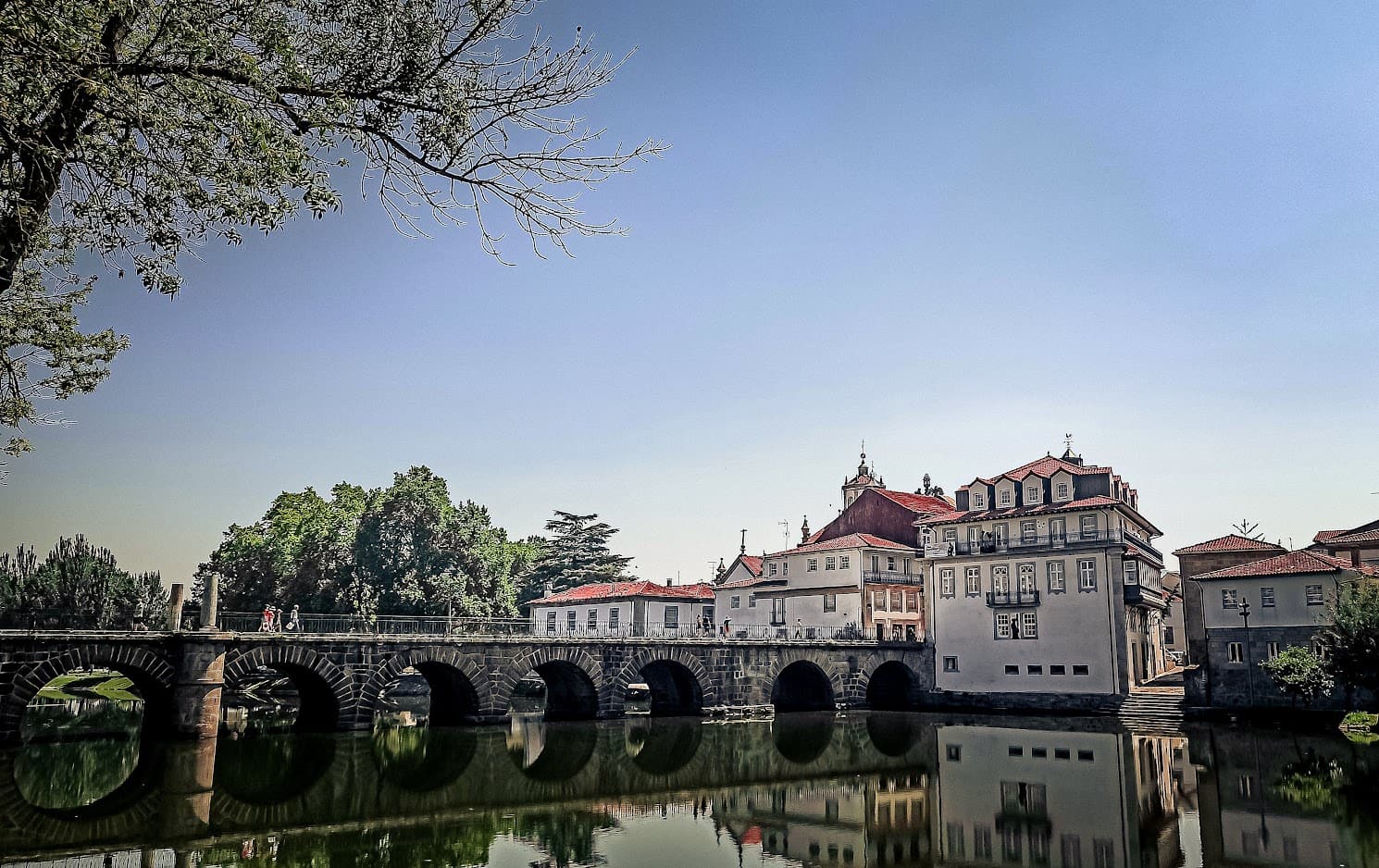
The occupation of the site long predates the castle. Here flourished the Roman Aquae Flaviae, a settlement linked to thermal springs and to an important crossroads, raised to the rank of municipium in the first century, in the time of the Flavian emperors. From that period there still survives, beside the castle, the remarkable Roman bridge of Chaves, which crosses the Tâmega and early on established the strategic vocation of the site.
After the period of Muslim rule and the Christian reconquest driven from Asturias, Chaves entered definitively into the Portuguese orbit. King Afonso III granted the town a charter in 1258 and ordered the rebuilding of its defences. It was in this context that construction of the keep began, towards which the inhabitants of the district contributed through payment of the anúduva. His successor, King Dinis (1279–1325), continued the undertaking, completing the tower and the town’s enclosure.
The Gothic keep
The most intact medieval element of the complex is the keep, Gothic in character and square in plan, measuring some twelve metres on each side and nearly twenty-eight metres in height. Internally it is arranged in several storeys roofed with barrel vaults, with a cistern at the lowest level. Since 1978 its floors have housed a military museum, which makes the tower the visitable heart of the fortress.
The strength of Chaves Castle lies not in the monumentality of its walls, today fragmentary, but in the continuity of the place: the same spur that the Romans watched over was the one that medieval and modern peoples disputed, always with their eyes fixed on Galicia.
The bastioned stronghold of the border
The northern frontier once again dictated the fate of Chaves in the context of the Restoration War. Between 1658 and the years that followed, the town’s walls were rebuilt according to a bastioned plan, lower and adapted to artillery, in keeping with the taste of the age. Dry moats were opened and advanced works were raised — among them the Madalena ravelin and the Fort of São Francisco — under the direction of the military governor Rodrigo de Castro, Count of Mesquitela. The medieval castle thus came to coexist with a “Vauban-style” defensive system that integrated Chaves into the network of strongholds along the land frontier.
That legacy links the complex to the nomination of the bastioned fortifications of the border, part of the Portuguese Tentative List for World Heritage, and places Chaves within the same defensive universe as strongholds such as Bragança and so many other Portuguese castles raised to guard the territory.
Visiting and understanding
Classified as a National Monument in 1938, Chaves Castle still dominates the historic centre of the town of Chaves. The keep and the surrounding garden, laid out over former stretches of wall, offer one of the finest overall readings of the evolution of Portuguese military architecture — from the medieval castle to the modern fortress — at one of the most northerly and most contested points in the country.
Frequently asked questions
- Can the keep of Chaves Castle be visited?
- Yes. Since 1978 the keep has housed a military museum spread across its floors, and it is the best-preserved medieval element of the complex.
- What is the connection between Chaves Castle and the Roman Aquae Flaviae?
- Chaves corresponds to Aquae Flaviae, a Roman settlement raised to the rank of municipium in the first century. The medieval castle rose on that same strategic site, beside the River Tâmega and the Roman bridge.
- When was Chaves Castle classified as a National Monument?
- The complex was classified as a National Monument in 1938.
Sources
Keep exploring
Heritage nearby
More places to discover from here. Approximate straight-line distances, within 50 km.