Places
Faro
Faro, capital of the Algarve: the walled Vila-a-Dentro, the cathedral, the Chapel of Bones and a historic core with Roman roots in ancient Ossonoba.
- Location
- Faro, Faro
Capital of the Algarve and head of its district, Faro is a city that combines port, salt marsh and historic centre along a coastal fringe sheltered by the Ria Formosa. Its heritage identity rests on a walled core of remarkable continuity — the Vila-a-Dentro — where Roman, Islamic and Christian layers overlap within a few hundred metres.
From Ossonoba to Faro
Settlement dates back to Antiquity: here flourished Ossonoba, one of the most important urban centres in the south of the Iberian Peninsula, active since Punic colonisation and consolidated in Roman times as a commercial port for agricultural produce, fish and ores. Its importance continued through Late Antiquity, when it was an early Christian episcopal see.
With the Muslim conquest, the settlement came to be called Santa Maria Ibn Harun — the probable origin of the place name Faro. Under Islamic rule the citadel was raised and the winding streets that still structure the old city were laid out. The Christian reconquest came in 1249, under Afonso III, making Faro one of the last Algarve strongholds to be incorporated into the kingdom of Portugal.
The plan of the Vila-a-Dentro is, in itself, a document: the labyrinthine layout betrays the Muslim city, while the great religious buildings mark the Christian appropriation of the same space.
The Vila-a-Dentro and its monuments
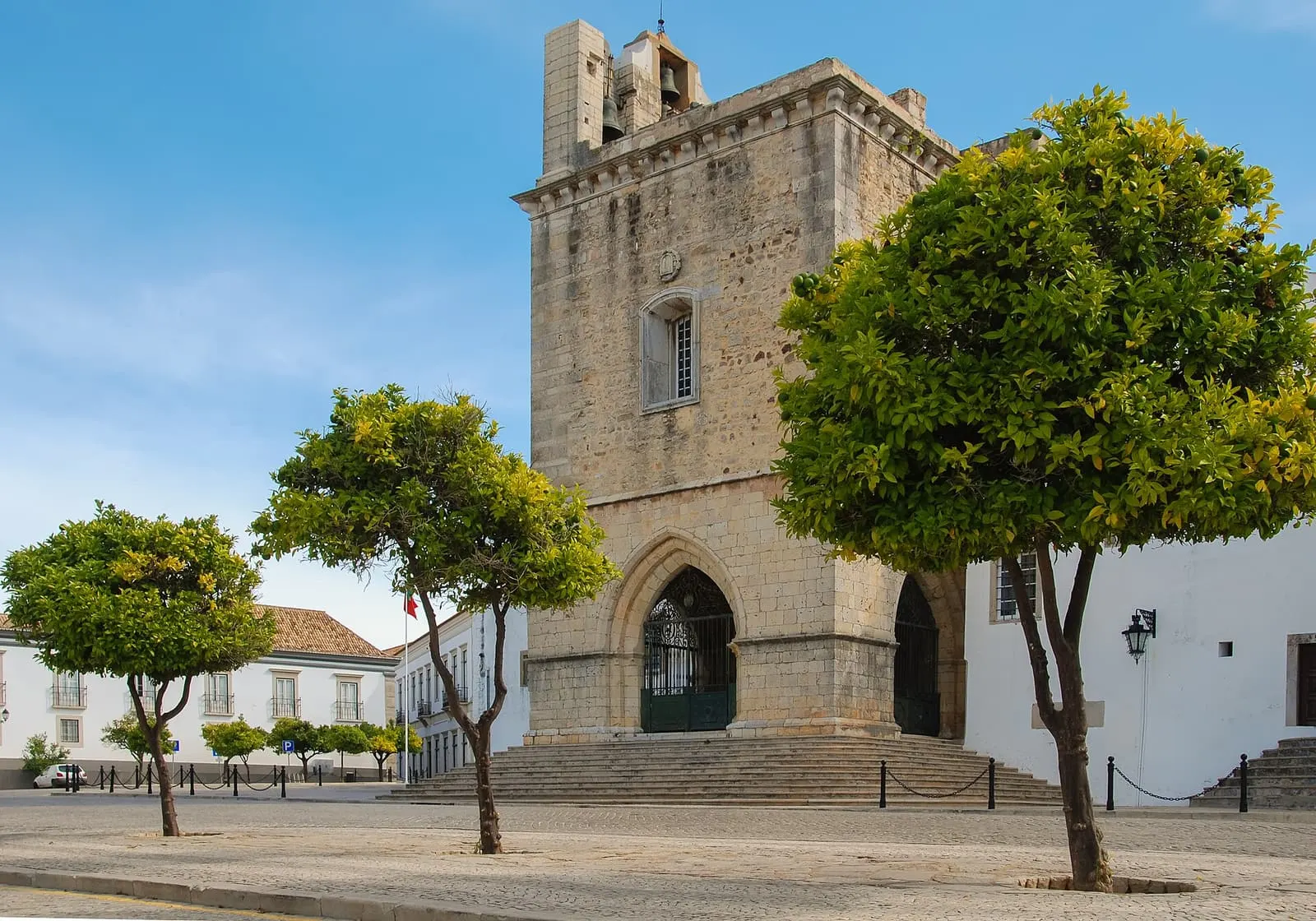
The heritage heart of Faro is the walled city, entered through two emblematic arches. The Arco da Vila, neoclassical in character, was designed in 1812 by the Genoese architect Francisco Xavier Fabri over a medieval gateway; the Arco do Repouso, plainer, preserves the memory of Afonso III’s entry. Within stands the Cathedral of Faro, a building of medieval origin rebuilt several times after the sack by the English troops of the Earl of Essex in 1596 and the earthquake of 1755.
Around the cathedral are arranged the former Episcopal Palace and the flagged square that forms one of the best-preserved urban spaces in the Algarve. The elevation of Faro to city status in 1540, and the transfer of the diocesan see from Silves to here in the sixteenth century, explain the density of ecclesiastical institutions concentrated within this perimeter.
Beyond the walls
Outside the Vila-a-Dentro, the Baroque city asserts itself in the Carmo Church, whose two-towered façade dominates one of Faro’s most scenographic squares. Adjoining the church is the celebrated Chapel of Bones, completed in 1816 and lined with the remains of more than a thousand Carmelite friars — one of the most striking ossuaries in the country, comparable to that of Évora.
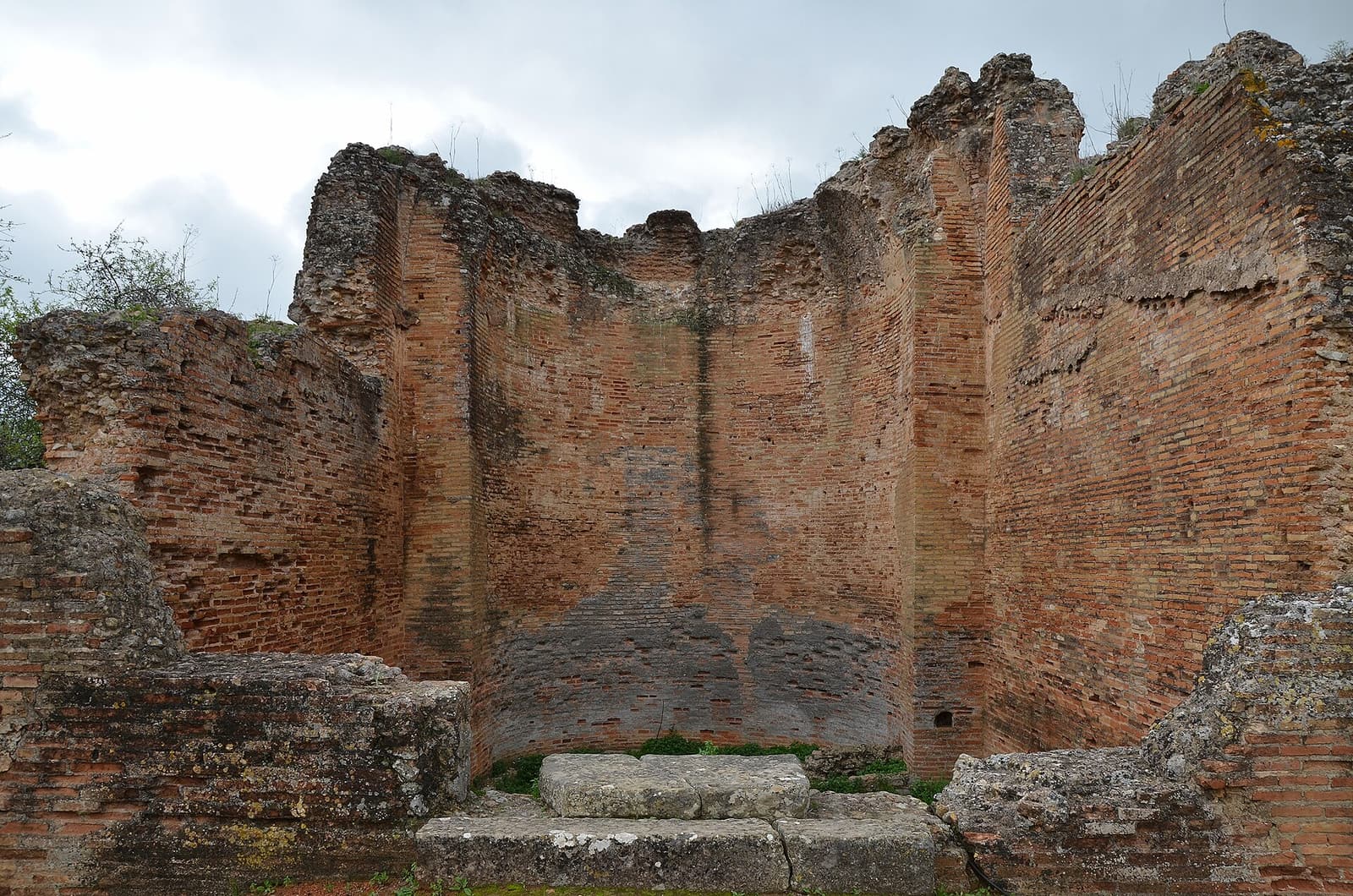
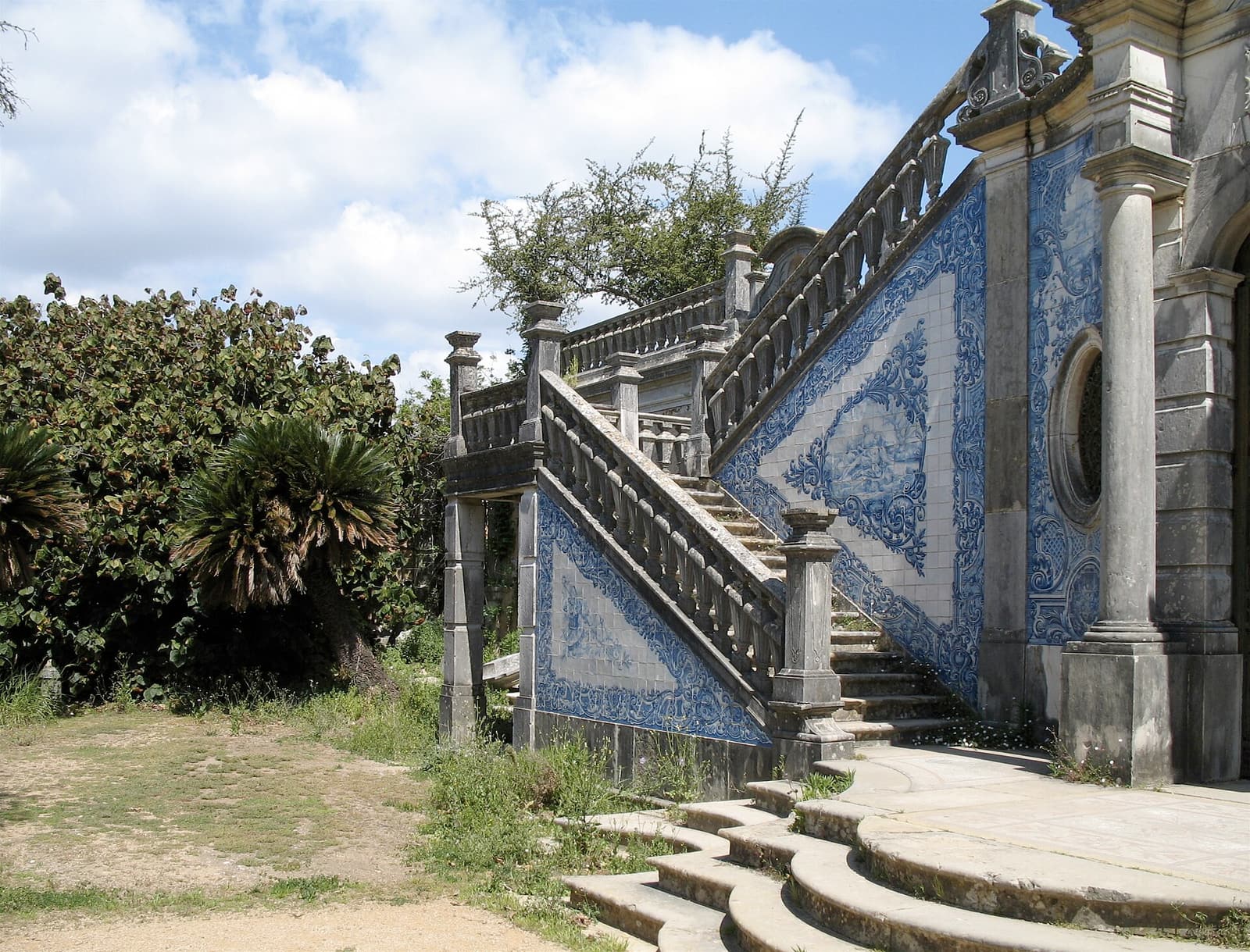
The surrounding territory extends the city’s historical depth. A few kilometres away, at Estoi, survive the remarkable Roman ruins of Milreu, with their temple-nymphaeum, and the scenographic Palácio de Estoi, a late example of Algarve romantic taste. To the east, the neighbouring town of Tavira offers an urban counterpoint of equal monumental richness, helping to compose the heritage mosaic of the leeward coast.
Today, Faro’s importance goes beyond its administrative role: the international airport, the university and the Ria Formosa make the city the region’s main gateway, without modern growth having erased the legibility of its old core — one of the most coherent readings of a walled city that the Portuguese south preserves.
Frequently asked questions
- Why is Faro the capital of the Algarve?
- Faro became the Algarve's principal administrative city above all after the earthquake of 1755, which devastated Lagos, then the head of the region. The transfer of the episcopal see from Silves to Faro in the sixteenth century had already strengthened its standing.
- What is Faro's Vila-a-Dentro?
- It is the oldest urban core of the city, encircled by the medieval walls. It brings together the cathedral, the former Episcopal Palace and narrow streets of Muslim and medieval origin, reached through the Arco da Vila and the Arco do Repouso.
- Can Faro's Chapel of Bones be visited?
- Yes. It forms part of the Carmo Church complex and is lined with the bones and skulls of more than a thousand Carmelite friars. It was completed in 1816 and is one of the best-known ossuaries in Portugal.
Sources
Keep exploring
Heritage nearby
More places to discover from here. Approximate straight-line distances, within 50 km.