Monuments
Church of Santo Ildefonso (Porto)
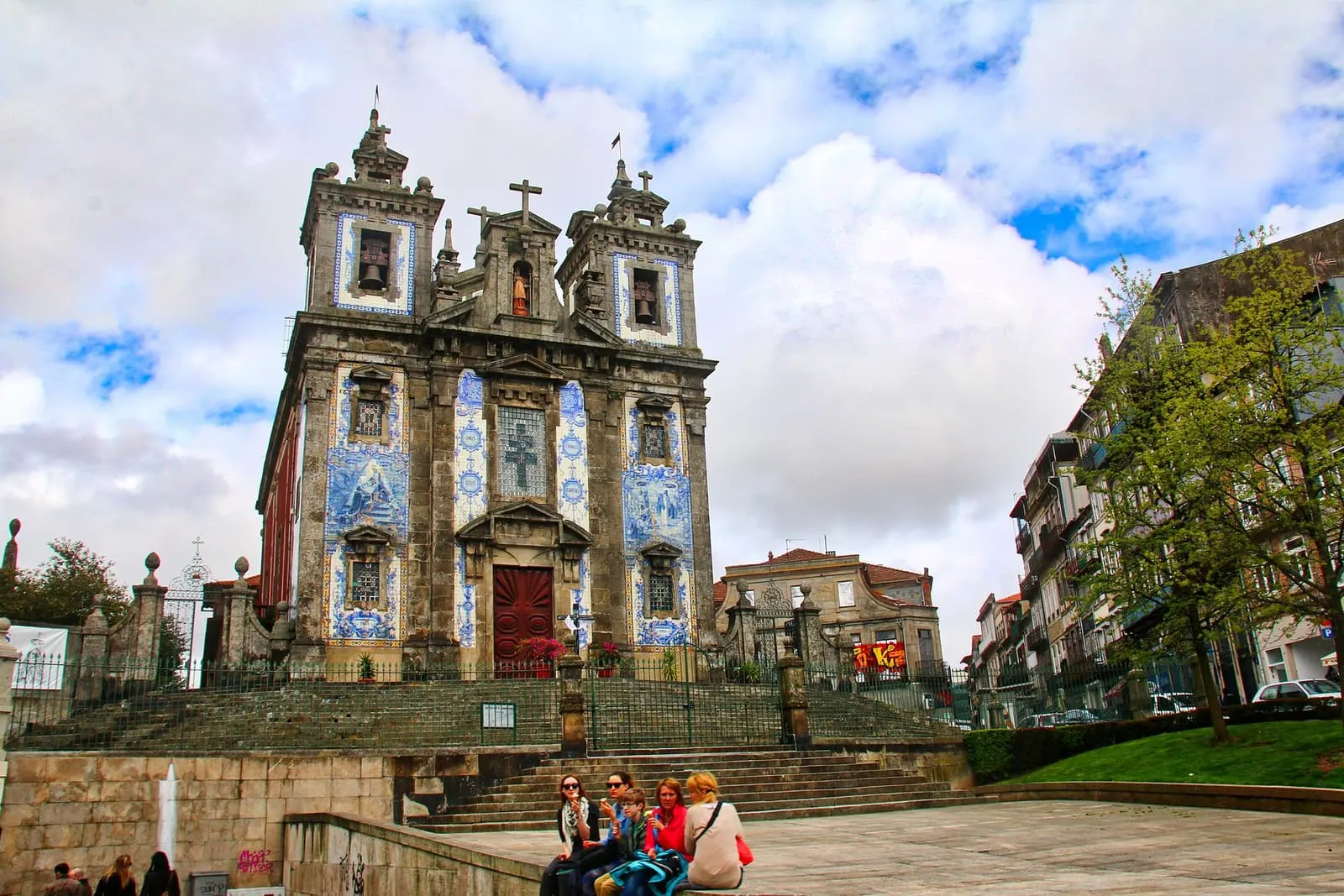
Baroque church in Porto, on the Praça da Batalha, famous for its façade clad in around 11,000 tiles by Jorge Colaço (1932).
- Location
- Porto, Porto
- Built
- 1709–1739
- Style
- Barroco
The Church of Santo Ildefonso rises on the Praça da Batalha, in the heart of Porto’s historic centre, at one of the highest and busiest points of the Baixa. Set on sloping ground, beside the foot of the Rua de Santo Ildefonso, it is one of the city’s most recognisable churches, above all for the great tilework that covers its main façade. The church is dedicated to Santo Ildefonso of Toledo, a Visigothic archbishop and theologian of the seventh century.
History and construction
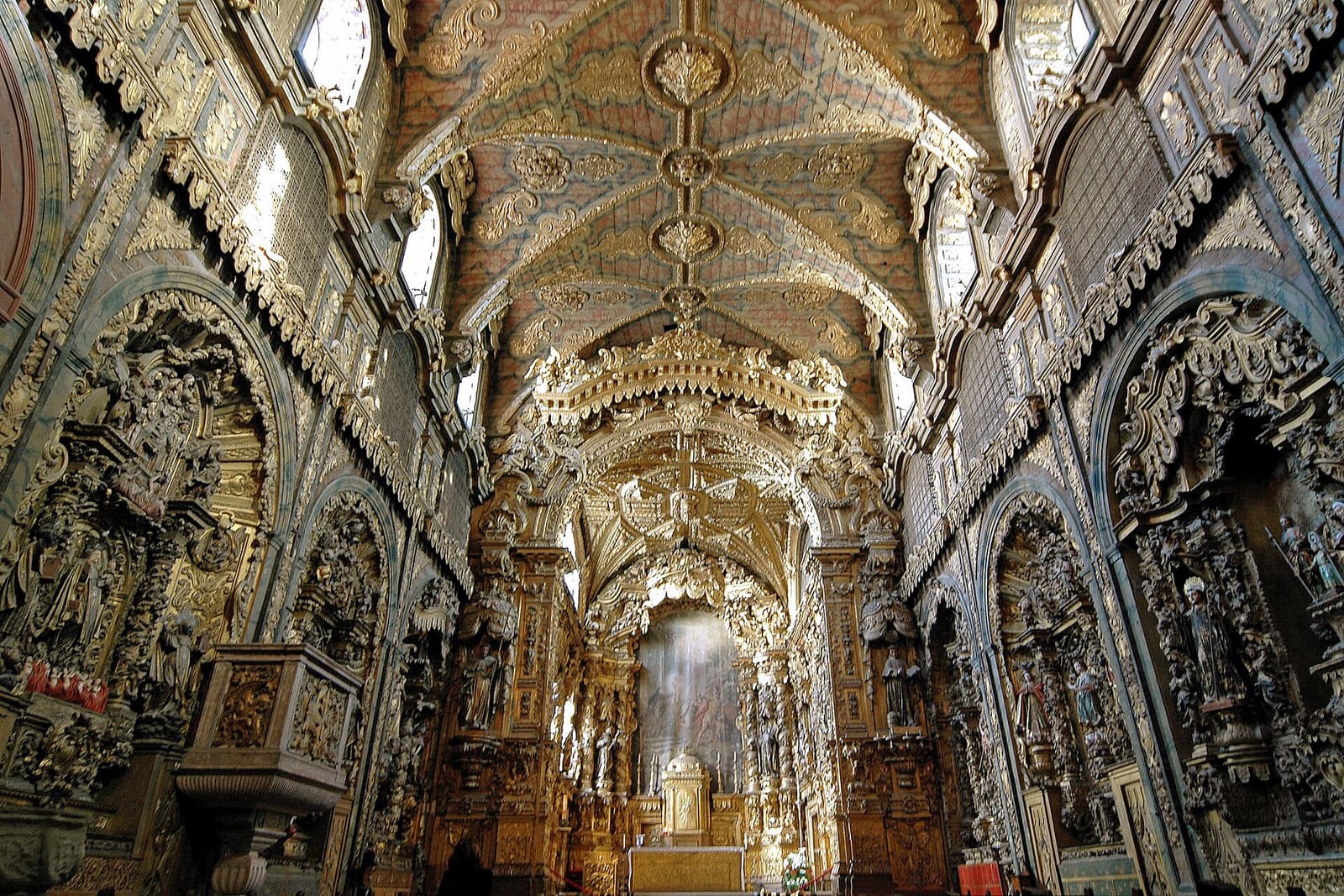
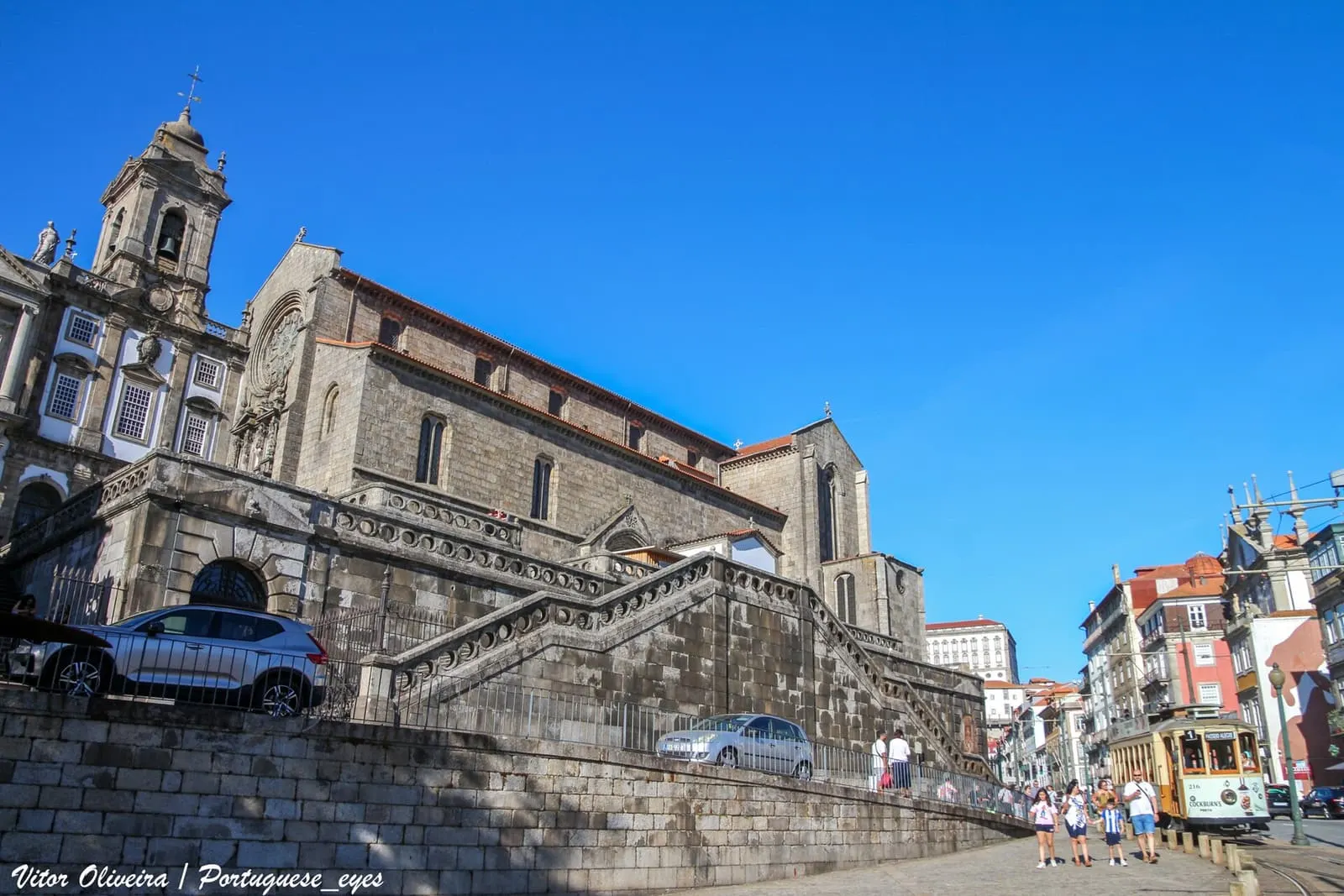
The present church replaced an older chapel, demolished at the start of the eighteenth century. The new building was raised between 1709 and 1739, a project spanning some three decades, and the edifice was solemnly consecrated on 18 July 1739. The plan presents a nave of polygonal form, characteristic of the Porto Baroque of the period, with a wooden ceiling and stucco ornamentation. The work reflects the artistic dynamism of eighteenth-century Porto, the same milieu in which other religious building sites flourished, such as that of the Church of São Francisco and that of the Church of Carmo.
Inside, the main altarpiece stands out, of Baroque and Rococo carved gilt woodwork from the first half of the eighteenth century, attributed to the design of the Italian architect and painter Nicolau Nasoni, a central figure of Porto’s art in this era. The side altars combine Neoclassical solutions with Rococo carving in the collateral chapels. Through the nineteenth century the building was damaged by the elements and by the clashes of the Siege of Porto (1832–1833), and was the object of successive campaigns of repair.
The tiled façade by Jorge Colaço
The monument’s most celebrated element is the cladding of the façade, executed in 1932 from designs by the painter and ceramicist Jorge Colaço (1868–1942), one of the great names of figurative Portuguese azulejo of the early twentieth century. The panel, composed of around 11,000 blue-and-white tiles, develops an iconographic programme combining scenes from the life of Santo Ildefonso, allegories of the Eucharist and episodes from the New Testament.
Colaço is also the author of the monumental panels at the São Bento station, a few metres away, which makes this part of Porto a true itinerary of narrative tilework from the first third of the twentieth century. The cladding of Santo Ildefonso is today one of the calling cards of Porto tilework, often compared, for its scale and its scenographic ambition, to the great tiled surfaces that distinguish the city.
Classification and visit
The complex is classified as a Property of Public Interest, forming part of the vast protected heritage of Porto’s historic centre, recognised by UNESCO. Its location, on the axis between the Praça da Batalha and the Cathedral, makes it a regular stop for those exploring the upper town. A few steps away stands the Porto Cathedral, the medieval core of the city, allowing a single route to bring together the Romanesque cathedral and this exponent of religious Baroque clad in tile.
Frequently asked questions
- How many tiles cover the façade of the Church of Santo Ildefonso?
- The façade is clad in around 11,000 tiles, applied in 1932 from designs by Jorge Colaço, depicting scenes from the life of Santo Ildefonso and Eucharistic allegories.
- Where is the Church of Santo Ildefonso?
- It stands on the Praça da Batalha, in the historic centre of Porto, beside the top of the Rua de Santo Ildefonso and close to the São Bento station.
- When was the present church built?
- The church was erected between 1709 and 1739, replacing an older chapel; it was consecrated on 18 July 1739.
Sources
Keep exploring
Heritage nearby
More places to discover from here. Approximate straight-line distances, within 50 km.