Places
Lamego
Lamego, a historic town in the district of Viseu, in the Douro: a former bishopric with a medieval cathedral, a castle and the Sanctuary of Nossa Senhora dos…
- Location
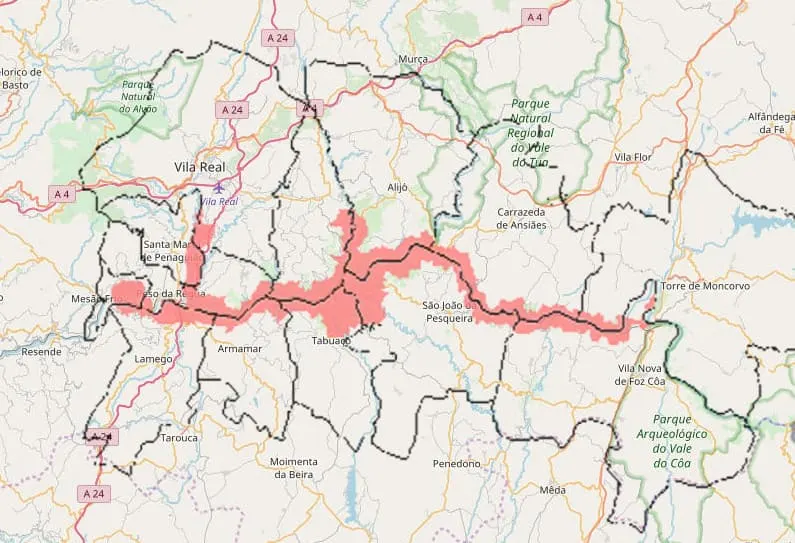
- Lamego, Viseu
Perched on the slopes that descend towards the valley of the Douro, Lamego is one of the oldest towns in northern Portugal. The seat of a municipality in the district of Viseu and part of the Douro sub-region, it preserves a density of monuments rare for its size, the fruit of centuries as the head of one of the most venerable bishoprics in the Iberian Peninsula. Its history blends Roman roots, Suebi and Muslim presence, and a Christian reconquest consolidated in 1057 by Ferdinand the Great of León — almost a century before the kingdom was founded.
A town older than Portugal
The origins of Lamego are lost in Antiquity: it is thought to have been a centre of the civitas of the Coelerni and, later, a fortified settlement disputed between Christians and Muslims throughout the tenth and eleventh centuries. This antiquity nourished one of the most famous — and most controversial — episodes of the national memory: the legendary Cortes of Lamego, at which Afonso Henriques was said to have been acclaimed king and the rules of succession to the throne were said to have been established.
The document describing the Cortes of Lamego, made public in the seventeenth century by Friar António Brandão, is today recognised as apocryphal: a patriotic forgery intended to support independence from Castile. The legend says more about the construction of Portuguese identity than about the twelfth century.
Its status as an ancient diocese — and the curious fact that it is the only Portuguese episcopal seat that does not correspond to a district capital — explains much of the religious heritage that still defines the town today.
The cathedral, the castle and the museum
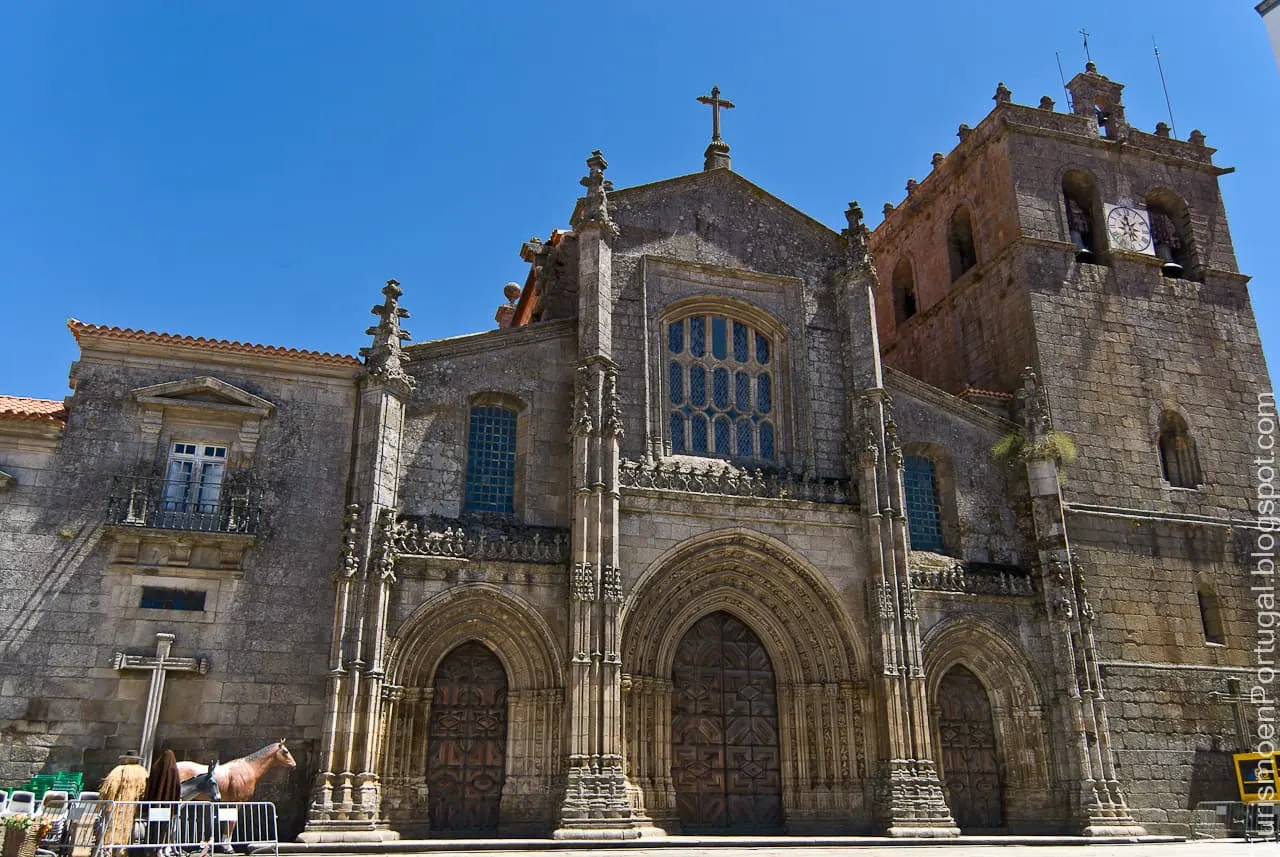
In the heart of the historic centre rises the Cathedral of Lamego, whose Romanesque tower predates nationhood and to which Gothic, Manueline and, above all, a thorough Baroque renewal were added in the seventeenth and eighteenth centuries. Above the medieval houses survives the Castle of Lamego, classified as a National Monument since 1951, with its keep, its vaulted cistern and stretches of wall that command the valley.
A few steps from the cathedral, the former Episcopal Palace — rebuilt in the late eighteenth century — houses the Museum of Lamego, founded in 1917. It is one of the richest regional museums in the country: it brings together sixteenth-century painting from the circle of Vasco Fernandes (Grão Vasco), Flemish tapestries from Brussels, gilded woodwork, tilework and archaeology, offering a synthesis of the arts that flourished in the region of the Douro and in neighbouring Viseu.
The sanctuary and the pilgrimage
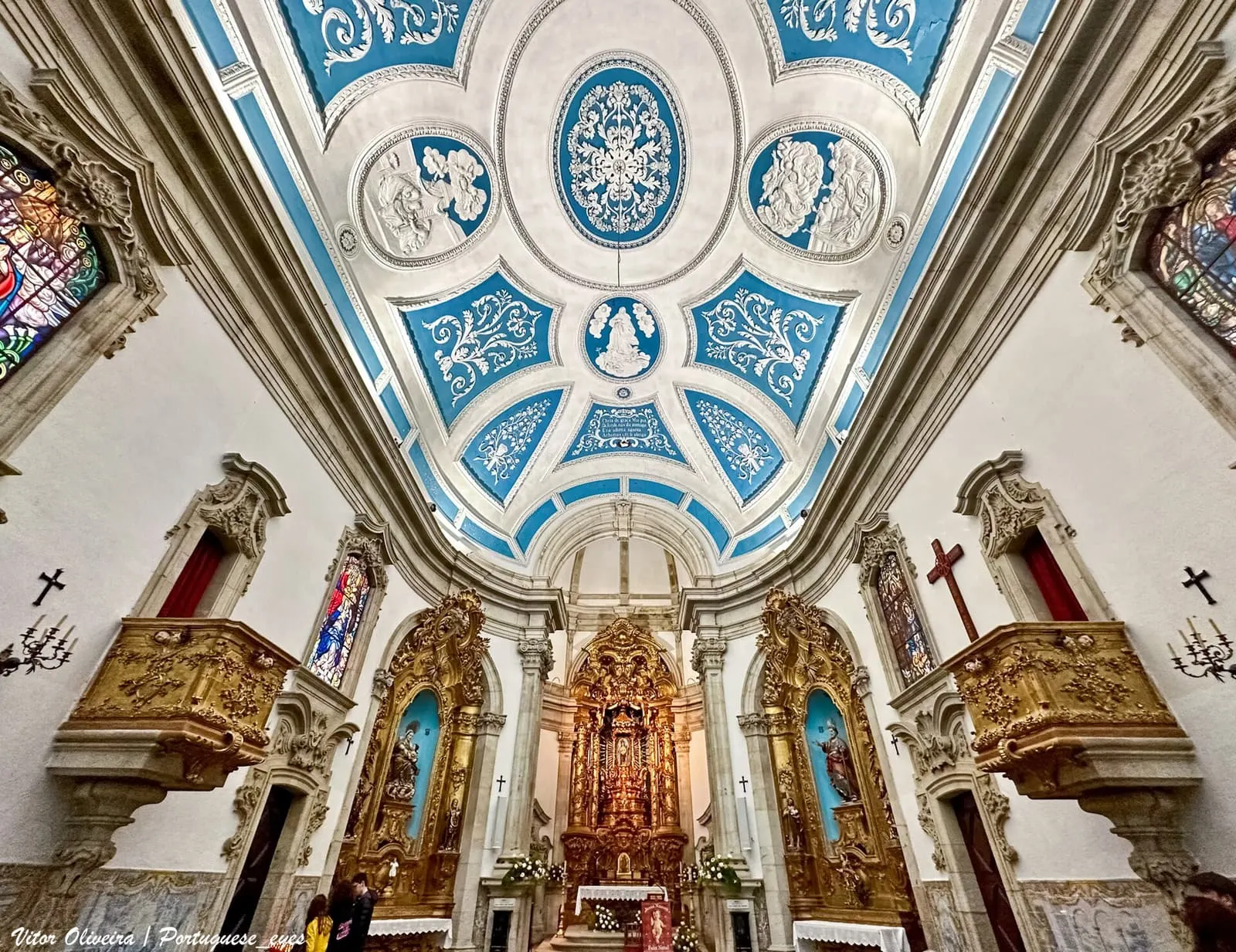
The emblem of Lamego is the Sanctuary of Nossa Senhora dos Remédios, set on the summit of the Monte de Santo Estêvão. It is reached by a monumental Baroque stairway of some six hundred steps, adorned with landings, fountains, statues and panels of blue-and-white tiles — one of the most spectacular ensembles of scenographic Stations of the Cross in the Portuguese Baroque, often compared to the Bom Jesus do Monte in Braga.
Every year, in early September, the town fills for the feast of its patron saint, with processions, festivities and the procession of the triumphs, a moment when popular devotion and tradition mingle in the streets of the old Douro town.
A town of stone, wine and faith, Lamego combines the intimate scale of a well-preserved historic centre with the monumental ambition of one that was, for centuries, the spiritual capital of a vast territory between the Douro and the Beira.
Frequently asked questions
- In which district is Lamego located?
- Lamego belongs to the district of Viseu, in the Norte region and the Douro sub-region, and is the only seat of a Portuguese diocese that does not coincide with a district capital.
- Did the Cortes of Lamego really exist?
- There is no proof that they ever existed. The supposed Cortes of Lamego, said to have acclaimed Afonso Henriques, rest on a seventeenth-century document now regarded as apocryphal, created to legitimise Portugal's independence.
- What are the main monuments of Lamego?
- The most notable are the Cathedral, the medieval Castle, the Museum of Lamego and, above all, the Sanctuary of Nossa Senhora dos Remédios, with its celebrated Baroque stairway.
Sources
Keep exploring
Heritage nearby
More places to discover from here. Approximate straight-line distances, within 50 km.