Monuments
Lamego Cathedral
Lamego Cathedral, a Romanesque-origin cathedral in Lamego (Viseu), featuring an early tower, Renaissance cloister and ceilings painted by Nicolau Nasoni.
- Location
- Lamego, Viseu
- Built
- 1159–1191 (núcleo medieval)
- Style
- Românico, Gótico, Renascentista e Barroco
Lamego Cathedral, dedicated to Our Lady of the Assumption, rises in the heart of Lamego city in Viseu district, serving as the seat of its namesake diocese. It stands as one of the most eloquent examples of architectural stratification in Portuguese cathedrals: beneath a predominantly Gothic and Baroque appearance lies its Romanesque core, where nearly seven centuries of construction campaigns overlap without cancelling each other. It has been classified as a National Monument since 1910.
From Romanesque foundations to Gothic temple
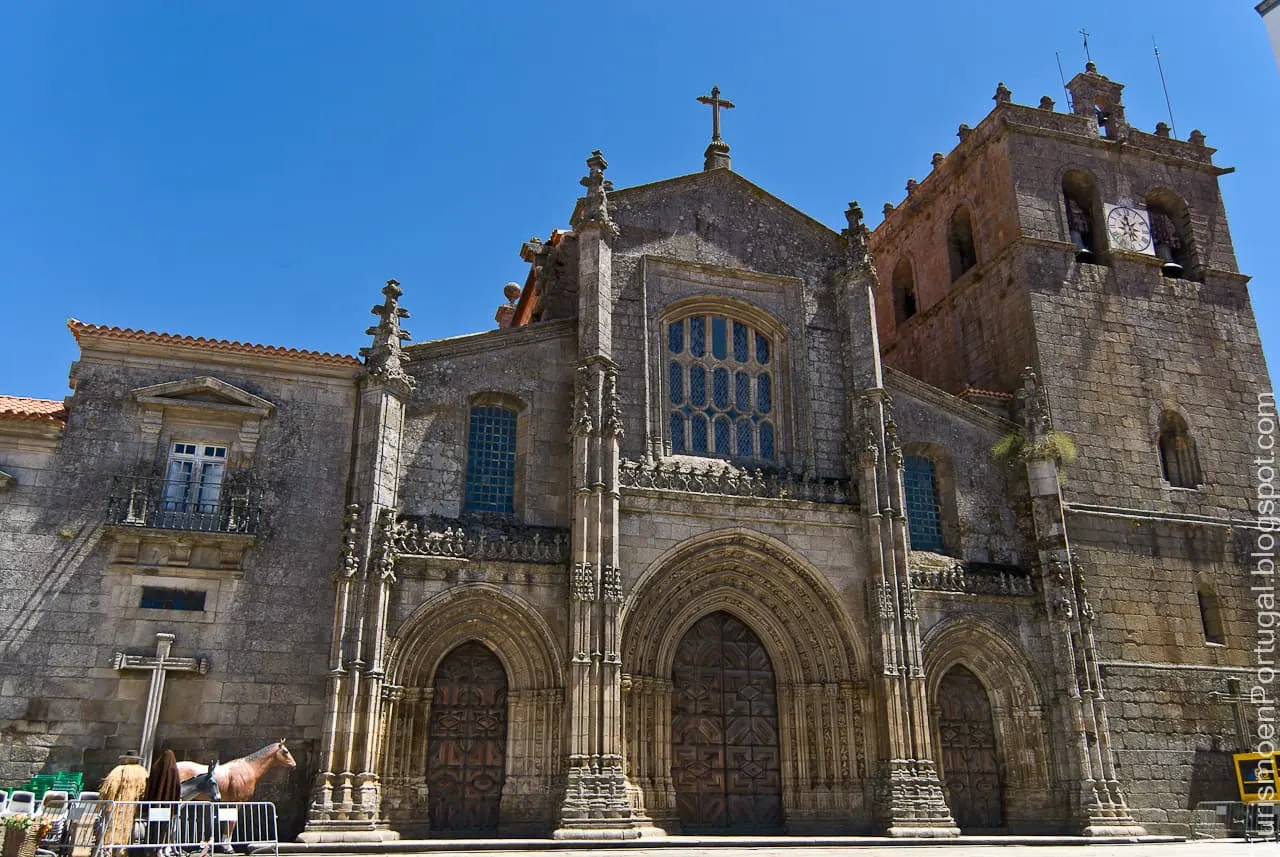
After the restoration of Lamego diocese in the 12th century, construction began on a larger temple in Rossio, the lower part of the future city. Work likely started around 1159, the church was consecrated to Saint Mary and Saint Sebastian in 1175, and its probable completion dates to about 1191. From the original Romanesque structure mainly survives the square-plan tower, located to the left of the facade, marked by sparse and reduced fenestration - a sober testament to the Romanesque architecture that spread through the Douro valley, comparable to other temples of Romanesque architecture in Portugal.
In subsequent centuries the building underwent profound transformations. The church body was rebuilt in Gothic style, giving the cathedral the verticality and rhythm of arcades that still define it today. Successive renovations extended into the 18th century, making the Cathedral a palimpsest where each era left its mark.
The Renaissance cloister
Lamego’s cloister represents one of the most successful moments of transition between Gothic and Renaissance in Northern Portugal.
A 16th-century undertaking, the cloister was completed in 1557 and organizes itself in two registers: the lower level formed by well-proportioned round arches, and the upper level consisting of a gallery of simple columns supporting an arcade. It presents four sections of arches from the transitional period between Gothic and Renaissance, reflecting the erudite taste then emerging in Portuguese religious architecture, in dialogue with what was being built in nearby Viseu Cathedral.
Nasoni and Baroque splendour
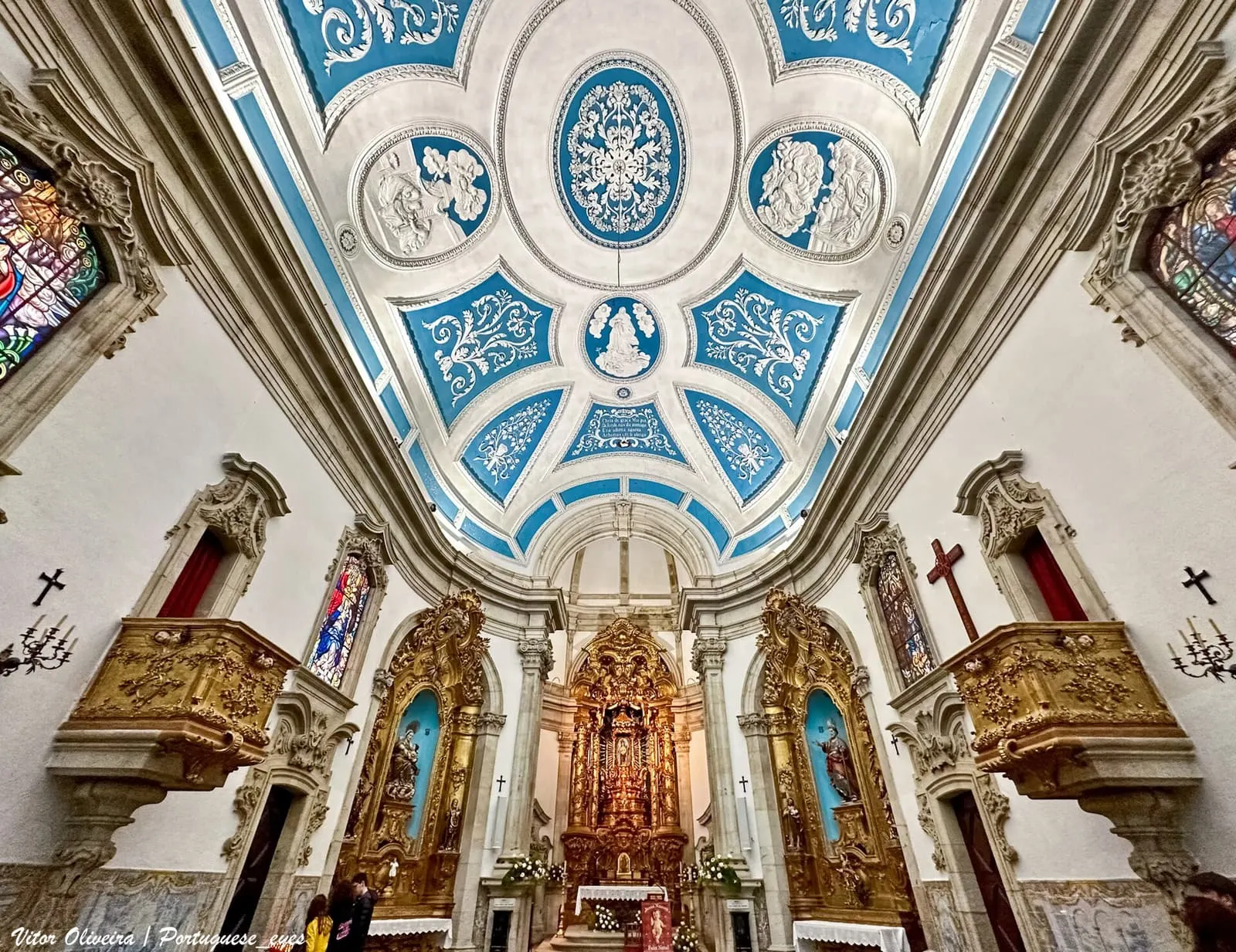
The cathedral’s great decorative campaign belongs to the 18th century. Between 1737 and 1738, Italian architect and painter Nicolau Nasoni - a central figure of Northern Portugal’s Baroque - painted the nave ceilings with illusionistic perspective compositions framing Old Testament episodes within feigned architectural frames. These paintings, of triumphant theatricality, make Lamego Cathedral one of the highlights of ceiling painting in the country.
The cathedral forms part of a broader heritage route that makes Lamego a destination for pilgrimage and visits: just steps away, the city culminates in the monumental Sanctuary of Our Lady of Remedies, whose Baroque stairway dialogues with the taste Nasoni helped disseminate. To understand the monument’s urban and historical context, it’s worth exploring the page dedicated to Lamego and the collection of Portuguese Cathedrals.
Thus Lamego Cathedral offers, in a single building, a synthesis of Portugal’s religious architectural history - from the discreet Romanesque of its primitive tower to the exuberance of its 18th-century ceilings - remaining a living testament to the centrality that Lamego diocese maintained throughout the centuries.
Frequently asked questions
- When was Lamego Cathedral built?
- The medieval cathedral began construction around 1159 after the diocese was restored, was consecrated in 1175 and completed around 1191. It underwent successive renovations until the 18th century.
- Who painted the ceilings of Lamego Cathedral?
- The ceilings were painted between 1737 and 1738 by Italian architect and painter Nicolau Nasoni, featuring Baroque-style perspective compositions framing biblical episodes.
- What remains of the original Romanesque construction?
- Mostly the square tower on the left side of the facade survives, with sparse fenestration - a vestige of the primitive 12th-century temple.
Sources
Keep exploring
Heritage nearby
More places to discover from here. Approximate straight-line distances, within 50 km.