Monuments
Miranda do Douro Cathedral
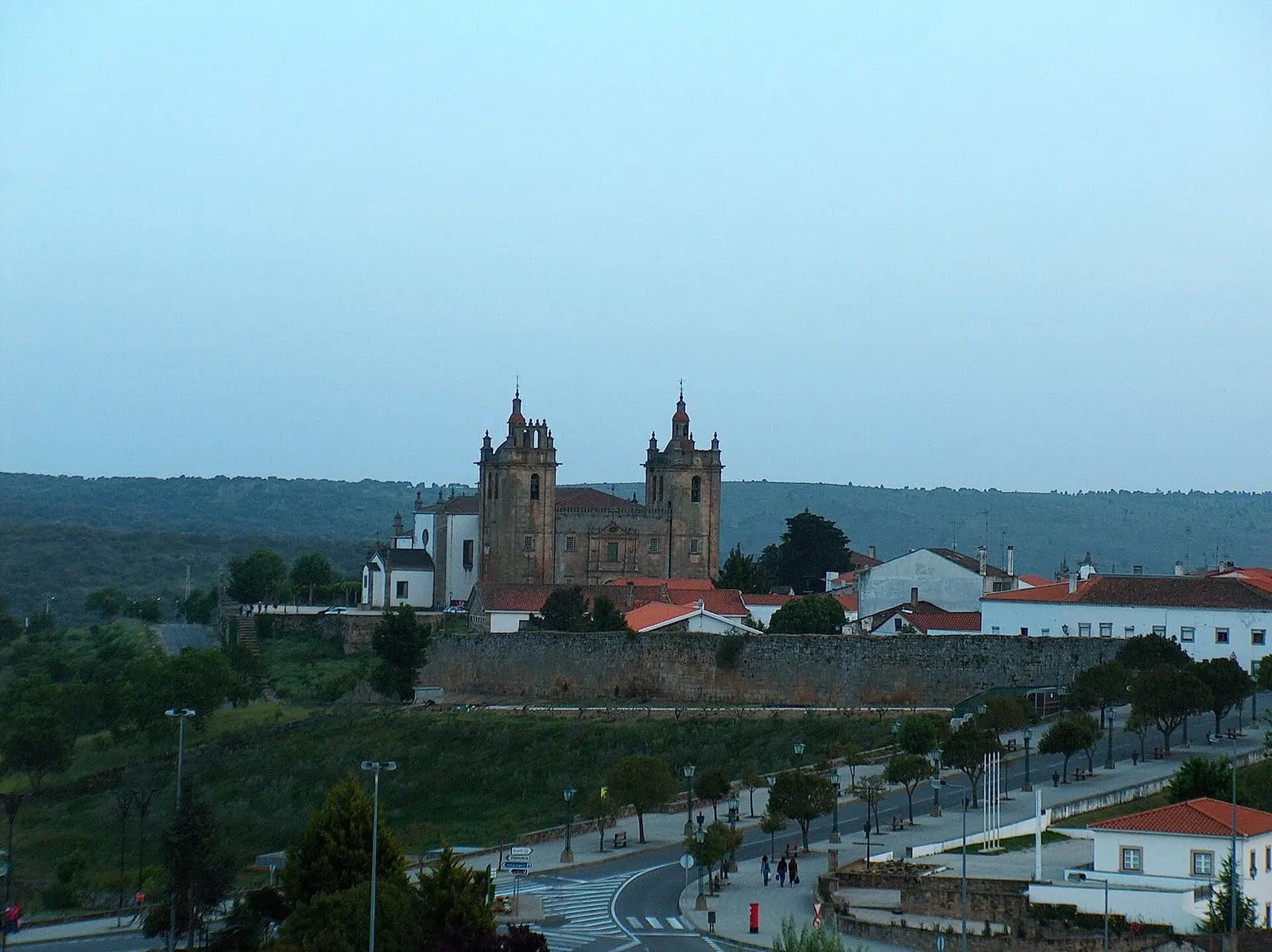
Miranda do Douro Cathedral, a former Renaissance and Mannerist cathedral in the Trás-os-Montes plateau, guardian of the 'Menino Jesus da Cartolinha'.
- Location
- Miranda do Douro, Bragança
- Built
- 1552–c. 1610
- Style
- Maneirismo
In the far northeast of Portugal, overlooking the border gorge of the Douro River, Miranda do Douro Cathedral stands as the most imposing testament to the brief yet remarkable period when this small Trás-os-Montes town was a bishopric seat. Built in granite throughout the second half of the 16th century, the former cathedral dominates the historic center’s houses and asserts itself in the Mirandese plateau landscape as a monument of severe grandeur.
A Cathedral Born from a Diocese
The building’s history is inextricably linked to the creation of the Diocese of Miranda. By papal bull from Pope Paul III on May 22, 1545, and by the will of King João III, the town was elevated to city status and became a new episcopal seat—a decision of clear political strategy in a borderland contested with Castile. To endow the young diocese with a cathedral worthy of its status, the project emerged in 1549, and construction began in 1552 under the direction of Gonçalo de Torralva and Miguel de Arruda, two of the kingdom’s most esteemed architects.
The construction spanned over half a century: the chancel was consecrated in 1566 by Bishop António Pinheiro, but the complex was only substantially completed in the first decade of the 17th century. This lengthy undertaking is reflected in the temple’s architectural language.
Mannerist Language in Trás-os-Montes Granite
The cathedral is one of the most representative works of Portuguese religious Mannerism, with clear echoes of the austerity of the Spanish El Escorial. It features a hall church (Hallenkirche) plan with three naves of equal height, divided into four bays by Tuscan pillars supporting ribbed vaults. The main façade, flanked by two towers, combines the sobriety of granite with a classical rhythm of pilasters and pediments, conveying the dignity befitting a borderland cathedral.
The Mannerism of Miranda Cathedral translates, in stone, the Crown’s assertion of this borderland stronghold: a temple that was simultaneously God’s house and a bulwark of sovereignty.
Inside, the altarpiece ensemble stands out, with the magnificent carved main altarpiece and a rich collection of decorative arts accumulated over the centuries. The monument was classified as a National Monument in 1910.
The ‘Menino Jesus da Cartolinha’
No element of the cathedral is as beloved in popular memory as the Menino Jesus da Cartolinha, a small 18th-century statue of the Child Jesus venerated in a gilded oratory. It is distinguished by the top hat it wears and an extensive wardrobe of outfits, capes, and accessories donated by devotees, periodically changed throughout the liturgical year. Legend associates it with the city’s defense during the 1762 Castilian siege, making it an identity symbol of Mirandese land, alongside the Pauliteiros de Miranda and the Capa de Honras that distinguish this culturally unique territory where Mirandese is spoken.
Miranda’s cathedral primacy was short-lived. In 1780, for strategic reasons, the diocese was transferred to Bragança through the bull Romanus Pontifex, giving rise to the current Diocese of Bragança-Miranda. The former episcopal temple then became a co-cathedral, a dignity it retains to this day. Visitors to Miranda do Douro thus find a cathedral whose architectural grandeur far exceeds the scale of the town that saw its birth—one of the keys to understanding the singular history of this borderland corner.
Frequently asked questions
- Why did Miranda do Douro Cathedral cease to be a cathedral?
- The Diocese of Miranda, established in 1545, was transferred to Bragança in 1780 by the papal bull Romanus Pontifex. Since then, the temple has served as a co-cathedral, maintaining shared cathedral dignity.
- Who is the 'Menino Jesus da Cartolinha'?
- It is an 18th-century small statue of the Child Jesus venerated in the cathedral, famous for its top hat and wardrobe of outfits donated by devotees—one of the most unique icons of Trás-os-Montes popular religiosity.
- When did construction of Miranda do Douro Cathedral begin?
- Work began in 1552 under the direction of Gonçalo de Torralva and Miguel de Arruda. The chancel was consecrated in 1566, and the complex was completed in the first decade of the 17th century.
Sources
Keep exploring
Heritage nearby
More places to discover from here. Approximate straight-line distances, within 50 km.