Resources
Military Tourism: Portugal's Fortifications Route
Military Tourism is the state program for the valorization of Portugal's military heritage, from medieval castles to star forts, launched in 2019.
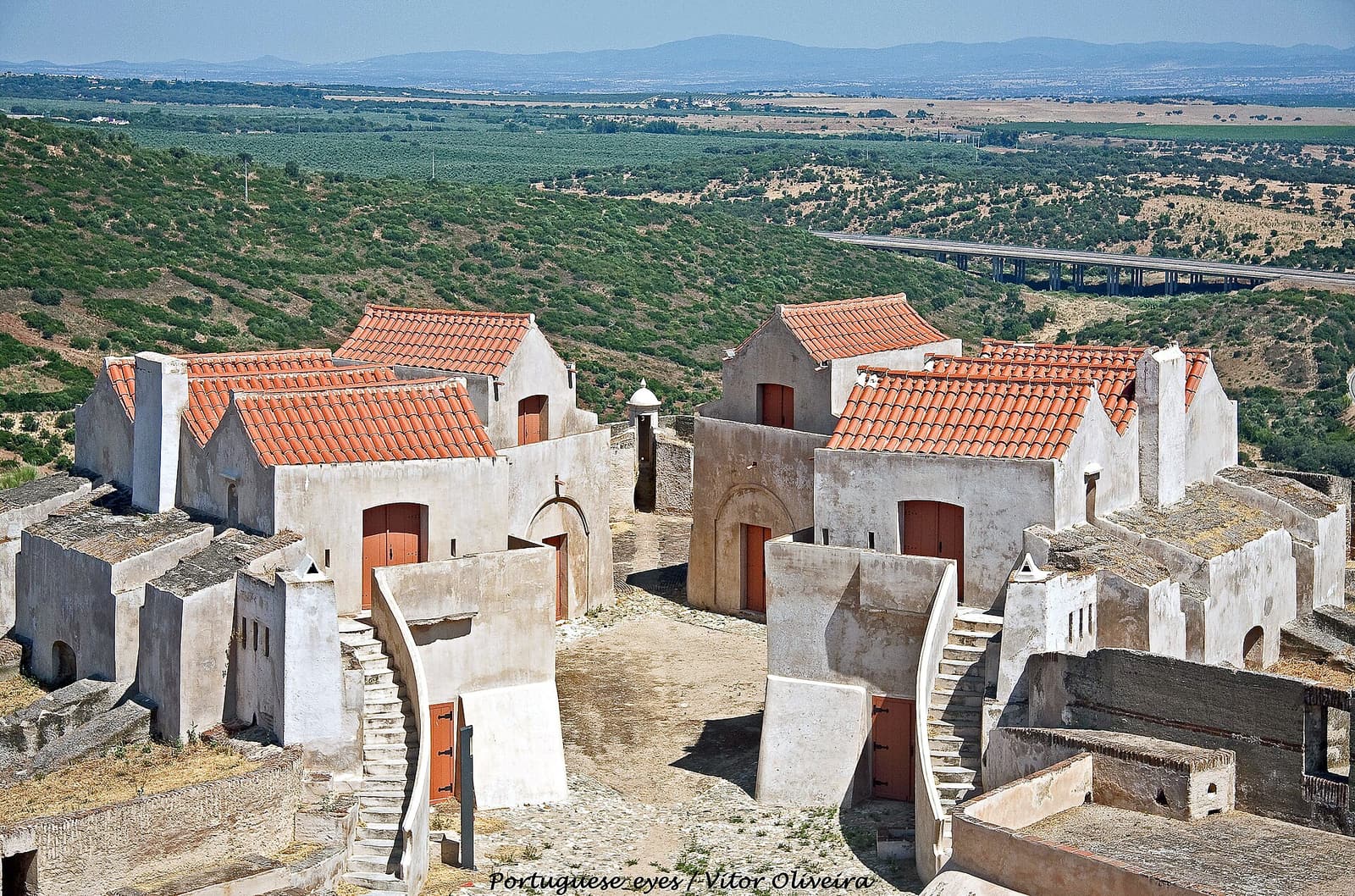
- Built
- 2019
Military Tourism is the state program that seeks to valorize and make accessible Portugal’s military heritage, from medieval castles to modern star forts. Presented on July 25, 2019, at Palácio Foz in Lisbon by then Minister of National Defense João Gomes Cravinho, it arose from the recognition that Portugal’s history can be read through its military history — and that this heritage, scattered across the territory, lacked a unifying brand and narrative.
A heritage scattered across the country
The defense of the territory has left in Portugal one of the densest networks of fortifications in Europe, accumulated over more than two millennia. The Military Tourism program inventories over 253 castles, more than 300 forts, fortresses, and small forts, around 100 lighthouses and beacons, over 70 hillforts and fortified settlements, and dozens of tower houses, along with redoubts, watchtowers, walls, and military museums. This collection spans eras and techniques: from Iron Age fortified settlements to Romanesque and Gothic castles on the medieval frontier, from 17th-century star forts to 19th-century defensive lines.
This diversity makes the subject difficult to grasp as a whole. Military Tourism addresses this issue by bringing together information about each site on a single platform — www.turismomilitar.gov.pt — and proposing circuits that connect distant monuments through a historical thread. The general overview of typologies and the evolution of defensive architecture is developed on the page dedicated to fortifications.
Coordination and itineraries
The program is a project of the Ministry of National Defense, coordinated by the Directorate-General for National Defense Resources, in partnership with Turismo de Portugal, local authorities, and branches of the Armed Forces. Its structure is based on thematic routes: the Route of the Castles of the National Flag, which visits the strongholds displaying the flag in the border region and the Algarve; the Military Museums and Collections Itinerary; and National Road 2, which crosses the country from Chaves to Faro.
Several of these circuits intersect with existing classified itineraries. This is the case of the Star Forts Route of the Border, which links Almeida, Elvas, Marvão, and Valença, or the Border Garrison Town of Elvas, a World Heritage Site since 2012, whose Forte da Graça is considered one of the finest examples of 18th-century European military architecture. North of Lisbon, the Lines of Torres Vedras — over a hundred forts and military roads built between 1809 and 1812 against the Napoleonic invasion and classified as a National Monument in 2019 — constitute another major integrated complex.
From defense to cultural enjoyment
More than a catalog, Military Tourism proposes a shift in perspective: reading structures designed for war as cultural and tourist resources, integrated into the lives of the surrounding communities. The program relies on interpretation centers, common signage, and local partnerships, and was accompanied at its launch by an agreement with RTP for television promotion.
By placing an Iron Age hillfort, a fortified cathedral, a border castle, and a star fort side by side, the program restores meaning to a heritage that, for centuries, defined the national territory in stone, earth, and calculation. It is also a tool for tourism decentralization, bringing visitors to inland regions where these fortifications are often the main monument.
Frequently asked questions
- What is Military Tourism?
- It is a program by the Ministry of National Defense, presented in July 2019, that brings together under a single brand and platform Portugal's vast military heritage — castles, forts, fortresses, lighthouses, hillforts, and museums — organizing it into visit itineraries.
- Who coordinates the program?
- Coordination falls to the Ministry of National Defense, through the Directorate-General for National Defense Resources, in collaboration with Turismo de Portugal, local authorities, and branches of the Armed Forces.
- What type of monuments does it include?
- According to the program itself, over 253 castles, more than 300 forts, fortresses, and small forts, around 100 lighthouses, over 70 hillforts and fortified settlements, as well as tower houses, redoubts, watchtowers, walls, and military museums.
- What routes does it include?
- Among the proposed itineraries are the Route of the Castles of the National Flag (in the border region and the Algarve), the Military Museums and Collections Itinerary, and National Road 2.
Sources
Resources for research
Find the sources. Follow the story.
Guides to researching buildings, exploring museum collections and understanding heritage protection.
SIPA
Get to know the architectural inventory, building records and documentary archive.
Read the guideMuseum collectionsMatrizNet
Explore the museum catalogue and records of works, materials, authorship and provenance.
Read the guideHeritage protectionHeritage classification
Understand cultural property categories and the levels of national, public and municipal interest.
Read the guide