Monuments
Pegões Aqueduct
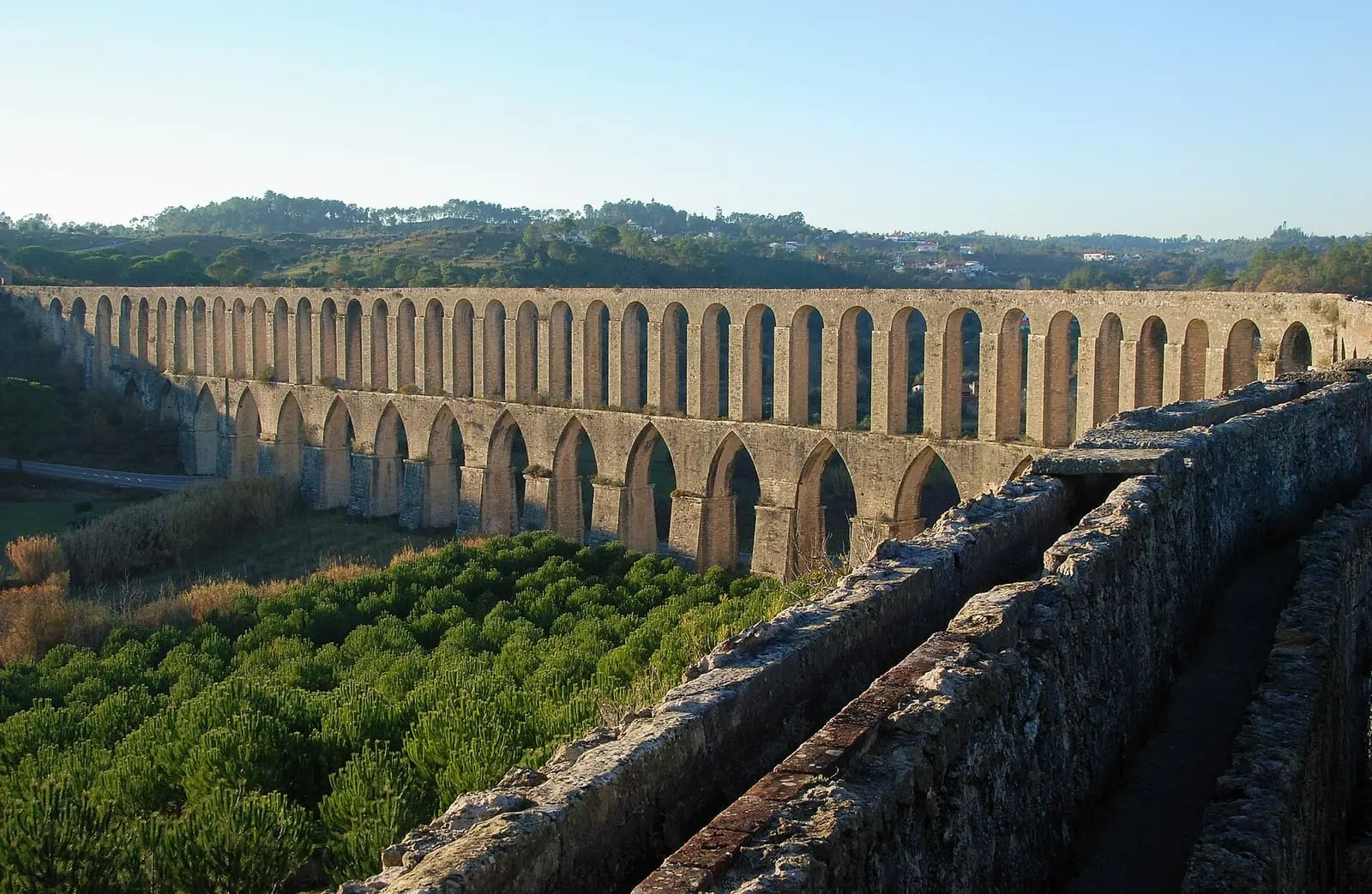
The Pegões Aqueduct in Tomar: a Mannerist work by Filipe Terzi that supplied the Convent of Christ with 180 arches spanning the Pegões valley.
- Location
- Tomar, Santarém
- Built
- 1593–1619
- Style
- Maneirista
The Pegões Aqueduct, also known as the Aqueduct of the Convent of Christ, rises to the west of Tomar and is one of the most ambitious works of hydraulic engineering of the Philippine period in Portugal. Conceived to solve an old problem — the lack of running water on the hilltop where the Convent of Christ stands — its silhouette of double arcading over the valley has become one of the calling cards of the Templar city.
Design and construction
The design of the work is attributed to Filipe Terzi (Filippo Terzi), chief architect of the Kingdom and responsible for various engineering undertakings in the service of the crown. The plan was probably drawn up in the 1580s, but work only began in 1593, already under the rule of Philip I of Portugal (Philip II of Spain), in his capacity as master of the Order of Christ. Terzi’s death in 1597 did not halt the building site: direction passed to Pedro Fernandes de Torres and, from 1616, to Diogo Marques Lucas.
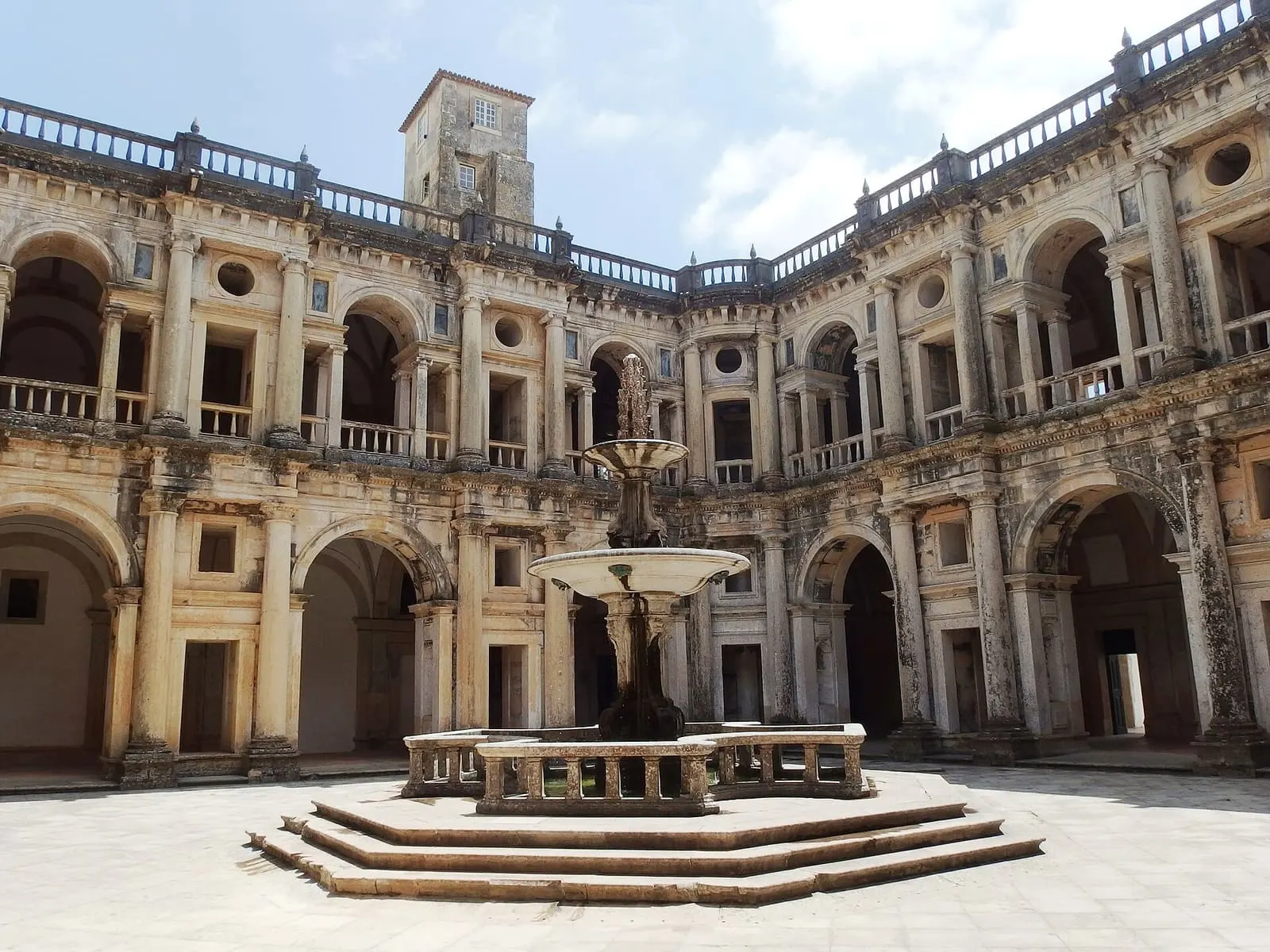
A first phase was completed around 1614, the year in which the monarch is said to have visited the work; the campaign closed in 1619, marked by the monumental fountain of the convent’s Main Cloister, the point where the water arrived.
A water machine over the valley
The aqueduct runs for about six kilometres, drawing water from springs and conducting it by gravity to the convent. Much of the route runs underground or at ground level, but it is at the points where it crosses valleys that the work asserts its monumentality: the aerial stretches add up to around 180 arches.
The most famous stretch crossed the Pegões valley. There, a row of round arches rests on a second tier of pointed (ogival) arches, which in turn discharge onto massive masonry piers — the “pegões” that give the ensemble its name and which made it possible to reach about 30 metres at the deepest point of the valley.
The solution of superimposing arches of different profiles is no mere aesthetic whim: each tier responds to a distinct structural need, distributing the weight and height according to the topography of the terrain.
The sobriety of its lines, its geometric clarity and its decorative restraint place the aqueduct within the Mannerist sensibility that dominated royal architecture in the late sixteenth century, in contrast to the exuberance of the Manueline style that still marked the convent’s earlier building campaigns.
Significance and listing
More than a utilitarian infrastructure, the aqueduct forms part of the cultural landscape of Tomar and extends the reading of the monastic ensemble beyond the walls. It is possible to walk along the crowning of the Pegões arcading, a rare experience among Portuguese aqueducts that brings the visitor closer to the scale of the work.
Listed as a National Monument, the aqueduct belongs to the same historic territory as the castle of Tomar and the convent, a heritage of the Templar presence and, later, of the Order of Christ. For its constructive ambition, it is often compared to other great hydraulic undertakings in the country, such as the Amoreira Aqueduct in Elvas.
Frequently asked questions
- What was the Pegões Aqueduct used for?
- It was built to carry water from distant springs to the Convent of Christ in Tomar, supplying the cloisters, kitchens and the fountain of the Main Cloister.
- Who designed the Pegões Aqueduct?
- The design is attributed to the Kingdom's chief architect Filipe Terzi, author of the project. The work continued after his death, directed by Pedro Fernandes de Torres and, later, by Diogo Marques Lucas.
- How many arches does the aqueduct have?
- In total it has around 180 arches. The most spectacular stretch, over the Pegões valley, combines round arches resting on a second tier of pointed arches, reaching about 30 metres in height.
Sources
Keep exploring
Heritage nearby
More places to discover from here. Approximate straight-line distances, within 50 km.