Places
Caldas da Rainha
Caldas da Rainha, a spa town in the district of Leiria founded by Queen Leonor, home to the Thermal Hospital, the Dom Carlos I Park and the celebrated Caldas…
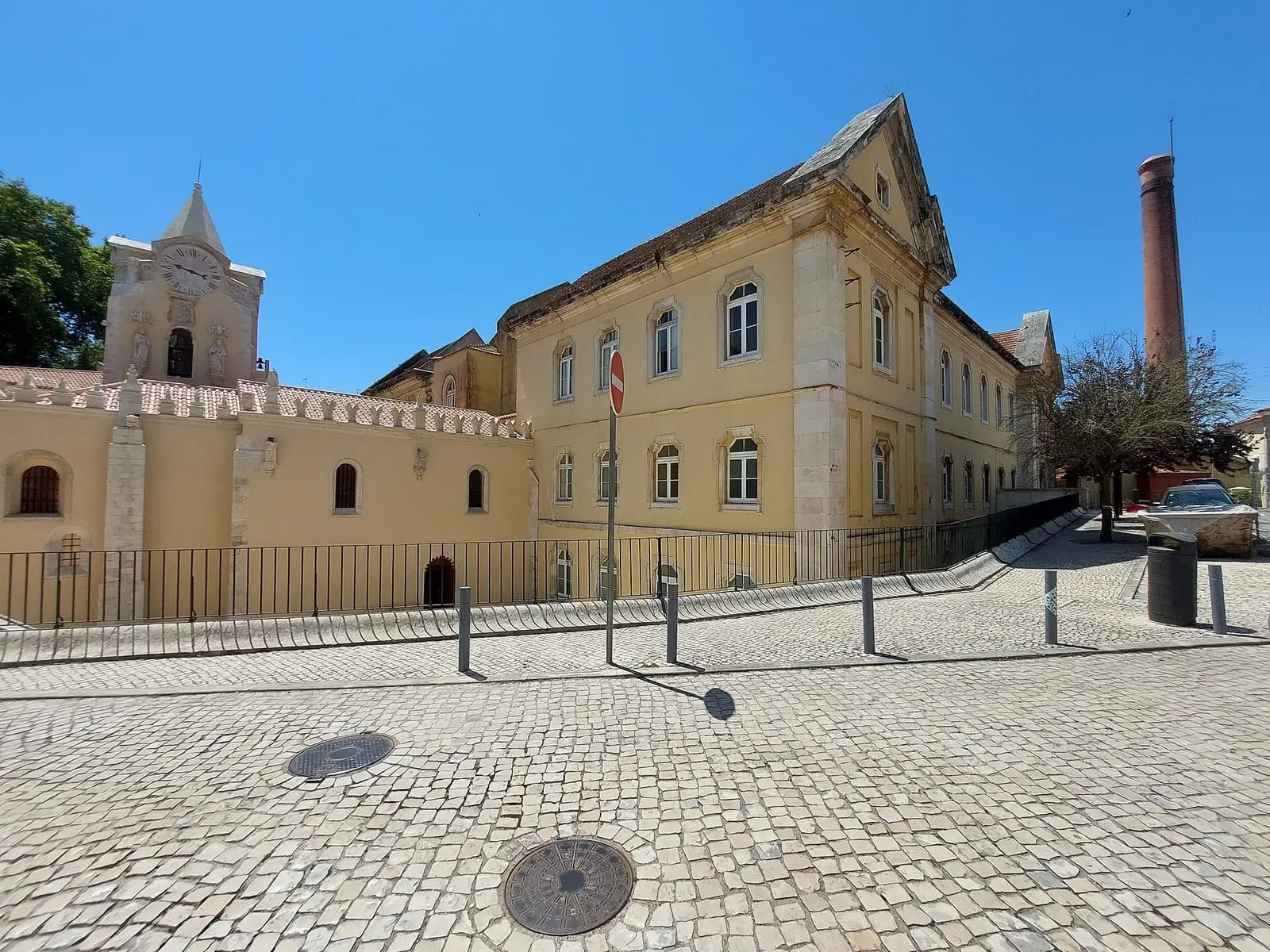
- Location
- Caldas da Rainha, Leiria
- Built
- 1485
Caldas da Rainha is one of the most singular of Portuguese towns: it was born not of a castle nor of a port, but of a spring of sulphurous waters and the will of a queen. Set in the heart of the West (Oeste) region, in the district of Leiria, it owes its origin and its name to Queen Leonor (1458-1525), wife of King John II, whose intervention transformed a place of rudimentary bathing into one of the first organised thermal establishments in Europe.
From the spring to the queen’s hospital
Tradition holds that, around 1484, Queen Leonor, passing from Óbidos on her way to Batalha, noticed people bathing in hot, strong-smelling waters by the roadside, to which she attributed curative virtues. Moved by the sight, the queen ordered a hospital to be built there, intended to regulate and dignify the therapeutic use of those waters. The Rainha Dona Leonor Thermal Hospital, founded in 1485, is held to be the oldest thermal hospital in the world still in operation.
Caldas da Rainha is a town built from the inside out: first the hospital, then the church, and only afterwards the settlement that grew up in the shadow of both.
The hospital complex preserves layers from various periods — from the late Gothic to the Neoclassical — reflecting the successive enlargement works carried out over more than five centuries. Associated with it is the Church of Nossa Senhora do Pópulo, the hospital’s original chapel, attributed to the master Mateus Fernandes, one of those responsible for the Unfinished Chapels of the Monastery of Batalha, and regarded as one of the first buildings to incorporate elements of the Manueline style.
The spa town and its park
The thermal calling shaped the entire urban design. Around the hospital there developed a settlement that would be raised to the status of town and, later, of city. In the nineteenth century, this growth gained fresh impetus with the creation of the Dom Carlos I Park, a vast romantic garden with a lake, woodland and leisure facilities, which remains the green lung of the city. Within it was installed the José Malhoa Museum, dedicated to the naturalist painter and to Portuguese art of the late nineteenth century.
The everyday life of the city still revolves around the Praça da República, setting for the fruit and vegetable market held in the open air every day, at a rhythm virtually unchanged since the nineteenth century — one of the most authentic traits of the Caldas identity.
The pottery of Caldas
No element defines Caldas da Rainha so much as its pottery tradition. The abundance of good clays favoured, from early on, a ceramic production that would become famous throughout the country. The turning point came in 1884, when Rafael Bordalo Pinheiro founded his factory in the city, lending the pottery of Caldas da Rainha a naturalistic, exuberant and deeply ironic character. Cabbages, leaves, animals and popular figures — among them the unforgettable Zé Povinho — issued from his workshops and lodged themselves in the national imagination.
For its history, for its thermal heritage and for its art, Caldas da Rainha stands as an essential point of reference in the West, alongside neighbouring centres such as Leiria. It is a town where the founding gesture of a medieval queen can still be felt, translated into stone, water and clay.
Frequently asked questions
- Who founded Caldas da Rainha?
- The town arose from the initiative of Queen Leonor, wife of King John II, who ordered a thermal hospital to be built beside the sulphurous waters; founded in 1485, it is still in operation today.
- In which district is Caldas da Rainha located?
- Caldas da Rainha lies in the district of Leiria, in the West (Oeste) region, about 90 km north of Lisbon.
- Why is the pottery of Caldas da Rainha famous?
- Caldas earthenware gained national renown above all through Rafael Bordalo Pinheiro, who founded his factory there in 1884 and created naturalistic and satirical pieces, such as the Zé Povinho figure.
Sources
Keep exploring
Heritage nearby
More places to discover from here. Approximate straight-line distances, within 50 km.