Places
Aldeias de Montanha: Mountain Villages of Serra da Estrela
Guide to the 41 Mountain Villages of Serra da Estrela and Gardunha (ADIRAM network): by municipality, and how they differ from Schist and Historical Villages.
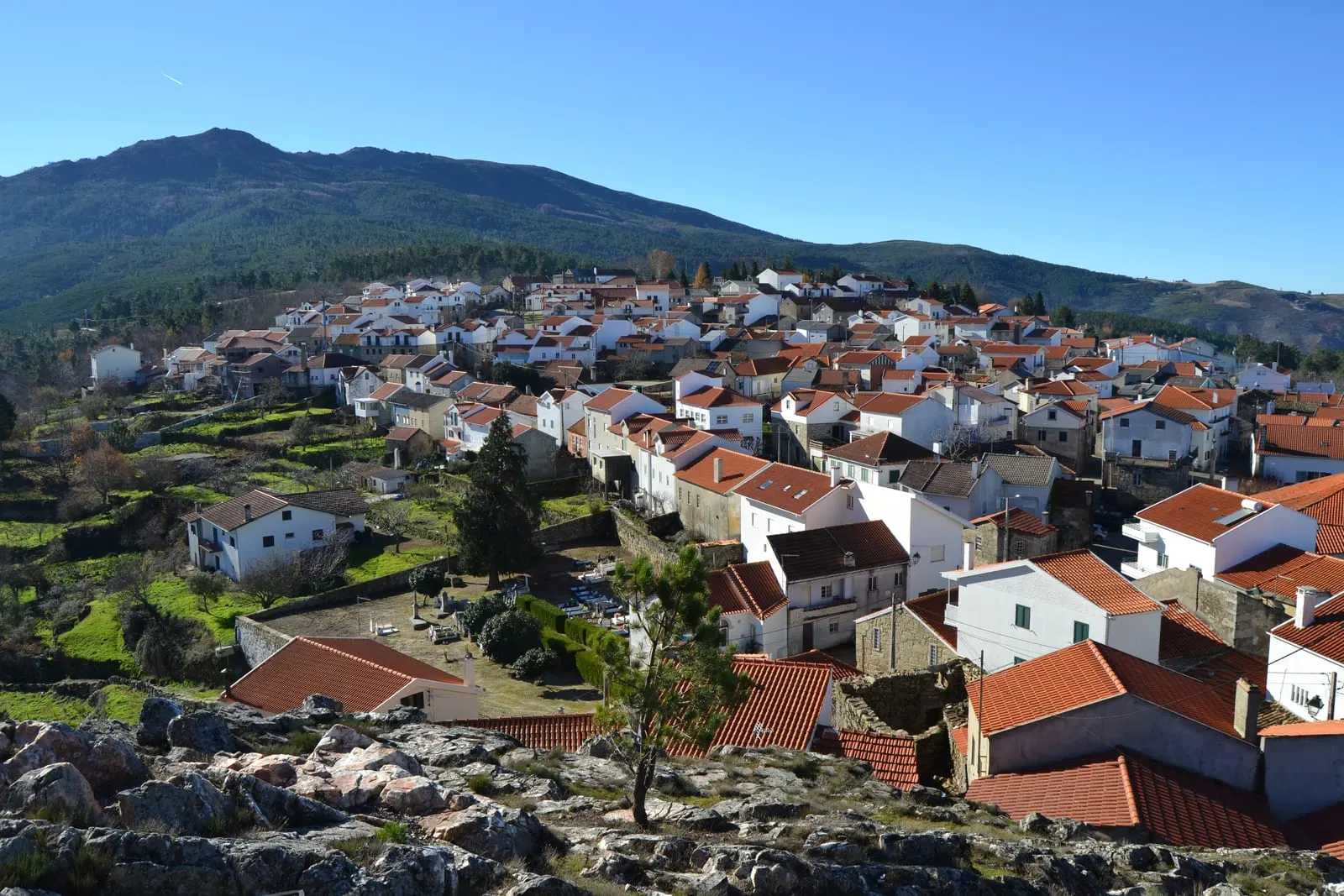
The Mountain Villages (Aldeias de Montanha) are a network of mountain villages and small towns between the Serra da Estrela Natural Park and the Serra da Gardunha Protected Landscape. When the official website was consulted on 5 November 2026, the network comprised 41 villages in nine municipalities. The mountain villages of the Estrela belong to this network, not to the Schist Villages, whose territories lie in other mountain ranges. They are separate projects, each with its own managing entity, territories and village lists.
Who runs the network
The network is driven by ADIRAM — Associação de Desenvolvimento Integrado da Rede das Aldeias de Montanha, a private non-profit association. The network’s Centro Dinamizador (promotion centre) is in Seia, at Largo Dr. Borges Pires. According to the association itself, its members are nine municipalities: Covilhã, Seia, Guarda, Manteigas, Celorico da Beira, Oliveira do Hospital, Gouveia, Fundão and Fornos de Algodres.
ADIRAM sets two objectives: to promote the network as a tourism brand of the Serra da Estrela and Beira Interior, and to contribute to sustainable regional development. Its mission expressly refers to the territory of the Serras da Estrela and da Gardunha. The official website does not publish the date the association was founded, and we were unable to confirm it from an official source.
The project falls within the PROVERE programmes, which promote the endogenous resources of the Centro region. The operation «Aldeias de Montanha Ecossistema Criativo e Comunitário», carried out from 2019 to 2023 under the iNature strategy, lists 27 villages involved in its fact sheet. The strategy Aldeias de Montanha 2030, with an action plan for 2024–2030, is currently under way. The network has also promoted coworking spaces: in October 2021 the Government inaugurated three, in Alvoco das Várzeas, Folgosinho and Videmonte.
The 41 villages by municipality
The list follows the official directory consulted on 5 November 2026. Each village’s municipality was confirmed on its individual sheet. Seia is the municipality with the most villages in the network, ten. «Aldeias», in Gouveia, is in fact the name of a settlement formed by joining Alrote and São Cosmado.
| Village | Municipality |
|---|---|
| Cadafaz | Celorico da Beira |
| Prados | Celorico da Beira |
| Rapa | Celorico da Beira |
| Salgueirais | Celorico da Beira |
| Vide Entre Vinhas | Celorico da Beira |
| Cortes do Meio | Covilhã |
| Erada | Covilhã |
| Penhas da Saúde | Covilhã |
| São Jorge da Beira | Covilhã |
| Verdelhos | Covilhã |
| Algodres | Fornos de Algodres |
| Figueiró da Granja | Fornos de Algodres |
| Alcaide | Fundão |
| Alcongosta | Fundão |
| Alpedrinha | Fundão |
| Aldeias | Gouveia |
| Figueiró da Serra | Gouveia |
| Folgosinho | Gouveia |
| Mangualde da Serra | Gouveia |
| Melo | Gouveia |
| Famalicão da Serra | Guarda |
| Fernão Joanes | Guarda |
| Trinta | Guarda |
| Valhelhas | Guarda |
| Videmonte | Guarda |
| Manteigas | Manteigas |
| Penhas Douradas | Manteigas |
| Sameiro | Manteigas |
| Vale de Amoreira | Manteigas |
| Alvoco das Várzeas | Oliveira do Hospital |
| São Gião | Oliveira do Hospital |
| Alvoco da Serra | Seia |
| Cabeça | Seia |
| Lapa dos Dinheiros | Seia |
| Loriga | Seia |
| Póvoa Velha | Seia |
| Sabugueiro | Seia |
| Sazes da Beira | Seia |
| Teixeira | Seia |
| Valezim | Seia |
| Vide | Seia |
Some are not villages in the strict sense. Manteigas is a municipal seat, and Loriga and Alpedrinha are presented as towns (vilas) in the official sheets. Penhas da Saúde and Penhas Douradas, both at about 1,500 metres, are linked to former health resorts. The sheet for Penhas Douradas connects its discovery to Hermenegildo Capelo’s scientific expedition to the Serra da Estrela at the end of the 19th century.
What sets these villages apart
The common denominator is the mountain: altitude, harsh winters, pastoralism, wool and water. The website organises the network around four themes, Nature, Getaways, Flavours and Culture, but the sheets for individual villages show very different realities.
Granite dominates the examples we consulted. In Loriga, in the municipality of Seia, the sheet describes a glacial valley at about 770 metres, terraced slopes and small granite houses. The town was a municipal seat until 1855 and had dozens of woollen mills. In Sabugueiro, also in Seia, granite housing extends beyond the church square, at about 1,100 metres of altitude. In Videmonte, in the municipality of Guarda, the sheet mentions housing of both schist and granite and a communal oven still in use. It would therefore be a mistake to generalise: the network is not defined by a building material.
Other villages are distinguished by other marks. In Folgosinho (Gouveia), the small quartz castle was rebuilt in 1938, according to the official sheet. Manteigas lies in the Zêzere Glacial Valley and maintains the tradition of burel cloth. Trinta, in Guarda, preserves the memory of the woollen industry and of the cobertor de papa blanket. Alpedrinha, on the southern slope of the Gardunha, retains the Palácio do Picadeiro, an unfinished work from the late 18th century. Pastoralism and wool run through many of these stories; see also transhumance and pastoralism.
Mountain Villages, Schist Villages and Historic Villages
The three networks overlap on the map of the interior Centro, but they are not the same.
- Mountain Villages: 41 villages in the Serra da Estrela and the Gardunha, across nine municipalities, managed by ADIRAM, headquartered in Seia.
- Schist Villages: 28 villages in four territories (Serra da Lousã, Serra do Açor, Zêzere and Tejo-Ocreza), coordinated by ADXTUR. None of these territories is the Serra da Estrela. Some Schist Villages lie in municipalities that also have Mountain Villages, such as Covilhã, Fundão or Oliveira do Hospital.
- Historic Villages of Portugal: twelve localities with strong historical and military heritage, such as Almeida, Belmonte, Linhares da Beira, Monsanto, Piódão or Sortelha. The association that manages the tourism brand was founded in 2007 and is headquartered in Belmonte.
No name on the Mountain Villages list appears in the official lists of the other two networks. In none of the three does membership amount to a heritage classification: it is a form of cooperation between municipalities and local actors for development and tourism.
A mountain range with several designations
The Mountain Villages share territory with other protection and recognition instruments. The Serra da Estrela Biosphere Reserve, designated by UNESCO in 2026, and the Estrela Geopark have their own boundaries and objectives. The Serra da Estrela Natural Park is another area, with its own nature protection rules. A village may lie within several of these areas at once, or within only some of them.
Preparing a visit
The official website has a sheet for each village, covering what to see, where to stay and where to eat, along with routes, events and experiences. Choose one municipality or valley and combine a few nearby villages. Straight-line distances are misleading in a mountain range of winding roads. Before setting out, confirm services, opening hours and road conditions with the municipalities and the Centro Dinamizador. To place the trip within the region, see Centro de Portugal.
Photograph by Crispi.pp, dated 8 December 2012. Original on Wikimedia Commons, under CC BY-SA 3.0; resized and compressed for the web, without altering the composition.

Frequently asked questions
- Are there schist villages in the Serra da Estrela?
- The Schist Villages network (Aldeias do Xisto) has no territory in the Serra da Estrela; its four territories are the Serra da Lousã, the Serra do Açor, the Zêzere and the Tejo-Ocreza. The mountain villages of the Estrela are grouped in a different network, the Mountain Villages (Aldeias de Montanha). In the official village sheets consulted, Loriga and Sabugueiro are described with granite housing and Videmonte with both schist and granite houses.
- How many Mountain Villages are there?
- When the official website was consulted on 5 November 2026, there were 41, across nine municipalities: Celorico da Beira, Covilhã, Fornos de Algodres, Fundão, Gouveia, Guarda, Manteigas, Oliveira do Hospital and Seia. Seia is the municipality with the most villages, ten.
- Who manages the network?
- ADIRAM, the Associação de Desenvolvimento Integrado da Rede das Aldeias de Montanha (Association for the Integrated Development of the Mountain Villages Network), a private non-profit association headquartered in Seia. Its members are the nine municipalities in the network.
- Is being a Mountain Village a heritage classification?
- No. It is membership of a network for development and tourism promotion. The protection of churches, castles or other buildings depends on the classification of each one, which can be checked in the national heritage register.
Sources
- ADIRAM — Aldeias de Montanha (página inicial)
- ADIRAM — Aldeias de Montanha: aldeias e concelhos
- ADIRAM — Associação de Desenvolvimento Integrado da Rede das Aldeias de Montanha
- ADIRAM — Projeto Aldeias de Montanha
- ADIRAM — PROVERE Aldeias de Montanha 2030
- ADIRAM — Ficha de projeto «Aldeias de Montanha Ecossistema Criativo e Comunitário» (PDF)
- ADIRAM — Fichas das aldeias (Loriga, Sabugueiro, Videmonte, Folgosinho, Manteigas, Penhas Douradas, Alpedrinha, Trinta, Aldeias)
- Governo de Portugal — Ministra da Coesão inaugura espaços de teletrabalho em Aldeias de Montanha (13 de outubro de 2021)
- ADXTUR — Apresentação da rede Aldeias do Xisto e entidade gestora
- Aldeias do Xisto — Território e unidades territoriais
- Aldeias Históricas de Portugal — Quem somos
- Wikidata — Aldeias de Montanha (Q106542348)