Places
Alter do Chão
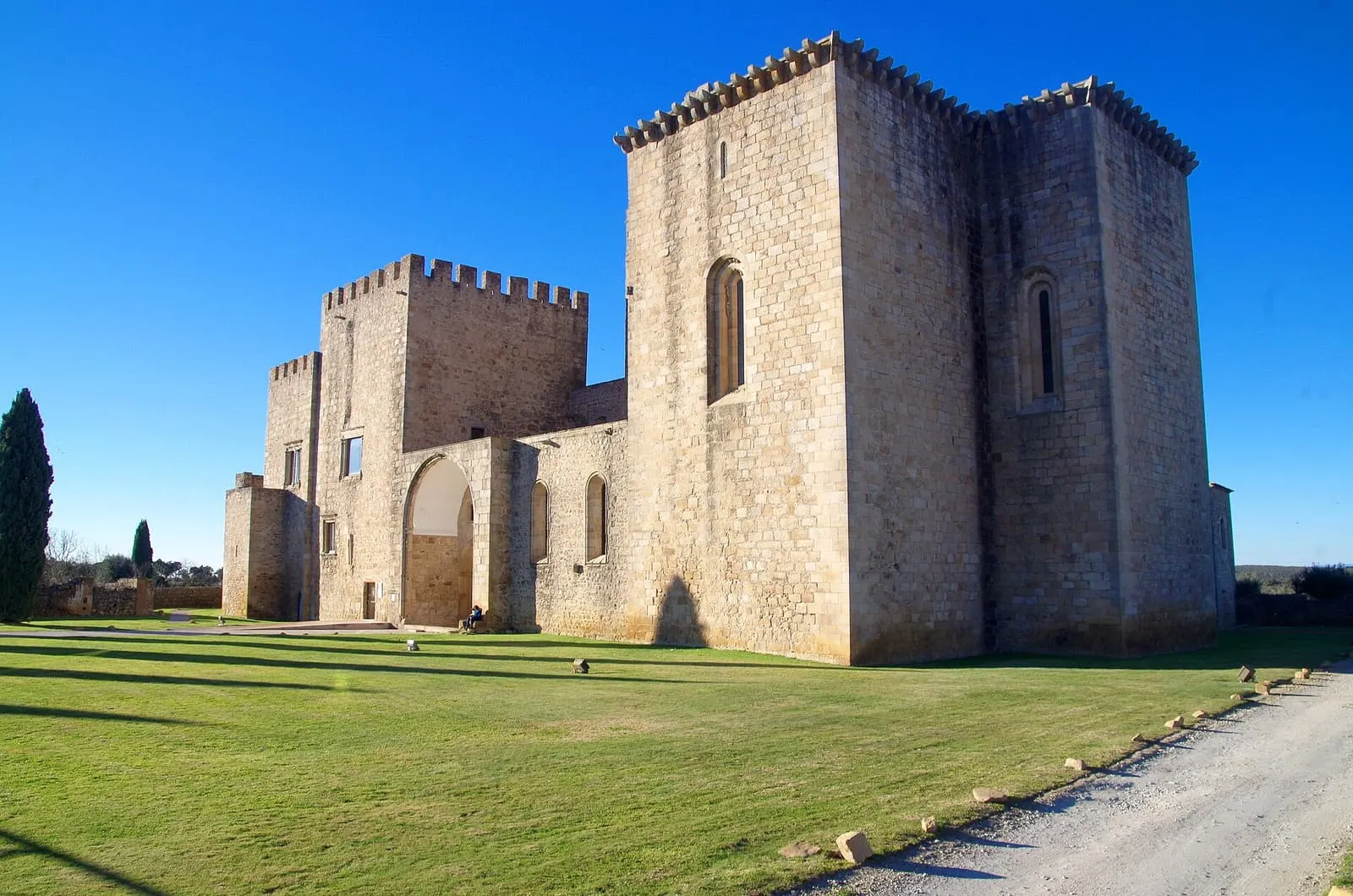
Alter do Chão, a town in the Alto Alentejo in the district of Portalegre, with a medieval castle and the Coudelaria de Alter, the oldest stud farm in the country.
- Location
- Alter do Chão, Portalegre
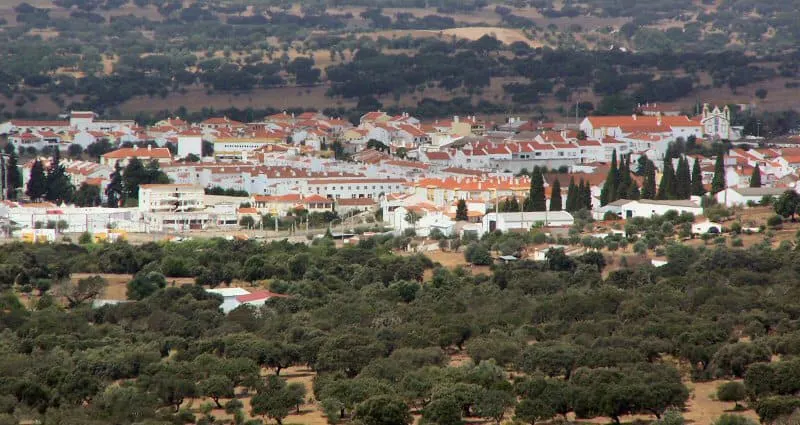
Set in the plain of the Alto Alentejo, in the district of Portalegre, the town of Alter do Chão preserves a dual identity: that of a medieval settlement crowned by a Gothic castle and that of the birthplace of the most celebrated Portuguese saddle horse. The seat of a municipality that brings together the parishes of Alter do Chão, Chancelaria, Cunheira and Seda, it is today one of the landmarks of European equestrian heritage.
From ancient roots to the medieval charter
The place name derives from Abelterium, the designation of a settlement of pre-Roman origin that flourished along one of the roads connecting Olisipo (Lisbon) to Emerita Augusta (Mérida). From the Latin form, by way of Abelterii, it evolved into the present-day Alter, distinguished as “do Chão” (“of the plain”) from neighbouring Alter Pedroso, set on higher ground.
The medieval consolidation of the place took place in the thirteenth century, with the granting of a charter in 1232, still during the reign of King Sancho II. The charter was later confirmed and expanded by King Dinis in 1293, and by King Manuel I in the new charter of 1512, following a course typical of the Alentejan towns that grew under the impetus of the crown and the military orders along the frontier with Castile.
The castle of King Pedro I
The historic heart of the town is dominated by the castle, ordered rebuilt by King Pedro I. An epigraphic inscription over the main gate records the date of the work — 22 September 1357 — making it one of the best-documented examples of Gothic military architecture in Portugal. With a quadrangular plan and walls raised in schist and granite, it is arranged around a keep that punctuates the town’s skyline. Together with the nearby castle of Marvão, it formed part of the defensive line that garrisoned this area of the Alentejo. It was classified as a National Monument by a decree of 1910.
The inscription on the gate, in naming the “most noble King Dom Pedro” and the exact date of construction, is rare among Portuguese castles, where the chronology of the works has only seldom come down to us in such precise form.
The Coudelaria de Alter and the Alter Real horse
The town’s greatest glory was born already in the heart of the eighteenth century. In 1748, on the initiative of King João V, the Coudelaria de Alter (Alter Stud) was created in the Coutada do Arneiro, intended to supply the Royal Riding School with High School saddle horses produced on national soil. Making use of the pastures and the singular agrological conditions of the Northern Alentejo, the stud farm established and refined the Alter Real lineage, a branch of the Lusitano Pure-Blood that became a symbol of Portuguese equestrian art.
The institution has crossed the centuries with remarkable continuity: it is the oldest and most notable stud farm in the country and, worldwide, the one that has operated uninterrupted for the longest time at its place of origin. Its horses still supply the Portuguese School of Equestrian Art today, ensuring that the town remains associated with a living tradition rather than a museum memory.
Beyond the castle and the stud farm, Alter do Chão lies within a territory of strong heritage density, close to settlements of Templar and Hospitaller tradition such as Crato and to other Alentejan towns such as Avis, all of them pieces of the mosaic that makes up the heritage of the Alentejo.
Frequently asked questions
- Where is Alter do Chão?
- Alter do Chão is a town in the Alto Alentejo, in the district of Portalegre, situated among the municipalities of Crato, Monforte, Fronteira, Avis and Ponte de Sor.
- What is the Coudelaria de Alter?
- It is the stud farm founded in 1748 by King João V for breeding the Lusitano Pure-Blood horse, and in particular the Alter Real lineage. It is the oldest Portuguese stud farm and the one that has operated, uninterrupted, for the longest time at its place of origin.
- When was the castle of Alter do Chão built?
- The castle was ordered rebuilt by King Pedro I, with an inscription dating the work to 22 September 1357. It has been classified as a National Monument since 1910.
Sources
Keep exploring
Heritage nearby
More places to discover from here. Approximate straight-line distances, within 50 km.