Monuments
Castle of Castelo Rodrigo
The Castle of Castelo Rodrigo, a medieval fortress on the Beira frontier that encloses the historic village of Figueira de Castelo Rodrigo, in the district of…
- Location
- Castelo Rodrigo, Guarda
- Built
- finais do século XII (origens); reedificação por D. Dinis após 1297
- Style
- Românico e Gótico
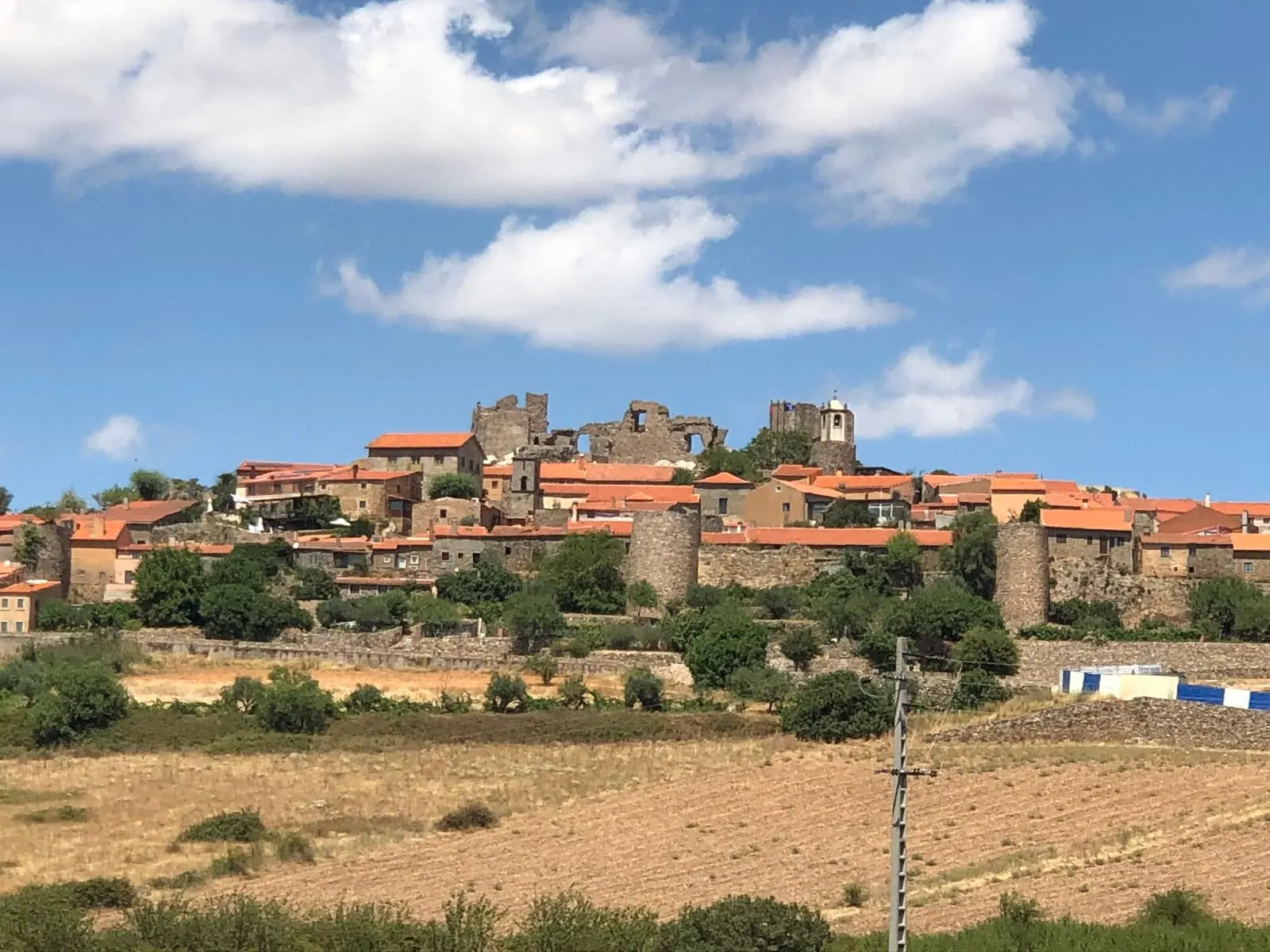
In the far north-east of the district of Guarda, on a hill that commands the plain of Riba-Côa, the Castle of Castelo Rodrigo merges with the very village it protects. Here there is no isolated fortress and a separate cluster of houses: the medieval wall embraces the whole settlement, tracing a roughly circular enclosure in which the houses, the streets and the old defensive precinct form a single organism. This is one of the features that set Castelo Rodrigo apart from the other historic villages of Portugal: the entire town is the castle.
From the Leonese frontier to incorporation into Portugal
The fortification seen today has its roots in the effort to defend the frontier. It fell to King Alfonso IX of León to raise, in the late twelfth century, a fortress at this strategic point, integrating it into the defensive line that contested the territory of Riba-Côa between León and the nascent kingdom of Portugal. The matter was settled only by the Treaty of Alcanizes, signed in 1297, which fixed the border and handed the region definitively to the Portuguese.
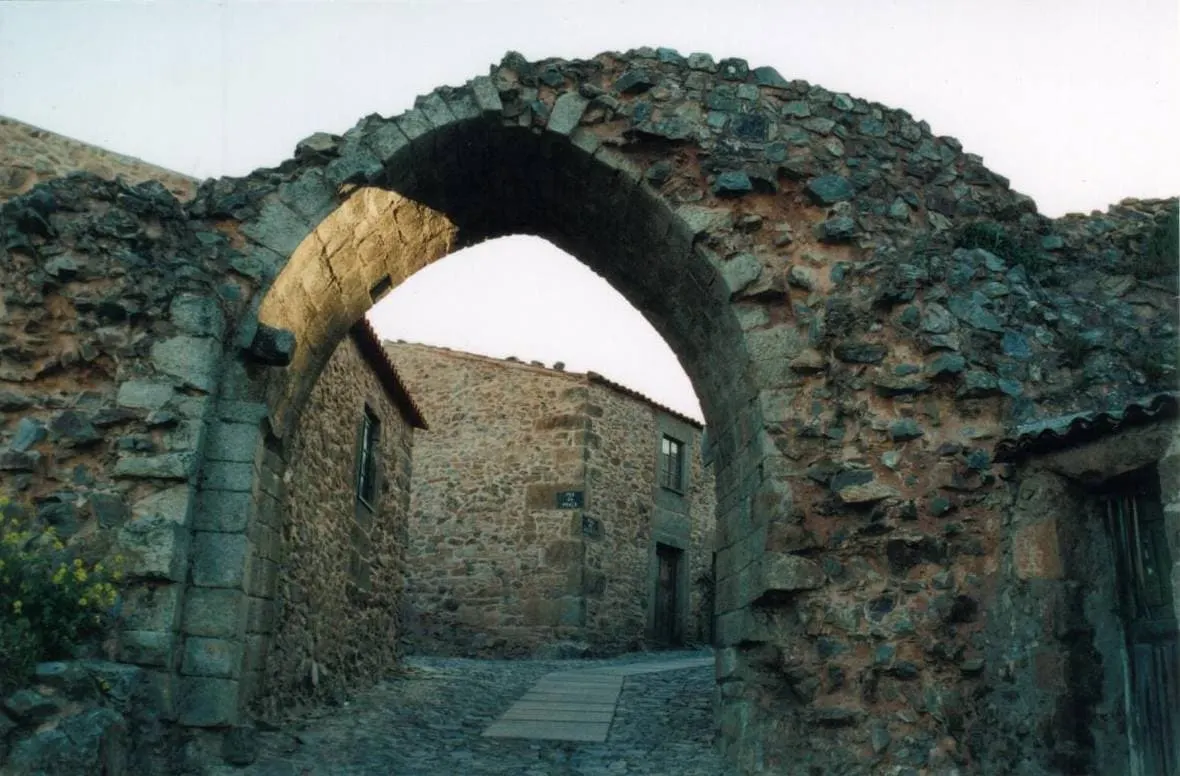
King Dinis, the beneficiary of that agreement, then launched a wide-ranging programme of reconstruction. To him is owed the Gothic configuration of much of the complex, with reinforced curtain walls, turrets and gates adapted to the terrain. Over the following centuries the stronghold continued to perform military functions on the frontier, withstanding, among other episodes, a Castilian siege in 1664, during the Restoration War, when a small garrison faced far superior forces.
The burnt palace of Cristóvão de Moura
The most famous episode in the history of the site is linked to the period of the Iberian Union. Over the old citadel, at the highest point of the enclosure, Cristóvão de Moura — Marquis of Castelo Rodrigo and a figure close to the Philippine crown — had a sumptuous palace built from 1590. Its façade still bore the family coat of arms and a doorway of Gothic character.
When Portugal recovered its independence in 1640, the local population, hostile to the lord associated with Spanish rule, set the palace ablaze. The ruins, which survive to this day at the top of the village, became an eloquent symbol of the Restoration and one of the most visited elements of the complex, alongside the parish church and the cistern.
Visiting the walled complex
To walk through Castelo Rodrigo is to walk inside an inhabited fortress. The medieval layout remains legible in the perimeter of the walls, in the sixteenth-century pillory and in the network of streets that climb to the top of the hill, from where one takes in the vastness of the frontier and, in the distance, Spanish territory. Classified as a National Monument since 1922, the castle is part of the itinerary of the great frontier castles and forms the heart of the village of Figueira de Castelo Rodrigo, in the interior of the Centro region.
Frequently asked questions
- Where is the Castle of Castelo Rodrigo?
- It rises at the top of the historic village of Castelo Rodrigo, in the municipality of Figueira de Castelo Rodrigo, district of Guarda, in the Riba-Côa region, close to the border with Spain.
- Who built the castle?
- The original fortress was raised by King Alfonso IX of León in the late twelfth century, and was thoroughly rebuilt by King Dinis after the territory passed to Portugal under the Treaty of Alcanizes in 1297.
- What happened to Cristóvão de Moura's palace?
- The palace, commissioned from 1590 by Cristóvão de Moura on the site of the old citadel, was set on fire by the local population in 1640, during the Restoration of Independence, and lies in ruins today.
- Is the Castle of Castelo Rodrigo a National Monument?
- Yes. It has been classified as a National Monument since 1922.
Sources
Keep exploring
Heritage nearby
More places to discover from here. Approximate straight-line distances, within 50 km.