Monuments
Castle of Póvoa de Lanhoso
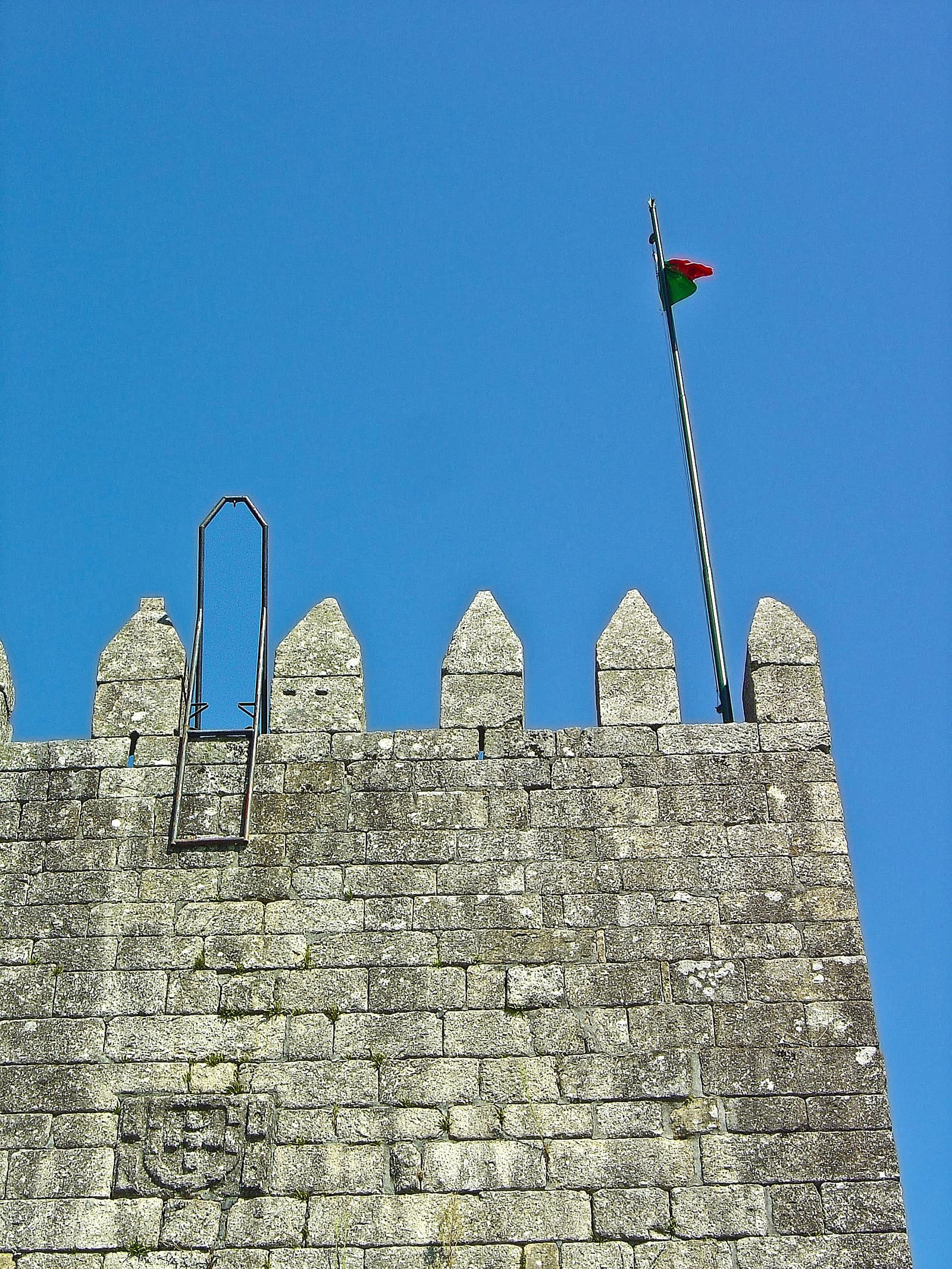
The Castle of Póvoa de Lanhoso, raised atop the Monte do Pilar in Braga, linked to Countess Teresa of León and to the struggles for the independence of Portugal.
- Location
- Póvoa de Lanhoso, Braga
- Built
- Séc. XI–XIII
- Style
- Românico e Gótico
Atop the Monte do Pilar, a granite colossus that commands the valley of the Cávado and is held to be the largest granite monolith on the Iberian Peninsula, stands one of the most history-laden castles of the Minho. The Castle of Póvoa de Lanhoso, in the district of Braga, owes as much to its natural setting — an all but impregnable fortress, carved by the rock itself — as to the role it played in the founding episodes of Portuguese nationhood.
Origin and construction
Tradition attributes the first fortification of the site to the initiative of Archbishop Pedro of Braga, in the late eleventh century, with the aim of forming an advanced defence for the episcopal see of Braga. The granite outcrop, hard to reach and commanding a broad view over the surrounding territory, offered exceptional conditions for a defensive stronghold amid the incursions and disputes of the comital period.
The reshaping of the enclosure, with the building of the keep, dates from the late twelfth to the early thirteenth century, combining Romanesque and Gothic features. The keep, square in plan, rests on the highest point of the hill, with walls more than a metre thick and a doorway with a pointed arch raised above the ground. Already in the reign of Dinis, Póvoa de Lanhoso received a charter (foral) in 1292, later renewed by Manuel I.
Teresa of León and independence
The castle’s renown owes above all to Countess Teresa of León, widow of Count Henry and mother of Afonso Henriques, the first king of Portugal. According to tradition, it was in this stronghold that Teresa took refuge when besieged by the forces of her half-sister Urraca, queen of León. The siege of 1121 led to an understanding known as the Treaty of Lanhoso, by which the countess preserved the governance of the County of Portugal.
Modern historiography distinguishes the traditional account from the proven facts: the episode of Teresa’s captivity at the hands of her own son, after the battle of São Mamede, is today the object of critical revision.
The castle’s association with this moment of assertion of comital power links it directly to the fate of the See of Braga and to the formation of the kingdom, in a territory where ecclesiastical and seigneurial power were intertwined.
From military stronghold to sanctuary
Once its military function was lost, the hill found a new vocation from 1680, when the Porto merchant André da Silva Machado had the sanctuary of Nossa Senhora do Pilar built on the site, reusing materials from the walls then demolished. The works continued through the eighteenth century, giving the complex the devotional character that still draws pilgrims today.
Classified as a National Monument since 1910, the Castle of Póvoa de Lanhoso belongs to the vast group of medieval castles of the north of the country and well illustrates the role of fortifications in the structuring of the territory and in the defence of the old County of Portugal.
Frequently asked questions
- Why is the Castle of Póvoa de Lanhoso famous?
- For its link to Countess Teresa of León, mother of Afonso Henriques, who took refuge here during the conflict with her half-sister Urraca of León, a central episode in the struggles that preceded the independence of Portugal.
- On what kind of rock does the castle stand?
- It rises atop the Monte do Pilar, often cited as the largest granite monolith on the Iberian Peninsula, at around 385 metres above sea level.
- Since when has it been a National Monument?
- The castle has been classified as a National Monument since 1910, by decree published in the Diário do Governo.
Sources
Keep exploring
Heritage nearby
More places to discover from here. Approximate straight-line distances, within 50 km.