Places
Castelo Mendo
Castelo Mendo, a historic walled village in the municipality of Almeida, in the Guarda district: castle, medieval gates, pillory and the first fair of the kingdom.
- Location
- Castelo Mendo, Guarda
- Built
- séculos XII-XIII
- Style
- Medieval (gótico), com intervenções manuelinas
On a granite hill commanding the left bank of the river Côa, Castelo Mendo is one of the best-preserved border settlements of the Beira Interior. Its stone houses, packed within a double ring of walls, retain the appearance of a medieval town that spent centuries guarding the frontier between Portugal and Castile. It belongs to the municipality of Almeida, in the Guarda district, and since 1991 has formed part of the network of the Historic Villages of Portugal.
From hillfort to border town
Occupation of the heights dates back to prehistory and the Roman presence, but it is with the formation of the kingdom that the site gains military importance. The rebuilding of the castle is attributed to the reign of King Sancho I, at the turn of the twelfth to the thirteenth century, in the effort to consolidate the eastern frontier. The decisive moment comes with King Sancho II, who granted the settlement a charter on 15 March 1229, raising it to the status of municipality and giving it a vocation that would last until the abolition of the council in 1855.
Associated with that charter is one of the most singular pages of Portuguese economic history: the creation of a free fair, frequently cited as the first official fair of the kingdom. Held three times a year and protected by royal safe-conduct for the merchants who flocked to it, it turned this border town into a commercial meeting point between the two peninsular kingdoms. Outside the walls the Alpendre da Feira (Fair Porch) still survives, a material memory of that privilege.
The true treasure of Castelo Mendo is not an isolated monument but the whole ensemble: the entire town is the document, read like a medieval plan engraved in granite.
Two walls and their gates
The settlement is organised into two adjoining walled cores. The first, oval in plan, is the citadel, where the castle and the parish church stand, articulated around an axis linking the main gate to the fortified summit. The second, lower and facing west, corresponds to the suburb of São Pedro, defended by a wall largely dating from the reign of King Dinis.
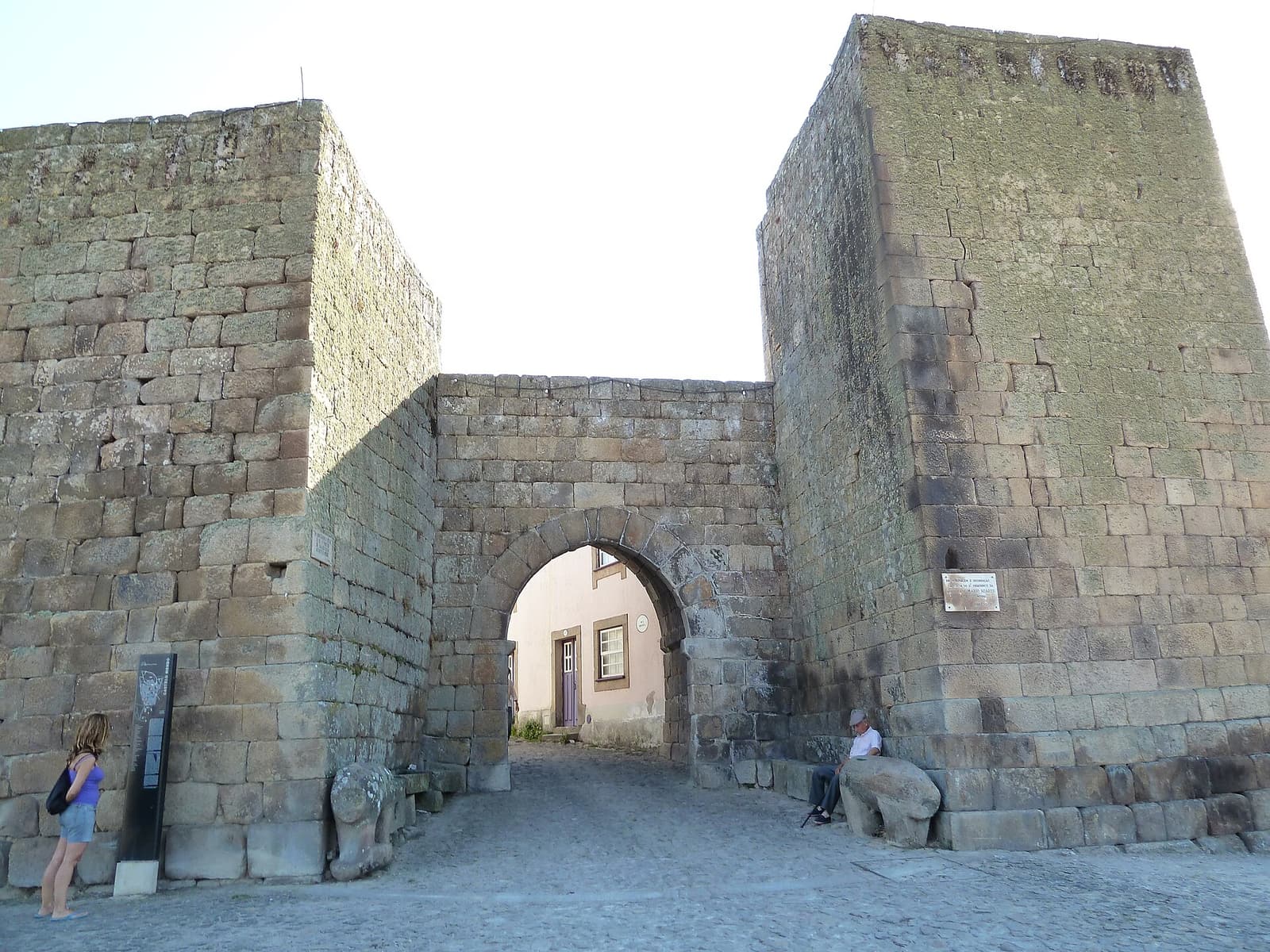
Passage between the two spaces is made through the Porta da Vila (Town Gate), a pointed arch of monumental size framed by two square-plan turrets — one of the most photographed features of the village. At the entrance, two granite berrões, zoomorphic sculptures of Castro origin reused here, stand guard like sentinels from a time before the town itself. The perimeter is completed by further gates, among them the Porta do Sol, and stretches of curtain wall reinforced by towers.
Pillory, classification and territory
Inside survives the pillory, datable to the sixteenth century and linked to the new Manueline charter, standing some seven metres tall — one of the tallest in the Beira Interior — classified as a Property of Public Interest since 1993. The settlement as a whole was declared a National Monument by a decree of 1946, a recognition that preceded its inclusion in the network of Historic Villages by decades.
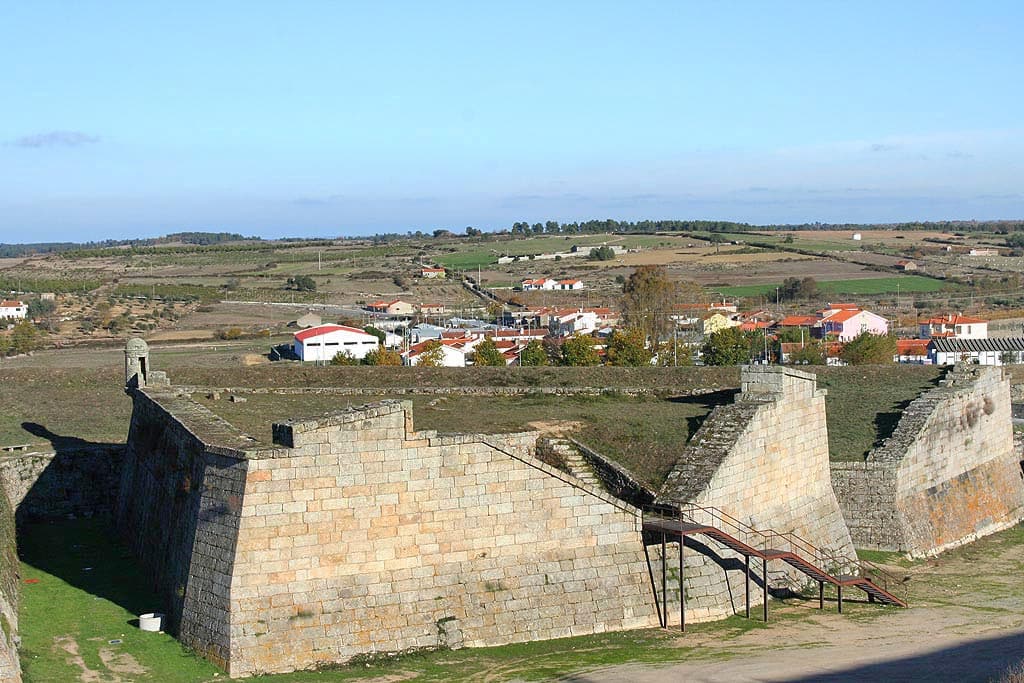
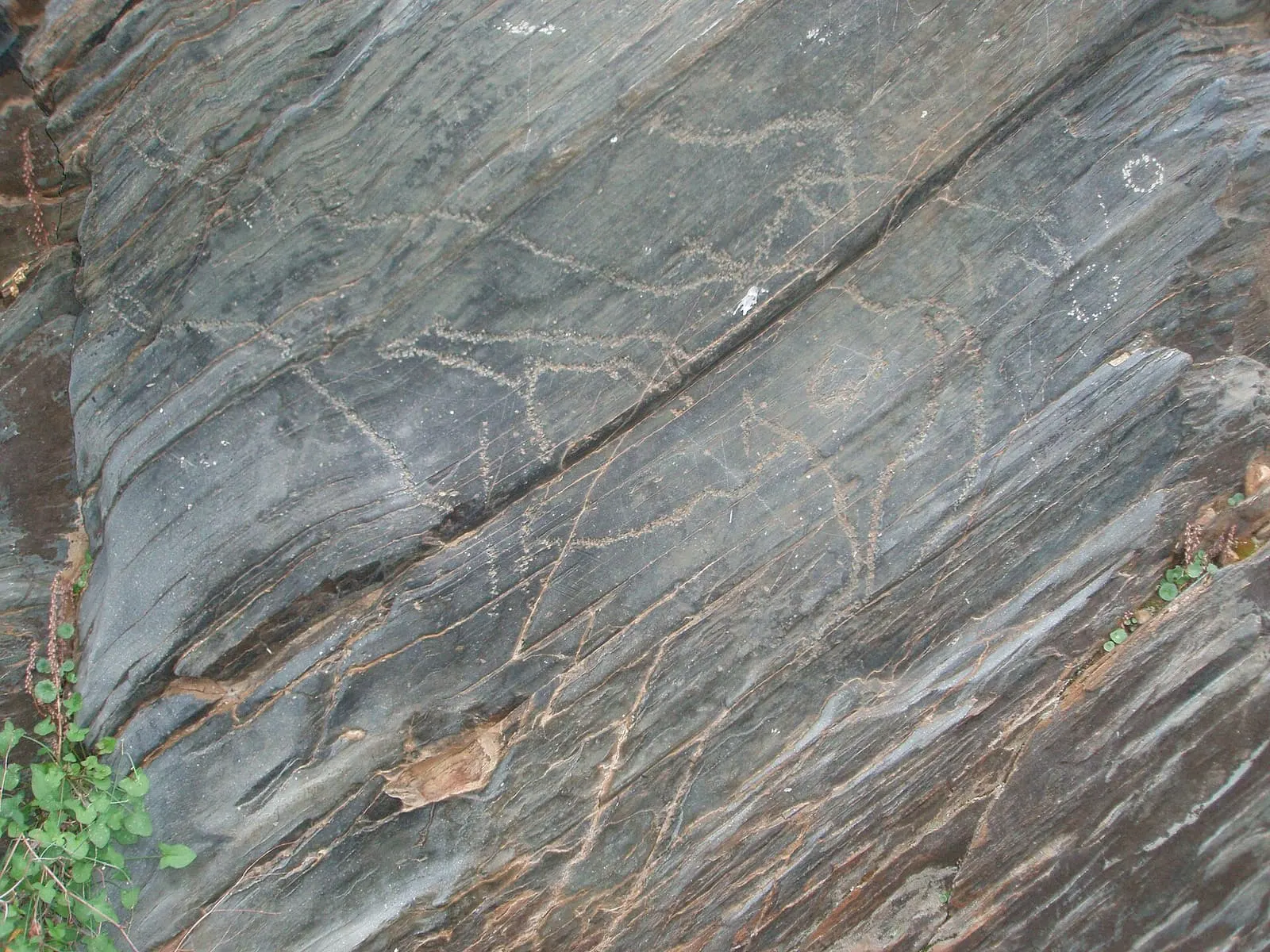
Castelo Mendo lies within a remarkably dense border itinerary. A few kilometres away rises the bastioned fortress of Almeida, and the whole region connects with the trails of the Côa Valley, famed for its Palaeolithic rock art. To walk its narrow streets, among coats-of-arms over doorways and façades of schist and granite, is to cross eight centuries of the history of the Portuguese frontier.
Frequently asked questions
- Where is Castelo Mendo?
- Castelo Mendo lies in the municipality of Almeida, Guarda district, on a granite hill on the left bank of the river Côa, near the border with Spain.
- Why is Castelo Mendo a Historic Village of Portugal?
- Since 1991 it has belonged to the network of the Historic Villages of Portugal on account of its exceptionally well-preserved medieval walled core, with castle, two rings of walls, fortified gates and pillory.
- What was the Castelo Mendo fair?
- Under the charter granted by King Sancho II in 1229, Castelo Mendo received a free fair regarded as the first official fair of the kingdom, held three times a year under royal protection for the merchants.
Sources
Keep exploring
Heritage nearby
More places to discover from here. Approximate straight-line distances, within 50 km.