Monuments
Church of Santa Clara (Porto)
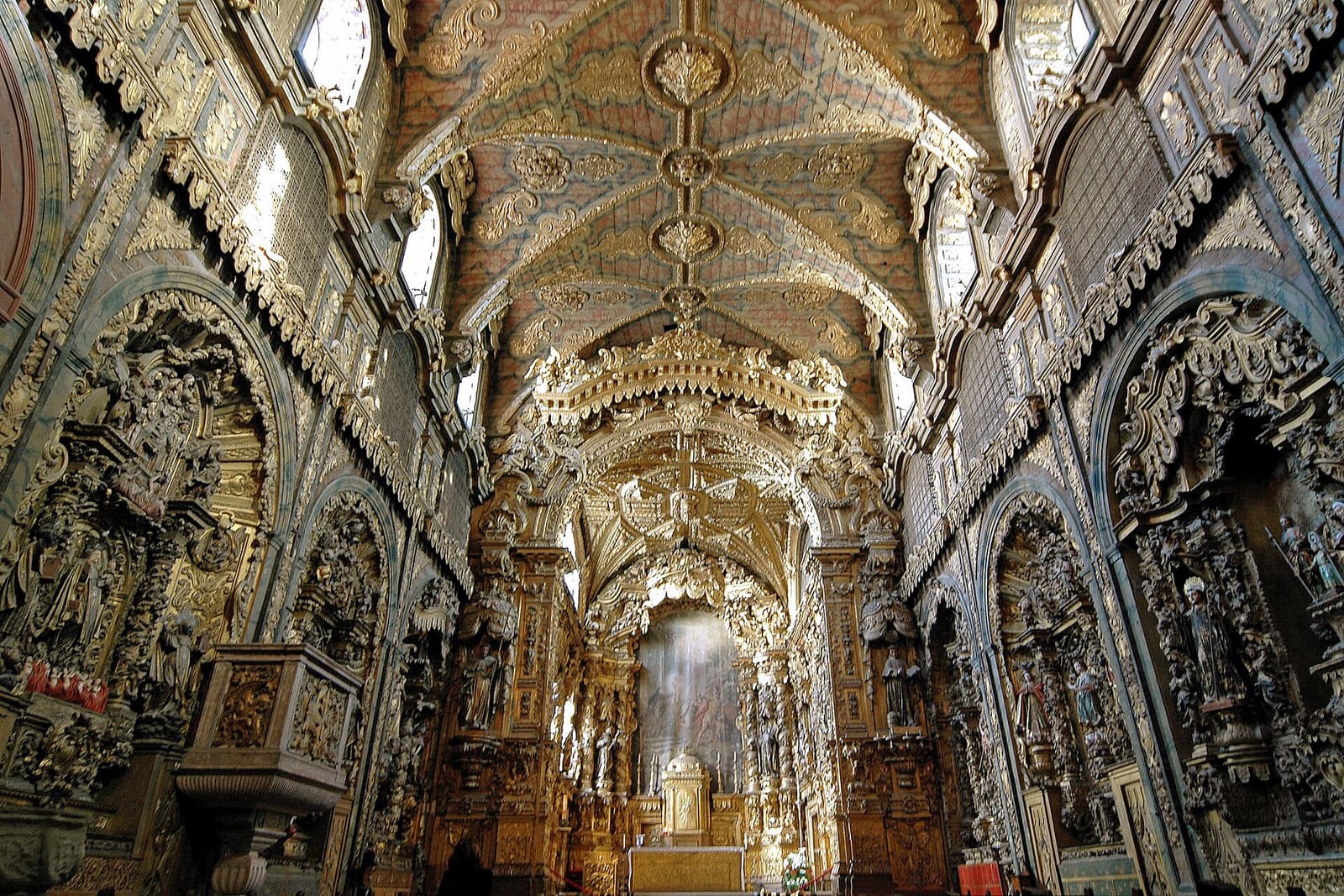
The Church of Santa Clara in Porto: a small temple of Gothic origin with one of the most exuberant interiors of Baroque gilded woodwork in Portugal.
- Location
- Porto, Porto
- Built
- 1416–1457 (igreja); talha do século XVIII
- Style
- Gótico e Barroco
The Church of Santa Clara is a small temple located in the heart of the city of Porto, in the parish of the Sé, beside the Fernandine walls. The apparent austerity of the exterior is set against a dazzling interior, entirely covered in gilded woodwork, which makes this church one of the highest expressions of the Portuguese Baroque and one of the high points of the so-called Porto school of woodcarvers.
Gothic origins and the convent of the Poor Clares
Construction of the church began in 1416, as part of the building of a new convent intended for the nuns of the Order of Saint Clare, the Poor Clares. The religious community settled on the site in 1427 and the church was completed in 1457. From the original phase a number of Gothic features survive, today largely concealed by the later ornamentation. The monastic complex developed over the following centuries, with the construction of new dormitories between 1707 and 1715 and the enlargement of chapels in 1729.
Access is through a Baroque portal, dated 1697 and reworked in the eighteenth century, in which Solomonic columns and Corinthian capitals can be recognised. Enclosed by a walled courtyard, the portal already announces the scenic contrast between the discretion of the façade and the opulence revealed within.
The splendour of the gilded woodwork
What distinguishes Santa Clara is the almost complete covering of the walls, arches and ceiling with gilded woodwork from the first half of the eighteenth century. The carving works extended over decades and are associated with masters of the Porto school, among whom Miguel Francisco da Silva, active around 1730, stands out. The result is a space where the sculpted, gold-leafed wood covers virtually every surface, with angels, festoons, cherubs and plant motifs forming an ensemble of rare virtuosity.
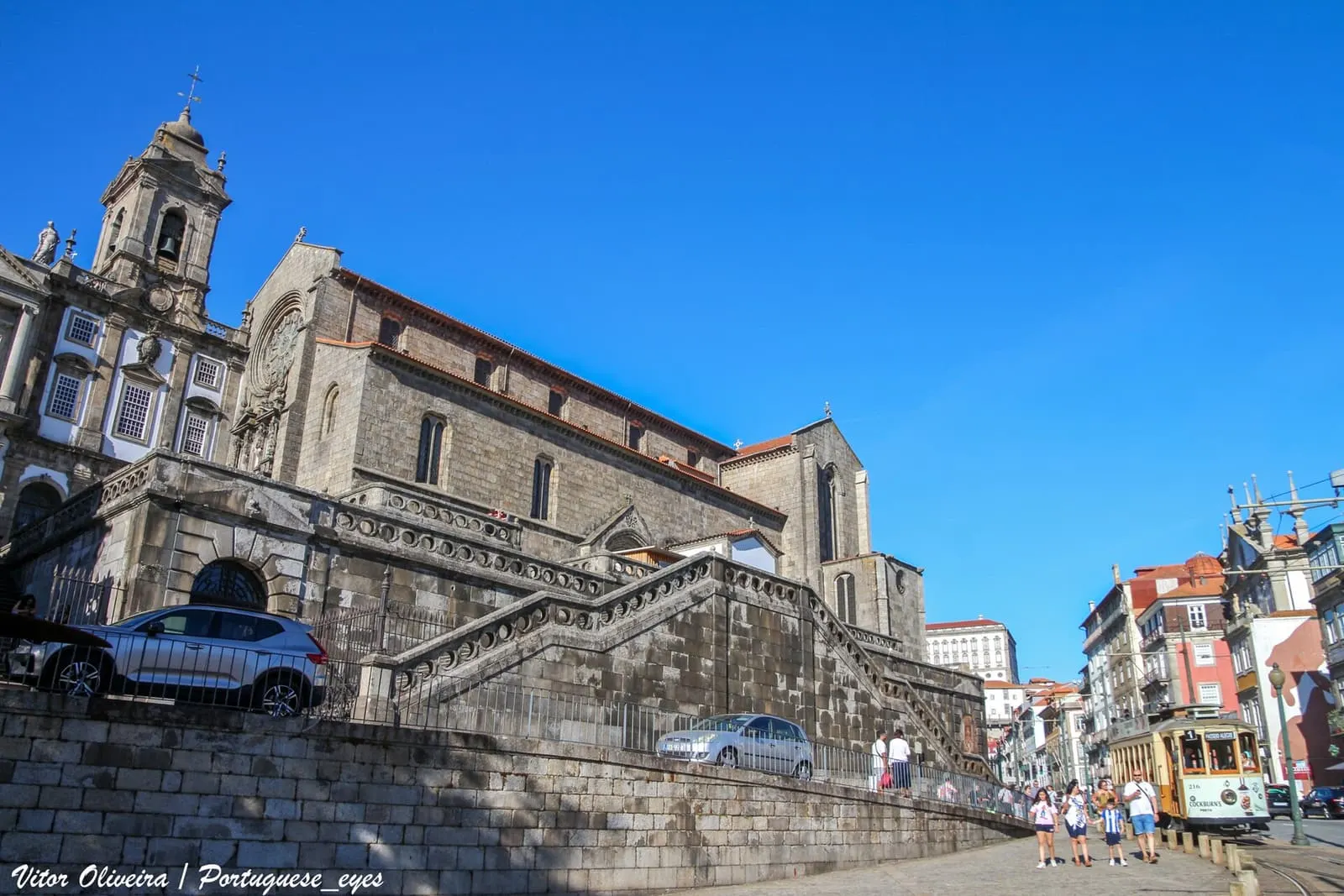
This decorative language brings Santa Clara close to other exceptional Porto monuments, such as the neighbouring Church of São Francisco, equally famed for the density of its gilded woodwork. Together, these churches constitute the most expressive testimony of the Baroque taste that flourished in eighteenth-century Porto.
Classification and recent restoration
The Church of Santa Clara was classified as a National Monument in 1910, a recognition that underscores its artistic and historical value. It lies within the perimeter of the Historic Centre of Porto, a territory inscribed on the UNESCO World Heritage list in 1996, a few steps from the Porto Cathedral.
Between 2016 and 2021 a thorough conservation and restoration intervention took place, named “Operation Church of Santa Clara of Porto”, which involved around a hundred specialists and an investment of more than two and a half million euros. The works covered the structure of the building and the complete treatment of the artistic heritage — woodwork, sculpture and mural painting — restoring the temple to its original brilliance. The reopening to the public in 2021 reintegrated the church into the city’s cultural itineraries, a remarkable example of Baroque architecture in Portugal.
Frequently asked questions
- When was the Church of Santa Clara in Porto built?
- The church was raised between 1416 and 1457, as part of the convent of the Poor Clares. The gilded woodwork interior for which it is celebrated today dates from the first half of the eighteenth century.
- Why is the Church of Santa Clara so famous?
- For its interior decoration: an almost complete covering of Baroque gilded woodwork, considered one of the richest and best preserved in Portugal, the result of works completed in 2021.
- Is the Church of Santa Clara a National Monument?
- Yes. It was classified as a National Monument in 1910 and lies within the perimeter of the Historic Centre of Porto, inscribed on the UNESCO World Heritage list since 1996.
Sources
Keep exploring
Heritage nearby
More places to discover from here. Approximate straight-line distances, within 50 km.