Monuments
Church of São João Evangelista (Évora)
The Church of São João Evangelista (Lóios), in Évora, a Gothic church clad in blue-and-white tiles by António de Oliveira Bernardes, in the UNESCO historic centre.
- Location
- Évora, Évora
- Built
- 1485–1491
- Style
- Gótico, maneirista e barroco
The Church of São João Evangelista, known from time immemorial as the Church of the Lóios, rises on the Praça do Conde de Vila Flor, in the heart of the historic centre of Évora, facing the Roman Temple. A church of late-medieval foundation, it owes its fame to the dazzling eighteenth-century tilework that covers the nave, regarded as one of the masterpieces of Portuguese azulejo art.
Foundation and the Lóio canons
The church was commissioned in 1485 by Dom Rodrigo Afonso de Melo, 1st Count of Olivença and first governor of Tangier, who intended it as the pantheon of his house. The first stone is said to have been laid on 6 May of that year, and the church was consecrated in 1491. It was entrusted to the Congregation of Secular Canons of São João Evangelista — the so-called Lóios or blue hermits —, a religious institute founded in Lisbon in the fifteenth century, whose convent was annexed to the church.
The building was raised over the remains of Évora’s old medieval castle, and the façade preserves a Gothic portal with a pointed arch and flamboyant elements, contrasting with the sobriety of the elevation. The single nave, covered by a ribbed vault, still follows the Gothic vocabulary, although later works added Mannerist and Baroque layers to it.
The tiles of Oliveira Bernardes
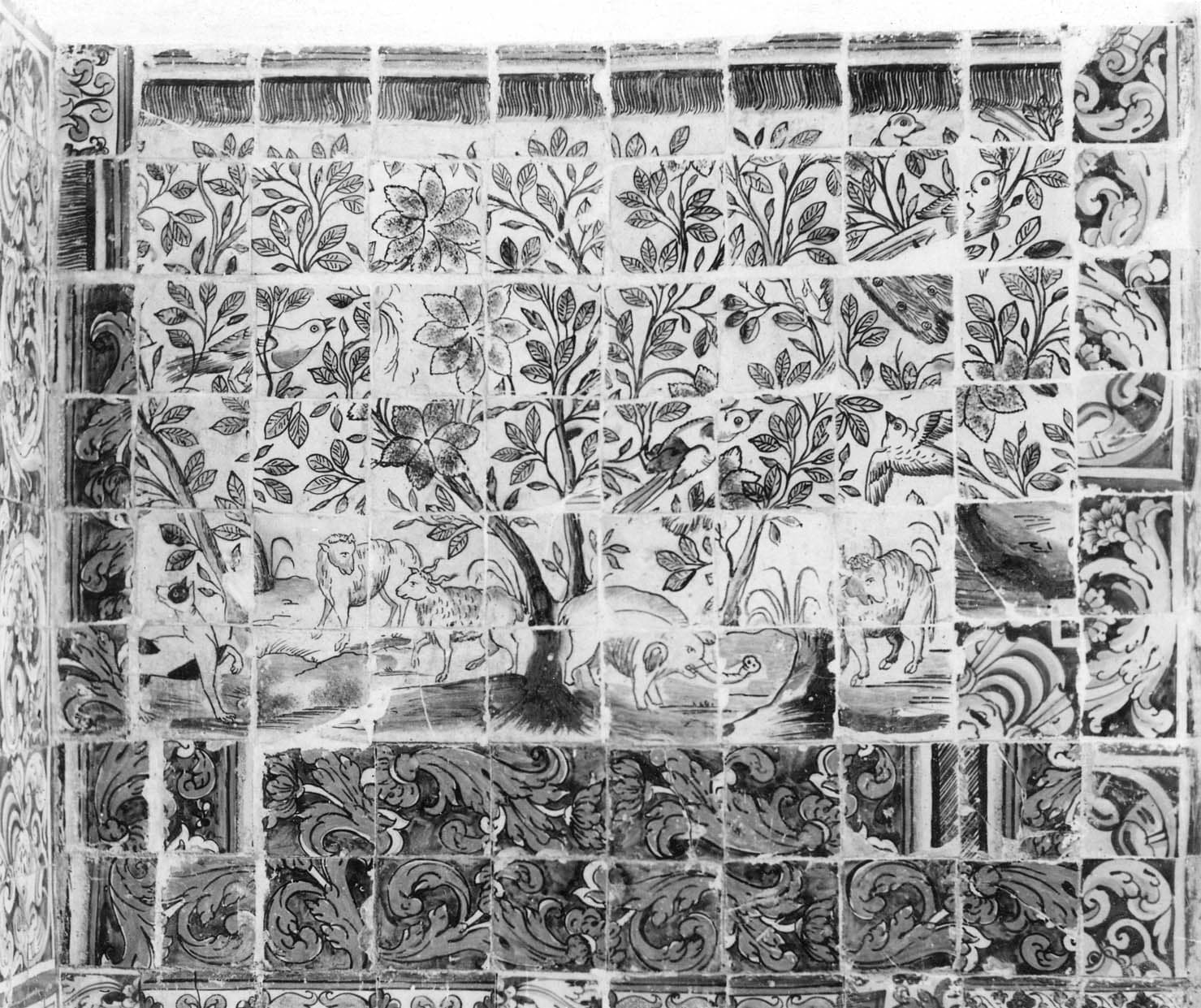
The interior is entirely lined with blue-and-white tiles, commissioned by Dom Nuno Álvares Pereira de Melo, 1st Duke of Cadaval, from master António de Oliveira Bernardes and dated 1711. The great panels narrate the life of Saint Lawrence Justinian, first patriarch of Venice, and form one of the most monumental and expressive ensembles to emerge from the painter’s workshop, a central figure of the so-called cycle of the great masters of Baroque tilework.
In few places in the country does azulejo painting attain this theatrical scale: the scenes, peopled with figures of lively gesture and deep perspectives, transform the walls of the nave into a veritable narrative gallery, inseparable from the liturgy of the space.
This decorative programme belongs to the great tradition of the blue-and-white azulejo that dominated Portuguese taste between the late seventeenth century and the first quarter of the eighteenth. Beneath the church floor open gratings that reveal an Islamic-origin cistern and an ossuary with the remains of the former canons — testimonies to the long monastic life of the place.
From the earthquake to the House of Cadaval
The 1755 earthquake seriously damaged the complex, above all the adjoining convent, which was rebuilt over the second half of the eighteenth century. The church, however, preserved its Gothic core and its eighteenth-century tiles. It houses the tombs of the founders and of several figures of the Évora nobility, among them Dom Rui de Sousa, ambassador to the Kingdom of Kongo.
Today the church remains the private property of the House of Cadaval, which occupies the adjoining palace, while the former Convent of the Lóios has been adapted into an inn. The complex is classified as a National Monument and forms part of the Historic Centre of Évora, inscribed on the UNESCO World Heritage list in 1986. A few steps away rise the Cathedral of Évora and the Church of São Francisco, which complete the city’s monumental itinerary.
Frequently asked questions
- Who founded the Church of São João Evangelista in Évora?
- It was founded in 1485 by Dom Rodrigo Afonso de Melo, 1st Count of Olivença and first governor of Tangier, intended as his family's pantheon and entrusted to the secular canons of São João Evangelista, the Lóios. It was consecrated in 1491.
- Who painted the church's tiles?
- The great blue-and-white panels that line the nave are the work of master António de Oliveira Bernardes, dated 1711, and depict episodes from the life of Saint Lawrence Justinian, patriarch of Venice.
- Can the Church of the Lóios be visited?
- Yes. The church is the private property of the House of Cadaval, but it is open to visits, beside the former Convent of the Lóios, today an inn, in the historic centre of Évora.
Sources
Keep exploring
Heritage nearby
More places to discover from here. Approximate straight-line distances, within 50 km.