Monuments
New Cathedral of Coimbra
The New Cathedral of Coimbra, a former Mannerist Jesuit church that became a cathedral in 1772, located in the heart of the university city.
- Location
- Coimbra, Coimbra
- Built
- 1598–1698
- Style
- Maneirismo / Barroco
The New Cathedral of Coimbra is the functioning cathedral of the Diocese of Coimbra, housed in the former church of the Colégio de Jesus, the major Jesuit establishment in the city. Built between the late 16th and late 17th centuries, it is one of the most expressive examples of Mannerist architecture and its transition to Baroque in Portugal. The name distinguishes it from the Old Cathedral of Coimbra, the Romanesque cathedral that served the diocese for over six centuries before the episcopal title changed churches.
A Jesuit church modeled after Il Gesù
The church’s construction began in 1598, as part of the vast Colégio de Jesus that the Jesuits had been building in Coimbra since the mid-16th century. The temple adopted a single-vaulted Latin cross plan flanked by interconnected chapels—a solution directly inspired by the Church of Il Gesù in Rome, the mother church of Jesuit architecture. This layout, designed for preaching and focusing worshippers’ attention on the high altar, spread throughout Catholic Europe following the Council of Trent.
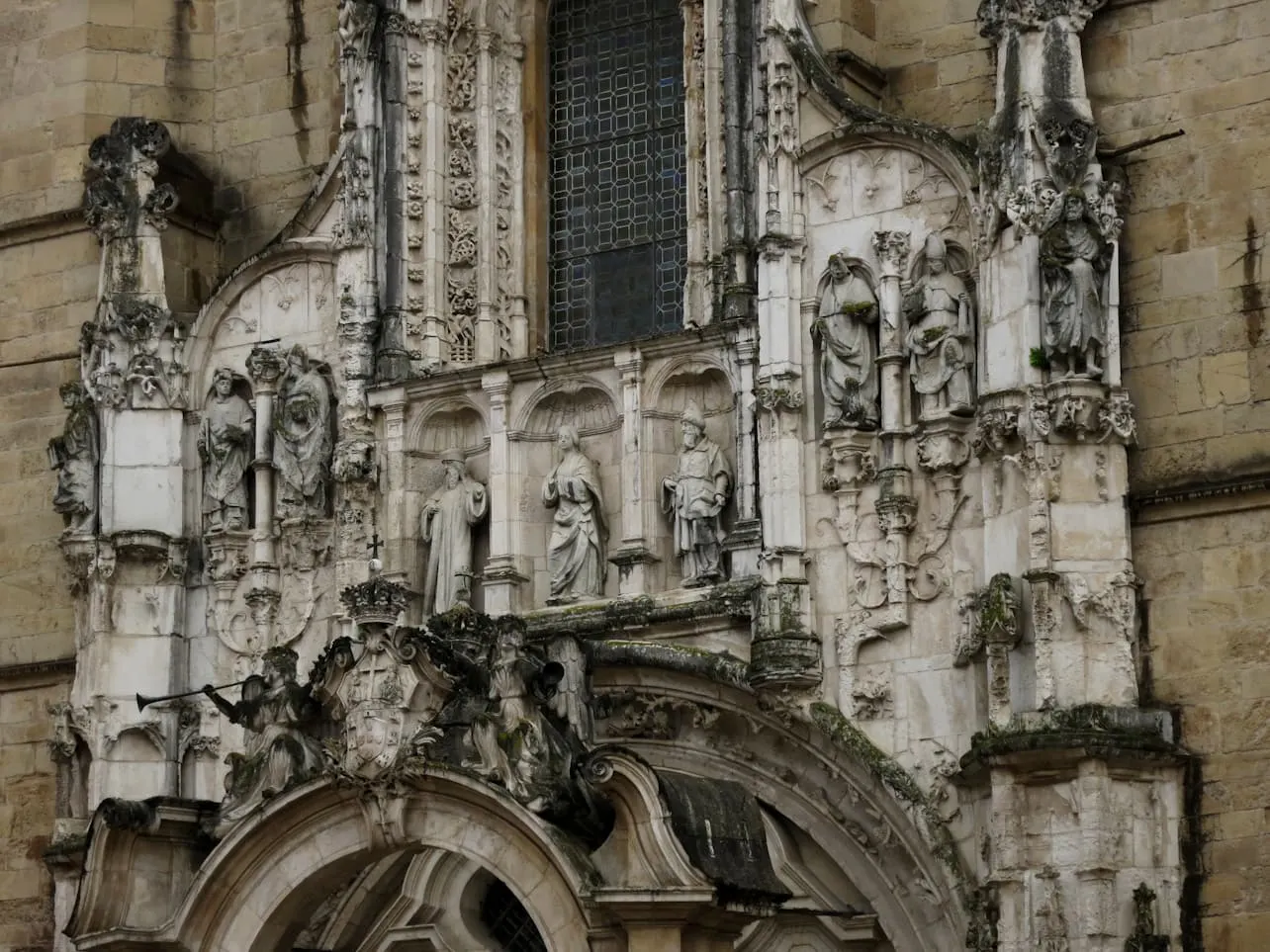
The work progressed slowly. Worship only began in 1640, and the church was formally inaugurated in 1698, nearly a century after the laying of the first stone. This lengthy timeline explains the stylistic contrast in the building: the facade combines the sobriety and geometric rigor of Mannerism in its lower section with Baroque decorative elements and bell towers completed in the 18th century.
The New Cathedral originated as a college church, not a cathedral—and it was the expulsion of the Jesuits, not a diocesan plan, that elevated it to the city’s primary church.
From Jesuit college to cathedral
The building’s fate changed with Pombaline policies. In 1759, the Society of Jesus was expelled from Portugal by order of the Marquis of Pombal, and the vast complex of the Colégio de Jesus became available for new uses. In 1772, the chapter transferred the episcopal seat from the Old Cathedral to the former Jesuit church, which was more spacious and centrally located in the city’s upper district. From that date onward, the temple became known as the New Cathedral and assumed its role as a cathedral, which it maintains to this day.
The choice was not neutral. The old Romanesque cathedral, a compact 12th-century fortress, contrasted with the clear spatiality and monumentality of the Jesuit interior, better suited to Baroque-era liturgy and episcopal pomp. The move also formalized the transfer of liturgical furnishings between the two buildings.
The interior and the university surroundings
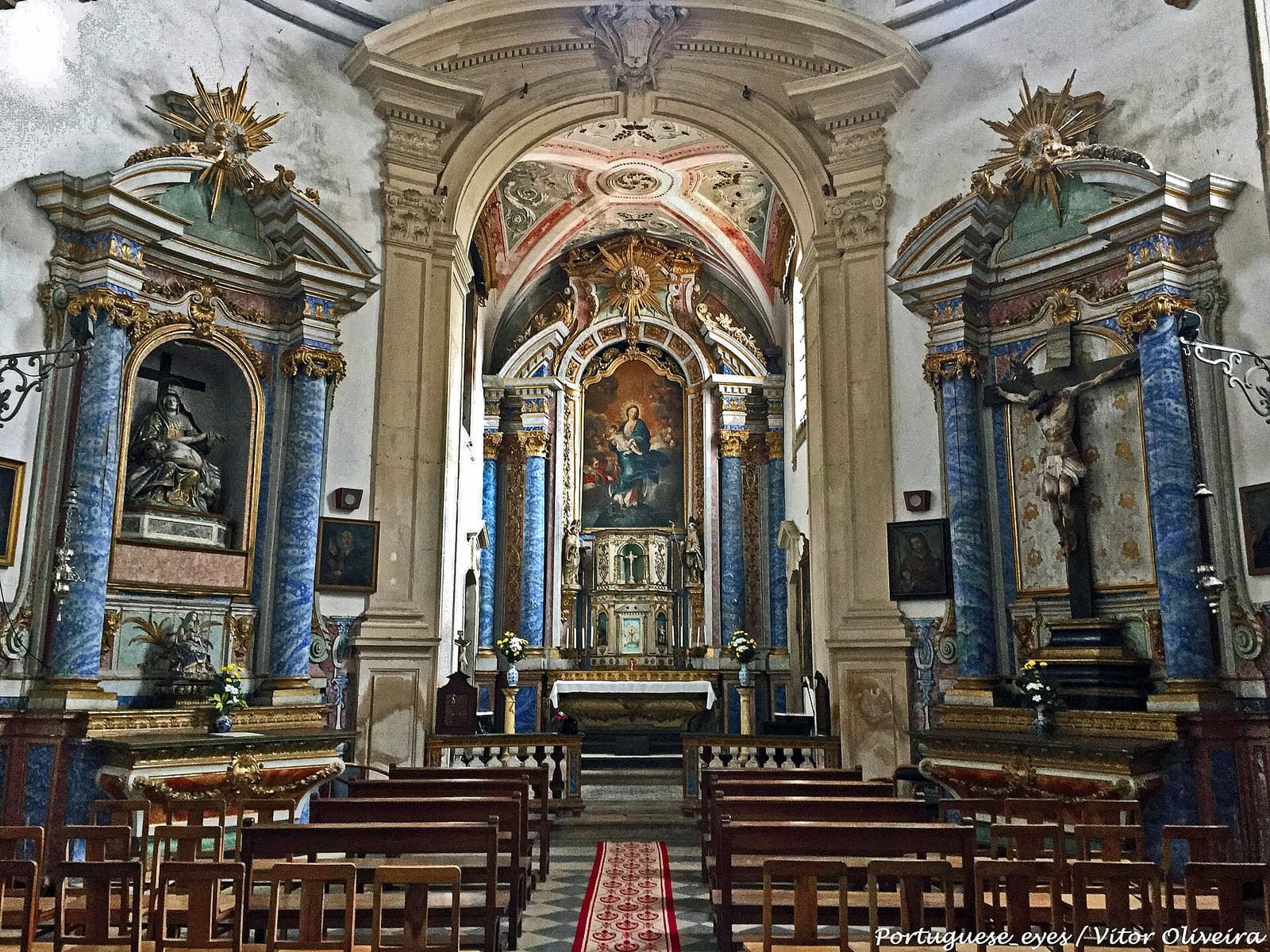
The interior of the New Cathedral preserves a remarkable collection of gilded altarpieces from the 17th and 18th centuries, distributed across the main chapel and side chapels, testifying to the various decorative campaigns that accompanied its prolonged construction. Notable is the baptismal font from the old cathedral, a Manueline-style piece that reflects the continuity between the two temples. The choir loft and organs complete a space designed for the solemnity of divine worship.
The New Cathedral stands in the upper part of Coimbra, closely linked to the University and the monumental complex extending to the Machado de Castro National Museum, housed in the adjacent former Episcopal Palace. Its architectural language fully embodies Mannerism in Portugal, a movement that marked national religious architecture between the classicism of the late 16th century and Baroque exuberance. Classified as a National Monument since 1910, the New Cathedral, along with the nearby Monastery of Santa Cruz, is one of the key landmarks of Coimbra’s religious and artistic history.
Frequently asked questions
- Why is it called the New Cathedral of Coimbra?
- It is called 'New Cathedral' in contrast to the Old Cathedral (Sé Velha), the former Romanesque cathedral. The title of cathedral was transferred to this Jesuit church in 1772, making it the new episcopal seat of the Diocese of Coimbra.
- Who built the New Cathedral of Coimbra?
- It was erected by the Society of Jesus as the church of the Colégio de Jesus, with construction beginning in 1598 following a Latin cross plan with vaulting inspired by the Church of Il Gesù in Rome. The construction lasted until its inauguration in 1698.
- Can the New Cathedral of Coimbra be visited?
- Yes. It remains the functioning cathedral of the Diocese of Coimbra and is open for worship and visits, located near Largo da Feira in the upper part of the university city.
Sources
Keep exploring
Heritage nearby
More places to discover from here. Approximate straight-line distances, within 50 km.