Monuments
Church of Santa Cruz (Coimbra)
The Church of Santa Cruz, in Coimbra, holds the royal tombs of Afonso Henriques and Sancho I, the Manueline pulpit by Chanterene, and is a National Pantheon.
- Location
- Coimbra, Coimbra
- Built
- 1131 (fundação); 1507–1530 (reforma manuelina)
- Style
- Românico, Manuelino e Maneirista
The Church of Santa Cruz is the church of the former Monastery of Santa Cruz, in the heart of downtown Coimbra, beside the present-day Praça 8 de Maio. Founded in 1131 under the patronage of Afonso Henriques, the first king of Portugal, it was during the Middle Ages one of the most influential monastic centres of the kingdom, seat of a community of Augustinian canons regular and of a remarkable scriptorium and library. The church one visits today results above all from the profound reform promoted by Manuel I from 1507 onwards, which rebuilt the primitive Romanesque church and endowed it with one of the most coherent Manueline ensembles in the country.
The Manueline reform
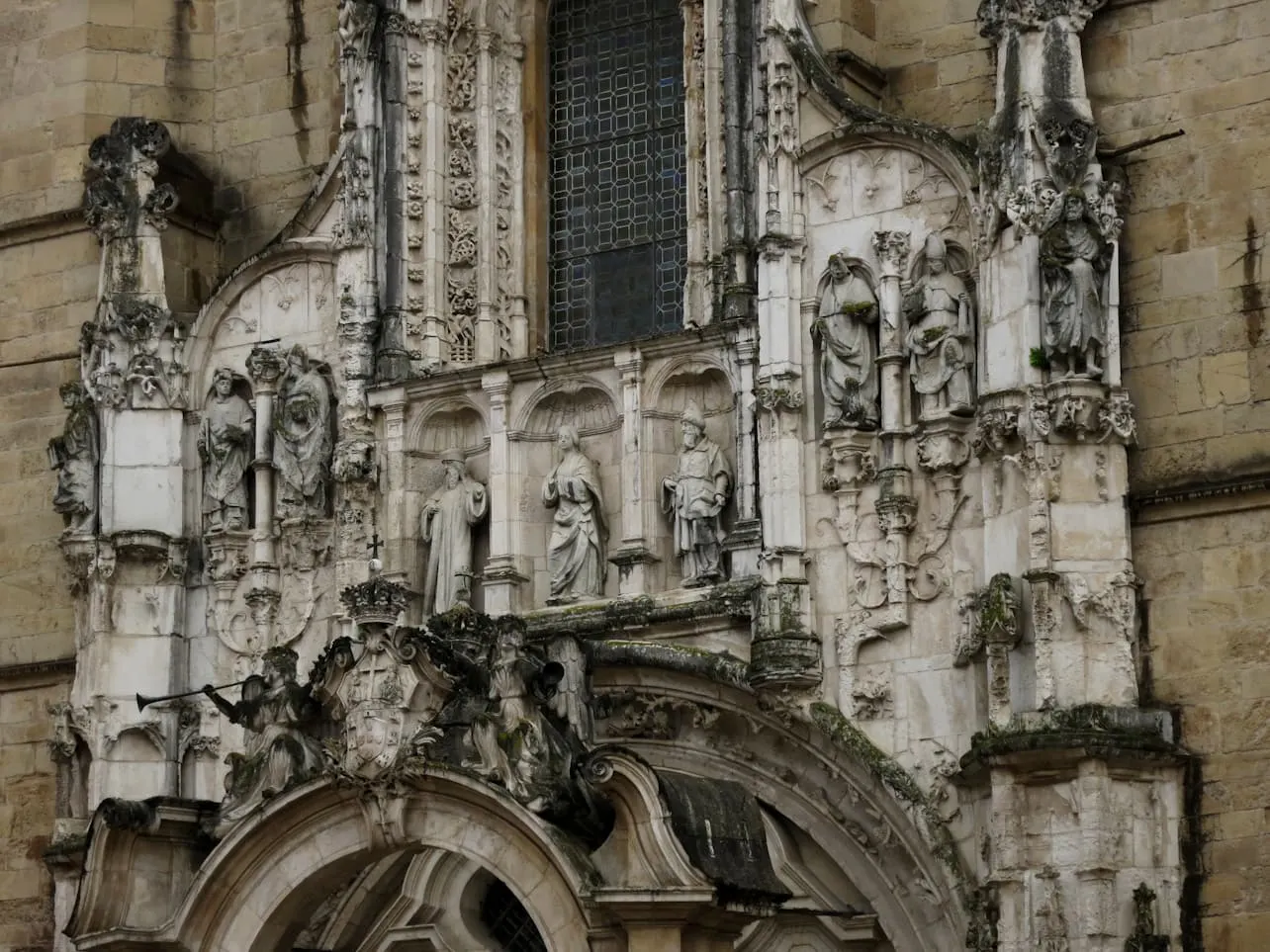
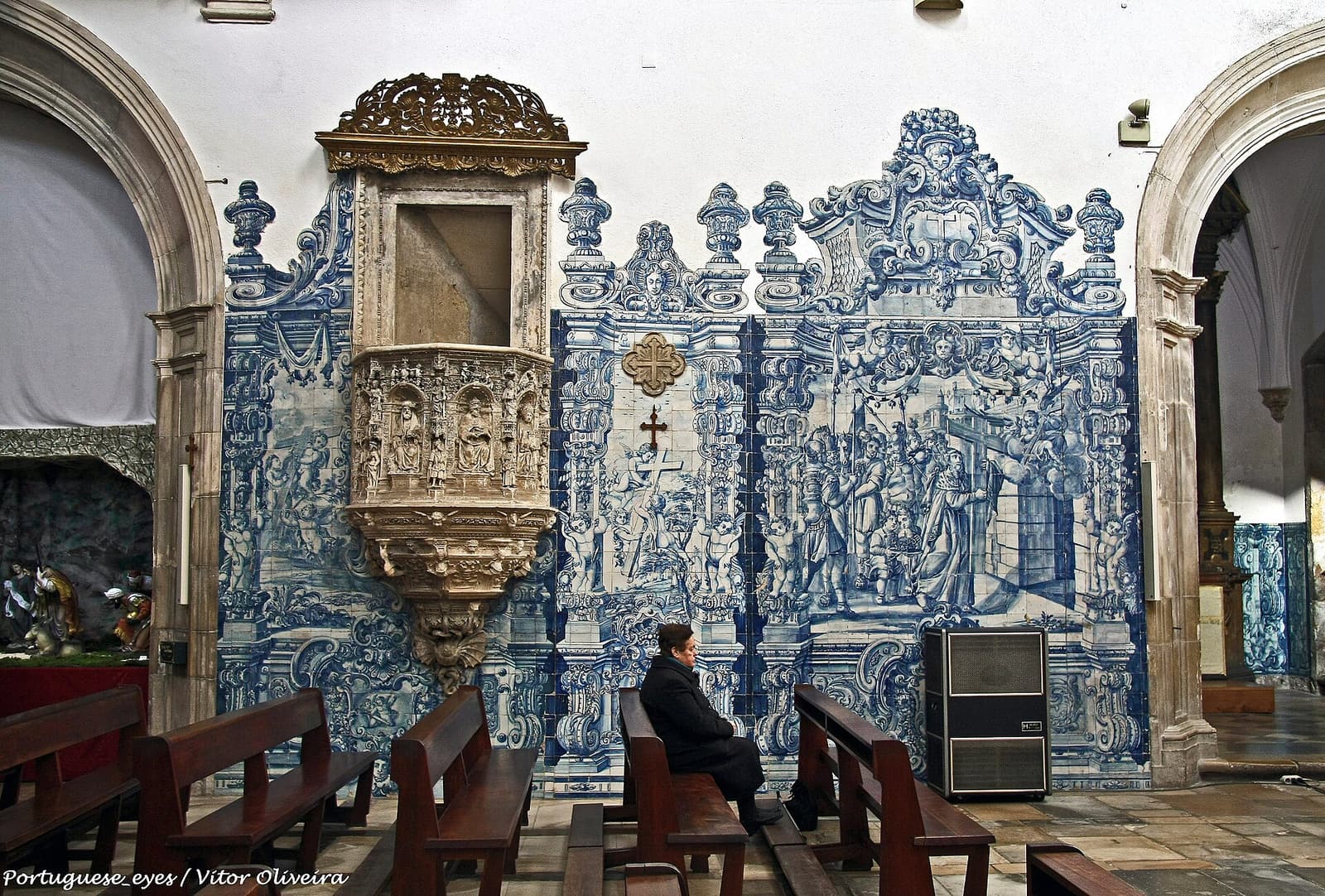
From 1507, Manuel I launched a building campaign that almost entirely replaced the medieval edifice. The single nave and the chancel were covered with Manueline vaults of great quality, in works directed by Diogo de Boitaca and by Marcos Pires of Coimbra. The façade itself was reshaped with a scenographic portal, raised between 1522 and 1526 under the direction of Diogo de Castilho and the Frenchman Nicolau de Chanterene, in a dialogue between the late-Gothic vocabulary and the first echoes of the Renaissance. Inside, one of the most admired elements of the church is preserved: the pulpit attributed to Chanterene (c. 1521), a piece in which Renaissance sculpture attains enormous refinement.
Santa Cruz is, more than a church, an archive in stone of the founding of Portugal: here the memory of the founding kings and the invention of the Manueline language meet.
The royal tombs
The great symbolic significance of Santa Cruz lies in the tombs of the first two Portuguese monarchs. Until the early sixteenth century, Afonso Henriques and Sancho I lay in modest graves, but the Manueline reform transferred their remains to new monuments in the chancel, placed face to face. Framed by stone reredos of the transition between the late Gothic and the Renaissance, they incorporate recumbent sculptures representing the kings. It was precisely this status as the burial place of the kingdom’s founders that justified, in 2003, the elevation of the church to National Pantheon, by Law No. 35/2003.
Sacristy and artistic treasure
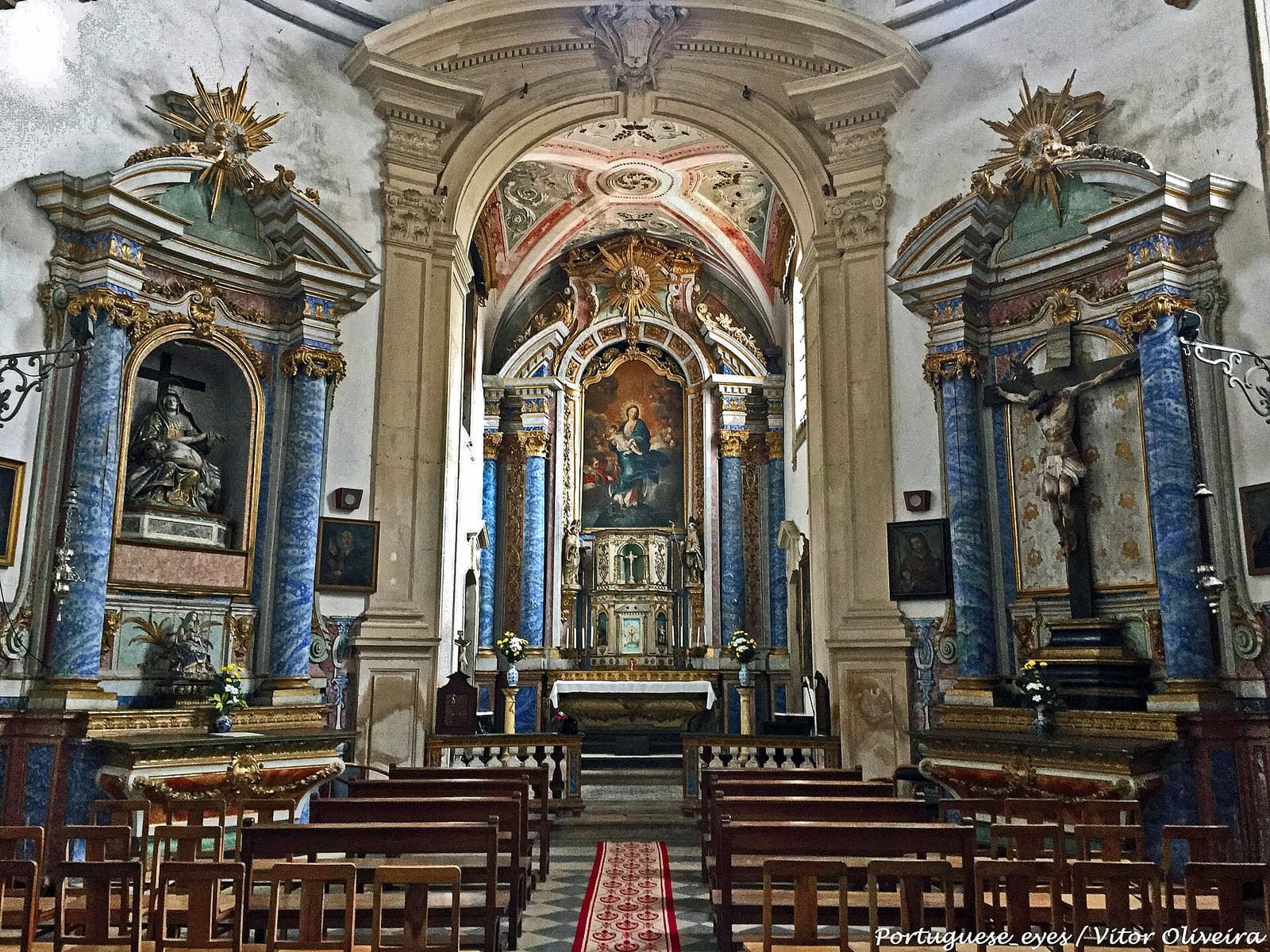
The sacristy, built between 1622 and 1624 to a design by Pedro Nunes Tinoco, is an example of the transition to Mannerism and holds a valuable pictorial ensemble, with works associated with the workshop of Vasco Fernandes (Grão Vasco) and Cristóvão de Figueiredo, as well as seventeenth-century azulejos. The ensemble makes Santa Cruz a rare synthesis of the Portuguese arts of the sixteenth and seventeenth centuries.
Classified as a National Monument in 1910, the church is part of the rich heritage landscape of Coimbra, alongside monuments such as the Old Cathedral of Coimbra. As the church of the Monastery of Santa Cruz, it is also one of the greatest examples of the Manueline style, comparable, in architectural ambition, to the Monastery of Batalha.
Frequently asked questions
- Who is buried in the Church of Santa Cruz?
- It holds the royal tombs of the first two kings of Portugal, Afonso Henriques and his son Sancho I, transferred to new Manueline monuments in the early sixteenth century.
- Is the Church of Santa Cruz a National Pantheon?
- Yes. It was recognised as a National Pantheon by Law No. 35/2003 of 22 August, a distinction tied to the tombs of the founding kings.
- Who made the church's Manueline pulpit?
- The celebrated Renaissance pulpit is attributed to the French sculptor Nicolau de Chanterene and dates from around 1521.
Sources
Keep exploring
Heritage nearby
More places to discover from here. Approximate straight-line distances, within 50 km.