Archaeology
Citânia de Sabroso
Citânia de Sabroso, in Guimarães: a fortified Iron Age settlement with two ramparts, excavated by Martins Sarmento, a National Monument since 1910.
- Location
- Sande São Lourenço e Balazar, Guimarães, Braga
- Built
- 2.ª metade do I milénio a.C. (Idade do Ferro)
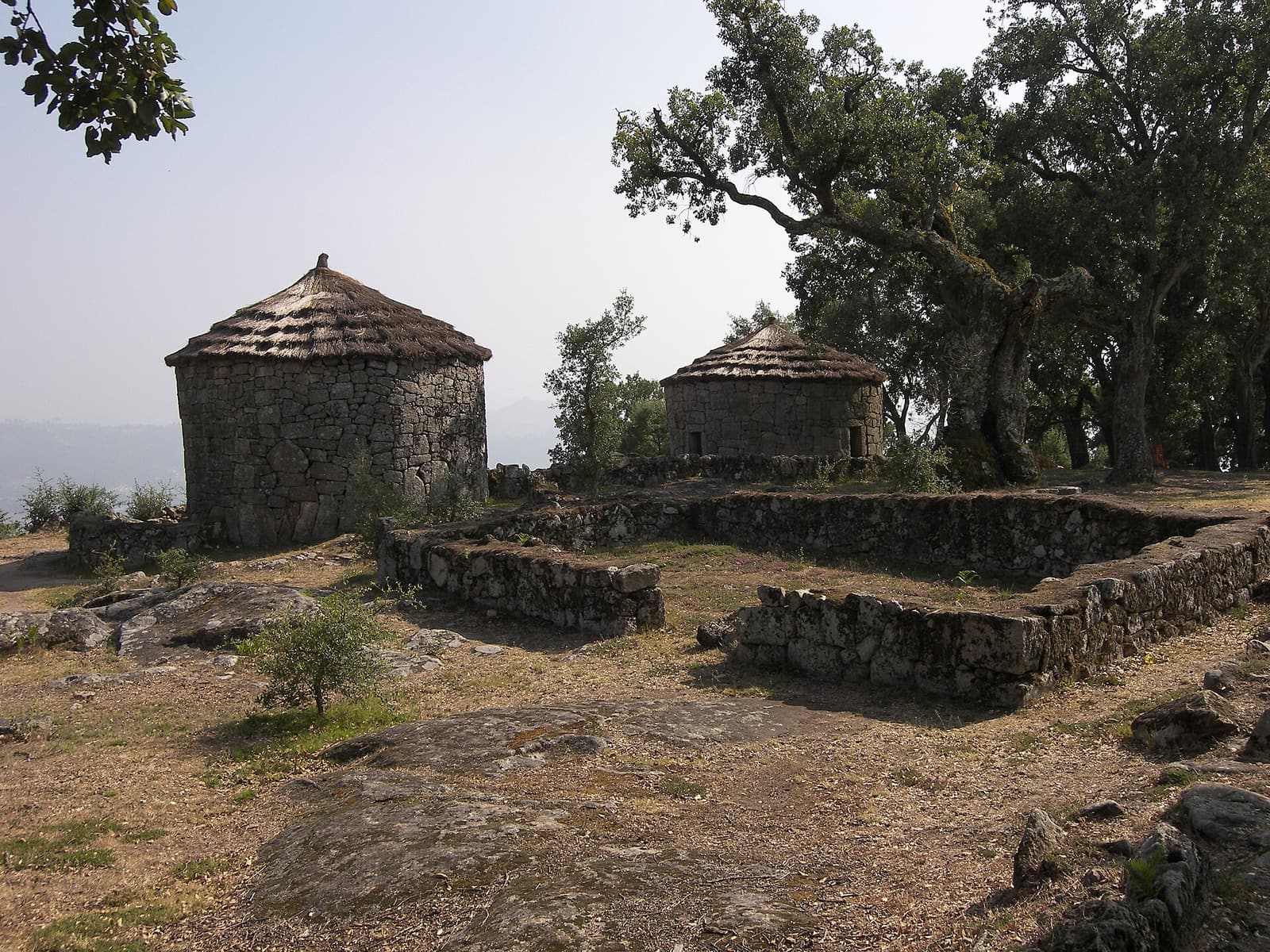
The Citânia de Sabroso, or Castro de Sabroso, is a fortified Iron Age settlement in the municipality of Guimarães, in the parish of Sande São Lourenço e Balazar. It occupies about three hectares on the summit of a hill, enclosed by two stone ramparts. It lies near the much better-known Citânia de Briteiros, and helps in understanding the Castro culture of the Northwest.
A settlement with two ramparts
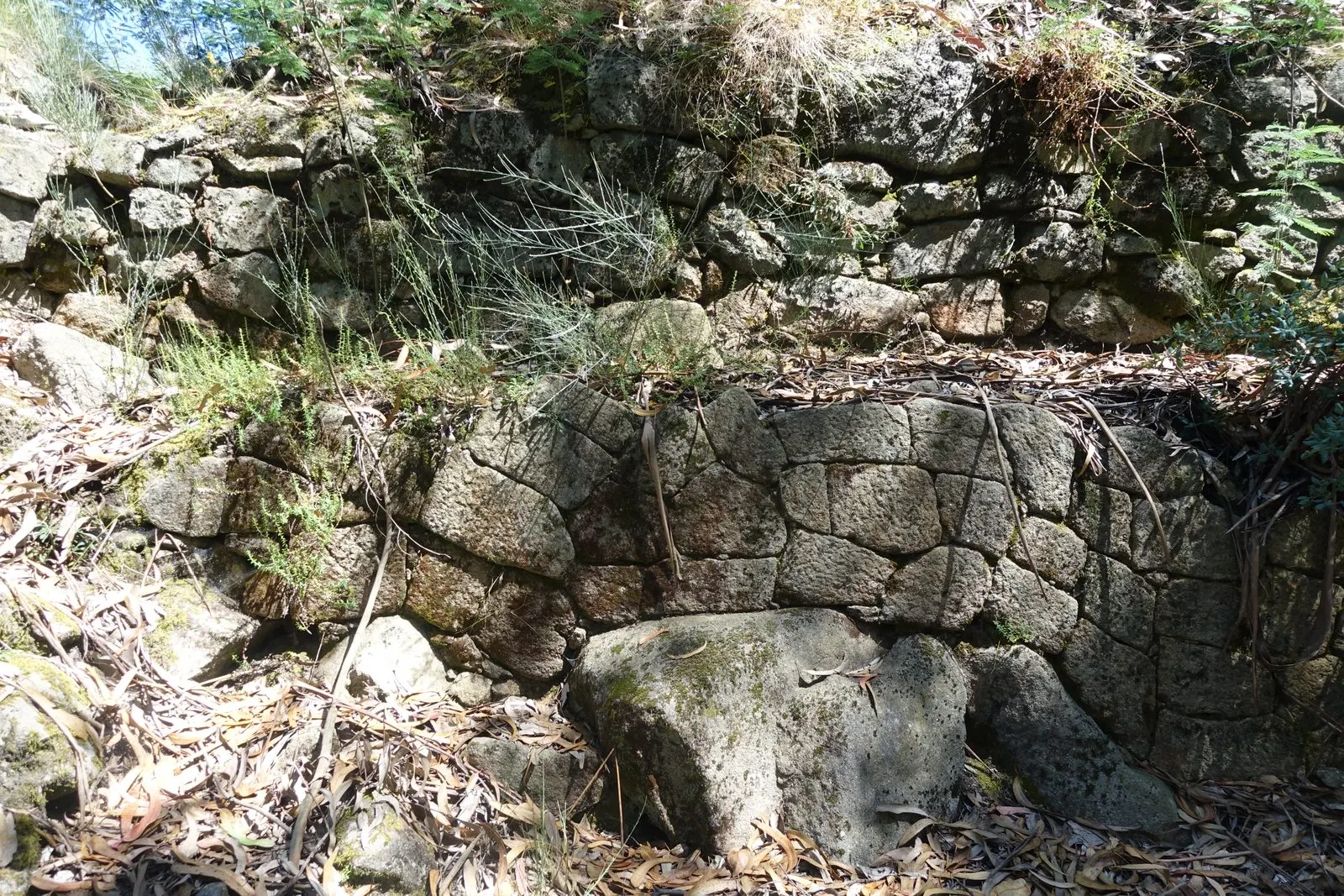
The Sociedade Martins Sarmento describes the site as a fortified settlement from the second half of the first millennium BC, of about three hectares. The enclosure is closed by two stone ramparts; at its highest and thickest points the first reaches 5.20 m in height and 4.20 m in thickness. Inside, the Sociedade counts 36 circular and three rectangular structures, two of which may form a cistern. On the summit of the hill there are rock engravings.
The dominant structures are therefore circular, built in stone, as is typical of Castro settlements. Visitors should expect low ruins and vegetation, which are better read with signage and guides than appreciated as a spectacular monument.
Martins Sarmento and Hawkes
Francisco Martins Sarmento excavated at Sabroso in 1877, 1878 and 1883. In 1958, a British team led by Christopher Hawkes, of the University of Oxford, with Ilid Anthony and the support of the Sociedade Martins Sarmento, returned to the site. Hawkes concluded that the Iron Age occupation divided into two phases, which he dated roughly to the 4th–3rd centuries BC and the 2nd–1st centuries BC.
The Sociedade Martins Sarmento, of Guimarães, presents the site among the monuments it cares for. For the context of other settlements of the same world, see the Citânia de Sanfins and the page on the Iron Age.
Classification
The national heritage register identifies the Citânia de Sabroso (NINV 2269) as a National Monument, by the Decree of 16 June 1910, published in the Diário do Governo no. 136, of 23 June 1910. The Atlas do Património lists the parish as Sande São Lourenço e Balazar and records no special protection zone. We consulted the Atlas register, not the full text of the decree.
Reopening to the public in 2023
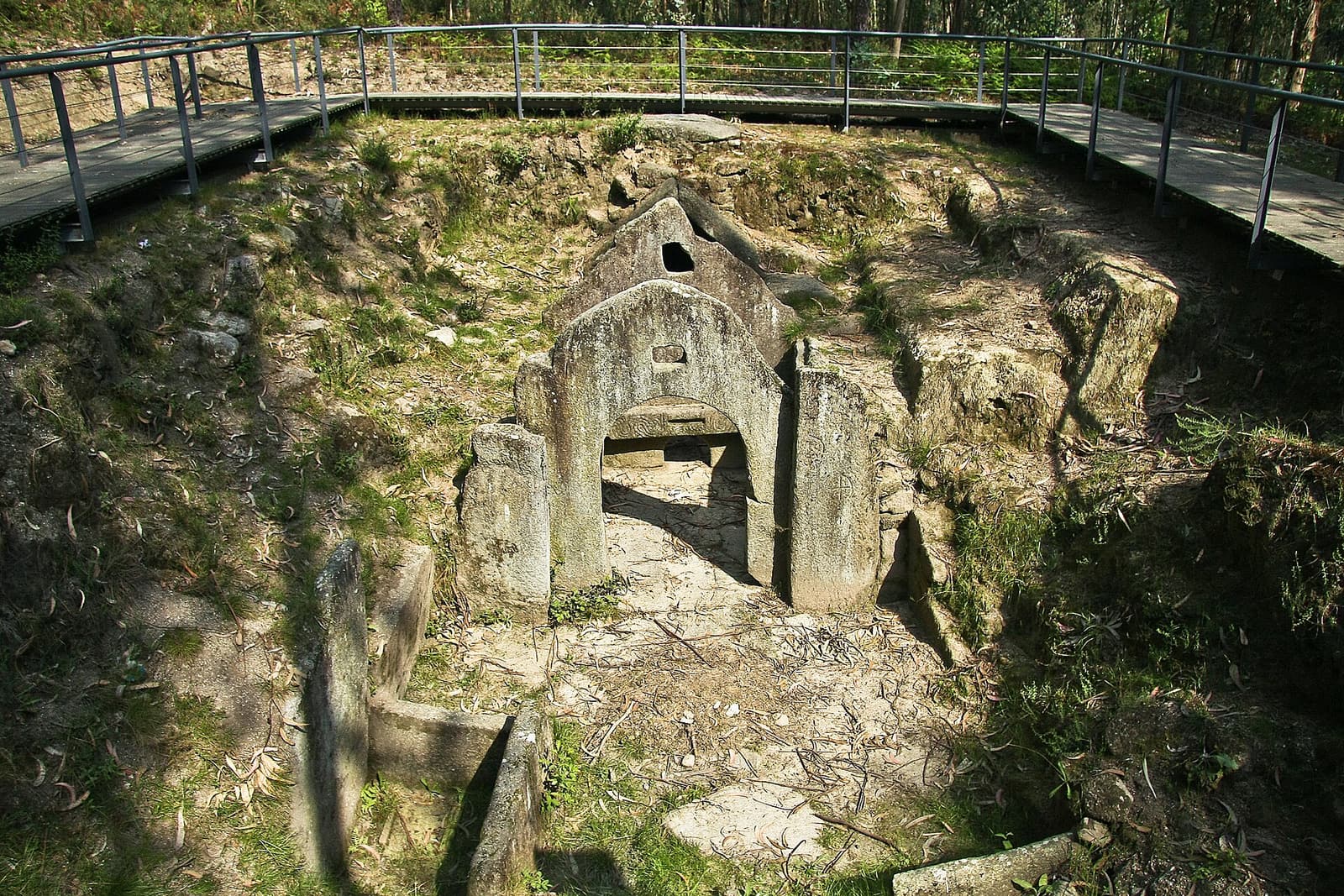
The Câmara Municipal de Guimarães opened the site to visits on 25 June 2023. The works lasted about a year and a half and cost 218,539.68 euros, according to the local press; they were based on a 2013 project by the Sociedade Martins Sarmento and a 2017 proposal from the Participatory Budget. The enclosure was fenced with mesh and timber, panels with a map and route were installed, and a timber walkway was built between the second rampart and the outer ditch, allowing the ruins to be observed without treading on them. The ruins are not fenced off; visitors are asked not to climb on the structures. At the opening, the president of the Sociedade noted that water points, waste collection and ongoing maintenance were still lacking.
Visiting
When consulted on 5 November 2026, the Sociedade Martins Sarmento’s page on the castro gave Tuesday to Sunday, 9:30–12:30 and 14:30–17:30, but did not make clear whether these hours apply to the site itself or to the Sociedade’s services, and it gave no prices or booking details. Before going, confirm with the Sociedade, at Rua Paio Galvão, in Guimarães (+351 253 415 969, [email protected]), or with the Câmara Municipal. Wear suitable footwear: the terrain is hillside, with loose stone. A visit pairs well with the nearby Citânia de Briteiros.
Photograph by Joseolgon, dated 29 June 2020. Original on Wikimedia Commons, under CC BY-SA 4.0; resized and compressed for the web, without altering the composition.
Frequently asked questions
- Is the Citânia de Sabroso the same as the Castro de Sabroso?
- Yes. The national register uses «Citânia de Sabroso»; the Sociedade Martins Sarmento and other sources use «Castro de Sabroso». It is a fortified Iron Age settlement in the parish of Sande São Lourenço e Balazar.
- What period does it date from?
- The Sociedade Martins Sarmento places it in the second half of the first millennium BC. Christopher Hawkes, who excavated in 1958, distinguished two phases, roughly the 4th–3rd and 2nd–1st centuries BC.
- Is it listed?
- Yes, as a National Monument, by Decree of 16 June 1910, published in the Diário do Governo no. 136, of 23 June 1910.
- Can it be visited?
- Yes. The municipality reopened the site to the public on 25 June 2023, after enhancement works. Confirm opening hours with the Sociedade Martins Sarmento or the municipality.
Sources
- Património Cultural, I.P. — Atlas do Património Classificado: Citânia de Sabroso (NINV 2269)
- Diário do Governo — Decreto de 16 de junho de 1910 (n.º 136, de 23-06-1910)
- Sociedade Martins Sarmento — Castro de Sabroso
- Reflexo Digital — Castro de Sabroso abre ao público (2023)
- Wikidata — Citânia de Sabroso (Q1049912)
Keep exploring
Heritage nearby
More places to discover from here. Approximate straight-line distances, within 50 km.