Monuments
Santa Justa Lift
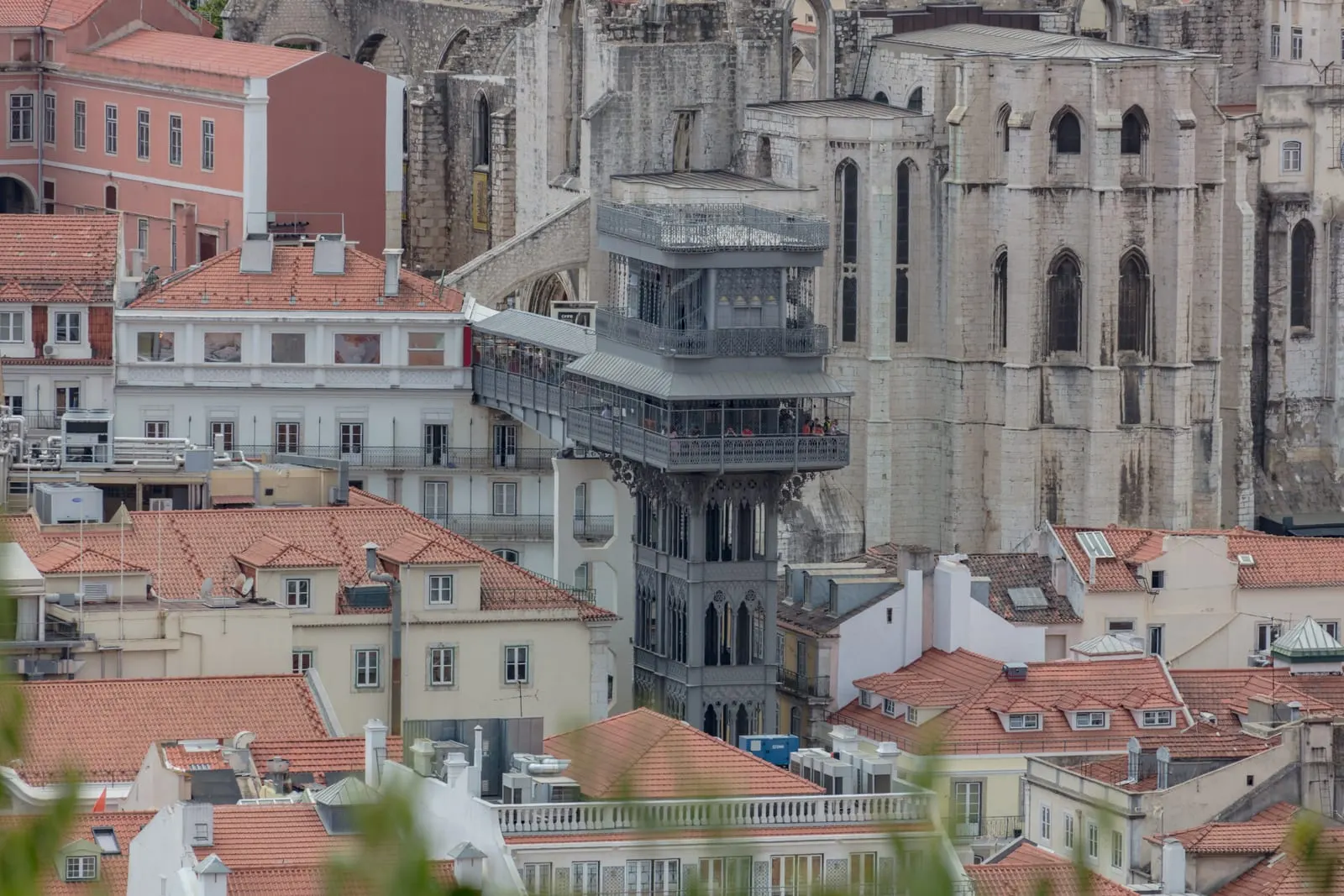
Santa Justa Lift in Lisbon: a neo-Gothic iron tower by Raoul Mesnier du Ponsard, opened in 1902, a National Monument since 2002 and operated by Carris.
- Location
- Lisboa, Lisboa
- Built
- 1900–1902
- Style
- Arquitetura do ferro, ornamentação neogótica
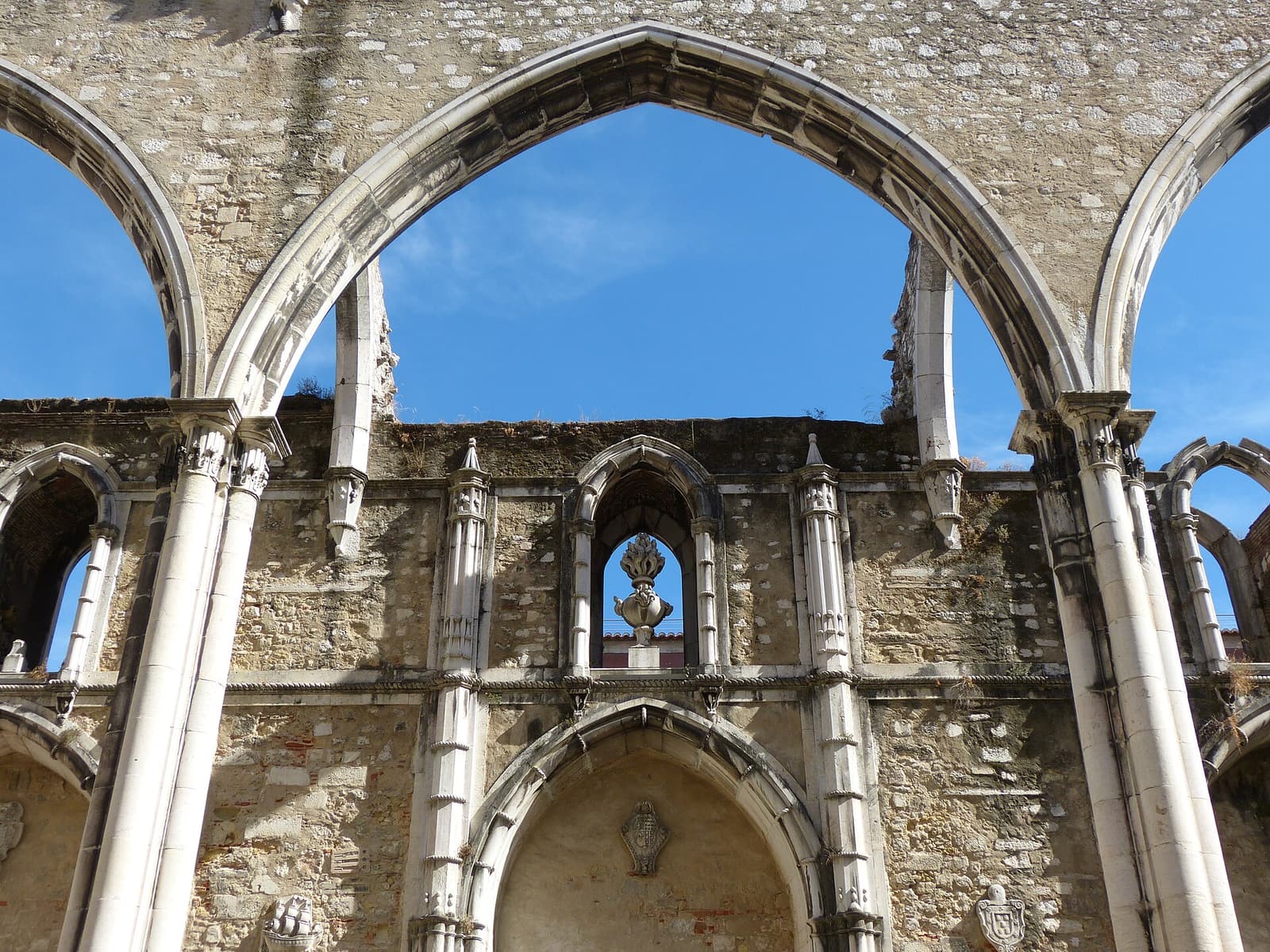
The Santa Justa Lift, also called the Carmo Lift, links the Baixa with the Largo do Carmo by means of a metal tower. It is the only vertical lift of this type in Lisbon, according to the national heritage register. Its neo-Gothic ornamentation engages with the ruins of the Carmo Convent, right beside it. It is a transport installation that has become both a monument and a symbol of the historic centre.
A problem of hills
In the nineteenth century, Lisbon’s population moved mainly on foot or in carriages drawn by animals, and the hills made it difficult to connect the upper neighbourhoods with the Baixa. The historical note from Património Cultural, I.P. records several projects for mechanical transport presented to the City Council from 1874 onwards. In 1882, the engineer Raoul Mesnier du Ponsard received a municipal licence to build and operate mechanically driven lifts in the city.
The design of the Carmo Lift was presented in 1900. It is the work of Ponsard, with the mechanical parts executed by Lambert d’Argent and drawings by Jacinto Augusto Mariares. Works began with the preparation of the ground at the Escadinhas de Santa Justa, where the machine house was built.
Carris gives the opening date as 10 July 1902. The lift then operated with steam engines. In November 1907, according to Carris, it received electric motors; the national register also notes the switch to electric power in 1907.
Iron and ornament
The national register describes the lift as one of the few examples of iron architecture in Lisbon. It emphasises the impact on the Baixa’s landscape, both through its vertical presence and the abundant ornamentation of the metal structure, with arches in a neo-Gothic taste.
According to the same description, the lifting system has two metal towers 45 metres high, linked to each other and resting on a base of two pillars with four vertical beams. The cabins are balanced by means of a steel cable, and their interiors are lined with wood and mirrors. A helical staircase connects the upper levels, and the top floor serves as a viewing platform.
When observing the tower, note the difference between structure and decoration. The vertical members and beams carry out the function of transport; the pointed arches, openwork and finials give it a historicist image. At the top, the walkway towards the Largo do Carmo shows the reason for the installation: overcoming the difference in level between the Rua do Ouro and the Carmo area.
Classification and context
The lift is classified as a National Monument by Decree No. 5/2002, published in the Diário da República, I Série-B, No. 42, on 19 February 2002. The official designation is Elevador do Carmo ou de Santa Justa. The process began with a proposal from the Companhia Carris de Ferro de Lisboa in 1995. Opinions from the Lisbon City Council and the IPPAR followed, and a ministerial order was issued in 1997.
The register also notes that the lift falls within the protection zone of the Church of Carmo (ruins). It further associates it with Pombaline Lisbon, a group included in the Portuguese Tentative List for UNESCO. A tentative list gathers possible nominations, not inscribed properties: the lift is not a World Heritage Site.
Planning a visit
The lift is operated by Carris. In March 2025, the National Railway Safety Authority of the Institute for Mobility and Transport (IMT) carried out the triennial inspection intended to revalidate the operating authorisation. The IMT describes a connection between the Rua do Ouro and the Largo do Carmo, with two independent cabins, overcoming a difference in level of 32 metres.
When consulted on 5 November 2026, the official Carris page listed the Santa Justa Lift as temporarily closed. RFM, citing RTP, reported on 2 September 2026 that it had been closed since September 2025 with no confirmed reopening date. Carris’s occasional-trip fare table still showed an on-board price for the lift. That price does not guarantee that the service is running.
Even without riding it, the structure can be seen well from the Rua de Santa Justa and the Rua do Ouro. The convent ruins can be visited from the Largo do Carmo. Before going, check the Carris website to see whether the service has resumed and under what conditions, including timetables, fares and accessibility.
Photograph by Diego Delso, dated 24 July 2022, taken from the Castle of São Jorge. Original on Wikimedia Commons, under CC BY-SA 4.0; resized and compressed for the web, without altering the composition.
Frequently asked questions
- Who designed the Santa Justa Lift and when did it open?
- The design is by the engineer Raoul Mesnier du Ponsard and was presented in 1900. Carris gives the opening date as 10 July 1902.
- Was the lift always electric?
- No. It began operating with steam engines. According to Carris, it received electric motors in November 1907.
- Is the Santa Justa Lift a classified monument?
- Yes. It is classified as a National Monument by Decree No. 5/2002, published in the Diário da República on 19 February 2002, under the designation Elevador do Carmo ou de Santa Justa.
- Is the lift currently operating?
- When consulted on 5 November 2026, the official Carris page listed the Santa Justa Lift as temporarily closed. Please check the Carris website for the current situation before planning your visit.
Sources
- Património Cultural, I.P. — Elevador do Carmo ou de Santa Justa (70141)
- Património Cultural, I.P. — Atlas do Património Classificado, registo NINV 1565
- Carris — Elevador
- Carris — Viagens ocasionais
- IMT — Inspeção do Elevador de Santa Justa
- RFM — Glória, Bica, Lavra e Santa Justa: um ano depois do acidente (02-09-2026)
- Wikidata — Elevador de Santa Justa (Q168001)
Keep exploring
Heritage nearby
More places to discover from here. Approximate straight-line distances, within 50 km.