Archaeology
Ruins of São Martinho de Dume
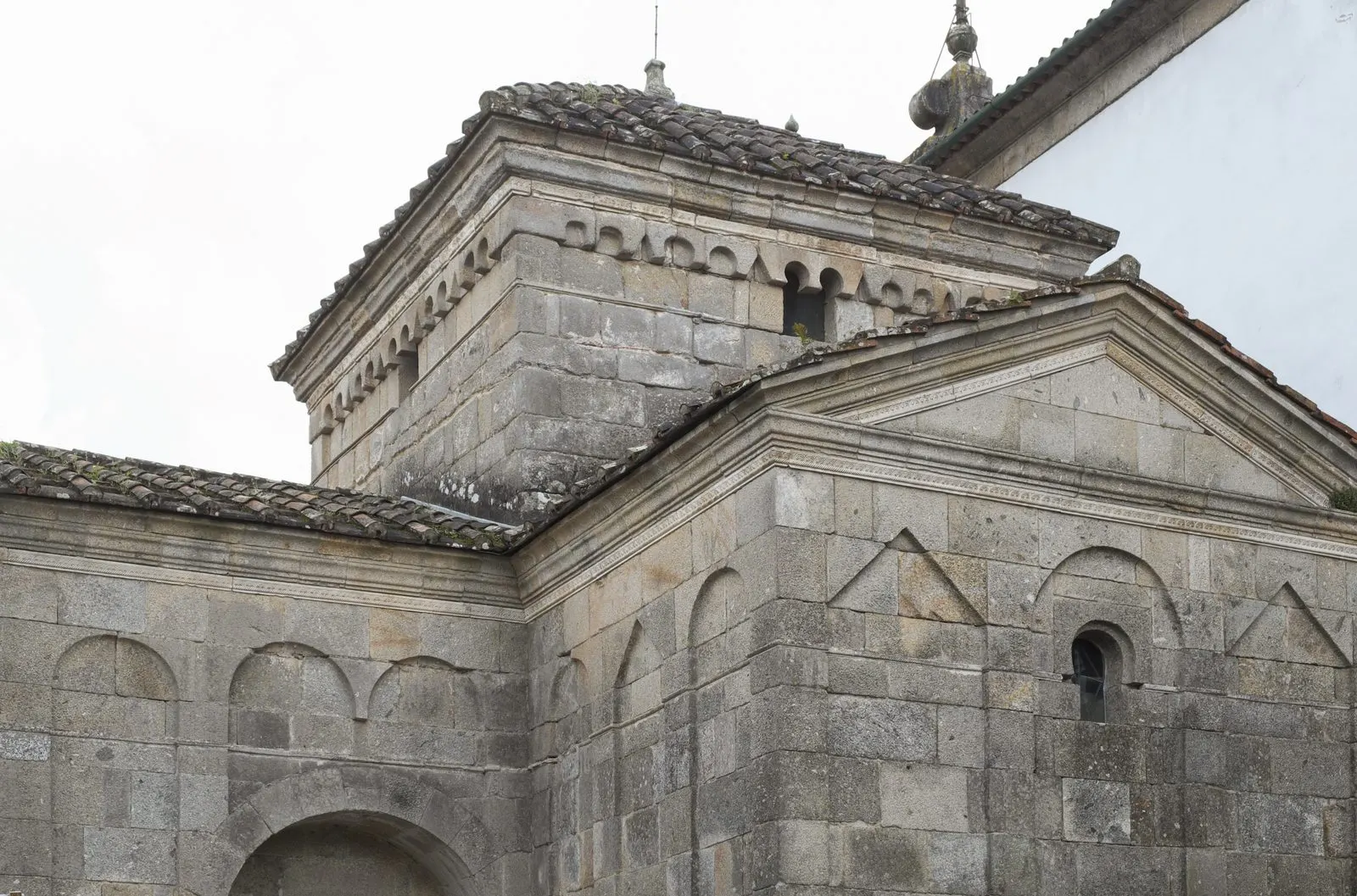
Ruins of São Martinho de Dume, in Braga: Roman villa, baths and basilica of the Suevic episcopal centre of Martinho de Dume, National Monument since 1993.
- Location
- Dume, Braga, Braga
- Built
- século VI (sobre uma villa romana)
Dume, a few kilometres from the centre of Braga, was the place where a bishop who had come from afar organised, in the mid-6th century, one of the decisive religious experiences of the Suevic kingdom. The Archaeological Ruins of São Martinho de Dume have been a National Monument since 1993. Beneath and around the parish church, the excavations have revealed a succession of occupations, from a Roman house to a monastery and a medieval necropolis. It is one of the sites that help to understand the passage from the Roman world to the Suevic and Visigothic worlds, but the public information available is more fragmentary than the site’s reputation suggests.
Martinho and the monastery of Dume
Martinho, of Pannonian origin, arrived in Gallaecia in the mid-6th century and was linked to the conversion of the Suevi from Arianism to Catholicism, a theme addressed in Suevic art. Tradition attributes to the Suevic king Cararic the construction of a basilica around 550, after the cure of his son; there arose the monastic centre of which Martinho was abbot. Academic studies place the elevation of Dume to an episcopal see around 558 (other authors propose 556), and refer to Dume as a bishopric in the councils that followed. Martinho subsequently became bishop of Braga, and the sources therefore use both names. The dates of his episcopate in Braga and of the councils have not been confirmed in a primary source and are not specified here.
What the excavations revealed
According to the synthesis that refers to the national inventory, archaeological research began in 1987, when a Roman villa was identified beneath the chapel of Nossa Senhora do Rosário (Luís Fontes, Salvamento Arqueológico de Dume – 1987). The villa dates to the 1st century; in the 3rd century it was provided with baths, discovered in May 1993. The exploration of the Early Christian basilica began in July 2005. The phases of the 6th and 7th centuries adapt earlier buildings to the monastery, and the area would later be used as a necropolis for centuries; a group of twelve graves is mentioned. These details come from an encyclopaedia that cites the specialised bibliography, not from a report we have read.
What survives to view is small and partly covered: the excavated structures lie beside the parish church and do not present themselves as a large standing monument. Some finds (pottery, Roman glass, amphorae, coins and architectural elements) are described as being held in the Museu D. Diogo de Sousa, in Braga; see the archaeology museum. For another witness to the Braga region in this period, see the Chapel of São Frutuoso de Montélios, in Real.
From the Suevic to the Visigothic period
The Suevic kingdom of Gallaecia ended in 585, annexed by the Visigoths. At Dume, the documentation we have read does not allow the Visigothic phase to be described with precision; the encyclopaedia’s synthesis states that the basilica underwent major reforms much later, during the Reconquista, and that the church temporarily passed to the bishop of Mondoñedo, which would be confirmed in 911. The broader artistic context is found in Visigothic art in Portugal.
Classification
The Atlas do Património Cultural records the Archaeological Ruins of São Martinho de Dume (NINV 4627) in the civil parish of Real, Dume and Semelhe, as a National Monument, under Decree No. 45/93, of 30 November 1993 (Diário da República, I Série-B, No. 280). We were unable to read the text of the decree (a scan without searchable text), so the classification cited here rests on the Atlas record. The coordinates used belong to the Wikidata entry for the monument and coincide with the area classified in the Atlas.
Visiting
There is a museum nucleus at Dume dedicated mainly to the basilica and the sarcophagus of São Martinho, according to the records consulted. When consulted on 5 November 2026 we did not find opening hours or prices in an official source. Please confirm them directly with the Câmara Municipal de Braga before going. For context, see Braga and Suevic art.
Frequently asked questions
- Who was Martinho de Dume?
- He was a bishop of Pannonian origin associated with the conversion of the Suevi to Catholicism in the mid-6th century. He founded the monastery of Dume and was later bishop of Braga, which is why he is also called Martinho de Braga.
- What is classified at Dume?
- The Archaeological Ruins of São Martinho de Dume, in Real, Dume and Semelhe (Braga), are a National Monument under Decree No. 45/93, published in the Diário da República, I Série-B, No. 280, of 30 November 1993.
- What phases do the excavations show?
- The syntheses consulted refer to a Roman villa of the 1st century, baths added in the 3rd–4th centuries, an Early Christian basilica and, afterwards, the monastery and the necropolis, which continued through the Middle Ages.
- Can I visit Dume?
- There is a museum nucleus at Dume dedicated to the basilica and the sarcophagus of São Martinho. Opening hours and conditions were not confirmed in an official source when consulted on 5 November 2026; please confirm with the Câmara Municipal de Braga.
Sources
- Património Cultural, I.P. — Atlas do Património Imóvel, camada PatrimonioImovel (NINV 4627)
- Diário da República — Decreto n.º 45/93, DR I Série-B, n.º 280, de 30-11-1993
- Wikidata — Ruínas arqueológicas de São Martinho de Dume (Q66813181), coordenadas
- Wikipédia — Mosteiro de Dume / Ruínas Arqueológicas de São Martinho de Dume (ponteiro para o SIPA 333 e o IGESPAR 70575)
- Wikipédia — Monastery of Dumio (ponteiro para Fontes, Cadernos de Arqueologia, 1987, e SIPA 333 e 8105)
Keep exploring
Heritage nearby
More places to discover from here. Approximate straight-line distances, within 50 km.