Resources
Museu dos Biscainhos
Museu dos Biscainhos, in Braga: a Baroque palace and gardens classified as IIP, state rooms, decorative arts collections and visitor information.
- Location
- Braga, Braga
- Built
- Séculos XVII–XVIII, com intervenções nos interiores no século XIX
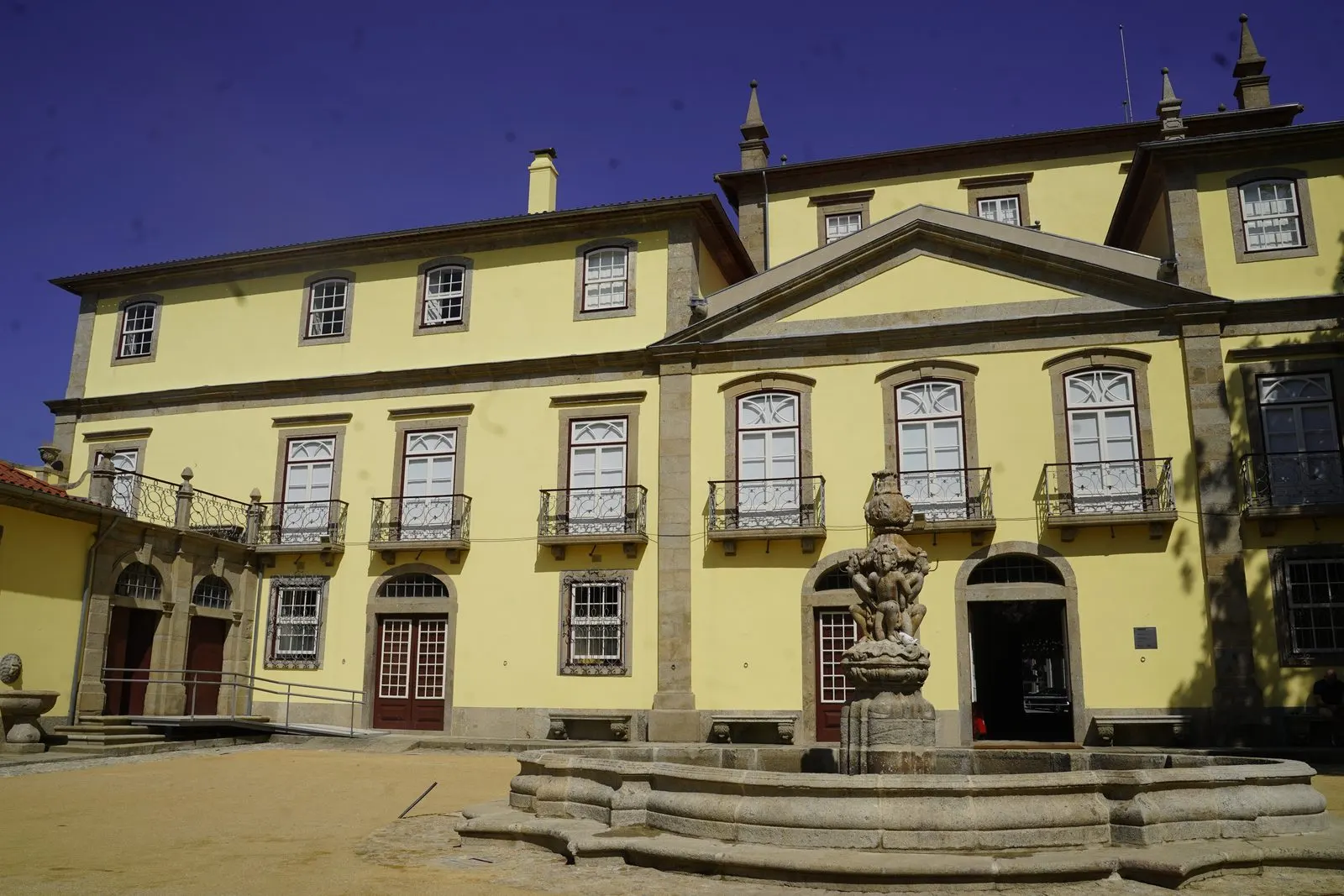
The Museu dos Biscainhos occupies a noble palace in the historic centre of Braga, between the Campo das Hortas and the Campo da Vinha. The interest of the visit lies in the whole ensemble: the house, its state rooms, service spaces and Baroque gardens show how a noble family of Braga lived between the 17th and 19th centuries. The official website now also presents it as the Palácio dos Biscainhos; the museum is part of Museus e Monumentos de Portugal, E.P.E..
A noble house built in several campaigns
The palace is not the product of a single project. The official information describes an evolution spanning the 17th and 18th centuries and extending into the 19th century, when the interiors received new stucco, painted and tile decoration. The oldest part is the tower: Braunio’s plan of Braga, of 1594, and documentation on a marriage held there in 1655 point to buildings already existing in the 16th and 17th centuries.
In the 17th century the house belonged to Dr. Constantino Ribeiro do Lago (1619–1686). In the following century it passed to his sons, Diogo de Sousa e Silva and the dean D. Francisco Pereira da Silva, whose descendants became counts of Bertiandos. The Braga District Assembly acquired the property in 1963, and the museum opened to the public in 1978.
What to see in the palace
The route is organised on two levels. On the ground floor are the functional spaces: the covered forecourt of honour, the stables, the coach house and the seigneurial kitchen. On the noble floor follow the state rooms.
The covered forecourt of honour is one of the rarest features of the house. It was the arrival point for carriages and riders: the grooved paving prevented animals from slipping, and the rings are still fixed to the pilasters. Five granite sculptures, attributed to the Braga school, serve as welcoming figures, among them a halberdier and two Black musicians.
The monumental staircase is lined with azulejos from the reign of D. João V, with painting attributed to António Vital Rifarto. The central scene shows Venus, Cupid, Ceres and Bacchus. In the Salão Nobre (Great Hall), the painted ceiling evokes the martyrdom in Japan of the Jesuit Miguel de Carvalho, an ancestor of the family. It is dated 1724 and attributed to Manuel Furtado de Mendonça. Painting, sculpture and tilework combine here in the spirit of Baroque architecture.
Other rooms show the transition to Neoclassical taste. The Dining Room, from the late 18th century, is presented by the museum as one of the first fixed dining rooms in Portugal; it displays Chinese porcelain of the Qing dynasty, including services bearing the coats of arms of Portuguese families. The inner courtyard garden retains pattern azulejos from the first half of the 17th century, with blue and yellow modules.
Collections
The collection engages with the house and the daily life of the noble families who lived in it. The museum highlights Joanine azulejaria, Baroque and Neoclassical painting, devotional sculpture from the 16th to 18th centuries, and Indo-Portuguese furniture. There is also Ming and Qing Chinese porcelain, French clocks of the Empire period, tea and coffee silverware, English Wedgwood black basalt ware and civil dress. In the coach house are an 18th-century sedan chair, from the Archiepiscopal Palace of Braga, a litter and a 19th-century phaeton. Most of the objects are linked to Portuguese decorative arts and to the domestic use of an urban manor house.
Part of the collection can be consulted online on the archival description platform of the Cultural Heritage, to which the museum’s website refers.
The gardens
The gardens were presumably laid out in the second decade of the 18th century, during the major works extending the palace. They are organised in three terraces linked by stairs: the forecourt and the formal garden, spaces of representation, followed by the productive areas (orchard and kitchen gardens) and the enclosure of the walls. The museum associates the forecourt fountain, the state garden and the pavilion with the architects Manuel Fernandes da Silva and André Soares.
Among the trees stands a Virginia tulip tree (Liriodendron tulipifera) about 300 years old, which the museum notes has been classified as a property of public interest since 2010. For comparison with other ensembles, see Portuguese historic gardens.
Classification
The Atlas do Património Cultural, I.P. records the Casa dos Biscaínhos (NINV 2205) as a Property of Public Interest, under Decree No. 37 366 of 5 April 1949. The decree classifies the ensemble of the Casa dos Biscainhos, forecourt, gardens, orchard and city wall. The protection thus covers both the house and the outdoor space. As consulted on 5 November 2026, the record did not indicate its own special protection zone.
Planning the visit
The museum is at Rua dos Biscainhos, 4700-415 Braga. As consulted on 5 November 2026, the official page indicated:
- opening hours Tuesday to Sunday, 10:00–12:30 and 14:00–17:30, with last entry at 12:15 and 17:15;
- closed on Mondays and on 1 January, Easter Sunday, 1 May, 24 June and 25 December;
- palace and gardens ticket at €7.50, palace only at €5 and garden only at €3;
- a 50% discount for young people aged 13 to 23 and for those over 65, and free admission up to age 12;
- free access for residents of Portugal under the regime of 52 days per year, upon presentation of the NIF (see free admission to museums and monuments).
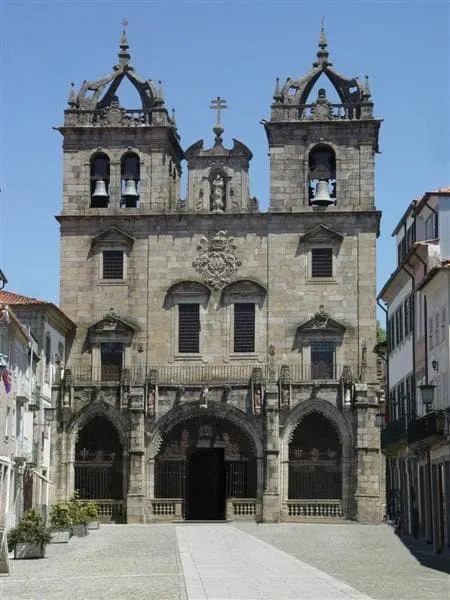
Braga railway station is about five minutes’ walk away, according to the museum. Confirm conditions, tickets and accessibility on the official page or by telephone at +351 253 204 650. Nearby are the Porta Nova Arch and the Braga Cathedral.
Photograph by Joseolgon, 5 September 2025. Original on Wikimedia Commons, under CC BY 4.0; resized and compressed for the web, without altering the composition.
Frequently asked questions
- What is the Museu dos Biscainhos?
- It is a museum housed in a noble palace in Braga dating from the 17th and 18th centuries, with Baroque gardens. It presents the palace's rooms and decorative arts collections related to the way of life of the noble families who lived there. It is part of Museus e Monumentos de Portugal, E.P.E.
- When did it open as a museum?
- The Braga District Assembly acquired the palace in 1963, and the museum opened to the public in 1978, according to the official website of the Palácio dos Biscainhos.
- Are the palace and gardens listed?
- Yes. Decree No. 37 366 of 5 April 1949 classified the ensemble of the Casa dos Biscainhos, forecourt, gardens, orchard and city wall as a Property of Public Interest. The tulip tree in the gardens has its own public-interest classification since 2010, according to the museum.
- Can one visit only the garden?
- As consulted on 5 November 2026, the official price list provided separate tickets for the palace, the garden and the combined visit. Please confirm prices and opening hours on the museum's Visit page before travelling.
Sources
- Palácio dos Biscainhos — Palácio
- Palácio dos Biscainhos — Jardins
- Palácio dos Biscainhos — Visitar, horários e bilhetes
- Património Cultural, I.P. — Atlas do Património Classificado e em Vias de Classificação (Casa dos Biscaínhos, NINV 2205)
- Património Cultural, I.P. — Casa dos Biscaínhos (73935)
- Diário da República — Decreto n.º 37 366, de 5 de abril de 1949 (classificação)
- Museus e Monumentos de Portugal — Bilheteira, Museu dos Biscainhos
- Wikidata — Casa dos Biscaínhos (Q4917216)
Keep exploring
Heritage nearby
More places to discover from here. Approximate straight-line distances, within 50 km.

Resources for research
Find the sources. Follow the story.
Guides to researching buildings, exploring museum collections and understanding heritage protection.
SIPA
Get to know the architectural inventory, building records and documentary archive.
Read the guideMuseum collectionsMatrizNet
Explore the museum catalogue and records of works, materials, authorship and provenance.
Read the guideHeritage protectionHeritage classification
Understand cultural property categories and the levels of national, public and municipal interest.
Read the guide