Monuments
Pillories of Alto Minho
The pillories of Arcos de Valdevez, Soajo, Ponte da Barca and Vila Nova de Cerveira, National Monuments of Alto Minho: history, form and classification.
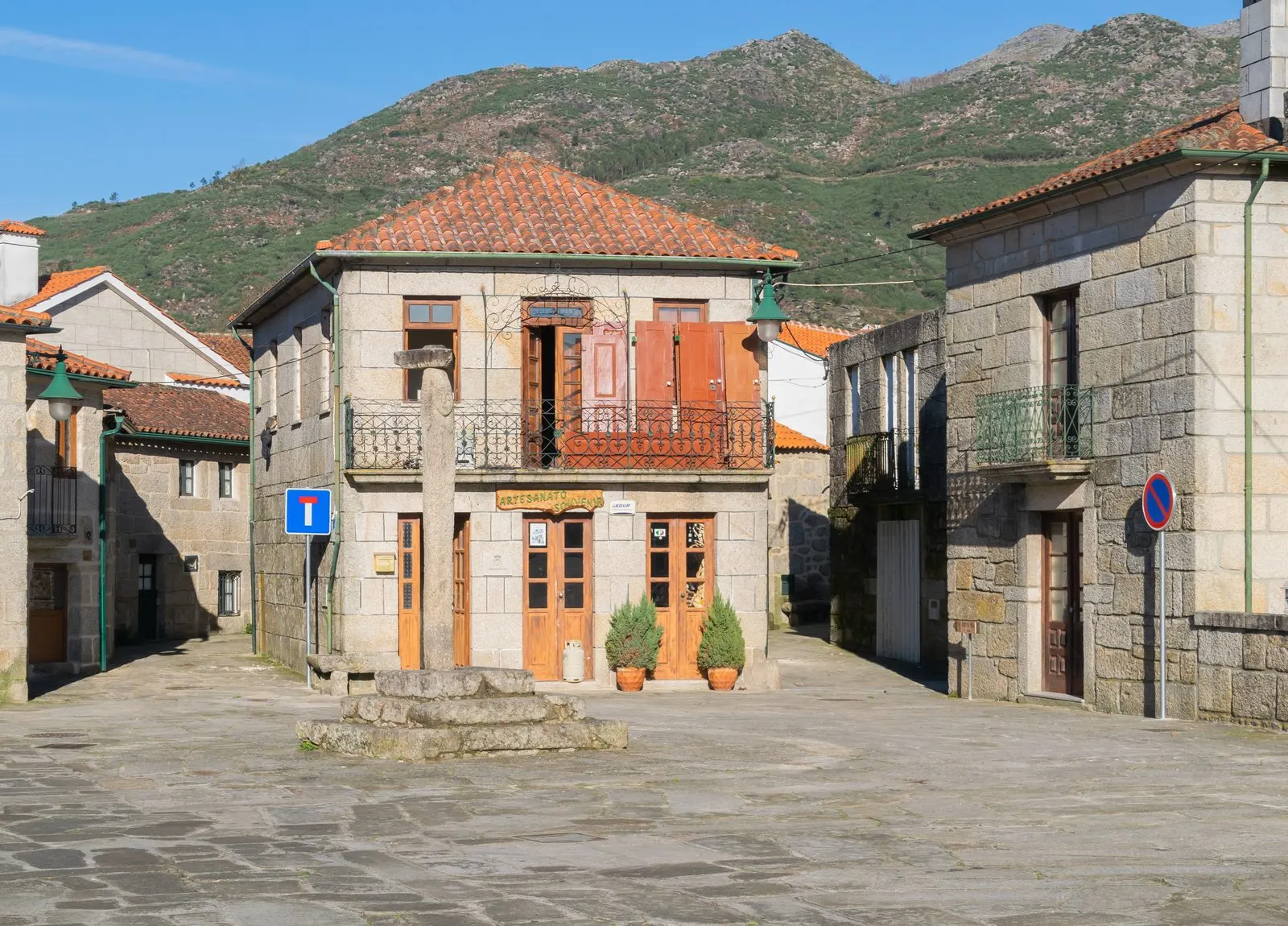
Four towns of Alto Minho retain the pillory they had when they were seats of a municipality: Arcos de Valdevez, Soajo, Ponte da Barca and Vila Nova de Cerveira. All four are National Monuments under a single instrument, the decree of 16 June 1910 (Diário do Governo no. 136, of 23 June 1910). They are granite columns and, for that reason, more austere than the great Manueline examples found in other regions, yet each displays a different solution. The typology, the civic and judicial function, and the reform of the forais of King Manuel I are explained on the national page on pillories; here are the Alto Minho cases, described from the official record of the Património Cultural, I.P.
Arcos de Valdevez
The pillory stands in the Largo do Pelourinho, in front of the parish church. The town’s Manueline foral dates from 1515, and the official record describes the monument as sixteenth-century. It was originally raised in the centre of the Praça Municipal, beside the former Casa da Câmara; around 1700 it was moved to the Valeta, on the bank of the River Vez, where washerwomen gathered, and only in 1895 did the Câmara place it in the square where it stands today.
It rests on a platform of four steps. The shaft consists of a central column surrounded by three spiralling colonnettes, and the capital takes the form of a large basket or bowl bearing three royal shields, from which small armillary spheres rose, now partly mutilated. Within a circular moulding can be read the inscription JOANS / LOPEZ / MEFEZ, a signature which the record links to the workshop of João Lopes, the Elder, a sculptor active in northern Portugal and Galicia between the early sixteenth century and around 1559. The date of its erection is not known; the year 1531 is frequently cited.
Soajo
The former couto of Eiró was tied to the Mosteiro de Ermelo, received a foral from King Manuel in 1514, and ceased to be a municipality in the nineteenth century, when it was incorporated into Arcos de Valdevez. The pillory stands in the Largo do Eiró, in front of the former Paços do Concelho.
It is the most singular of the four. The three-step platform and the cylindrical shaft are, in the words of the record, of very crude workmanship and considerably worn. There is no capital: the top of the shaft ends in a schematic carved face, with the air of a smiling countenance, and the crowning element is a very projecting triangular slab. The record admits that it may be relatively late, and some authors consider it seventeenth-century; the interpretations of the face as solar or lunar are not regarded as convincing. Nothing in this pillory therefore allows a secure date.
Ponte da Barca
The town’s Manueline foral dates from 1513, and the pillory was presumably raised after it. It stood in the Largo da Misericórdia, near the Paços do Concelho, and was removed in the twentieth century to the present Jardim dos Poetas, opposite an arcaded shelter built in 1752 where market traders gathered.
The base is simple, with a plinth and torus on four steps, and the shaft is smooth and circular. Upon it rests a sphere of good size bearing the royal arms, the Cross of Christ, and the bands of the coat of arms of the Magalhães family, lords of the town. The present crowning element, a small cubic plinth with a quadrangular pyramid ending in a ball, is later and replaced an earlier one at the end of the seventeenth or the beginning of the eighteenth century. The whole ensemble is granite and still shows traces of the iron fittings for securing prisoners.
Vila Nova de Cerveira
Here the date is on the monument itself: 1547, during the lordship of D. Francisco de Lima, 5th Viscount of Vila Nova de Cerveira. The town’s new foral dates from 1521. The pillory stands in the Praça da Liberdade, within the castle enclosure, in front of the former jail and Paços do Concelho, rebuilt in 1598 and altered in 1768; the record regards this as its original site.
Its appearance is very rustic. The shaft, smooth and slender, is octagonal and ends in a square section; the parallelepiped capital has four small shields, bearing the arms of Portugal and those of the viscounts, on alternating faces. Between the shaft and the capital are four iron fittings set in a cross, terminating in serpents. The collar, the iron ring used to fasten condemned prisoners, is missing, having been removed around 1850. The capital ends in a conical cap of eight faces with a rounded finial at the top.
What distinguishes them
These four pillories show that the type is not confined to exuberant Manueline work. At Arcos de Valdevez there is heraldic sculpture and a workshop signature; at Ponte da Barca, a smooth column with a blazoned sphere; at Cerveira, a late and rustic example, but a dated one; at Soajo, a piece which the official record itself considers hard to characterise. Two of them, those of Arcos de Valdevez and Ponte da Barca, have been moved, a reminder that a classified pillory does not always stand where the municipality first erected it. In all of them remain signs of the judicial function, such as the iron fittings at Ponte da Barca and Cerveira.
For comparison with another destination of the typology, see the pillory of Évora, the Manueline style and the page on courts and jails. All four stand in public space, with no visiting hours. For the context of granite construction in the region, see the granite houses of Minho.
Photograph by Krzysztof Golik, dated 19 February 2020. Original on Wikimedia Commons, under CC BY-SA 4.0; resized and compressed for the web, without altering the composition.

Frequently asked questions
- Which pillories of Alto Minho are classified as National Monuments?
- Those of Arcos de Valdevez, Soajo, Ponte da Barca and Vila Nova de Cerveira, all classified by the decree of 16 June 1910, published in the Diário do Governo no. 136, of 23 June 1910.
- Which of these pillories has a known date?
- That of Vila Nova de Cerveira, which bears the inscribed date 1547. In Arcos de Valdevez the date of its erection is not known, although the year 1531 is frequently cited, and in Soajo the chronology is uncertain.
- Has any of these pillories been moved?
- Yes. According to the official record, the one in Arcos de Valdevez was taken to the Valeta around 1700 and re-erected in 1895 in front of the parish church, and the one in Ponte da Barca was moved from the Largo da Misericórdia to the Jardim dos Poetas during the 20th century. The one in Cerveira stands in what is considered its original location.
Sources
- Património Cultural, I.P. — Pelourinho de Arcos de Valdevez (70210)
- Património Cultural, I.P. — Pelourinho de Soajo (71221)
- Património Cultural, I.P. — Pelourinho de Ponte da Barca (70600)
- Património Cultural, I.P. — Pelourinho de Vila Nova de Cerveira (70701)
- Património Cultural, I.P. — Atlas do Património Imóvel (serviço ArcGIS, camada 1)
- Diário do Governo n.º 136, de 23 de junho de 1910 — decreto de 16 de junho de 1910