Archaeology
Dolmens of the Municipality of Évora
Ten dolmens in Évora, plus Zambujeiro, have been National Monuments since 1910. See seven-stone chambers, corridors and engraved cup marks on herdades.
- Location
- Nossa Senhora da Tourega, Évora, Évora
- Built
- c. 4000–2500 a.C.
- Style
- Megalítico (dólmenes de câmara poligonal e corredor)
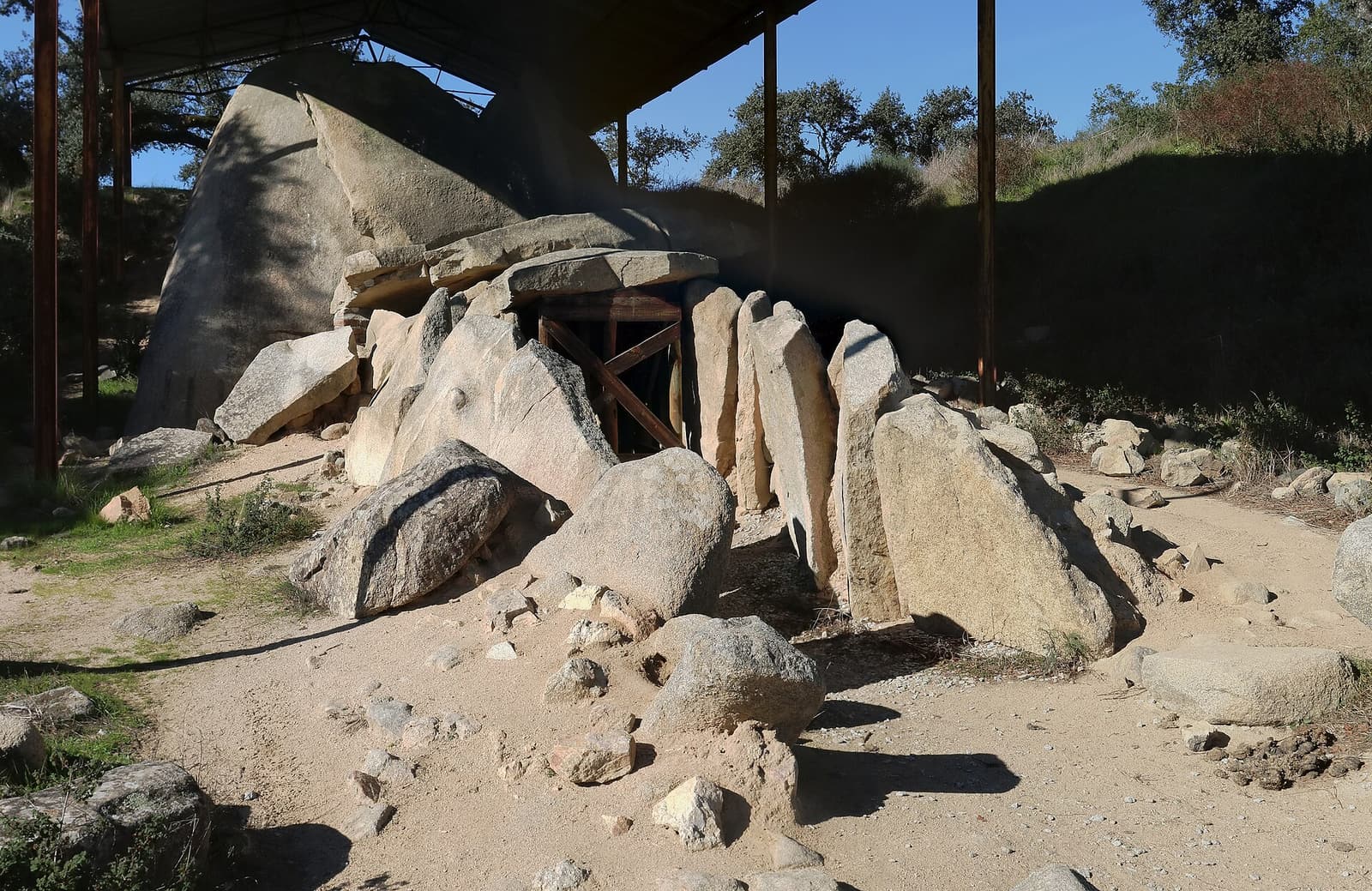
Around the city of Évora lies one of the densest groups of megalithic tombs in the Iberian Peninsula. The Anta Grande do Zambujeiro has its own page; this guide deals with the other ten dolmens in the municipality classified as National Monuments, all by the same decree of 16 June 1910 (Diário do Governo no. 136, of 23 June 1910). They are more modest monuments, on estates, which help to understand what the register calls the “Évora megalithic universe”: polygonal-chamber dolmens with seven pillars, corridor and mound, built between the beginning of the 4th and the mid-3rd millennium BC.
What unites them
The register texts repeat a formula: these dolmens follow the model of the Anta Grande da Comenda da Igreja, in Montemor-o-Novo. The chamber is about 3 metres in diameter with seven granite pillars; the corridor, where it exists, has an oblong plan and is covered by lintels laid in sequence, while the chamber has a single slab. Several retain carved cup-marks, small concavities in the stone. This is collective funerary architecture, of the kind the guide to megalithism explains in general; the Cromeleque dos Almendres, in the same municipality, is another chapter of the same prehistoric landscape.
The ten dolmens
In parentheses, the register code at imovel.patrimoniocultural.gov.pt and the parish indicated.
- Anta do Paço da Vinha (70470; Canaviais). Elongated chamber, about 4 metres wide, with seven pillars 2 metres high, which keeps its original covering intact. The corridor, about 9.5 metres long, is considered one of the longest in the region; it retains six of the ten possible pillars and two capstones with cup-marks on the outer face.
- Anta de Paredes (70116; Nossa Senhora da Graça do Divor). Chamber about 3 metres across, seven pillars of about 2 metres, corridor of 3.5 metres of which two fragmented pillars and two slabs remain. One slab has 31 cup-marks. Traces of a mound 0.5 metres high and 9 metres in diameter.
- Anta de Silvadas (70115; Divor). Chamber of 3.5 metres and corridor of about 4 metres, with seven lintels (three fallen). It best shows differentiated covering: one slab in the chamber, several lintels in the corridor. It has other names in the register (Silval).
- Anta da Herdade da Galvoeira (70386; Bacelo and Senhora da Saúde). Corridor with four schist pillars, which distinguishes it from the others, which are granite; large capstone in the chamber and small lintels in the corridor.
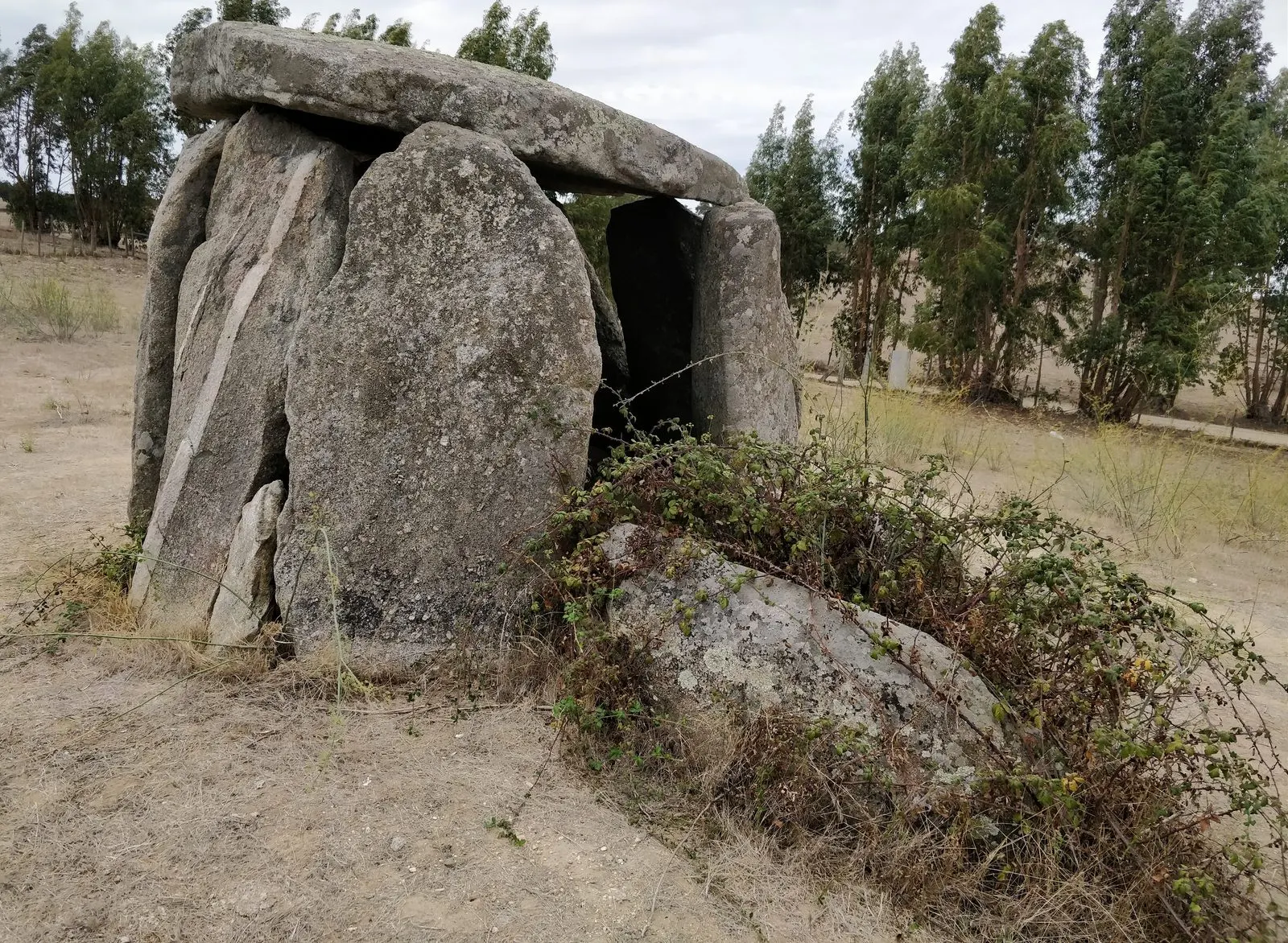
- Anta do Barrocal (70649; Nossa Senhora da Tourega and Nossa Senhora de Guadalupe). Chamber of seven pillars, five in place, 3 metres in diameter and 2.30 metres high; corridor visibly destroyed. This is the one in the photograph.
- Anta da Herdade da Murteira (70448; Torre de Coelheiros). Seven chamber pillars in place; of the corridor only two fractured pillars survive, found inside the chamber, and three fragments of the covering.
- Anta da Herdade da Tisnada (70737; Torre de Coelheiros). Very deteriorated: it retains five of the nine chamber pillars, about 1.5 metres above ground. Georg Leisner studied it in 1949.
- Anta de Pinheiro do Campo (70296). Excavated by Gabriel Pereira in the nineteenth century; chamber with seven pillars in place, capstone, closing slab with architrave and two corridor pillars. Note: the Atlas places it in the municipality of Évora, but the register entry gives the parish of Nossa Senhora da Vila (Montemor-o-Novo) and notes that the 1910 decree refers to it as being in Évora.
- Anta da Herdade do Zambujal (70738; Tourega). Already largely destroyed when Possidónio Narciso da Silva discovered it in the nineteenth century, and already invisible in the Leisners’ time; the published plan remains, showing three pillars. It is a classified monument that exists only on paper.
- Anta da Herdade de Montinho (70384; Nossa Senhora de Machede). The register says its trace has long been lost, with the hypothesis that it may coincide with Anta 2 of Paço das Vinhas.
A group to see in context
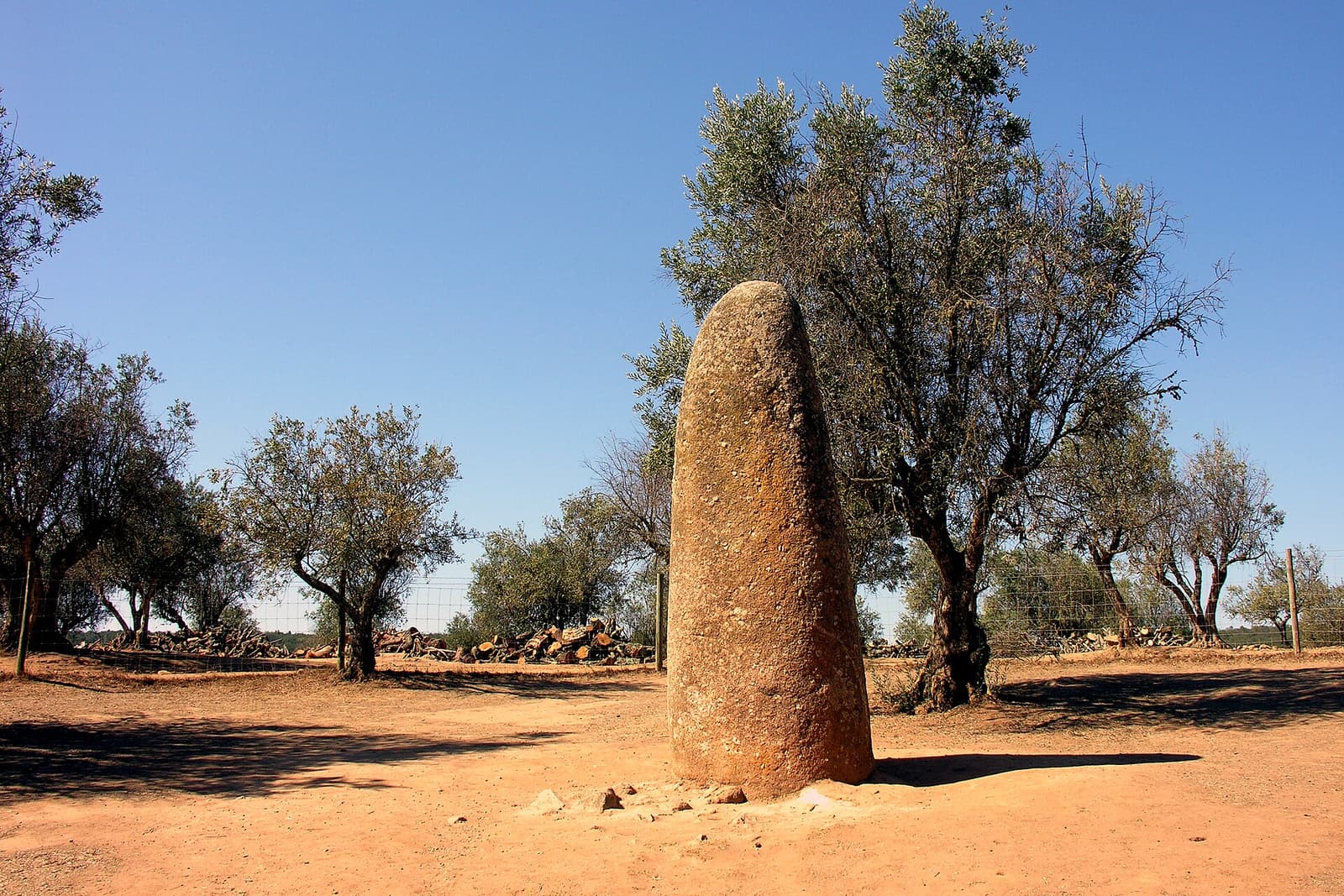
These dolmens belong to the cluster of monuments that includes, still in the municipality, the four dolmens of Vale de Rodrigo, the menhirs of Casbarra and the Menir dos Almendres, protected as property of public interest, and the megalithic complex of Monsaraz, in another municipality. In Évora, what is gained is the comparison between examples: a long corridor at Paço da Vinha, cup-marks at Paredes, schist at Galvoeira, ruin at Tisnada, absence at Zambujal and Montinho.
How to visit
As consulted on 5 November 2026, the register entries indicated no access restrictions or opening hours, and describe the monuments by estate and parish-track directions (at Silvadas, for example, about 18 km from Évora, next to the Monte da Herdade do Silval). These are private agricultural lands: confirm access with the Câmara Municipal de Évora before setting out, leave gates as you found them, and do not climb onto the monuments if there is livestock or crops. The Anta Grande do Zambujeiro and the Cromeleque dos Almendres have their own pages with visiting information.
Photograph by Roundtheworld, of 11 October 2019. Original on Wikimedia Commons, under CC BY-SA 4.0; resized and compressed for the web, without altering the composition.
Frequently asked questions
- How many dolmens in the municipality of Évora are National Monuments?
- The national register lists eleven, including the Anta Grande do Zambujeiro, which has its own page. The other ten are Tisnada, Paredes, Zambujal, Murteira, Galvoeira, Montinho, Pinheiro do Campo, Barrocal, Paço da Vinha and Silvadas.
- Do they all still exist?
- Not in complete condition. The register describes the Anta do Zambujal as already destroyed when the Leisners sought it, leaving only the nineteenth-century plan, and the Anta de Montinho as lost, possibly identified with one of the dolmens of Paço das Vinhas.
- What are the covinhas?
- Small concavities carved into stone. The register mentions 31 covinhas on a slab of the corridor of the Anta de Paredes, and covinhas on the outer face of two slabs of the corridor of the Anta do Paço da Vinha.
- Can I visit these dolmens?
- The register entries indicate no restrictions or opening hours and describe access by estate tracks (caminhos vicinais). Confirm access with the Câmara Municipal de Évora before going and respect the properties.
Sources
- Património Cultural — Anta da Herdade da Tisnada
- Património Cultural — Anta de Paredes
- Património Cultural — Anta da Herdade do Zambujal
- Património Cultural — Anta da Herdade da Murteira
- Património Cultural — Anta da Herdade da Galvoeira
- Património Cultural — Anta da Herdade de Montinho
- Património Cultural — Anta de Pinheiro do Campo
- Património Cultural — Anta do Barrocal
- Património Cultural — Anta do Paço da Vinha
- Património Cultural — Anta de Silvadas
- Património Cultural — Atlas do Património Classificado (serviço geográfico)
- Diário do Governo n.º 136, de 23 de junho de 1910 — Decreto de 16 de junho de 1910
Keep exploring
Heritage nearby
More places to discover from here. Approximate straight-line distances, within 50 km.