Archaeology
Dolmens of Montemor-o-Novo
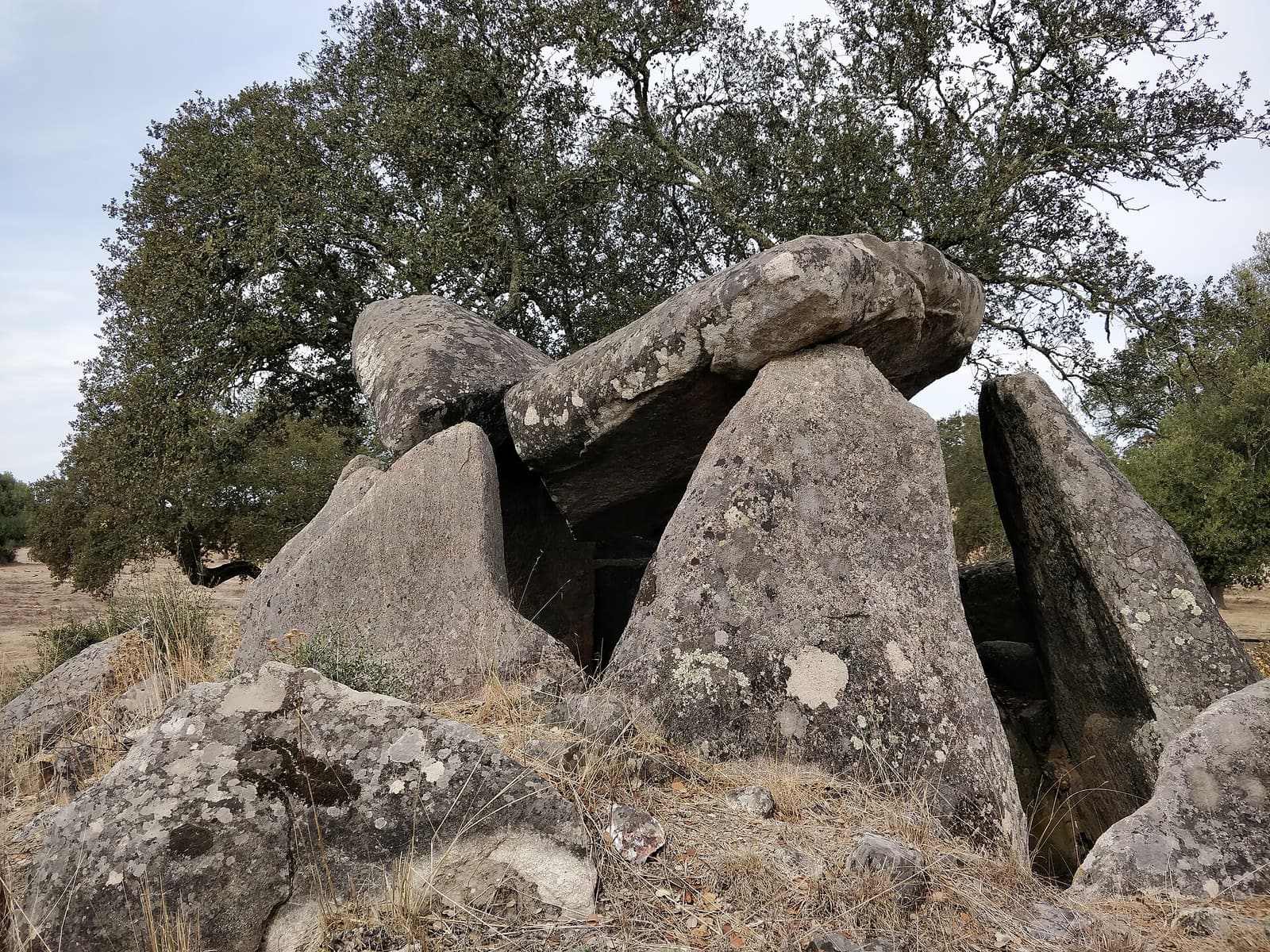
Montemor-o-Novo's seven National Monument dolmens include the Anta Grande da Comenda da Igreja, prototype of Évora megalithism, plus a dolmen-chapel.
- Location
- Nossa Senhora do Bispo, Montemor-o-Novo, Évora
- Built
- c. 3500–2500 a.C.
- Style
- Megalítico (dólmenes de câmara poligonal e corredor)
The municipality of Montemor-o-Novo, in Central Alentejo, is one of the richest in megalithic funerary architecture. The register of Cultural Heritage recalls that the pioneers of Portuguese archaeology traversed it in the last quarter of the 19th century in search of dolmens that would demonstrate the antiquity of Portuguese megalithism relative to the Iberian. Today, seven dolmens are listed as National Monuments, to which others with lower classification, or awaiting classification, are added. This guide gathers the seven, with what the register says about each, and places them within the megalithism of the Évora region.
Évora megalithism
The records use the expression “megalitismo eborense” (Évora megalithism) to designate the dolmens of the Évora and Montemor region, built between the late 4th and mid 3rd millennium BC: a polygonal chamber of seven or eight granite orthostats, a capstone, a passage and a mound. The register identifies the Great Dolmen of Comenda da Igreja, in Montemor, as the prototype of the group, and it is by reference to it that it describes the neighbouring dolmens. For the general panorama, see the guide to megalithism; the most famous of the same universe, the Zambujeiro Great Dolmen, lies already in the municipality of Évora.
The seven dolmens that are National Monuments
In parentheses, the register code at imovel.patrimoniocultural.gov.pt and the classification decree indicated.
- Great Dolmen of Comenda da Igreja (69719; Nossa Senhora do Bispo; Decree no. 26 236, of 20 January 1936). Polygonal chamber about 4 metres in diameter, eight orthostats 6 metres high and an 11-metre passage, with slabs nearly 2 metres high. The register describes it in good condition, with the passage practically intact and part of the mound in place. It is the anchor of any visit.
- Antas Grandes do Paço (70279; 1936). Two dolmens facing each other, about 30 metres apart, on a slope above the Ribeira de Lavre. The register compares them to Comenda da Igreja for their monumental chambers and passages and states that they are structurally intact, with covering and passages integrated into the mound.
- Anta da Velada, at Herdade da Comenda do Coelho (70280; Nossa Senhora do Bispo; 1936). Isolated on the edge of a marsh that, at maximum levels, partly submerges it. Of the chamber remains the headstone orthostat; the capstone lies fallen beside it; of the passage, two orthostats and some lintels.
- Anta da Herdade das Comendas, also known as Anta da Comenda Grande (70156; Nossa Senhora do Bispo; decree of 16 June 1910). Eight chamber orthostats in place, the capstone in place and one passage orthostat.
- Anta da Herdade da Serranheira (70577; Nossa Senhora da Vila; 1910). Chamber of seven orthostats and a passage with two orthostats to the south and one to the north; the capstone is fractured inside. The register says the monument is badly damaged by weathering, with traces of a mound.
- Anta da Herdade dos Tourais (70131; Nossa Senhora da Vila; 1910). Chamber of seven orthostats, without passage, consolidated and restored with masonry. The register adds that it is visible from the EN 90, in the Montemor–Évora direction.
- Anta-Ermida of Nossa Senhora do Livramento (73365; Santiago do Escoural). See below.
The 1910 decree is the decree of 16 June, published in the Diário do Governo no. 136, of 23 June 1910; the 1936 one is Decree no. 26 236, published in no. 16 of 20 January. In the case of Livramento, the register record cites Decree no. 41 191, of 18 July 1957, while the Atlas indicates the 1910 decree: I have not been able to resolve this discrepancy from the text of the decrees.
A dolmen that is a chapel
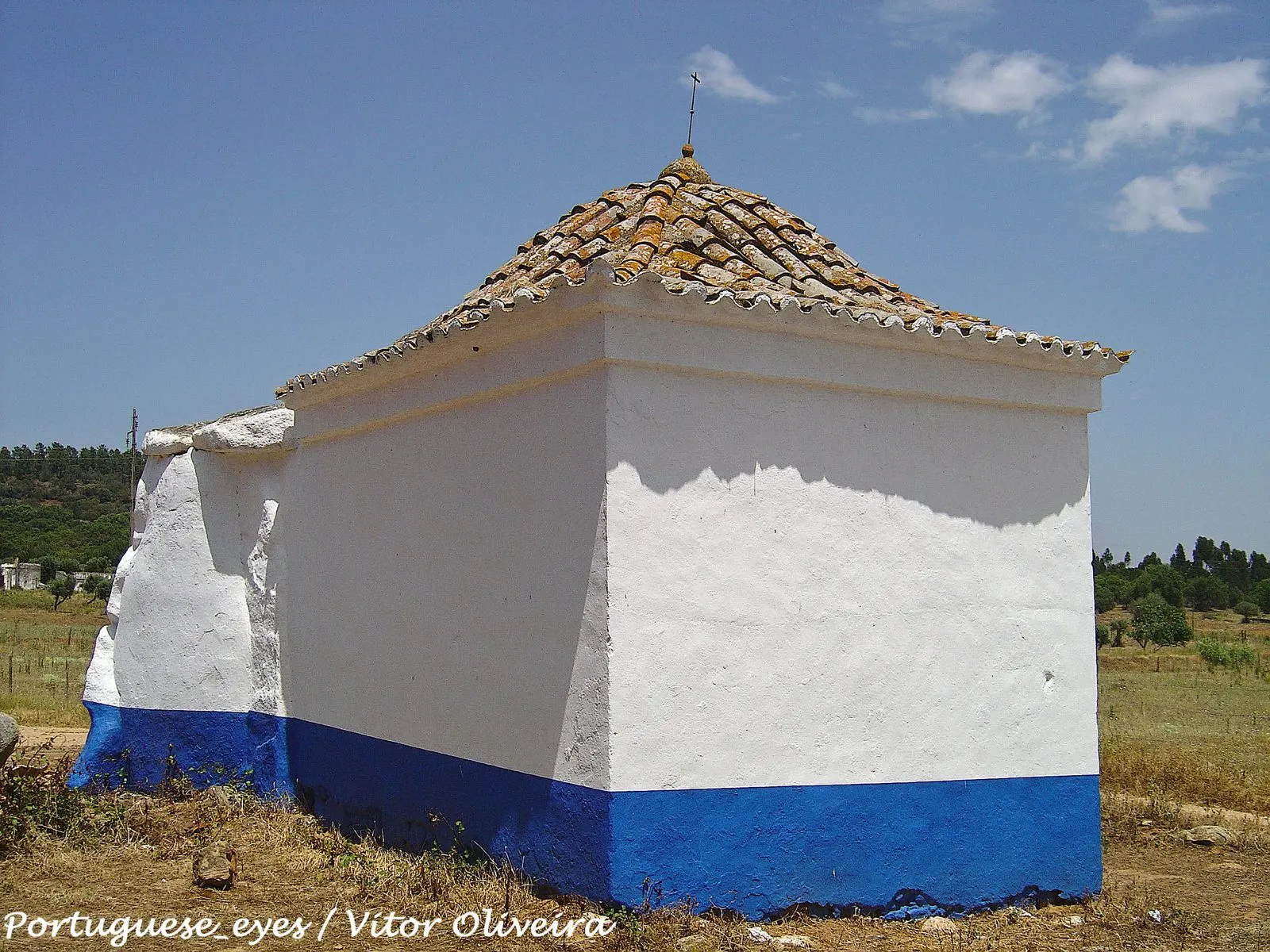
The Anta-Ermida of Nossa Senhora do Livramento, also called Anta de São Brissos, is the most unusual case. The register relates that the dolmen, of which five orthostats survive, was converted into a chapel in the 17th century: the chamber space is now the chapel’s vestibule, the capstone is still visible, and there are traces of the passage, with two orthostats in place. Inside is the image of Nossa Senhora do Livramento, a place of pilgrimage, especially during the Easter period, with popular practices that the register associates with the way Christianity absorbed earlier customs. The same text identifies it as dolmen no. 7 of São Brissos. For other chapels and hermitages, see the guide to chapels and hermitages. It lies in the same parish as the Escoural Cave, the Palaeolithic sanctuary that gives Montemor an even deeper prehistoric occupation.
How to visit
As consulted on 5 November 2026, the register indicated no access restrictions for the seven dolmens, but it publishes no opening hours, visiting conditions or routes; several monuments lie on estates. The Anta dos Tourais, beside the EN 90, is the most straightforward to reach. For the others, confirm access and the owner’s permission with the Câmara Municipal of Montemor-o-Novo before travelling, and respect the fences. Anyone planning a route through the region should combine the Almendres Cromlech and the city of Évora.
Photograph by Vitor Oliveira (Portuguese eyes), dated 12 November 2005. Original on Wikimedia Commons, under CC BY-SA 2.0; resized and compressed for the web, without altering the composition.
Frequently asked questions
- How many dolmens of Montemor-o-Novo are National Monuments?
- The national register of Cultural Heritage lists seven: Comenda da Igreja (the Great Dolmen), Antas Grandes do Paço, Velada, Herdade das Comendas, Serranheira, Tourais and the Anta-Ermida of Nossa Senhora do Livramento. Other dolmens in the municipality are classified at lower grades or are awaiting classification.
- What is the most important dolmen?
- The Great Dolmen of Comenda da Igreja, described in the register as the prototype of Évora megalithism: a chamber about 4 metres in diameter, eight orthostats 6 metres high and an 11-metre passage, in good state of conservation.
- What is the Anta-Ermida of Nossa Senhora do Livramento?
- It is a dolmen converted into a chapel in the 17th century, in Santiago do Escoural. The former chamber now serves as the chapel's vestibule, and the site is a place of pilgrimage, especially during the Easter period.
- Can I visit the dolmens?
- The register indicates no legal restrictions, but it does not publish opening hours or access conditions. The restored Anta dos Tourais is visible from the EN 90, according to the register. Confirm with the Câmara Municipal before going.
Sources
- Património Cultural — Anta Grande da Comenda da Igreja
- Património Cultural — Antas Grandes do Paço
- Património Cultural — Anta da Velada (Comenda do Coelho)
- Património Cultural — Anta da Herdade das Comendas
- Património Cultural — Anta da Herdade da Serranheira
- Património Cultural — Anta da Herdade dos Tourais
- Património Cultural — Anta-Ermida de Nossa Senhora do Livramento
- Património Cultural — Atlas do Património Classificado (serviço geográfico)
- Diário do Governo n.º 16, de 20 de janeiro de 1936 — Decreto n.º 26 236
- Diário do Governo n.º 136, de 23 de junho de 1910 — Decreto de 16 de junho de 1910
Keep exploring
Heritage nearby
More places to discover from here. Approximate straight-line distances, within 50 km.