Monuments
Casa de Garcia de Resende, Évora
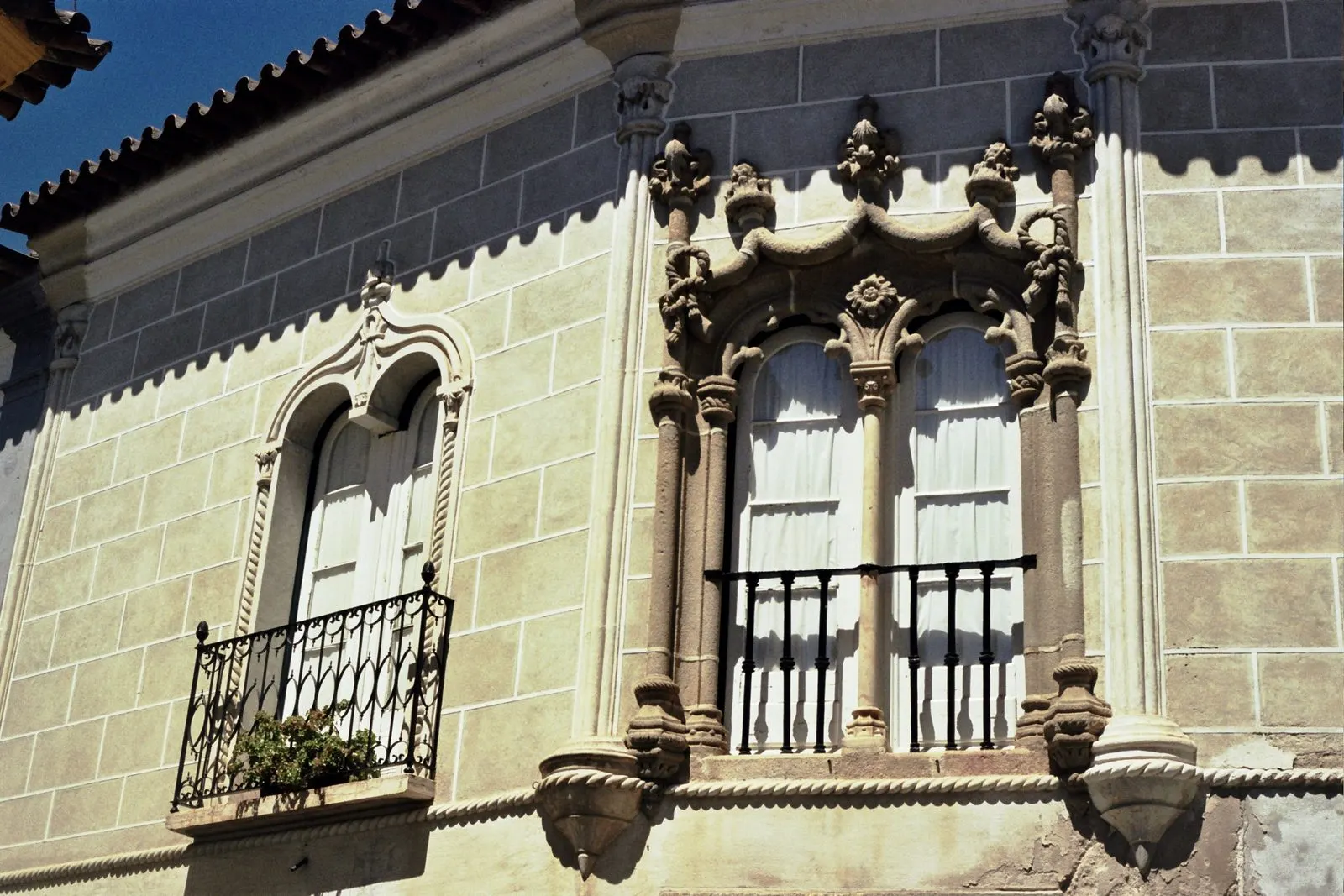
Garcia de Resende's house in Évora is a 16th-century manor with a Manueline twin window, a National Monument since 1910 in the UNESCO historic centre.
- Location
- Évora, Évora
- Built
- Século XVI
- Style
- Manuelino
The Casa de Garcia de Resende is a sixteenth-century house in the historic centre of Évora, known above all for the Manueline-decorated twin window of its noble first floor. It is a small, private building that is seen from the street and not visited, but it shows how the language of the Manueline style reached domestic architecture. It has been classified as a National Monument since 1910.
The house and its name
The house stands on the Rua de São Manços, according to the Guia Michelin, and lies in the parish of Évora (São Mamede, Sé, São Pedro e Santo Antão), according to the official register. The Guia Michelin says that the humanist Garcia de Resende is thought to have lived in this sixteenth-century house, and that on the first floor three twin windows with Manueline decoration can be seen. The verb is tentative and should be read as such: the association with Resende is traditional, and I found no documentation that proves it. Nor did I find an accessible official source dating the construction or identifying the architect; a collaborative encyclopedia proposes a name, but without support I could verify, so I do not repeat it.
What is confirmed is Garcia de Resende’s connection with the city: the Vinculum database of the Universidade Nova de Lisboa records that in 1533 he instituted an entail (morgadio) with property in Évora, and the chapel of that entail was that of Nossa Senhora do Espinheiro, which the Atlas do Património Classificado also identifies as Garcia de Resende’s funerary chapel and classifies as a National Monument, separately from the house.
What to look at on the façade
In the photograph that illustrates this page, two openings can be seen: on the right, the twin window, with two lights divided by a central column and, above, an arch of complex tracery, topped by pinnacles and twisted cords; on the left, a window with a simpler frame and a wrought-iron balcony. What distinguishes the Manueline window is the sculptural stone decoration framing the lights, rather than a plain moulding. The same language, applied to larger monuments, is described under Manueline style. For the religious architecture of sixteenth-century Évora, see the Church of São Francisco and the Church of Graça.
Protection and context
The Atlas do Património Classificado identifies the Casa de Garcia de Resende as a National Monument, by decree of 16 June 1910, published in the Diário do Governo no. 136, of 23 June 1910.
The house lies within the Historic Centre of Évora, inscribed on the UNESCO World Heritage List in 1986 (criteria ii and iv). UNESCO’s statement of justification expressly mentions the house of Garcia de Resende, alongside the Casa Cordovil, as an example of the city’s several sixteenth-century manor houses. The inscription concerns the historic centre as a whole; the house has its own national classification and is not a separate inscription.
How to see it
I found no official information on occupation or access. A travel guide describes it as a house still lived in, and Wikipedia indicates private ownership, but no official source consulted confirms this; the safest course is to treat it as a building viewed from the outside, respecting the privacy of anyone who may live or work in it. When consulted on 5 November 2026, I found no visiting hours or admission tickets. For information on routes and access, consult the Évora municipality or the city’s tourist offices.
Photograph by Elisa Rolle, dated 26 October 2010. Original on Wikimedia Commons, under CC BY-SA 4.0; resized and compressed for the web, without altering the composition.
Frequently asked questions
- Did Garcia de Resende really live in this house?
- The Guia Michelin says that the humanist Garcia de Resende is thought to have lived in this sixteenth-century house. The association is a traditional one, and I did not find official documentation that proves it.
- What is special about the Casa de Garcia de Resende?
- The twin window on the first floor, decorated in the Manueline style, stands out. UNESCO cites the house, alongside the Casa Cordovil, among Évora's sixteenth-century manor houses.
- What is its classification?
- It is a National Monument, by decree of 16 June 1910, published in the Diário do Governo no. 136, of 23 June 1910. It lies within the Historic Centre of Évora, a World Heritage Site since 1986, but it is not a separate inscription.
- Can it be visited?
- When consulted on 5 November 2026, I found no visiting hours. It is a house seen from the street, on the Rua de São Manços; there is no official confirmation of its current use.
Sources
- Património Cultural, I.P. — Atlas do Património Classificado e em Vias de Classificação (NINV 2706, Casa de Garcia de Resende; NINV 2704, Capela de Nossa Senhora do Espinheiro)
- Diário do Governo — Decreto de 16 de junho de 1910 (I Série, n.º 136, 23-06-1910)
- UNESCO — Historic Centre of Évora (361)
- Guia Michelin / ViaMichelin — Casa da Garcia de Resende
- Vinculum (FCSH-NOVA) — Garcia de Resende entail
- Wikidata — Casa de Garcia de Resende (Q39713676)
- Wikipédia — Casa de Garcia de Resende (apenas como ponteiro)
Keep exploring
Heritage nearby
More places to discover from here. Approximate straight-line distances, within 50 km.