Resources
Frei Manuel do Cenáculo National Museum (Évora)
Visit Évora's Museu Nacional Frei Manuel do Cenáculo: Archiepiscopal Palace beside the Sé, Flemish altarpiece from the cathedral, sculpture, archaeology, hours.
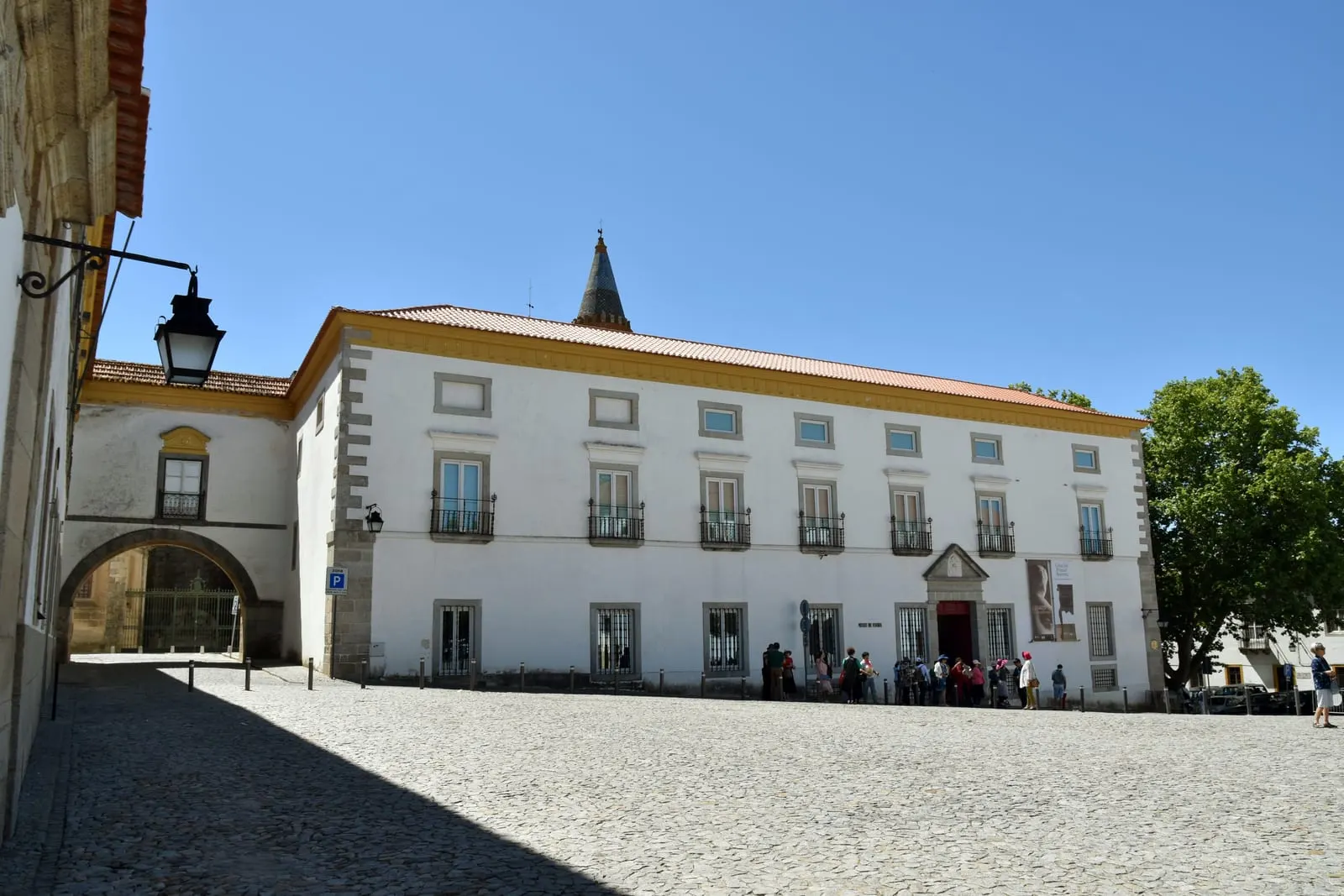
- Location
- Évora, Évora
- Built
- Paço contemporâneo da Sé, remodelado nos séculos XVI e XVII; museu criado em 1915
The Frei Manuel do Cenáculo National Museum is a national museum of art and archaeology in Évora, managed by Museus e Monumentos de Portugal. For decades it was known as the Évora Museum. It occupies the former Archiepiscopal Palace, adjoining the Cathedral and a few metres from the Roman Temple. It holds the Flemish altarpiece that stood in the cathedral’s high chapel, Portuguese painting of the 15th and 16th centuries, sculpture and funerary monuments from the city, and archaeological collections ranging from the Neolithic to the Roman period.
The building: the former Archiepiscopal Palace
The heritage inventory of the Municipality of Évora describes the building as the original episcopal seat and former Archiepiscopal Palace. The construction is contemporary with the cathedral, but it was thoroughly remodelled in the 16th and 17th centuries. For this reason, the sober white façade, with stone quoins and balcony windows, should not be read as that of the medieval palace.
The link with the Cathedral is also visible in the collection: the museum’s most celebrated work, the high-chapel altarpiece, was painted for the cathedral next door.
Frei Manuel do Cenáculo and the creation of the museum
Museus e Monumentos de Portugal (MMP) traces the museum’s origins to the collection of Frei Manuel do Cenáculo (1724–1814). An influential intellectual of the Pombaline period, Cenáculo was an art collector, Archbishop of Évora and one of the pioneers of archaeology in Portugal. The museum’s archaeological, numismatic and naturalia collections (exotic objects from the natural world) were formed largely from pieces he gathered.
As an institution, the Évora Museum was founded in 1915, according to the municipal inventory, and installed in the former palace. In 2017 it was promoted to national museum status. The MMP presents this change as recognition of the value of the collection, which includes pieces classified as national treasures. The MMP estimates the collection at twenty thousand pieces.
The Cathedral’s Flemish altarpiece
The museum’s most famous work is the altarpiece of the high chapel of Évora Cathedral, c. 1500, also known as the Polyptych of the Life of the Virgin. The MMP calls it the largest and one of the most important ensembles of Flemish painting in Portugal.
A note from the Sanctuary of Fátima, dated August 2026, summarises its history. The altarpiece was commissioned by D. Afonso de Portugal, Bishop of Évora. Originally it comprised 13 large-scale panels devoted to the Life of the Virgin and six panels with scenes of the Passion and Resurrection of Christ. It was painted by an organised workshop, with several painters working to the design of a principal master.
The ensemble left the cathedral during the Baroque renovation of the apse, in the reign of King João V. Frei Manuel do Cenáculo saved the paintings and incorporated them into his collection. At the start of the 21st century, the ensemble underwent a major conservation and restoration programme at the José de Figueiredo Laboratory. The panel of the Last Supper is classified as a national treasure. It was lent to the exhibition «Refuge and Path», at the Sanctuary of Fátima, which ran until October 2026. If you wish to see a particular piece, confirm with the museum beforehand whether it is on display.
Painting, sculpture and archaeology
In painting, the collection allows one to follow early Portuguese painting over more than a century. The MMP highlights:
- The Virgin and Child (c. 1410), by Álvaro Pires de Évora;
- the Triptych of Bom Jesus de Valverde (1544), by Gregório Lopes;
- Saint Jerome, Saint Anthony and Saint Denis, by Diogo de Contreiras;
- works by the Luso-Flemish painters Francisco Henriques and Frei Carlos.
Beyond Portuguese painting, the MMP also highlights the Triptych of the Passion of Christ, painted in enamel by Nardon Pénicaud in the 16th century.
The sculpture is closely tied to the city. There are architectural elements taken from Évora’s monuments and funerary sculpture from the 14th to the 18th centuries, with works attributed to Nicolau de Chanterene and the tomb of Fernão Gonçalves Cogominho (c. 1364).
The archaeology combines the pieces from Cenáculo with two collections of regional provenance. The Leonor Pina collection holds the finds from the Anta Grande do Zambujeiro. The so-called Hospital collection brings together finds from other dolmens in the municipality, from Herdade das Casas, Castelo da Lousa and Castelo do Geraldo. The collection is completed by its goldsmithing and numismatic holdings.
Classification and World Heritage
The former palace has no separate classification: the municipal inventory records it as «not classified». It lies, however, within the Historic Centre of Évora, which the Património Cultural, I.P. register treats as a national monument because it has been on the UNESCO World Heritage List since 1986. The building also lies within the protection zone of the Cathedral, a national monument.
The museum is within the inscribed property, but UNESCO does not list it as an autonomous component: what was inscribed is the historic centre as a whole. The museum’s annex, the Church of Nossa Senhora das Mercês, a 17th-century church linked to the museum since 1917, is a property of public interest under Decree No. 1/86, of 3 January 1986.
Planning the visit
When consulted on 5 November 2026, the MMP page gave the address Largo do Conde de Vila Flor, 7000-804 Évora, and the following hours:
- Tuesday to Sunday, 9:30–13:00 and 14:00–17:30, with last entry at 17:00;
- closed on Easter Sunday, 1 January, 1 May, 29 June (municipal holiday) and 25 December;
- standard ticket of €10.00, also sold through the online ticket office.
The Church of Mercês was closed for conservation reasons. Confirm hours and conditions on the official museum page or by telephone at +351 266 730 480. The network’s free-entry rules are explained in the guide to free entry to museums and monuments.
The museum is part of the network managed by Museus e Monumentos de Portugal and of the group of national museums. To complete the visit, the Cathedral of Évora is next door and the Roman Temple is a few steps away.
Photograph by Retogenes, 7 May 2017. Original on Wikimedia Commons, under CC BY-SA 4.0; resized and compressed for the web, without altering the composition.
Frequently asked questions
- Where is the Frei Manuel do Cenáculo National Museum?
- In the historic centre of Évora, on Largo do Conde de Vila Flor, beside the Cathedral. It occupies the former Archiepiscopal Palace, the original residence of the prelates of Évora.
- Why is it called Frei Manuel do Cenáculo?
- The museum's collection originates in the pieces gathered by Frei Manuel do Cenáculo (1724–1814), an intellectual of the Pombaline period, collector and Archbishop of Évora. Much of the museum's archaeology, numismatics and naturalia comes from that collection.
- What is the museum's best-known work?
- The Flemish altarpiece of the high chapel of Évora Cathedral, c. 1500, dedicated to the Life of the Virgin. It left the cathedral during the Baroque renovation of the apse, in the reign of King João V, and was saved by Frei Manuel do Cenáculo.
- Is the museum open?
- When consulted on 5 November 2026, the Museus e Monumentos de Portugal listed opening from Tuesday to Sunday and a standard ticket of 10 euros. The annex, the Church of Nossa Senhora das Mercês, was closed for conservation reasons.
Sources
- Museus e Monumentos de Portugal — Museu Nacional Frei Manuel do Cenáculo
- Município de Évora — PDM, Anexo IV: Inventário do Património Arquitectónico e Arqueológico Concelhio (novembro de 2022)
- Santuário de Fátima — «Última Ceia» do Retábulo da Sé de Évora: o tesouro nacional em foco na visita temática de setembro (24-08-2026)
- Património Cultural, I.P. — Atlas do Património Classificado e em Vias de Classificação (serviço de mapas)
- Património Cultural, I.P. — Centro Histórico de Évora
- Património Cultural, I.P. — Igreja das Mercês, Évora
- Wikidata — Museu Nacional Frei Manuel do Cenáculo (Q10333873)
- UNESCO — Historic Centre of Évora (361)
Keep exploring
Heritage nearby
More places to discover from here. Approximate straight-line distances, within 50 km.

Resources for research
Find the sources. Follow the story.
Guides to researching buildings, exploring museum collections and understanding heritage protection.
SIPA
Get to know the architectural inventory, building records and documentary archive.
Read the guideMuseum collectionsMatrizNet
Explore the museum catalogue and records of works, materials, authorship and provenance.
Read the guideHeritage protectionHeritage classification
Understand cultural property categories and the levels of national, public and municipal interest.
Read the guide