Monuments
Terena Castle
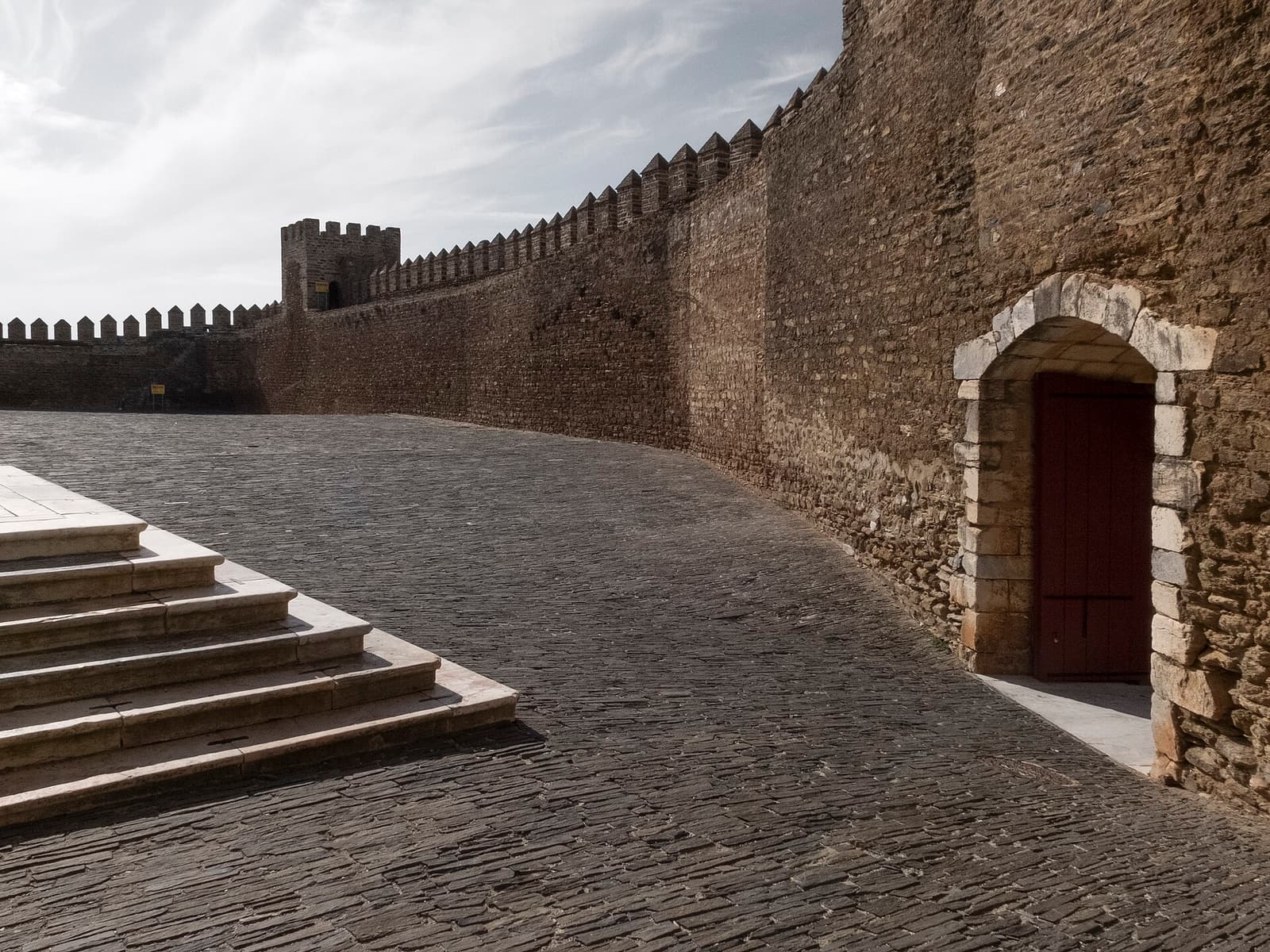
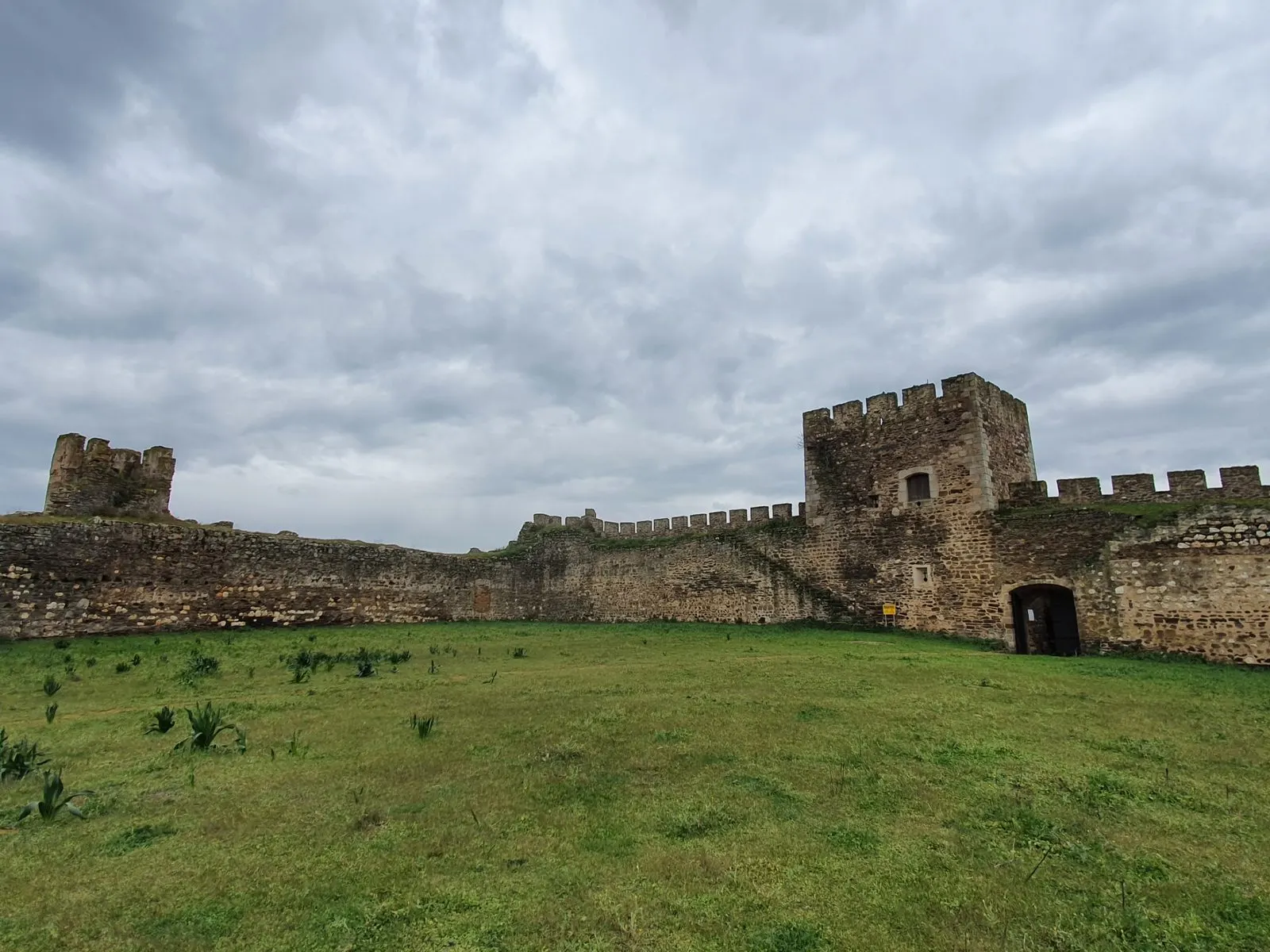
Terena Castle, in Alandroal: a medieval fortress with a pentagonal plan, a keep above the gate, and works from the early 16th century. National Monument.
- Location
- Terena, Alandroal, Évora
- Built
- séc. XIV (reinado de D. Afonso IV; barbacã e fosso em 1380); obras c. 1514
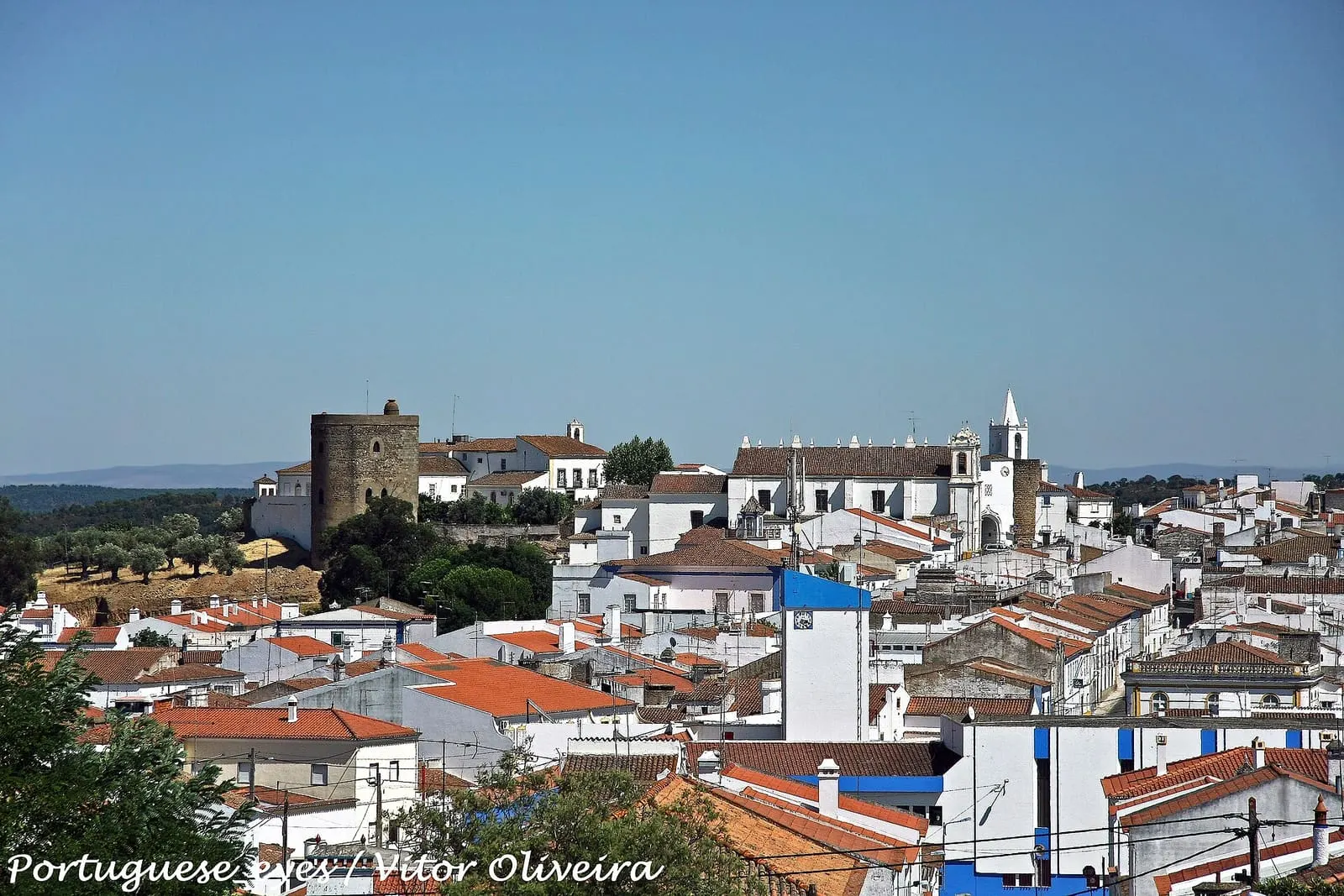
The Terena Castle stands on the highest point of the village of Terena, in the municipality of Alandroal, above the valley between the Alcaide and Lucefécit streams. It is a medieval fortress of modest size, with an angled entrance and a keep that directly guards the gate. The major campaign of works from the early 16th century left visible marks. Together with the Alandroal Castle and the Juromenha Fortress, it is one of the three fortifications that the municipality highlights in its territory.
An ancient settlement, a castle of uncertain date
The Municipality of Alandroal summarises what is known of Terena’s origins. Some researchers accept an Islamic origin, linked to the abandonment of the Castelo Velho do Lucefécit, with remains from the 10th century. The Andalusian geographer Ibn Said mentions, in 1242, a Hisn Talanna, interpreted as the “fortress of Terena”. However, archaeological evidence is lacking. In 1259, King Afonso III gave the Estate of Santa Maria de Terena to Gil Martins de Riba de Vizela. In 1262, he and his wife, Maria Anes, granted Terena its first charter.
The date of the castle’s construction remains unsettled. The municipality suggests it was built around the time of the charter. The national register of Cultural Heritage, I.P., citing Mário Barroca (2006), proposes a different chronology. Based on the castle’s form and documentary evidence, it places the foundation in the reign of King Afonso IV, when most of the structure is thought to have been built. Work then appears to have stopped, perhaps because of financial difficulties. In 1380, King Fernando ordered the completion of the barbican and the moat.
Plan and gates
According to the national register, the fortress has an irregular pentagonal plan, with four circular towers arranged asymmetrically. Only one of them protects a corner of the curtain wall. The keep, square and two storeys high, stands midway along one of the walls, above the main gate. It is protected by a small barbican with a walkway and a crenellated terrace.
The main entrance, set at an angle, passes through two wide round arches. The imposts are decorated with balls and interlacing, a vocabulary the municipality associates with Manueline works. On the opposite side is the Porta do Campo, also called the Porta do Sol. It was walled up in the 17th century, but it retains its pointed arch, between two circular towers, in a symmetrical composition with Gothic taste.
The Manueline campaign
In 1482, King João II appointed Nuno Martins da Silveira as alcaide of Terena. In the first decades of the 16th century, the castle received an extensive campaign of works. A substantial part of the structure that survives today dates from this period. The national register attributes it to Francisco de Arruda, who is thought to have worked at Terena around 1514. He altered the main entrance and the keep, to which he gave a palatial interior. The municipality adds that the works on the keep and the Paços dos Alcaides were only completed in the reign of King Manuel I. It also notes that King João I had granted the village to the Order of Avis.
Restoration, abandonment and restoration works
During the War of the Restoration, the Crown concentrated financial and engineering resources on the fortress of Elvas. Terena received reinforcement of only a small part of the structure, the Porta das Sortidas, or Porta do Campo. In 1652, the castle was occupied by Castilian troops. A gradual abandonment followed, and the 1755 earthquake caused some damage.
The Directorate-General for Buildings and National Monuments (DGEMN) carried out the first consolidation campaign in 1937, rebuilding a stretch of curtain wall and recreating the merlons. In the 1980s work was done on the keep, including the reconstruction of vaults. The national register notes that these works altered several original elements.
Classification
The castle is a National Monument under Decree No. 35 443, published in the Diário do Governo, I series, No. 1, of 2 January 1946. The same decree also classified the Castle of Alegrete and the fortification of Monsaraz. The castle is not part of any UNESCO listing. In Terena, the Pillory of Terena is also classified, as a property of public interest, and the Chapel of Boa Nova, as a national monument.
Planning your visit
The castle is at the top of the village. On the Rua Direita, which links the Church of São Pedro with the castle, the municipality highlights the 16th-century pillory and the former Town Hall, dating from the 18th century. Outside the village stands the Sanctuary of Our Lady of Boa Nova, a fortified church with a Greek cross plan, which the municipality dates to the 14th century.
When consulted on 5 November 2026, no official published opening hours for the castle could be found. To confirm access, contact the Municipality of Alandroal at 268 440 040 or [email protected].
To explore the fortresses along this stretch of the Guadiana, visit the Alandroal Castle and the Monsaraz Castle. For more context, see the pages on the castles of Portugal and on the Alentejo.
Photograph by GualdimG, 8 February 2023. Original on Wikimedia Commons, under CC BY-SA 4.0; resized and compressed for the web, without altering the composition.
Frequently asked questions
- When was Terena Castle built?
- The exact date is not known. The national register of Cultural Heritage, I.P., citing Mário Barroca, places most of the structure in the reign of King Afonso IV; in 1380, King Fernando ordered the completion of the barbican and the moat. The Municipality of Alandroal allows for an earlier construction, close to the first charter (foral) of 1262.
- What building work was carried out in the 16th century?
- At the beginning of the 16th century there was an extensive campaign of works, attributed to Francisco de Arruda, who is thought to have worked at Terena around 1514. He altered the main entrance and the keep, to which he gave a palatial interior.
- Is Terena Castle classified?
- Yes. It is a National Monument under Decree No. 35 443, published in the Diário do Governo, I series, No. 1, of 2 January 1946.
- Are there visiting hours?
- When consulted on 5 November 2026, no official published opening hours for the castle could be found. To confirm access, contact the Municipality of Alandroal at 268 440 040 or [email protected].
Sources
- Património Cultural, I.P. — Castelo de Terena (70190)
- Património Cultural, I.P. — Atlas do Património Classificado, Castelo de Terena (NINV 2654)
- Diário do Governo — Decreto n.º 35 443 (I série, n.º 1, 02-01-1946)
- Município de Alandroal — Terena
- Município de Alandroal — Património e Natureza
- Wikidata — Castelo de Terena (Q5050421)
Keep exploring
Heritage nearby
More places to discover from here. Approximate straight-line distances, within 50 km.