Monuments
Church of Fonte Arcada
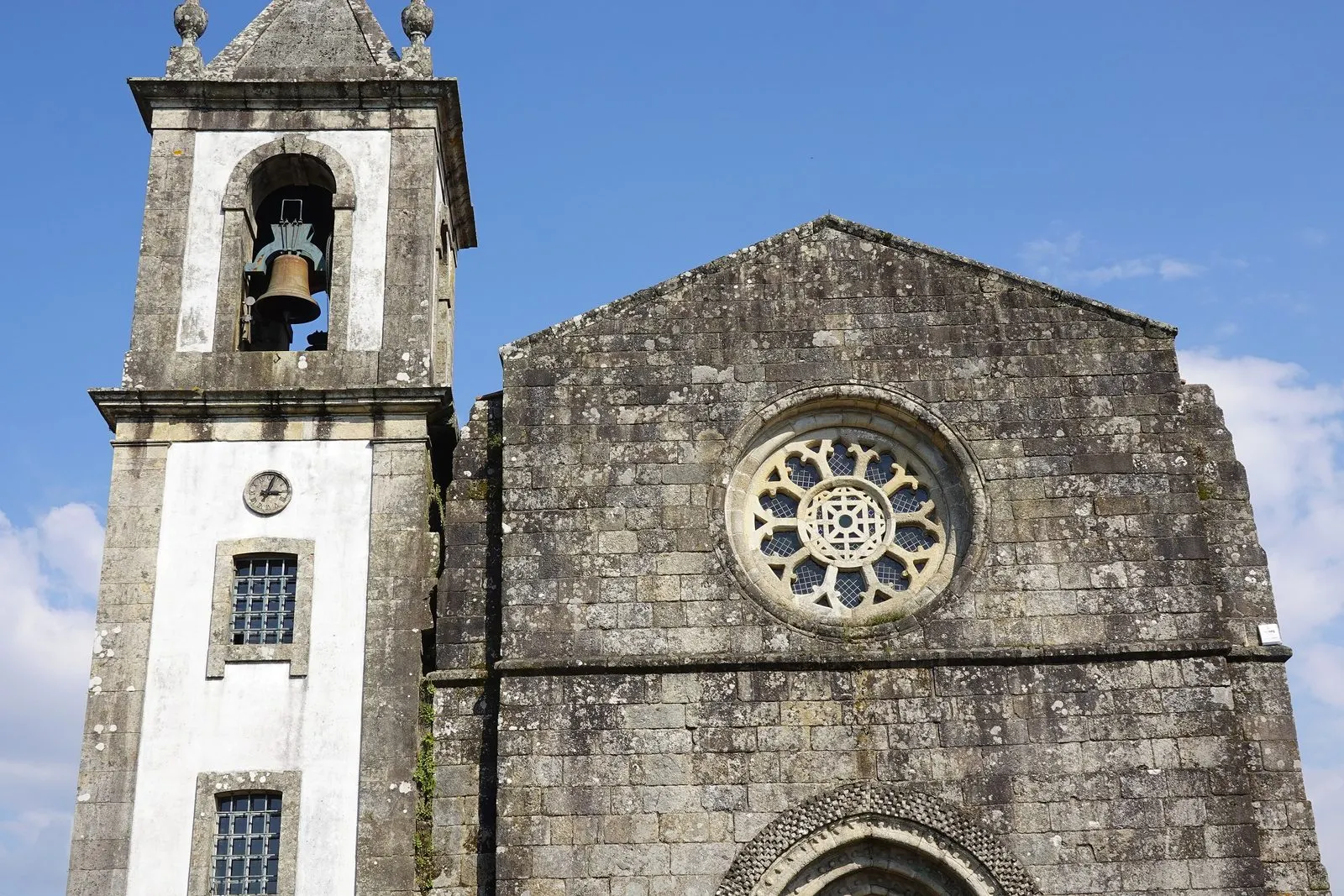
Church of Fonte Arcada, in Póvoa de Lanhoso: former Benedictine church of the mid-13th century, with a three-archivolt portal; National Monument.
- Location
- Fonte Arcada e Oliveira, Póvoa de Lanhoso, Braga
- Built
- Mosteiro beneditino documentado desde o século XI ou XII; igreja atual de meados do século XIII (segundo a Câmara de Póvoa de Lanhoso); restaurada no século XVI e pela DGEMN no século XX
The Church of Fonte Arcada, also known as the Church of São Salvador or the Monastery Church, stands at the place called Mosteiro, in the parish of Fonte Arcada e Oliveira, in the municipality of Póvoa de Lanhoso, in the same municipality as the Castle of Póvoa de Lanhoso. It is a National Monument and preserves the plan of a late Romanesque church of Minho. It was the church of a Benedictine monastery of which nothing else remains. It should not be confused with the Church of Fonte Arcada in Sernancelhe, which is a different building, in Viseu, and has a different category of protection.
A Benedictine monastery, dates in question
The foundation of the monastery of São Salvador de Fontarcada is, according to the inventory records that repeat it, 1067, by donation of D. Godinho Fafes, father of a standard-bearer (alferes-mor) of Count D. Henrique. The municipal council of Póvoa de Lanhoso is more cautious: it states that the monastery was founded at the end of the 11th or beginning of the 12th century and that the present church was, very probably, built in the mid-13th century. Other descriptions place the present church at the end of the 13th and the beginning of the 14th century. The three chronologies do not coincide, so an exact date cannot be given with confidence.
The monastic life was short, by medieval standards. According to the council, the monastery was suppressed in 1455 and the church became a secular parish church; the inventory records mention a confirmation of royal privileges in 1450 and the conversion into an archdeaconry by the archbishop of Braga, D. Fernando da Guerra, in 1455. The church was restored in the 16th century.
The exterior
The main façade is austere. The portal has three archivolts resting on six colonnettes with carved capitals and projecting abaci, topped by a chequered frieze, with an Agnus Dei in the tympanum. Above it opens a rose window framed by two rings, which the council says was rebuilt in the 20th century. The apse is girded by three columns with sculpted capitals supporting a cornice of Lombard arcades. On the south side there is a pointed-arch portal with two archivolts and a tympanum bearing a Greek cross flanked by a sun and a moon. The bell tower, beside the façade, dates from the 18th century and was kept during the 19th-century restoration.
The interior
The nave is single, tall and wide, with a timber ceiling. The chancel has two straight bays and a semicircular apse, with a vault. The interior elevation of the apse alternates blind arcades with openings, which animates the walls. The inventory descriptions speak of five blind arcades of pre-Romanesque character, resting on engaged columns. This arrangement was enriched, in the second quarter of the 16th century, with figurative and decorative mural painting, of which only some traces survive.
In the 20th century, the Directorate-General for Buildings and National Monuments sought to remove the additions of the 18th and 19th centuries and return the building to its original purity: altarpieces, the choir (which the council’s English version calls a “rood screen”), confessionals and the stuccoed ceiling were removed. For the stylistic context, see Romanesque architecture in Portugal; in the region, the Church of São Pedro de Rates is another example of granite Romanesque.
Classification
It is a National Monument by decree of 16 June 1910 (Diário do Governo no. 136, of 23 June 1910). The Atlas do Património Classificado does not indicate a protection zone fixed by any legal instrument. The church is not part of any UNESCO inscription. The Rota do Românico is organised by municipalities of the Tâmega e Sousa and Douro regions, and Póvoa de Lanhoso does not appear among them in the consultation of 5 November 2026: the church does not belong to that route, despite being Romanesque.
Planning a visit
In the consultation of 5 November 2026 we did not find opening hours published by an official source for this church. As a parish church, it opens mainly for worship; confirm the possibility of a visit with the parish or the tourist office of Póvoa de Lanhoso before travelling. For the rest of the region, see the pages for Braga, Norte and the Mosteiro de Tibães, another former Benedictine monastery in Minho.
Photograph by Joseolgon, as recorded on Wikimedia Commons in 2026. Original on Wikimedia Commons, under CC BY 4.0; resized and compressed for the web, without altering the composition.
Frequently asked questions
- Which church is this, and not the one in Sernancelhe?
- There are two churches named Fonte Arcada in the Atlas do Património Classificado. This one is in the parish of Fonte Arcada e Oliveira, in Póvoa de Lanhoso, and is a National Monument; the one in Sernancelhe, in the district of Viseu, is a Property of Public Interest and is a different building.
- When was it built?
- There is no precise date. The Póvoa de Lanhoso municipal council states that the Benedictine monastery of São Salvador was founded at the end of the 11th or beginning of the 12th century and that the present church was very probably built in the mid-13th century. Other inventory records repeat 1067 as the foundation date of the monastery and place the present church between the end of the 13th and the beginning of the 14th century.
- Does the monastery still exist?
- No. The Benedictine community died out in the Middle Ages and, according to the descriptions consulted, nothing remains of the conventual buildings. Only the church survives, now a parish church.
- What is its classification?
- National Monument, by decree of 16 June 1910, published in the Diário do Governo no. 136 of 23 June 1910. The Atlas do Património Classificado does not indicate a protection zone fixed by any legal instrument.
Sources
- Património Cultural, I.P. — Atlas do Património Classificado e em Vias de Classificação (NINV 2310)
- Diário do Governo — Decreto de 16 de junho de 1910 (n.º 136, de 23 de junho de 1910)
- Município de Póvoa de Lanhoso — Romanesque church of Fontarcada
- Rota do Românico — Monumentos (lista de concelhos)
- Wikidata — Igreja de Fonte Arcada (Q5116876)
- Wikipédia — Igreja de Fontarcada (ponto de partida; descrição de inventário)
Keep exploring
Heritage nearby
More places to discover from here. Approximate straight-line distances, within 50 km.