Monuments
Church of São Pedro de Rubiães
Romanesque Church of São Pedro de Rubiães in Paredes de Coura: Galician influence, 1202 inscription, Annunciation statue-columns, National Monument since 1922.
- Location
- Rubiães, Paredes de Coura, Viana do Castelo
- Built
- Finais do século XII (inscrição lida como 1202); ampliada no século XVI; torre sineira do século XVIII
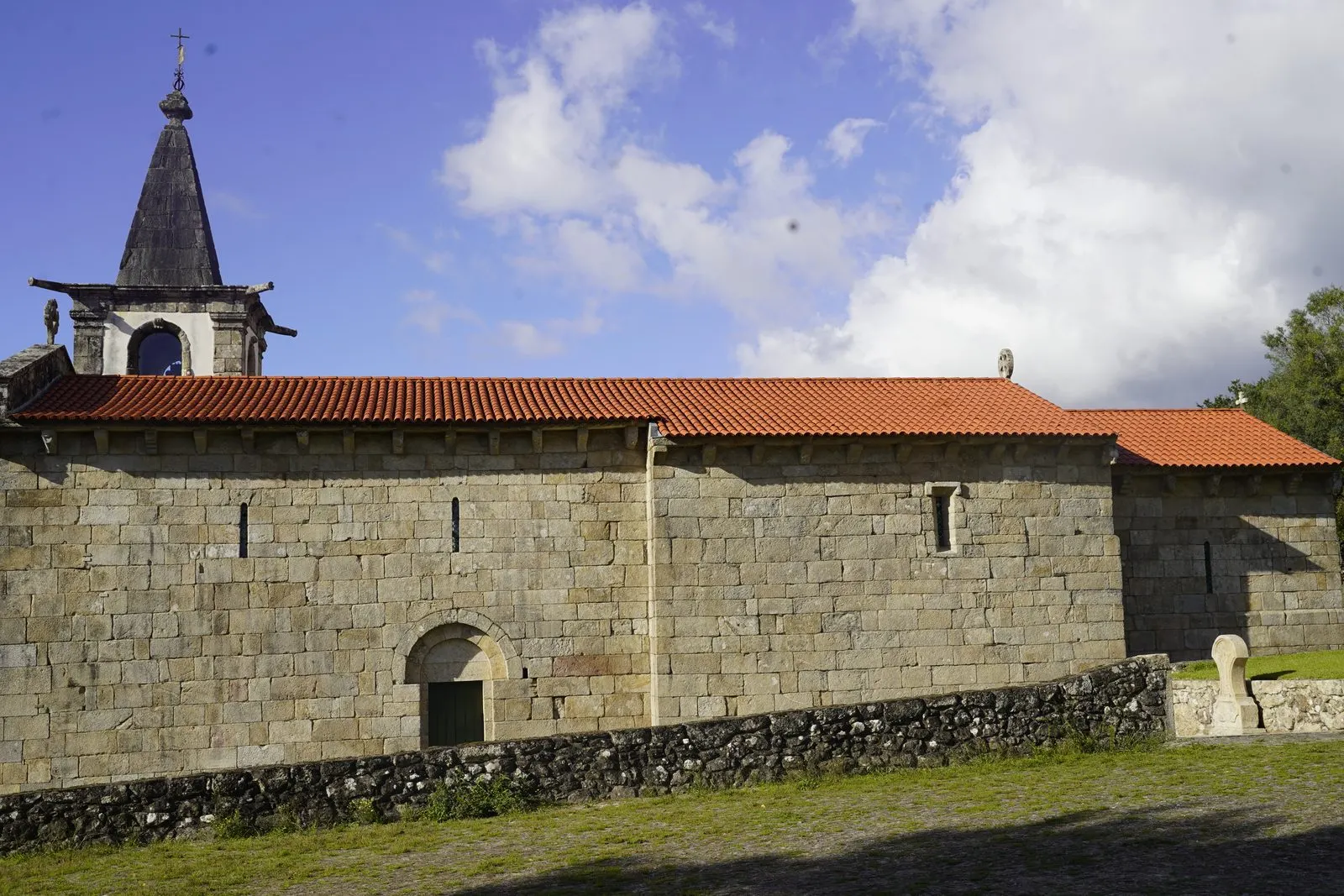
The Church of São Pedro de Rubiães (Igreja Paroquial de Rubiães) stands in the parish of Rubiães, in the municipality of Paredes de Coura, in Alto Minho. It is not on the banks of the river, but the official record insists that stylistically it belongs to the Romanesque centre of the Minho, where a Galician manner predominates. It is a National Monument and stands out for its dated inscription on the portal and for an Annunciation carved on column-statues, a rare feature in Portuguese Romanesque art.
A date that changed
The church has an inscription on the lintel of the main portal, made at an unknown date, which is thought to copy an earlier one. It has been read in several ways. The first readings gave the year 1295 of the Spanish Era, that is 1257, and Carlos Alberto Ferreira de Almeida saw in it the completion of the works. More recently, according to the record of the Património Cultural, I.P., the inscription has been read as 1240 of the Spanish Era, that is, 1202, because the penultimate character should be a “X” with a serif and not a “V”. The dating therefore moved back about half a century, which places Rubiães in the same period as Longos Vales and Sanfins de Friestas, major works of Pontevedran influence in Alto Minho. The decorative repertoire, the record says, confirms a chronology of the late twelfth century.
It is therefore worth being precise about what is known: the date 1202 comes from a reading of an inscription, not from a foundation document. It is a strong argument, but it remains an interpretation.
Portal sculpture
The greatest interest lies in the western portal. In the modillions and capitals, the human and animal figures, in full volumes, are one of the surest indicators of kinship with Galician models. The record mentions a scene of a man holding a cask, a possible allusion to wine-making, a theme that Jorge Rodrigues identified in other Galician churches.
The tympanum shows Christ in Majesty, treated in a summary manner, with two modern flowers flanking the mandorla; in the opinion cited in the record, it is a “very poor, relatively modern restoration” of the earlier piece that was broken. More important are the figures of the archangel Saint Gabriel and Our Lady, on two shafts of the portal: an archaic Annunciation, still distant from Gothic iconography, with the Virgin raising both hands and a bearded Saint Gabriel. The record links it to another Annunciation on column-statues, on the main portal of the Church of the Saviour of Bravães, a little further south, and stresses the originality of the ensemble within Portuguese Romanesque art.
Later alterations
The main spatial reform most probably took place in the sixteenth century. The nave was extended to the east and gained a kind of transept wider than the original body; the Romanesque triumphal arch was destroyed and the chancel rebuilt slightly further east than the original, but keeping a square plan. In the eighteenth century a Baroque-style bell tower was added to the north side of the façade, together with service buildings. In 1997 restoration and archaeological study took place, which made it possible to safeguard several burials and fragments of mural painting identified in the process, as well as a general arrangement of the forecourt. The most honest reading of the building is therefore that of a Romanesque church with a modified plan, whose value lies above all in the sculpture of the portal.
Classification and surroundings
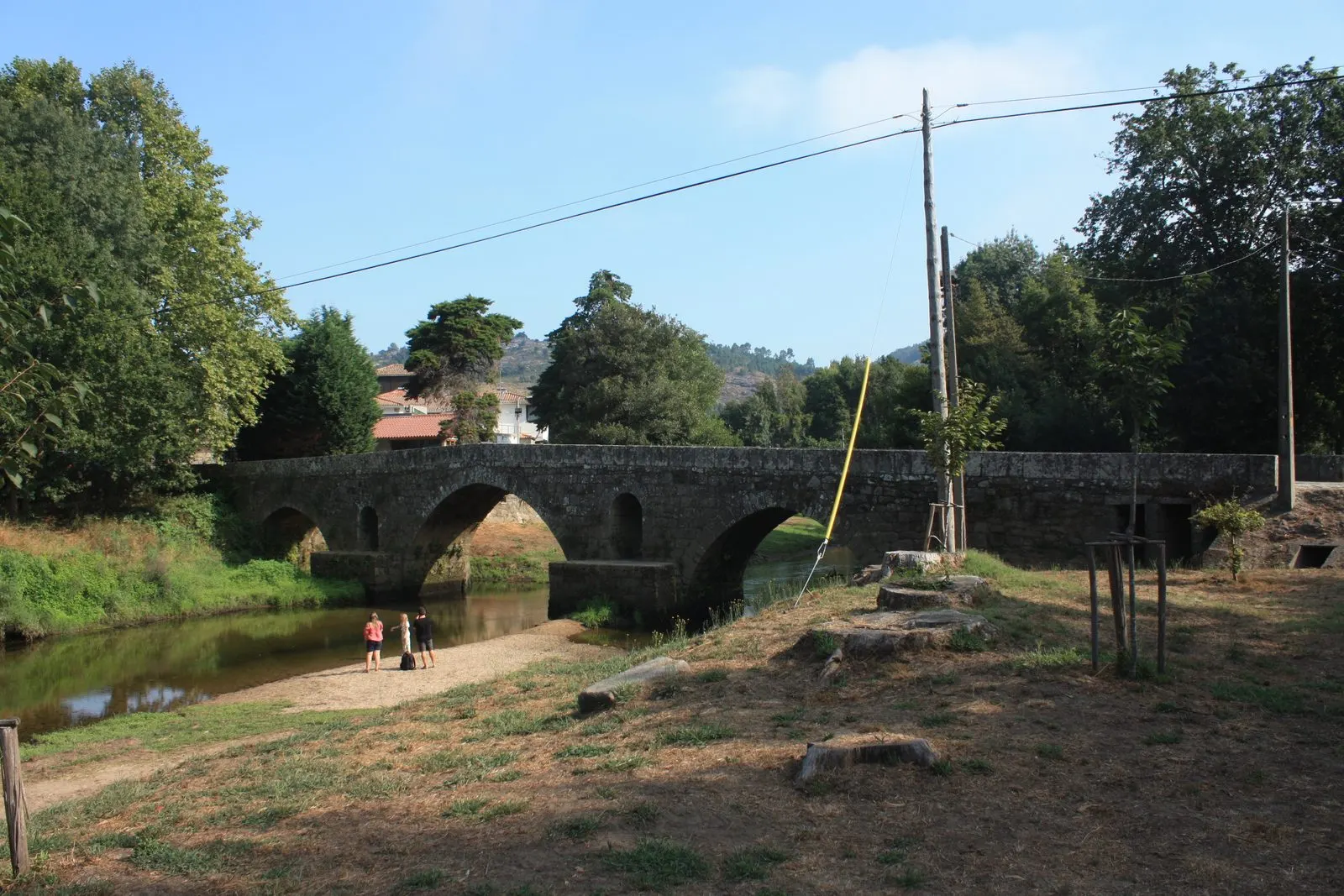
It is a National Monument under Decree No. 8 228 of 4 July 1922 (Diário do Governo, I series, no. 133); the record also cites a decree of 1 February 1913 (Diário do Governo no. 29, of 6 February 1913). The text of the 1922 decree is an image scan that we could not transcribe, so the description relies on the official record. The Atlas of Classified Heritage lists, in the same parish, the Roman Bridge of Rubiães, classified as a Property of Public Interest, and the “Milestone at the Church of São Pedro de Rubiães / Caracalla Milestone”, a National Monument forming part of the Roman road from Braga to Tui (14 milestones, Capela series). The church is not part of any UNESCO inscription.
Preparing a visit
The church is located at the place called Costa, in the parish of Rubiães. Our page on the Portuguese Central Way mentions Rubiães as one of the localities on the final stretch of the route, close to the border at Valença. When consulted on 5 November 2026, we did not find opening hours, admission prices or access rules published in an official source we could read, so we do not give them here. It is a parish church: please confirm the conditions with the Municipality of Paredes de Coura or the parish before travelling. To place the style in context, see Romanesque architecture in Portugal, the guide to parish churches and the page on the North.
Photograph by Joseolgon, 21 September 2025. Original on Wikimedia Commons, under CC BY 4.0; resized and compressed for the web, without altering the composition.
Frequently asked questions
- Does the portal inscription read 1257 or 1202?
- For a time it was read as the year 1295 of the Spanish Era, that is 1257, which made Rubiães a late work. The record of the Património Cultural, I.P. gives a more recent reading, which sees the penultimate character as a "X" with a serif and gives 1240 of the Spanish Era, that is, 1202. On this reading the building moves back in time and becomes contemporary with Longos Vales and Sanfins de Friestas.
- Why does a church far from the Minho have Minho-style features?
- According to the record, Rubiães is stylistically linked to the centre of the Minho river banks, where a Galician manner predominates, stemming from the workshop of Tui Cathedral and other churches in the province of Pontevedra.
- Is the tympanum original?
- No. The record cites the view that the tympanum with Christ in Majesty is a very poor, relatively modern restoration of the earlier piece, which broke. In the early 1980s a fragment of the original tympanum still survived on site.
- What is its classification?
- National Monument, by Decree No. 8 228 of 4 July 1922 (Diário do Governo, I series, no. 133). The record also cites an earlier decree of 1 February 1913. The church is not part of any UNESCO inscription.
Sources
- Património Cultural, I.P. — Igreja de São Pedro de Rubiães (71137)
- Património Cultural, I.P. — Atlas do Património Classificado e em Vias de Classificação (NINV 4143, 4145 e 4147)
- Diário do Governo — Decreto n.º 8 228, de 4 de julho de 1922 (I série, n.º 133)
- Wikidata — Church of São Pedro de Rubiães (Q5117753)
Keep exploring
Heritage nearby
More places to discover from here. Approximate straight-line distances, within 50 km.