Resources
Museus e Monumentos de Portugal, E.P.E. (MMP)
Museus e Monumentos de Portugal, E.P.E.: its decree, mission, museums, monuments and palaces it manages, and links to Património Cultural, I.P. and RAIZ.
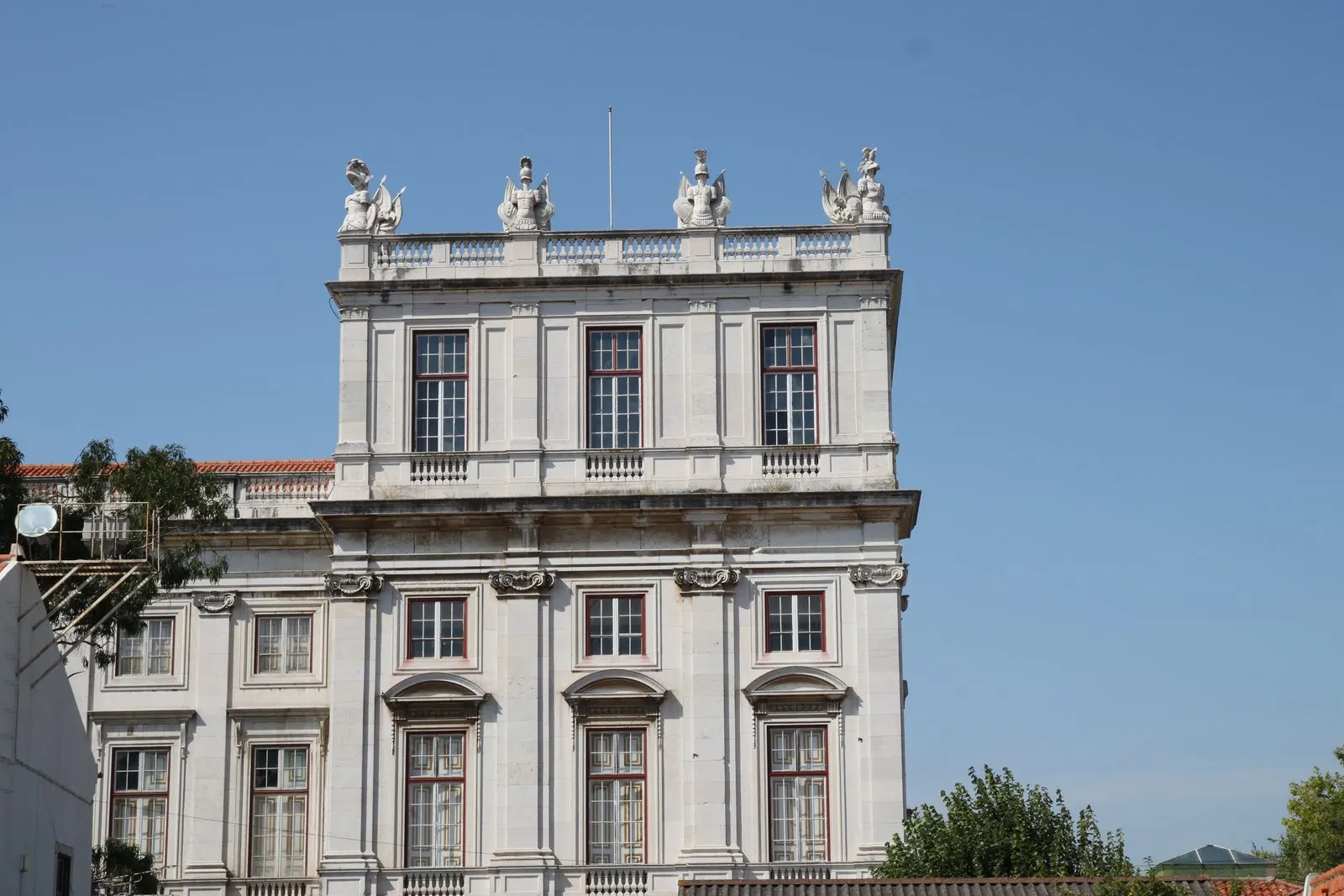
The Museus e Monumentos de Portugal, E.P.E. is the public entity that manages the major national museums, monuments and palaces of mainland Portugal. It was created in 2023 and began operating on 1 January 2024, as part of the reform that abolished the Directorate-General for Cultural Heritage (DGPC). If you are looking for the body that manages the Jerónimos, the Tower of Belém or the Museu Nacional de Arte Antiga, the answer is this public business entity, not the Património Cultural, I.P..
Creation and legal nature
The entity was created by Decree-Law No. 79/2023 of 4 September, published in the Diário da República, 1st series, No. 171. On the same day, Decree-Law No. 78/2023 created Património Cultural, I.P. The decree-law entered into force the day after publication, but the succession to the DGPC’s responsibilities and most of the Statutes took effect only on 1 January 2024.
The decree defines it as a public law legal person of a business nature, with administrative, financial and patrimonial autonomy. It is governed by the decree-law itself, the annexed Statutes and, subsidiarily, the legal regime of the public business sector. Supervision is exercised jointly by the members of the Government responsible for finance and for culture.
According to the Statutes, its headquarters are in Lisbon, with premises in the South Wing of the Ajuda National Palace. Its corporate bodies are the board of directors and the supervisory body. There are also two advisory bodies: the advisory council and the board of trustees.
The original text has already been amended by Decree-Laws No. 17/2024 and No. 62/2025. The third amendment, Decree-Law No. 174/2026 of 3 September, created a supplement for public-facing staff who work on public holidays. To cite a specific provision, consult the consolidated version in the Diário da República.
In the language of the decree, the acronym MMP refers to the «national museums, monuments and palaces» themselves. In common usage, the acronym has also come to identify the entity.
Mission and functions
Article 4 assigns it three areas:
- management of the national museums, monuments and palaces;
- implementation of the national museum policy;
- protection, conservation and restoration, research, enhancement and communication of the national collections and movable cultural heritage.
The decree also places under its management the José de Figueiredo Laboratory, the State Collection of Contemporary Art and the Photographic Documentation Archive, housed in the Fort of Sacavém. The archive of the SIPA also operates in the same fort, but it belongs to Património Cultural, I.P.: these are two different collections belonging to different entities.
The Statutes add further tasks: developing the Portuguese Museum Network, inventorying and registering protected movable property, monitoring the trade, export and circulation of cultural goods, and programming requalification works at the facilities it manages. For assets inscribed on the UNESCO World Heritage List that are under its management, the Statutes give it the role of manager, in coordination with Património Cultural, I.P.
Which museums, monuments and palaces it manages
Annex II of the decree-law lists 31 entries. Among the monuments and palaces are:
- the Jerónimos Monastery and the Tower of Belém, in Lisbon;
- the Monastery of Santa Maria da Vitória, in Batalha;
- the Monastery of Alcobaça and the Convent of Christ, in Tomar;
- the Mafra National Palace (see the Palace-Convent of Mafra) and the Ajuda National Palace, with the Royal Treasury Museum;
- the National Pantheon and the Fortress of Sagres;
- in Guimarães, the Ducal Palace, the Castle and the Church of São Miguel do Castelo.
The museums include most of the national museums: for example, the Museu Nacional do Azulejo, the Museu Nacional de Arqueologia, the Museu Nacional dos Coches, the Museu Nacional de Soares dos Reis, the Museu Nacional Machado de Castro, the Museu Nacional Grão Vasco and the Museu Nacional de Conímbriga. Other museums also appear, such as the Alberto Sampaio, the Lamego, the José Malhoa and the Casa-Museu Dr. Anastácio Gonçalves.
The annex list does not exhaust the current scope. Article 5 provided that four regional museums would remain under the entity’s management if they were not transferred to the municipalities by the end of 2023: the Museu D. Diogo de Sousa and the Museu dos Biscainhos, in Braga, the Museu da Terra de Miranda and the Museu do Abade de Baçal. The list of 37 sites published by the Government in August 2024 already included them, together with other museums. This number may change; confirm the current list on the official website.
Several of these monuments belong to assets inscribed on the UNESCO World Heritage List: the Jerónimos and the Tower of Belém, Batalha, Alcobaça, the Convent of Christ and the Royal Building of Mafra. Not all Portuguese World Heritage falls under the MMP. The Pena Palace and the Sintra National Palace, for example, are not in Annex II and are managed by Parques de Sintra – Monte da Lua.
Relationship with Património Cultural, I.P. and the CCDR
The 2024 division separates the management of the facilities from the safeguarding authority. Museus e Monumentos de Portugal manages the spaces, the collections and the museum policy. Património Cultural, I.P. retains, among other competences, the classification and protection of immovable heritage, archaeology and intangible heritage. For decisions on the classification of a building, a special protection zone or archaeological works, the competence lies with Património Cultural, I.P. (and, on territorial matters, with the CCDR), not with the MMP, even when the property is one of its monuments.
The former Regional Directorates of Culture were also abolished in this reform. The decree provides that the MMP succeeds them in managing the museums and monuments in Annex II and in implementing the museum policy. The remaining regional culture functions passed to the Regional Coordination and Development Commissions (CCDR). A museum that previously depended on a Regional Directorate may therefore now be under the MMP, a municipality or another entity, depending on the case.
RAIZ: the collections online
Public searching of the collections is done through RAIZ, “the platform for the inventory, management and dissemination of cultural assets, developed by Museus e Monumentos de Portugal”. The official presentation describes it as the successor to the Matriz system and indicates a selection of more than 150,000 records from participating institutions. For older references to MatrizNet and for search steps, consult the guide MatrizNet e RAIZ.
Tickets, free admission and leadership
When consulted on 5 November 2026, the official website, museusemonumentos.pt, directed visitors to the online ticket office (mmp.bymeoblueticket.pt). Prices, opening hours and closures for works vary by site and should be confirmed on the page of each museum or monument.
In August 2024, the Government announced a free-admission scheme for residents in Portugal with a tax identification number: 52 days a year across 37 sites, at the visitor’s choice, upon identification at the ticket office. Before relying on it, confirm the conditions at the ticket office or on the official website. Details are in the guide on free admission to museums and monuments.
As for leadership, Council of Ministers Resolution No. 79/2024 of 18 June dissolved the board of directors then in office and appointed a new one for the 2024–2026 term. The Government’s communiqué of 14 June 2024 named Alexandre Pais as chair. Since that mandate ends in 2026, verify the current composition before citing it.
Photograph by João Carvalho, 15 September 2011. Original on Wikimedia Commons, under CC BY-SA 3.0; resized and compressed for the web, without altering the composition.

Frequently asked questions
- What is Museus e Monumentos de Portugal, E.P.E.?
- It is a public business entity created by Decree-Law No. 79/2023 of 4 September. It manages the national museums, monuments and palaces, implements the national museum policy, and looks after the national collections and movable cultural heritage.
- What is the difference between Museus e Monumentos de Portugal and Património Cultural, I.P.?
- Both succeeded the DGPC in 2024. Museus e Monumentos de Portugal manages the network of museums, monuments and palaces and the movable heritage. Património Cultural, I.P., created by Decree-Law No. 78/2023, is the public institute that deals mainly with immovable, archaeological and intangible heritage.
- Which monuments does Museus e Monumentos de Portugal manage?
- Annex II of the decree-law includes, among others, the Jerónimos Monastery, the Tower of Belém, the monasteries of Batalha and Alcobaça, the Convent of Christ, the Mafra National Palace, the Ajuda National Palace, the National Pantheon and the Fortress of Sagres.
- Where can the MMP's museum collections be searched?
- In RAIZ, the inventory and dissemination platform for cultural assets developed by Museus e Monumentos de Portugal. It presents itself as the successor to the Matriz system and publishes a selection of records from participating institutions.
Sources
- Diário da República — Decreto-Lei n.º 79/2023, de 4 de setembro (criação da Museus e Monumentos de Portugal, E.P.E.)
- Ordem dos Advogados — Museus e Monumentos de Portugal, E.P.E. (texto do Decreto-Lei n.º 79/2023 e da RCM n.º 79/2024)
- Diário da República — Decreto-Lei n.º 174/2026, de 3 de setembro (altera o Decreto-Lei n.º 79/2023)
- Diário da República — Resolução do Conselho de Ministros n.º 79/2024 (conselho de administração 2024-2026)
- Governo de Portugal — Conselhos de administração da Museus e Monumentos de Portugal e do Teatro Nacional de São João (14-06-2024)
- gov.pt — Museus, monumentos e palácios com entrada grátis 52 dias por ano (06-08-2024)
- Museus e Monumentos de Portugal — Sítio oficial
- Museus e Monumentos de Portugal — Bilheteira
- Museus e Monumentos de Portugal — RAIZ, Apresentação
- Diário da República — Decreto-Lei n.º 78/2023, de 4 de setembro (criação do Património Cultural, I.P.)
- Parques de Sintra — Palácio Nacional de Sintra
- Património Cultural, I.P. — Portal do Arqueólogo (aviso sobre a extinção da DGPC e a conversão das CCDR, Decreto-Lei n.º 36/2023)
- UNESCO — Monastery of the Hieronymites and Tower of Belém in Lisbon (263)
- UNESCO — Monastery of Batalha (264)
- UNESCO — Convent of Christ in Tomar (265)
- UNESCO — Monastery of Alcobaça (505)
- UNESCO — Royal Building of Mafra (1573)
Resources for research
Find the sources. Follow the story.
Guides to researching buildings, exploring museum collections and understanding heritage protection.
SIPA
Get to know the architectural inventory, building records and documentary archive.
Read the guideMuseum collectionsMatrizNet
Explore the museum catalogue and records of works, materials, authorship and provenance.
Read the guideHeritage protectionHeritage classification
Understand cultural property categories and the levels of national, public and municipal interest.
Read the guide