Archaeology
Maximinos Roman Baths
Maximinos Roman Baths in Braga: ruins of a Bracara Augusta bathhouse, excavated since 1977, a National Monument since 1986, plus practical notes for your visit.
- Location
- Maximinos, Braga, Braga
- Built
- séculos I–III d.C.
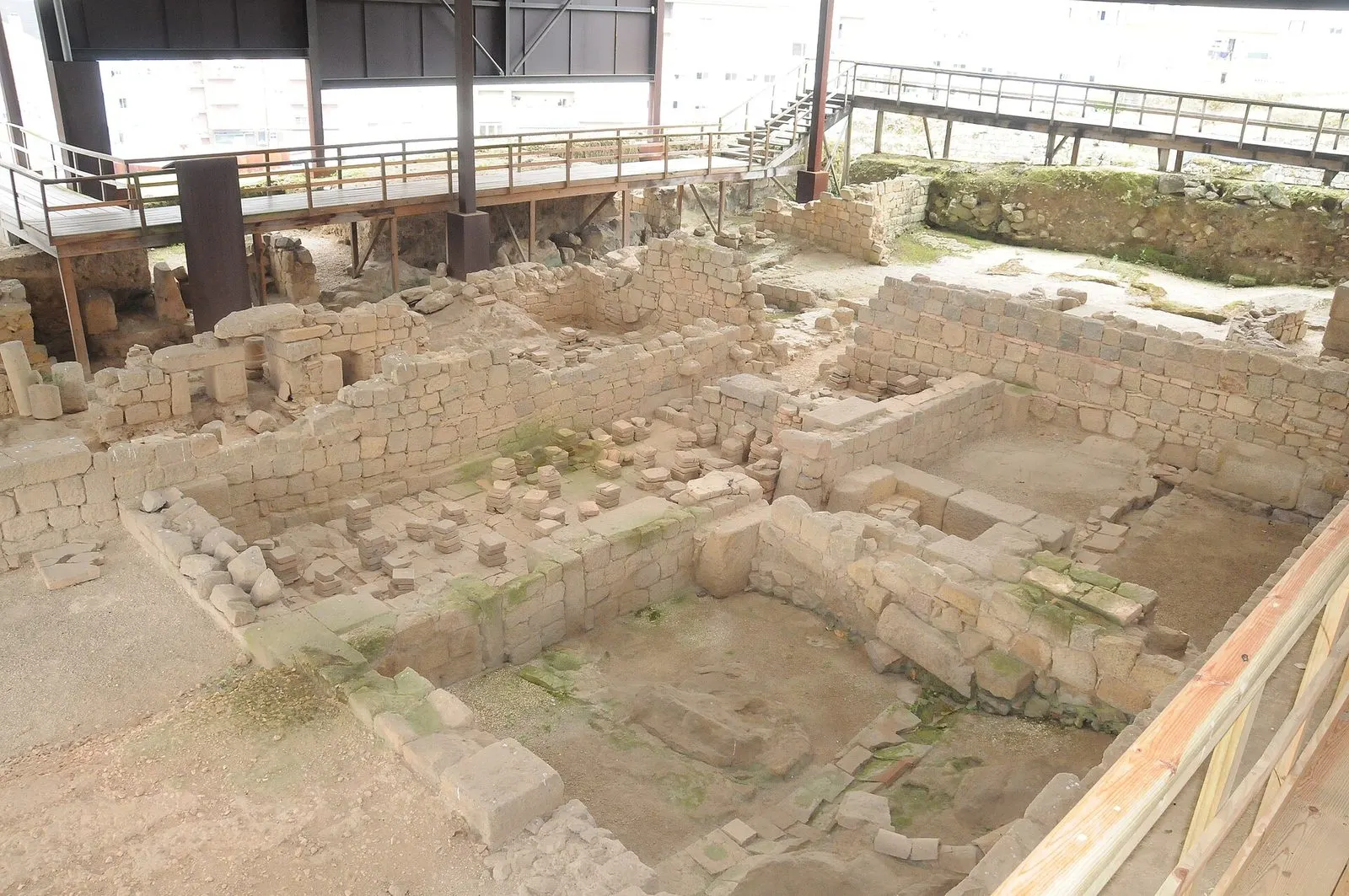
The Maximinos Roman Baths, also known as the Alto da Cividade Baths or the Maximinos Hill Baths, are the remains of a large public building in Bracara Augusta, the Roman city that gave rise to Braga. They are classified as a National Monument and, close to the centre of Braga, reveal the plan of a Roman bathhouse.
A public building of Bracara Augusta
The complex occupies the Maximinos hill, next to the historic centre of Braga. According to the summary available on Wikipedia, which draws on the SIPA record by Isabel Sereno and Paulo Dordio (1994) and other archaeological publications, the site reveals three phases: a monumental structure predating the baths, the installation of public baths within the existing structure and, finally, a remodelling that greatly reduced the area of the building. The site is said to have operated from the 1st century AD until the end of the 3rd century, when an urban reorganisation associated with the period of Diocletian reduced the complex. Construction dates differ among the sources consulted and should therefore be read as approximations.
The plan of the baths follows the usual sequence of Roman bathing: changing room (apodyterium), cold pool (natatio), cold room and then warm and hot rooms heated by a hypocaust, the raised-floor system through which hot air from the furnace circulated. The plan is not fully excavated, so several chronological questions remain open.
Excavations
According to Wikipedia (citing the SIPA record), work began in 1977, when the discovery of late hypocausts led to excavation; by 1980 the excavated area had reached about 800 square metres. Interventions focused on chronology and architecture followed until 1986. In the 21st century, a municipal project begun in 2004 included excavations by the Archaeology Unit of the University of Minho in 2005 and 2006, aimed at locating the Roman theatre believed to have been linked to the baths. These excavation dates have not been verified against an official source, which was not accessible when consulted on 5 November 2026.
Classification
The Atlas do Património Cultural, consulted on 5 November 2026, records the Maximinos Roman Baths (alternative name: Alto da Cividade / Maximinos Hill) as a National Monument, inventory number 2233, in the parish of Braga (Maximinos, Sé and Cividade). The classification was made by Decree No. 1/86, published in the Diário da República, I Série, No. 2, of 3 January 1986. The property has a special protection zone, set by Ordinance No. 865/91, of 22 August 1991.
Archaeological context
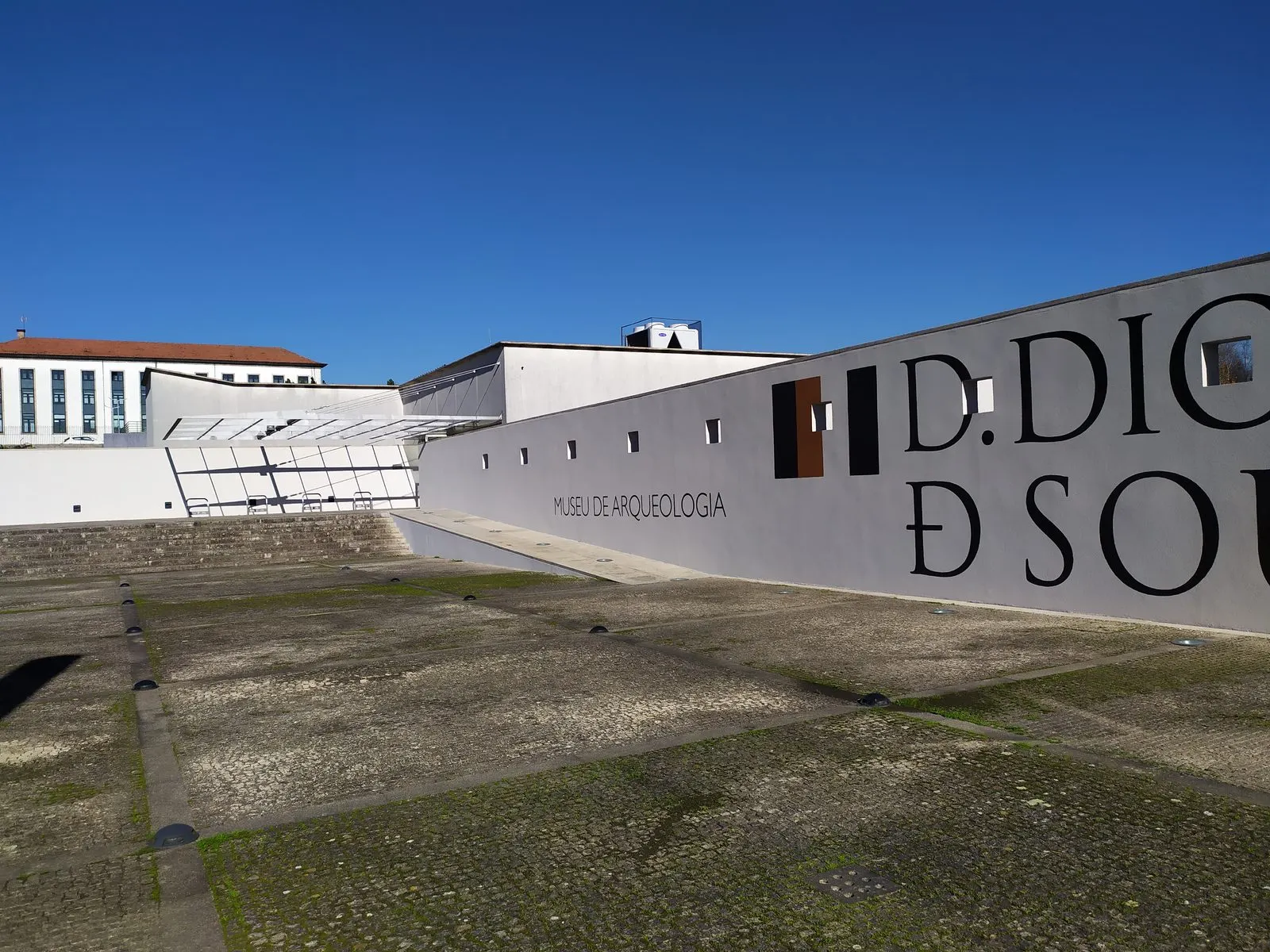
The Roman city of Bracara Augusta is covered under Roman archaeology. The Maximinos baths show the everyday, public face of that city, and complement a visit to the D. Diogo de Sousa Archaeology Museum, which holds collections from the Roman city and a mosaic preserved on site.
Planning your visit
Tourism aggregator sites give hours and prices that differ from one another, and we did not find an official Municipality of Braga page with this information. When consulted on 5 November 2026, the municipal contact given in a local listing is the email address [email protected], but this should be confirmed. Check opening hours, tickets and accessibility on the websites of the Municipality and the D. Diogo de Sousa Museum before you go.
Photograph: Joseolgon, 28 September 2014, Termas romanas do Alto da Cividade 05.JPG, licence CC BY-SA 4.0, resized and compressed for the web, without altering the composition.
Frequently asked questions
- What are the Maximinos Roman Baths?
- They are the remains of a public bathing complex in the Roman city of Bracara Augusta, on the Maximinos hill in Braga, also known as the Alto da Cividade Baths.
- Are they classified?
- Yes. They are a National Monument under Decree No. 1/86, of 3 January 1986, and have a special protection zone set by Ordinance No. 865/91.
- When were they excavated?
- According to secondary sources, work began in 1977 and continued through the 1980s, with a further campaign in 2005 and 2006.
- Where can I confirm visiting hours?
- On the websites of the Municipality of Braga and the D. Diogo de Sousa Museum; tourist listings give conflicting information.
Sources
Keep exploring
Heritage nearby
More places to discover from here. Approximate straight-line distances, within 50 km.