Monuments
Amieira Castle
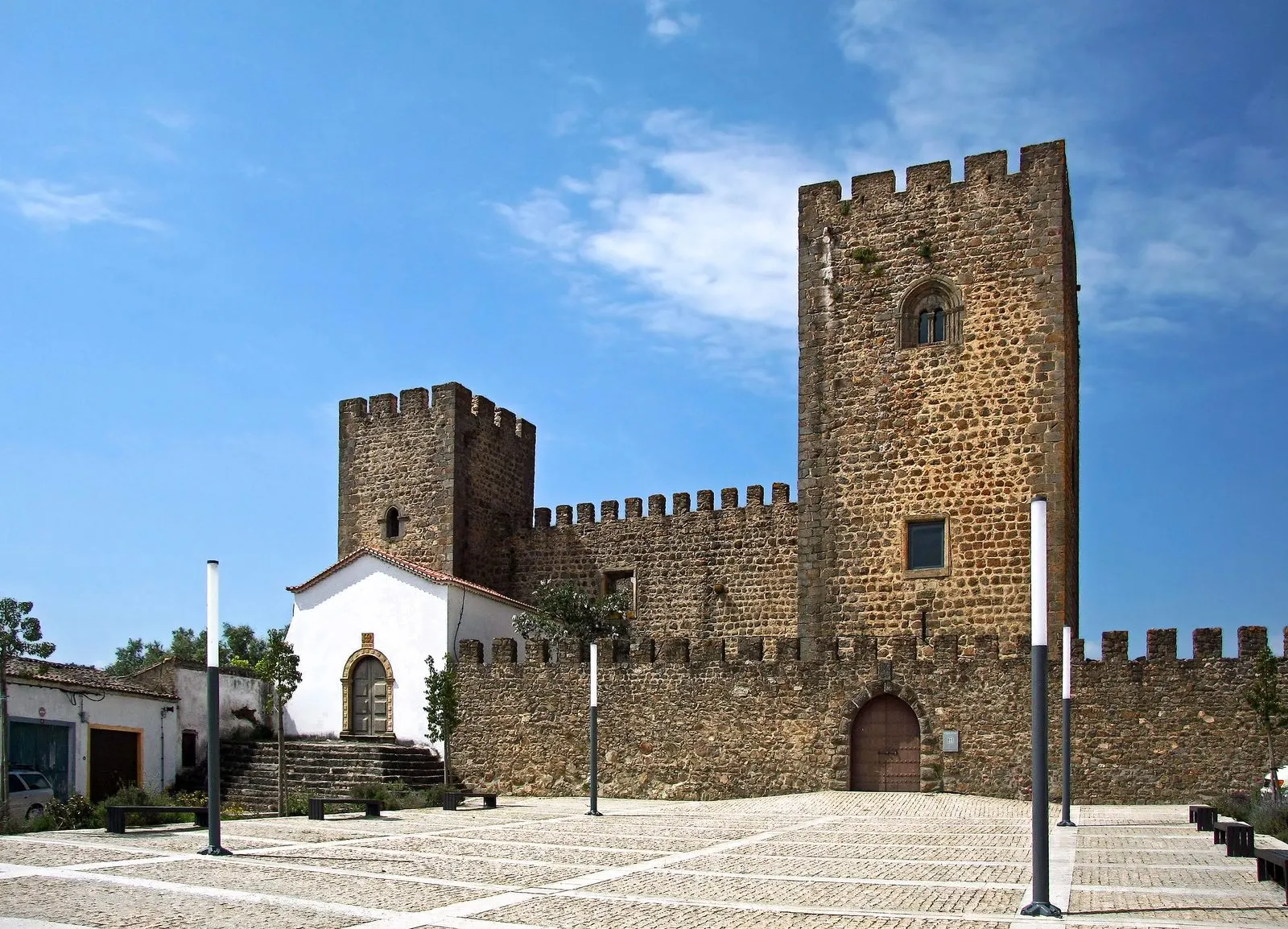
Amieira Castle, Nisa: Order of the Hospital Gothic fortress completed in 1362, with four towers on a rectangular plan. A National Monument since 1922.
- Location
- Amieira do Tejo, Nisa, Portalegre
- Built
- meados do séc. XIV; concluído em 1362
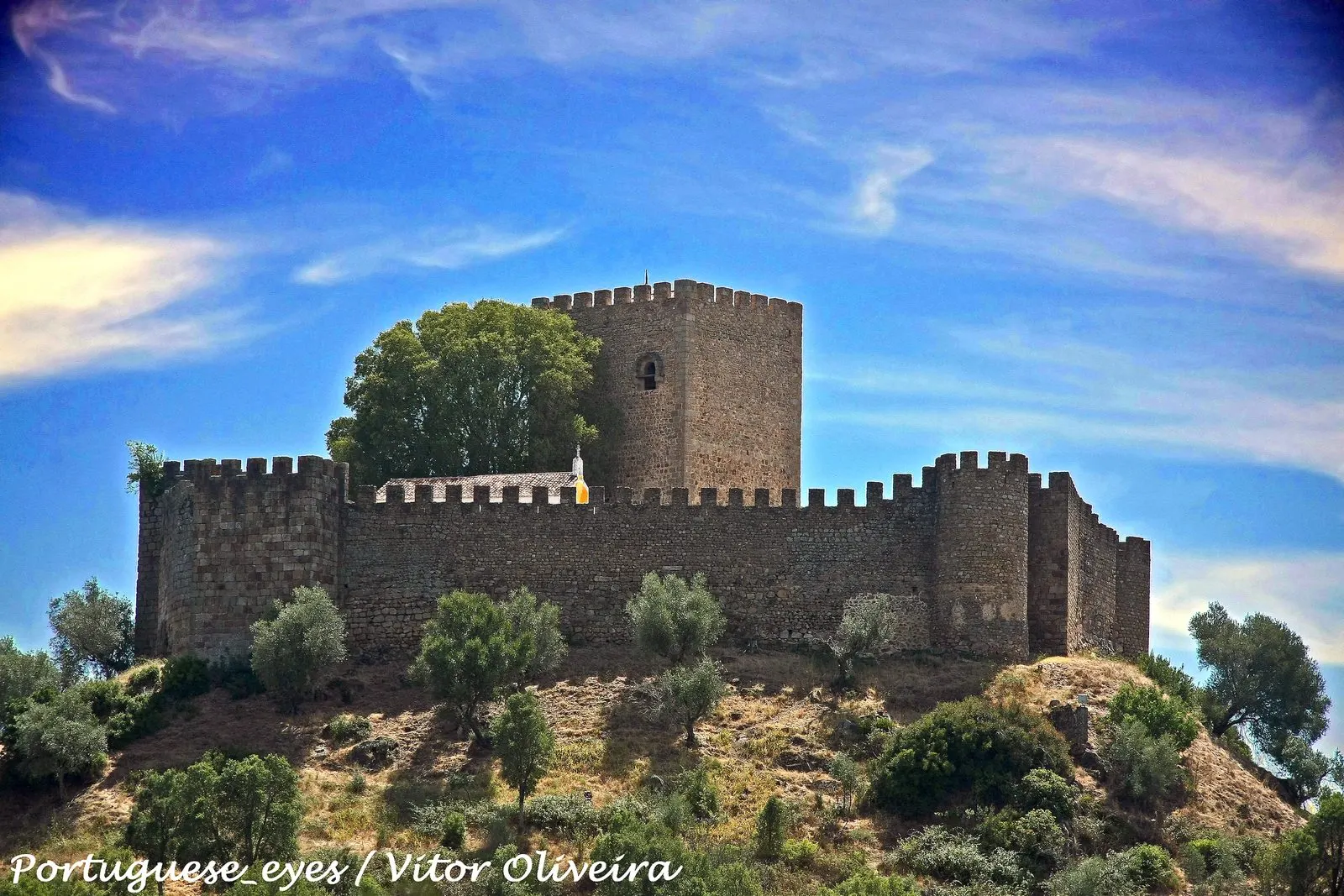
The Amieira Castle dominates the small village of Amieira do Tejo, in the municipality of Nisa, in the north of the Alentejo. Built by the Order of the Hospital in the mid-fourteenth century, it is a small, regular and compact castle. The historian Mário Barroca, followed by the national register of the Cultural Heritage, I.P., sees in it the prototype of the Portuguese Gothic castle. Compared with the neighbouring Belver Castle, begun about a century and a half earlier, it clearly shows how military architecture changed between the Romanesque and the Gothic.
A Hospitaller village without a castle
Amieira came under the Hospitallers in 1232, when a donation by King D. Sancho II extended the Order’s lands to the south, with the villages of Amieira, Gavião and Crato. At Crato, the Order carried out works soon after the donation. Amieira, by contrast, only received a castle about a century later.
The construction is due to Álvaro Gonçalves Pereira, prior of the Order of the Hospital, illegitimate son of Bishop D. Gonçalo Pereira and father of the future constable D. Nuno Álvares Pereira. The work belongs to a moment of renewal for the Order: in 1356, the seat moved from Leça do Balio to Crato, at the heart of its principal landholdings. According to the national register, D. Pedro I visited the fortress three years later, when the works were already well advanced. Formal completion came in 1362. Álvaro Gonçalves Pereira oversaw the work closely and died at Amieira in 1375.
The design of a Gothic castle
Belver stands on a steep hilltop. Amieira lies at a relatively low elevation. For the national register, this shows that military architecture no longer depended so heavily on the terrain. The plan is rectangular and regular, with four towers at the corners.
The keep is one of these corner towers, of square plan and larger than the others, and rises above the main entrance. Unlike Romanesque keeps, isolated in the middle of the enclosure, it takes a direct part in the defence: it allowed vertical fire onto the gate of the barbican, the most vulnerable point. With no tower or other buildings in the centre, the courtyard is wide and easy to cross. The Municipality of Nisa’s page also mentions the windows of the keep, one of them paired and another with a pointed arch.
The defence was completed by two features recorded in the documentation: a moat, of which little remains, and a barbican around the fortress, which created a second line difficult to cross in the event of a siege.
Works, prison and cemetery
During the reigns of D. João II and D. Manuel there is record of works, probably to adapt the castle to the new demands of warfare. The castle also served as a prison. Beside one of the towers, but outside the walls, stands the Chapel of Saint John the Baptist, dated 1556 by the inscription over its portal. The portal is a full round arch with panelled voussoirs. Inside there is a coffered vault with grotesques, an image of the patron saint and a late Renaissance altarpiece.
As the frontier receded, the castle lost importance. In the eighteenth century, much of the structure was abandoned and part of the fortress had been adapted into dwellings. The keep was then partly restored. In the nineteenth century, the courtyard became the village cemetery, and it remained so until the 1940s. In that decade, the Directorate-General for Buildings and National Monuments (DGEMN) carried out the full restoration that gave the complex its present appearance.
Classification
The castle is a National Monument under Decree No. 8477, published in the Diário do Governo, I series, No. 233, of 10 November 1922. The decree justifies the classification by the monument’s artistic and architectural characteristics. The special protection zone, with a non aedificandi zone, was set by ordinance of 27 October 1949, published in the Diário do Governo, II series, No. 266, of 16 November 1949. The castle is not part of any UNESCO inscription.
Planning a visit
Amieira do Tejo belongs to the civil parish of Arez e Amieira do Tejo, in the municipality of Nisa and the district of Portalegre. When consulted on 5 November 2026, no official published opening schedule for the castle was found. The Nisa Tourist Office, on Praça da República, was open every day from 9:00 to 12:30 and from 14:00 to 17:30, by telephone at 245 410 000 (extension 353). It is the most reliable contact for confirming whether the castle is open before you go.
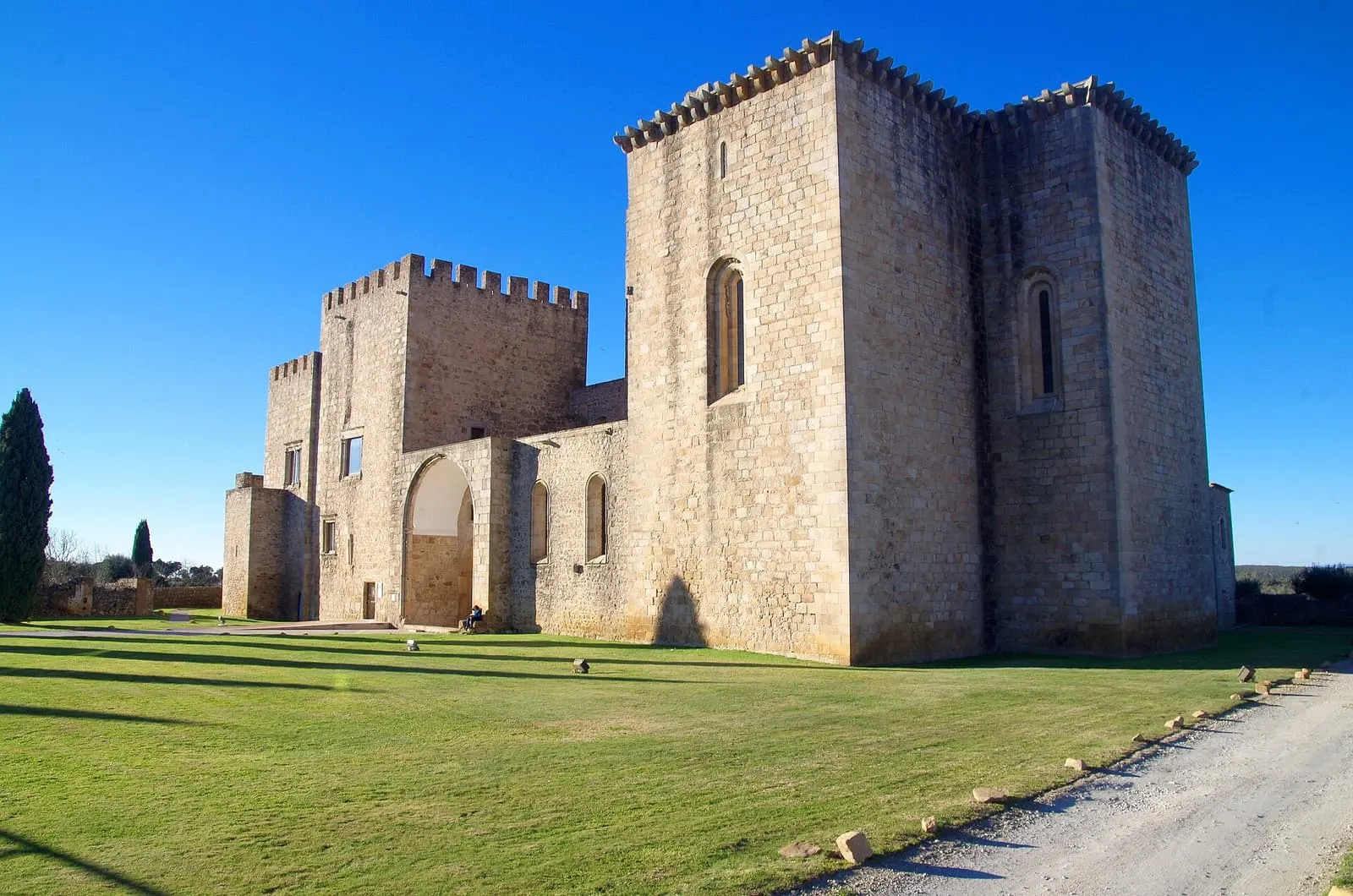
The municipality has other traditions worth discovering, such as the Nisa pottery. To follow the Hospitaller route, visit Belver Castle, in the neighbouring municipality of Gavião, and Crato. To compare with other fortresses, see the pages on Portuguese castles and Gothic architecture.
Photograph by Vitor Oliveira, May 2012. Original on Wikimedia Commons, under CC BY-SA 2.0; resized and compressed for the web, without altering the composition.
Frequently asked questions
- Who had Amieira Castle built?
- Álvaro Gonçalves Pereira, prior of the Order of the Hospital and father of D. Nuno Álvares Pereira. According to the national register of the Cultural Heritage, I.P., the works were well advanced when D. Pedro I visited the fortress, and they were formally completed in 1362.
- Why is it said to be a prototype of the Gothic castle?
- The historian Mário Barroca, followed by the national register, sees in it the prototype of the Portuguese Gothic castle: a regular rectangular plan, four towers at the corners, and a keep integrated into the curtain wall above the entrance, rather than isolated in the centre of the courtyard.
- Is the castle classified?
- Yes. It is a National Monument under Decree No. 8477, published in the Diário do Governo, I series, No. 233, of 10 November 1922. An ordinance of 27 October 1949 set the special protection zone, with a non aedificandi zone.
- Where can I get information for a visit?
- When consulted on 5 November 2026, no official published opening schedule for the castle was found. The Nisa Tourist Office can be reached on 245 410 000 (extension 353), every day, from 9:00 to 12:30 and from 14:00 to 17:30.
Sources
- Património Cultural, I.P. — Castelo de Amieira (70244)
- Património Cultural, I.P. — Atlas do Património Classificado, Castelo de Amieira (NINV 3563)
- Diário do Governo — Decreto n.º 8477 (I série, n.º 233, 10-11-1922)
- Município de Nisa — Património classificado
- Município de Nisa — Turismo
- Wikidata — Castelo de Amieira (Q5050365)
Keep exploring
Heritage nearby
More places to discover from here. Approximate straight-line distances, within 50 km.