Monuments
Belver Castle
Belver Castle, in Gavião: the first Hospitaller castle in Portugal, begun after 1194 above the Tagus, with a freestanding keep. National Monument.
- Location
- Belver, Gavião, Portalegre
- Built
- a partir de 1194; em funcionamento em 1210
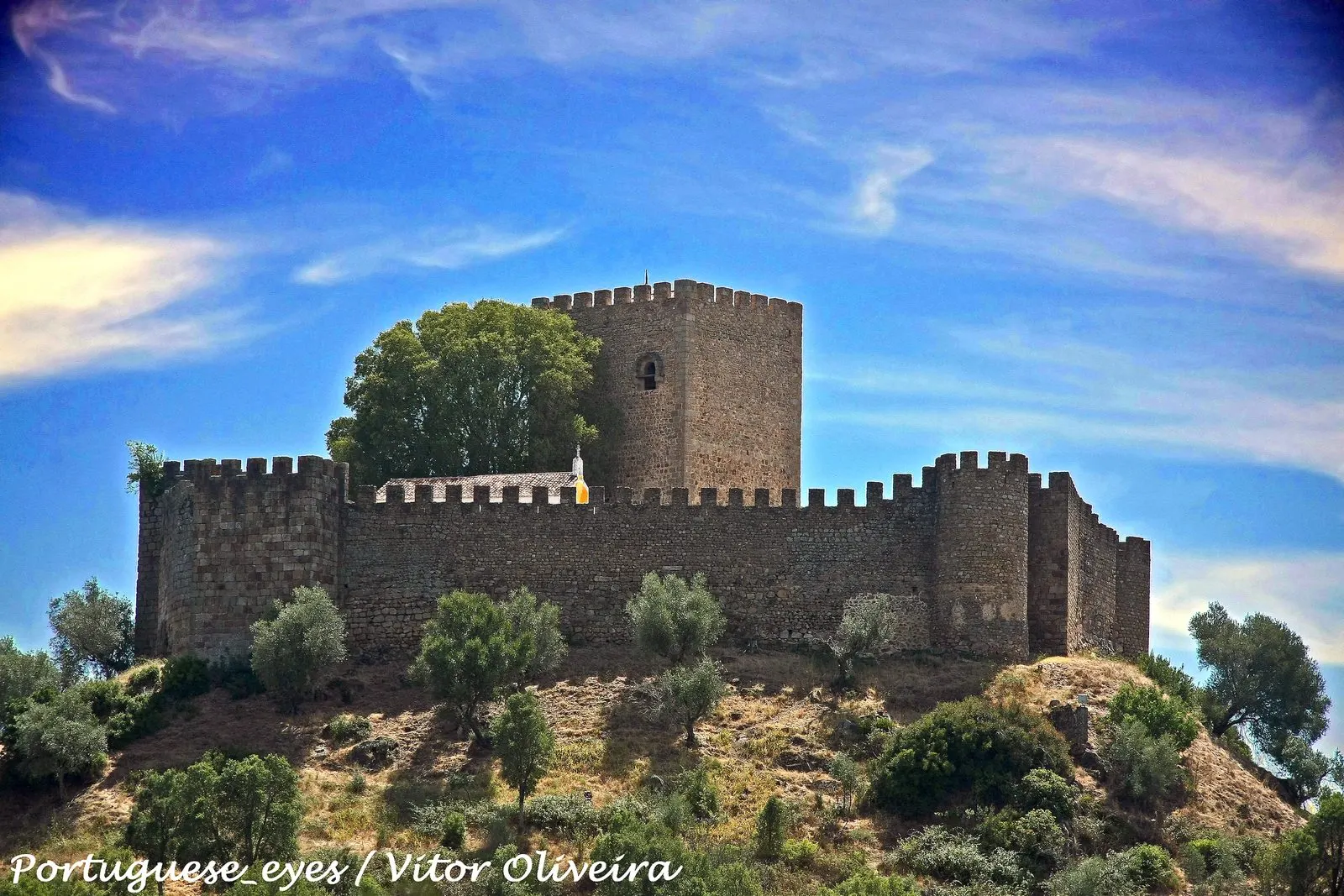
Belver Castle occupies a steep hill beside the River Tagus, opposite the village of Belver, in the municipality of Gavião. It was the first castle built in Portugal by the knights of the Order of the Hospital and one of the most imposing that the Order raised in the country during the Middle Ages. Despite later works, it essentially preserves its original design. The national register of the Cultural Heritage, I.P. considers it one of the most representative examples of the Romanesque phase of Portuguese military architecture.
A donation by D. Sancho I
The castle’s history begins in 1194. According to the national register, which follows the historian Mário Barroca, D. Sancho I that year granted Afonso Pais, prior of the Hospital, the lands of Gimdintesta, on condition that a castle be built there. The Municipality of Gavião writes the place name as Guidintesta.
The donation responded to a difficult situation. Muslim incursions in the preceding years had pushed the Christian frontier to the line of the Tagus. The defence of the middle Tagus was shared among several institutions, but the Templars held an almost complete monopoly there. By calling the Hospitallers to Belver, the king sought to check the incursions and balance the weight of the military orders in the region.
Work progressed quickly. By 1210 the castle was already in operation: the will of D. Sancho I mentions it and states that it was one of six places in the kingdom where the royal treasure was kept. For the national register, this choice demonstrates the quality of the construction and the king’s confidence in the commander of Belver, despite its frontier position.
An oval enclosure and an isolated tower
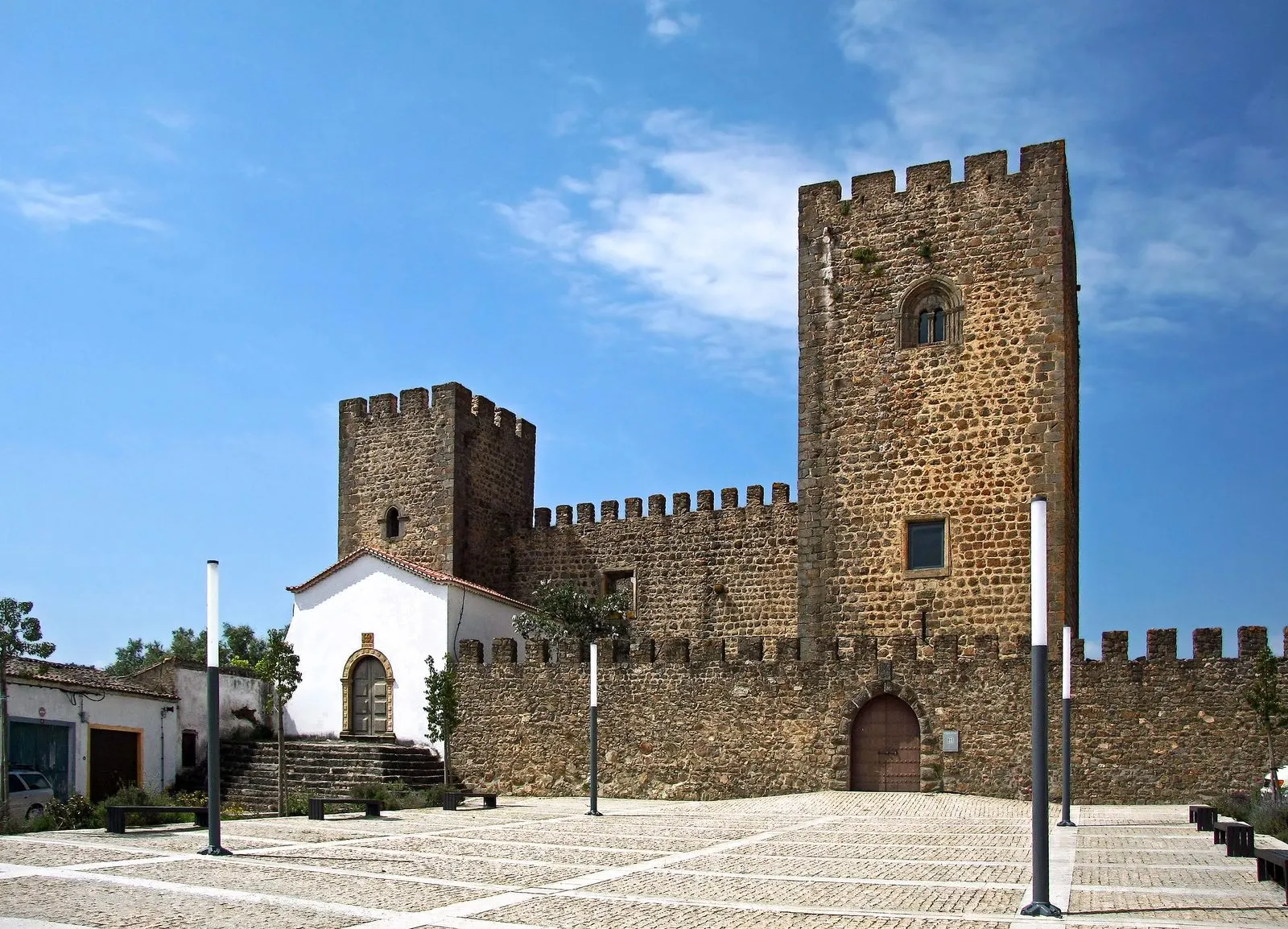
The castle adapts to the terrain, as was typical of the period. The enclosure, of oval plan, has a wall-walk and is crenellated all around. At the centre of the courtyard rises the freestanding keep. It has a rectangular, almost square plan and three storeys. Entry was made through the middle floor, by an elevated doorway reached by a movable ladder. The top floor connected to the wall-walk by a walkway, now dismantled.
Defences are reinforced where access is easiest. The eastern face, turned towards the settlement, has four square towers. The opposite face rests on cliffs and has only two semicircular towers.
The main gate opens to the south, between two towers. The right-hand tower is sturdier and partly hides the entrance, so that anyone approaching could not easily see it. The national register notes that this arrangement only became widespread more than half a century later, in the reign of D. Dinis. The second entrance, the Porta da Traição (Gate of Treachery), lies to the west, above the steepest slope. It is also protected, between a circular tower and a projection of the wall.
From D. João I to the twentieth-century restoration
With the accession of D. João I and the wars with Castile, the castle regained military importance. In 1390, D. Nuno Álvares Pereira ordered works. Mário Barroca attributes to this campaign the cistern beside the Porta da Traição.
In the early modern period, Belver lost its military relevance. From the sixteenth century dates the Chapel of São Brás, within the enclosure. It is a Mannerist chapel with a high altarpiece of Italian influence and great devotion in the region, linked to supposed relics from the Holy Land. The 1755 earthquake caused serious damage, and in the nineteenth century the interior served as a cemetery. In the 1940s, the Directorate-General for Buildings and National Monuments (DGEMN) carried out the first full restoration. According to the national register, this campaign partly reinvented the castle, something worth keeping in mind when observing the crenellations and finials.
Classification
The castle is a National Monument under the Decree of 16 June 1910, published in the Diário do Governo no. 136, of 23 June 1910. A ministerial order of 25 February 1947, published in the Diário do Governo, II series, no. 74, of 31 March 1947, set the special protection zone, with a non aedificandi zone. The castle is not part of any UNESCO inscription.
Preparing the visit
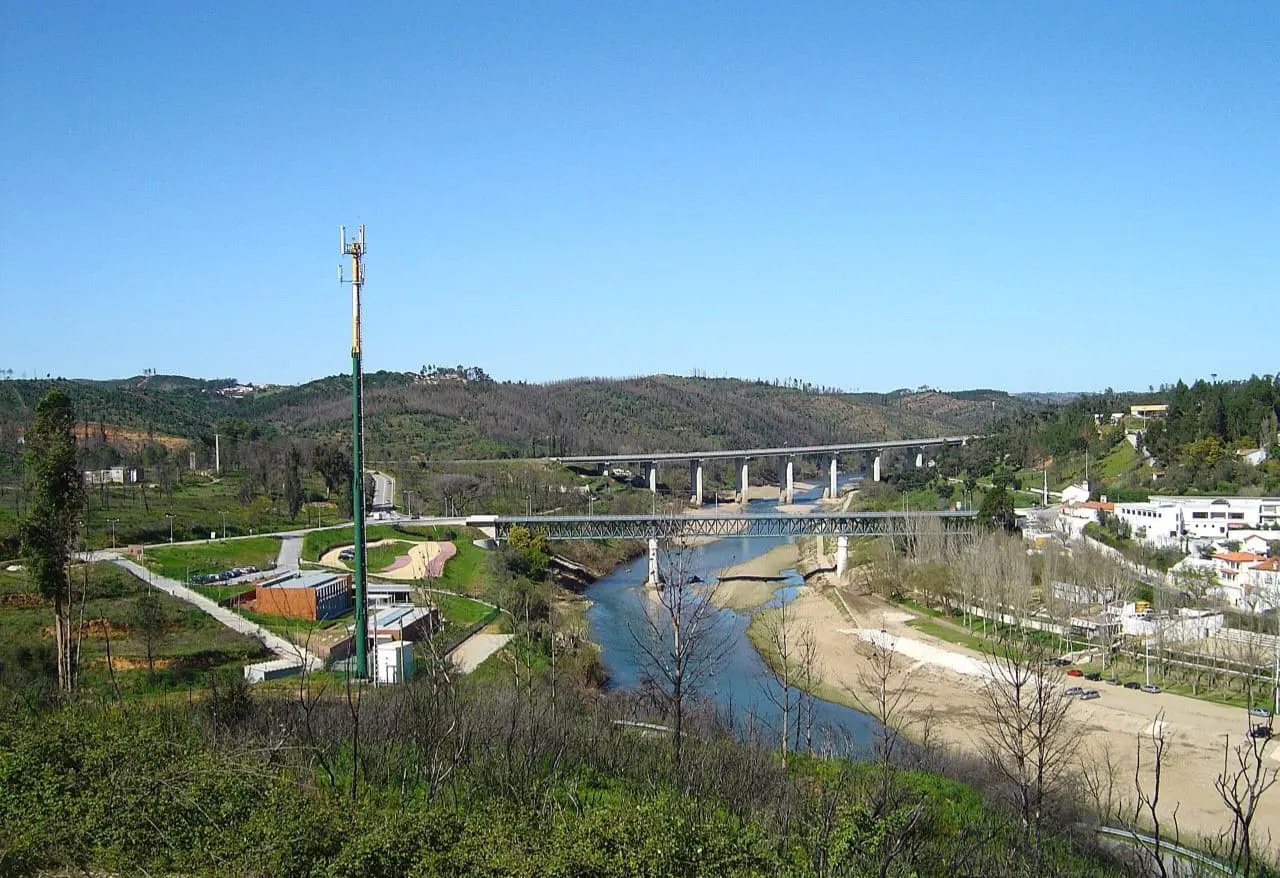
Belver belongs to the municipality of Gavião, in the district of Portalegre and in the north of Alentejo. From the castle the Tagus can be seen. When consulted on 5 November 2026, the Municipality of Gavião’s webpage listed opening hours from 6 May to 30 September, 10:00 to 13:00 and 14:00 to 18:00, with an address on Rua Dom Sancho I. No hours were published for the rest of the year.
No separate admission price was published for the castle. The municipality’s museums page presented a tourist ticket of €5.00, which includes Belver Castle, the Soap Museum, the Belver Museum Nucleus of Blankets and Tapestries and the Casa das Artes de Gavião. Confirm hours and conditions by telephone at +351 241 639 070 or by email at [email protected].
To follow the history of the Hospitallers in Portugal, the visit continues at Crato, seat of the priory from the fourteenth century, and at the Church of Leça do Balio, the Order’s former seat in Portugal. Downriver, the Almourol Castle is another fortress linked to the defence of the Tagus. The wider context is on the page on Portuguese castles and on the page on Romanesque architecture.
Photograph by Vitor Oliveira, October 2012. Original on Wikimedia Commons, under CC BY-SA 2.0; resized and compressed for the web, without altering the composition.
Frequently asked questions
- Who built Belver Castle?
- The knights of the Order of the Hospital. According to the national register of the Cultural Heritage, I.P., King D. Sancho I granted the lands of Gimdintesta to the prior Afonso Pais in 1194, on condition that a castle be built there. By 1210 the fortress was already in operation.
- What is special about the keep?
- It rises freestanding at the centre of the oval enclosure, as was typical of Romanesque castles. It has an almost square plan and three storeys, and the doorway opens on the middle floor, which was reached by a movable ladder.
- Is Belver Castle listed?
- Yes. It is a National Monument under the Decree of 16 June 1910, published in the Diário do Governo no. 136 of 23 June 1910. It has a special protection zone, with a non aedificandi zone, set by ministerial order of 25 February 1947.
- When can it be visited?
- When consulted on 5 November 2026, the Municipality of Gavião's webpage listed opening hours from 6 May to 30 September, 10:00 to 13:00 and 14:00 to 18:00, with no hours published for the rest of the year. Please confirm with the municipality before going.
Sources
- Património Cultural, I.P. — Castelo de Belver (70546)
- Património Cultural, I.P. — Atlas do Património Classificado, Castelo de Belver (NINV 3546)
- Diário do Governo — Decreto de 16 de junho de 1910 (n.º 136, 23-06-1910)
- Município de Gavião — Castelo de Belver
- Município de Gavião — Museus e Castelo de Belver
- Wikidata — Castelo de Belver (Q5050367)
Keep exploring
Heritage nearby
More places to discover from here. Approximate straight-line distances, within 50 km.