Monuments
Sabugal Castle
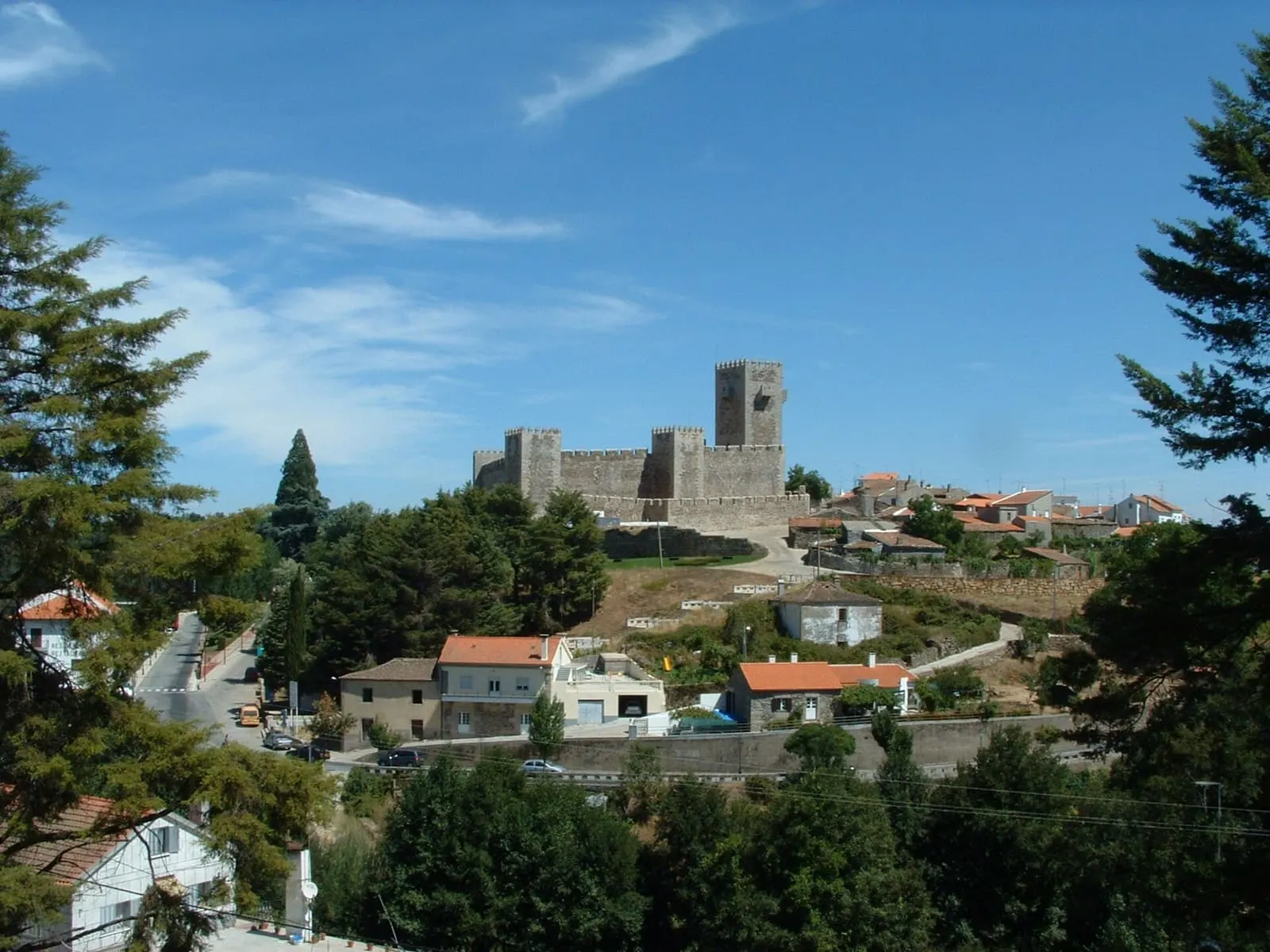
Sabugal Castle, the Castle of the Five Shields: a Gothic fortress of King Denis on the Côa, with a pentagonal keep, built after 1296. National Monument.
- Location
- Sabugal, Guarda
- Built
- Séc. XIII (reduto leonês); castelo gótico de D. Dinis, depois de 1296, e cerca do séc. XIV
Sabugal Castle rises above the River Côa, in the historic centre of the town of Sabugal, in the district of Guarda. It is known as the Castle of the Five Shields because of its keep, which has a pentagonal plan, a rare form in Portuguese castles. More than a curiosity, the castle is a clear example of the Gothic military architecture that King Denis brought to the lands of Riba-Côa after integrating them into the kingdom.
A Leonese town on the Côa
The national register of Cultural Heritage, I.P. places the castle’s origins in the Kingdom of León, when Alfonso IX held the lands of Riba-Côa. In the twelfth and thirteenth centuries, Sabugal was the main settlement of the region, because it controlled the bridge over the Côa. The earliest secure data, however, date from the early thirteenth century: according to the register, the Leonese king founded the town around 1224. The municipality of Sabugal places the foundation and charter of Alfonso IX at the end of the twelfth century. In the following decades, Castile and León built a first defensive stronghold.
In 1296, King Denis captured the town, during the offensive over Riba-Côa. The Treaty of Alcañices, of 1297, confirmed Portuguese possession of the lands on the right bank of the Côa. According to the municipality, Denis also confirmed the earlier charter and the free fair.
King Denis’s Gothic castle
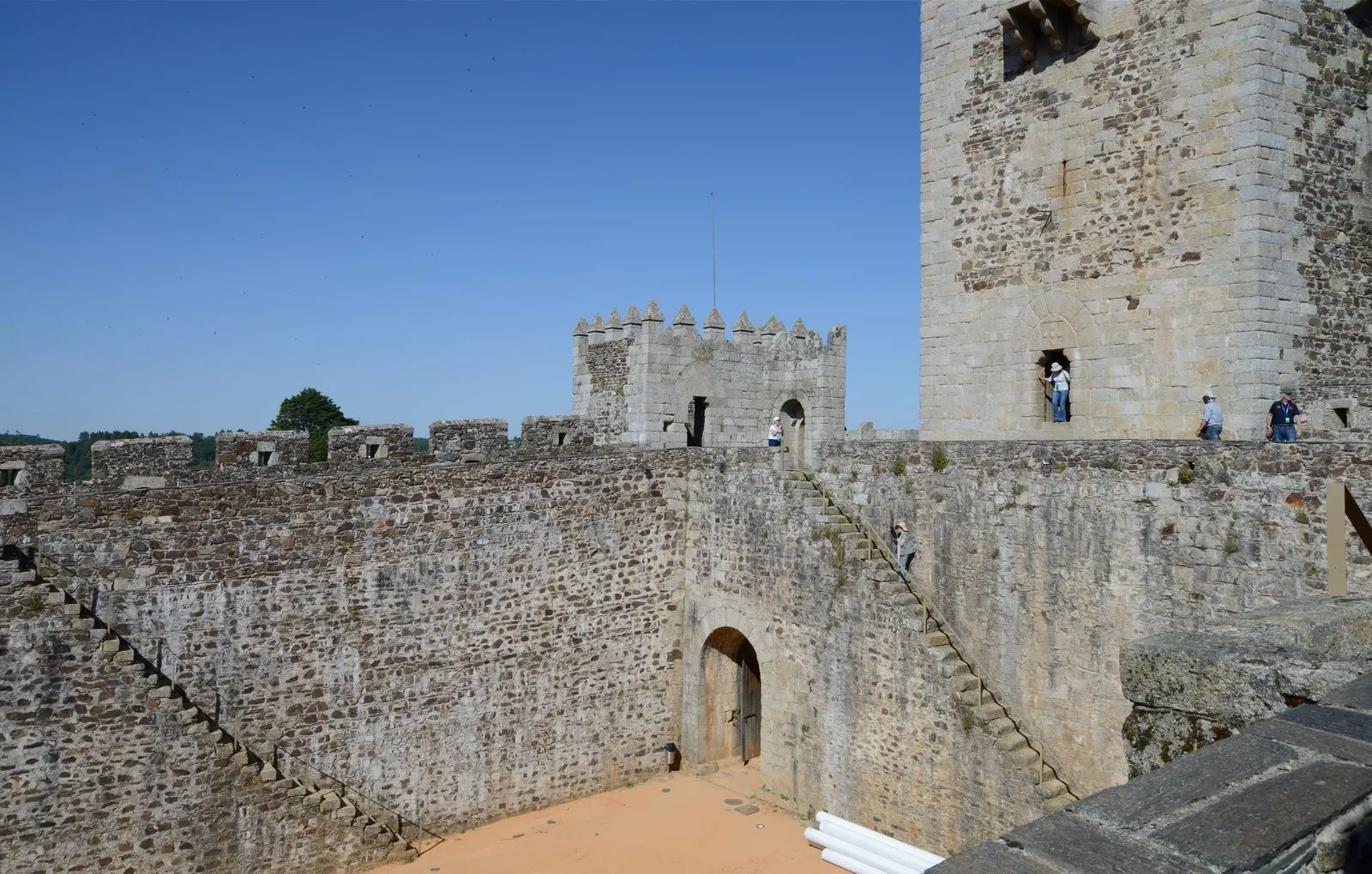
The national register describes King Denis’s castle as an exemplary, modern and rational project. Works began by clearing the central core of the town, within the old Leonese walls, where houses stood. The resulting castle has, in the words of Mário Barroca cited by the register, a “nearly perfect geometric plan”, with a sub-rectangular courtyard and quadrangular towers at the corners.
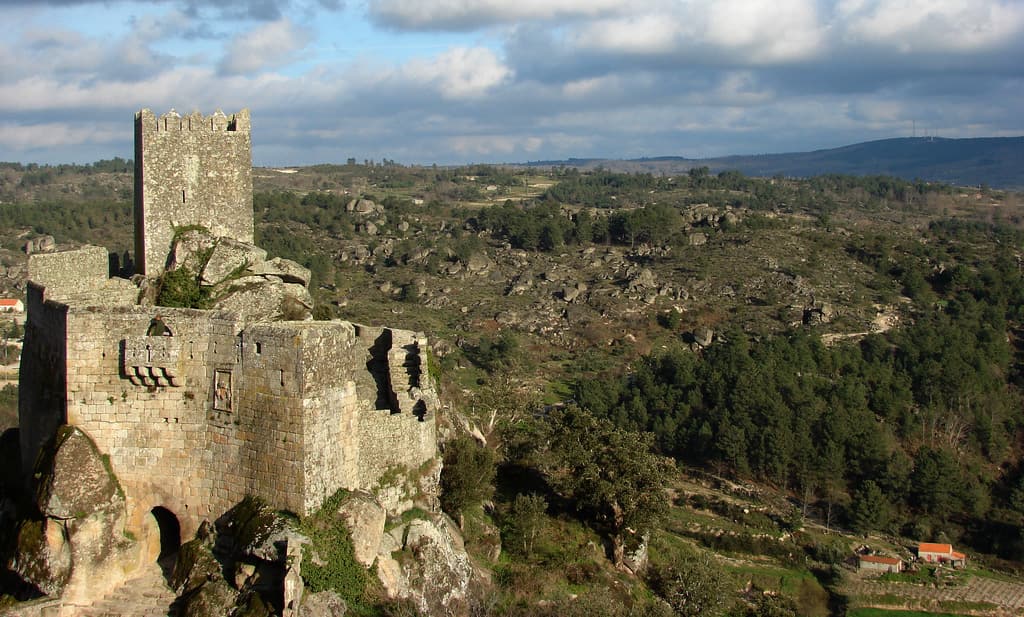
The great novelty is the keep. In Romanesque castles, this tower stood isolated within the enclosure. At Sabugal, it is attached to the wall and serves for the active defence of the main gate. The pentagonal plan is, according to Barroca, an heir to the five-sided towers of the Templars and of King Sancho I. The tower became the town’s principal image.
The walls were planned with the same care. Two circular towers protect one side, and a broad wall walk runs around the whole enclosure. On the outside, a barbican, probably already from the fourteenth century, narrowed the approaches and exposed attackers to vertical fire.
The town walls, of oval plan, are also Gothic and should date from the fourteenth century, almost contemporary with the castle. The main gate lies at the opposite end from the castle, and Rua Direita links the two. The municipality adds that part of the Leonese wall survives, including the only gate of that enclosure to have reached our day.
Alterations, cemetery and restoration
In the reign of King Manuel, the castle received works. The municipality mentions the shield flanked by armillary spheres on the castle and on the surviving Leonese gate. The drawings of Duarte de Armas, from the early sixteenth century, show a barbican with gun ports, adapted to artillery. Further campaigns of reinforcement followed, and the castle still served as a support during the Peninsular Wars of the early nineteenth century. The municipality recalls that the last battle of the French invasions on national territory was fought near the town, at Gravato.
Once its military function was lost, the castle fell into decline. In the mid-nineteenth century, the courtyard was adapted as a cemetery. At the turn of the twentieth century, the chapel of Santa Maria, the fortress’s church since the Gothic period, was demolished. Restoration began shortly after the creation of the Directorate-General of Public Buildings and National Monuments. According to the register, it was an ambitious programme to rebuild much of the castle, from the walls to the merlons, which explains its present configuration.
Classification
The castle is a National Monument. The Decree of 16 June 1910, published in the Diário do Governo No. 136, of 23 June 1910, classified the castle. Decree No. 38 147, published in the Diário do Governo, Series I, No. 4, of 5 January 1951, classified the rest of the wall along with it. The special protection zone, with a non aedificandi zone, was set by the ordinance of 21 November 1949, published in the Diário do Governo, Series II, No. 282, of 6 December 1949. The castle is not part of any UNESCO inscription.
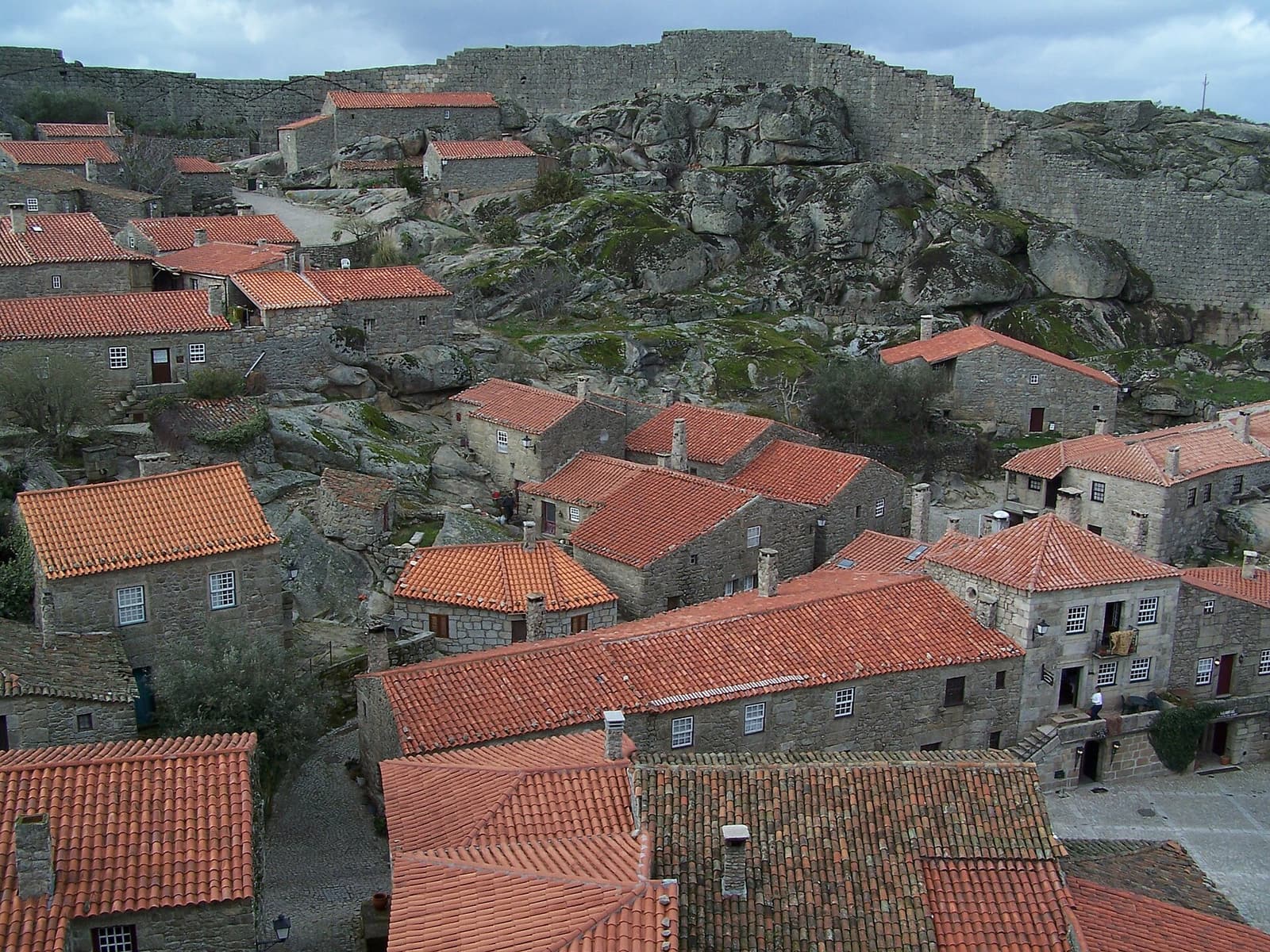
Sabugal does not belong to the Historic Villages of Portugal. That network includes Sortelha, a civil parish of the same municipality with its own castle, the Castle of Sortelha, also a National Monument. The municipality presents Sabugal as one of its five medieval villages, together with Alfaiates, Sortelha, Vila do Touro and Vilar Maior.
Planning the visit
The castle is in the historic centre, next to Largo de Santa Maria. On consulting on 5 November 2026, the municipality did not publish a separate castle timetable. It published the timetable of the Sabugal Museum, in Largo de S. Tiago, which also functions as the tourist office. It was open every day, from 10:00 to 13:00 and from 14:00 to 18:00 from June to August, and from 09:30 to 13:00 and from 14:00 to 17:30 from September to May.
The municipality also organised guided visits to the castle and the museum, led by tourism staff, booked with 24 hours’ notice. The price was 25 euros for groups of up to 25 people and 35 euros for larger groups. Bookings could be made at [email protected] or by telephone on 800 262 788 and 271 750 080. Please confirm timetables and conditions on the tourist offices page before going.
Near the castle, the bridge over the Côa is, according to the municipality, the one from the time of King Denis, subject to successive rebuilds; one of its arches, destroyed by the river in 1908, had to be remade. To continue, head on to Sortelha, consult the itinerary of Centro de Portugal, or compare Sabugal with other castles of Portugal.
Photograph by Alvesgaspar, of 8 July 2016. Original on Wikimedia Commons, under CC BY-SA 4.0; resized and compressed for the web, without altering the composition.
Frequently asked questions
- Why is it called the Castle of the Five Shields?
- After the popular name linked to the keep, which has a pentagonal plan, a rare form in Portuguese military architecture. The national register, citing Mário Barroca, sees in it an heir to the five-sided towers of the Templars and of King Sancho I.
- Who built Sabugal Castle?
- The first stronghold was Leonese and Castilian. After King Denis captured the town in 1296 and the Treaty of Alcañices brought it into Portugal, the king ordered the current Gothic castle built, with the pentagonal tower attached to the wall beside the main gate.
- Is the castle listed?
- Yes. The Decree of 16 June 1910 classified the castle as a National Monument, and Decree No. 38 147, published in the Diário do Governo on 5 January 1951, extended the classification to the rest of the wall. The special protection zone was set by ordinance of 21 November 1949.
- Is Sabugal part of the Historic Villages of Portugal?
- No. The network includes Sortelha, which lies in the municipality of Sabugal and has its own listed castle, but the town of Sabugal is not part of it.
Sources
- Património Cultural, I.P. — Castelo do Sabugal e o resto da respectiva muralha (70564)
- Património Cultural, I.P. — Atlas do Património Classificado, Castelo do Sabugal (NINV 3000)
- Diário do Governo — Decreto n.º 38 147 (I Série, n.º 4, 5-01-1951)
- Diário do Governo — Decreto de 16 de junho de 1910 (n.º 136, 23-06-1910)
- Município do Sabugal — Sabugal (5 vilas medievais)
- Município do Sabugal — Postos de Turismo
- Wikidata — Castelo do Sabugal (Q2970478)
- Aldeias Históricas de Portugal — Página inicial (lista das 12 aldeias)
Keep exploring
Heritage nearby
More places to discover from here. Approximate straight-line distances, within 50 km.